
(3-Chlorophenyl)boronic acid

Grundinformationen
- CAS
63503-60-6- Standard-SMILES
OB(O)c1cccc(Cl)c1- InChIKey
SDEAGACSNFSZCU-UHFFFAOYSA-N- Summenformel
- C6H6BClO2
- Durchschnittliche Molmasse
- 156,38 g/mol
- Monoisotopische Masse
- 156,0149373
Namen und Bezeichner
- Bevorzugter Name
- (3-Chlorophenyl)boronic acid
- IUPAC
- (3-chlorophenyl)boronic acid
- Englischer Name
- 3-Chlorophenylboronic acid
- Summenformel
- C6H6BClO2
- Molmasse
- 156.37
Namen und Synonyme
(3-chlorophenyl)boronic acidRefChem:400104628-786-63-Chlorophenylboronic acid63503-60-63-chlorobenzeneboronic acid3-chlorophenyl boronic acid3-ChlorophenylboronicacidMFCD00161354m-chlorophenylboronic acid(3-Chlorophenyl)BoranediolB-(3-chlorophenyl)-boronic acid
Weitere Namen anzeigen
AKOS BRN-0010RARECHEM AH PB 01793-Chlorophenylboroni3-Chlorophenylboronic3-Chlorophenylboric acid3-CHLOROPHENYLBORNIC ACID3-Chlorophenylboroic acid
3-Chlorophenylboronic acid (contains varying amounts of Anhydride)Boronic acid, (3-chlorophenyl)-B-(3-Chlorophenyl)boronic Acid; (3-Chlorophenyl)boronic Acid; (m-Chlorophenyl)boronic Acid; 3-Chlorobenzeneboronic Acid; m-Chlorobenzeneboronic AcidVismodegib Impurity 103-chlorphenylboronic acid3-chiorophenylboronic acidm-chlorophenyl boronic acid3-chloro phenylboronic acid
Datenbank-Bezeichner
- CAS
63503-60-6- PubChem CID
- 2734323
- DTXSID
DTXSID40370214- ChEMBL
CHEMBL164616- EC Number
- 628-786-6
- Nikkaji
- J920.027D
Eigenschaften
Berechnete Struktureigenschaften
- Polarare Oberfläche (TPSA)
- 40,5 Ų
- H-Brücken-Donoren
- 2
- H-Brücken-Akzeptoren
- 2
- Frei drehbare Bindungen
- 1
- Schwere Atome
- 10
- Formalladung
- 0
- Komplexität
- 110
Physikochemische Eigenschaften
- Schmelzpunkt
- 185 · 185-189 °C(lit.)
- Siedepunkt
- 311.4 · 311.4±44.0 °C(Predicted)
- Dichte
- 1.32 · 1.32±0.1 g/cm3(Predicted)
- storage temp.
- Inert atmosphere,Room Temperature
- Löslichkeit
- soluble in Methanol
- pka
- 7.55 · 7.55±0.10(Predicted)
- Aggregatzustand
- Crystalline Powder or Needles
- Farbe
- White to light yellow-green
- Wasserlöslichkeit
- Slightly soluble in water. soluble in ether, tetrahydrofuran,, dimethyl sulfoxide, dimethyl formamide, methanol.
- BRN
- 2936343 · 2936343
- InChI
- InChI=1S/C6H6BClO2/c8-6-3-1-2-5(4-6)7(9)10/h1-4,9-10H
- InChIKey
- SDEAGACSNFSZCU-UHFFFAOYSA-N
- SMILES
- B(C1=CC=CC(Cl)=C1)(O)O
- CAS Datenbank
- 63503 · 63503-60-6(CAS DataBase Reference)
Sicherheit und Regulatorisches
GHS-Klassifizierung
GHS Classification
This chemical does not meet GHS hazard criteria for 1.8% (1 of 55) of reports.
Warning
H302 (80%): Harmful if swallowed [Warning Acute toxicity, oral];H312 (74.5%): Harmful in contact with skin [Warning Acute toxicity, dermal];H315 (23.6%): Causes skin irritation [Warning Skin corrosion/irritation];H319 (23.6%): Causes serious eye irritation [Warning Serious eye damage/eye irritation];H332 (74.5%): Harmful if inhaled [Warning Acute toxicity, inhalation];H335 (21.8%): May cause respiratory irritation [Warning Specific target organ toxicity, single exposure; Respiratory tract irritation]
P261, P264, P264+P265, P270, P271, P280, P301+P317, P302+P352, P304+P340, P305+P351+P338, P317, P319, P321, P330, P332+P317, P337+P317, P362+P364, P403+P233, P405, and P501 (click each P-code to see the statement)
Aggregated GHS information provided per 55 reports by companies from 13 notifications to the ECHA C&L Inventory. Each notification may be associated with multiple companies.;Reported as not meeting GHS hazard criteria per 1 of 55 reports by companies.;There are 12 notifications provided by 54 of 55 reports by companies with hazard statement code(s).;Information may vary between notifications depending on impurities, additives, and other factors. The percentage value in parenthesis indicates the notified classification ratio from companies that provide hazard codes. Only hazard codes with percentage values above 10% are shown. For more detailed information, please visit ECHA C&L website.
Gefahrenhinweise
Hazard Classes and CategoriesAcute Tox. 4 (80%);Acute Tox. 4 (74.5%);Skin Irrit. 2 (23.6%);Eye Irrit. 2 (23.6%);Acute Tox. 4 (74.5%);STOT SE 3 (21.8%)
Sicherheitsdaten
- wgk
- 3
- hs_code
- 29163990
- risk_code
- 20/21/22-36/37/38
- hazard_code
- Xn,Xi
- safety_code
- 36-37/39-26
- hazard_class
- IRRITANT
- Speicherklasse
- 11 - Combustible Solids
- Hazard Classifications
- Acute Tox. 4 DermalAcute Tox. 4 InhalationAcute Tox. 4 Oral
Chemie und Industrie
Anwendungen
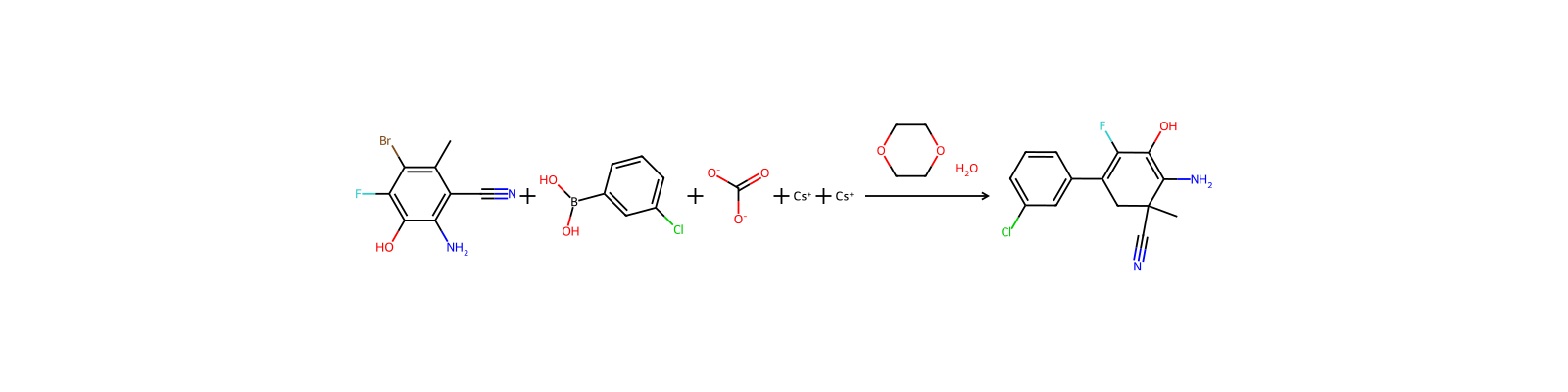
Verwendensuzuki reaction
Vor- und nachgelagerte Produkte
Vorgelagerte Rohstoffe
Nachgelagerte Produkte
Anbieter100 Anbieter
国药集团化学试剂有限公司86-21-63210123 · [email protected]
北京华美互利生物化工010-56205725 · [email protected]
梯希爱(上海)化成工业发展有限公司021-67121386 · [email protected]
上海阿拉丁生化科技股份有限公司400-6206333 13167063860 · [email protected]
天津欣康佑生物科技有限公司19922659386 · [email protected]
INTATRADE GmbH+49 3493/605464 · [email protected]
T&W GROUP021-61551611 13296011611 · [email protected]
上海赫文斯化工有限公司15721252604 17321035817 · [email protected]
韶远科技(上海)有限公司021-50795510 4000665055 · [email protected]
科瑞迪化学400-821-5857 021-64326257 · [email protected]
Syntechem Co.,Ltd[email protected]
上海迈瑞尔生化科技有限公司4006356688 18621169109 · [email protected]
宇瑞(上海)化学有限公司02150456736 18602143071 · [email protected]
北京华威锐科化工有限公司0757-86329057 18934348241 · [email protected]
武汉易泰科技有限公司上海分公司18930552037 · [email protected]
Hangzhou Sage Chemical Co., Ltd.+86057186818502 13588463833 · [email protected]
阿法埃莎(中国)化学有限公司400-6106006 · [email protected]
安耐吉化学&3A(安徽泽升科技股份有限公司)400-0056266 · [email protected]
武汉凯威斯科技有限公司86-027-67849912 · [email protected]
北京亿思研科技开发中心010-56645598 13366904824 · [email protected]
上海柏卡化学技术有限公司400-026-1533/(021) 6478-0600 · [email protected]
上海恩诺生物科技有限公司+86 (21) 6435-5022
上海瀚鸿科技股份有限公司021-54306202 13764082696 · [email protected]
上海相辉医药科技有限公司13761987713 · [email protected]
上海景颜化工科技有限公司13817811078 · [email protected]
嘉兴市艾森化工有限公司0573-85285100 18627885956 · [email protected]
上海隆盛化工有限公司58099637 13585536065 · [email protected]
浙江六康生物科技有限公司13213637321
成都福尔斯特医药技术有限公司028-87078428 028-87074958 · [email protected]
杭州东帆化学有限公司86-0571-85151182
瀚商化工科技有限公司021-50521775 15800962688
四川库利南科技有限公司400-1166-196 18981987031 · [email protected]
天津希恩思生化科技有限公司400 638 7771 · [email protected]
上海钰康生物科技有限公司15618758386 15618758386 · [email protected]
上海乔木化学科技有限公司021-60451683 15021268886 · [email protected]
常州创视电子科技有限公司+86 (519) 8829-2061 · [email protected]
百盛HK进出口有限公司+86-18068513926
河南多贝化工有限公司0370-2785118 17550508557 · [email protected]
斯百全化学(上海)有限公司021-021-021-67601398-809-809-809 15221380277 · [email protected]
上海思域化工科技有限公司86-21-34053660 · [email protected]
赛默飞世尔科技(中国)有限公司800-810-5118 · [email protected]
北京伊诺凯科技有限公司400-810-7969 010-59572699 · [email protected]
上海特伯化学科技有限公司+86-21-60341587 · [email protected]
江苏艾康生物医药研发有限公司025-66113011 13913916777 · [email protected]
上海健超生物科技有限公司150-2103-5486 18017383231 · [email protected]
TCI AMERICA800-4238616 · [email protected]
TOKYO CHEMICAL INDUSTRY CO., LTD.03-36680489 · [email protected]
TCI Europe320-37350700 · [email protected]
卡迪亚医药科技有限公司0371-86615086 18203638366 0371-86159066 13526786601
上海贤鼎生物科技有限公司4009209199 · [email protected]
Zugehörige Reaktionen
575



Notizen zur Verbindung
Wird geladen…