
Grundinformationen
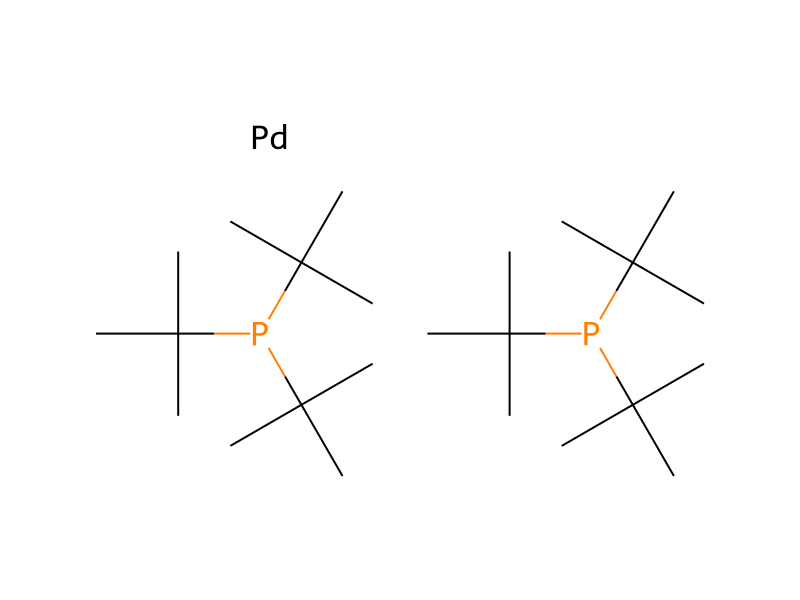
- Standard-SMILES
CC(C)(C)P(C(C)(C)C)C(C)(C)C.CC(C)(C)P(C(C)(C)C)C(C)(C)C.[Pd]- InChIKey
MXQOYLRVSVOCQT-UHFFFAOYSA-N- Summenformel
- C24H54P2Pd
- Durchschnittliche Molmasse
- 511,1 g/mol
- Monoisotopische Masse
- 510,27356
Namen und Bezeichner
- Bevorzugter Name
- Bis(tri-tert-butylphosphine)palladium(0)
- IUPAC
- palladium;bis(tritert-butylphosphane)
- Englischer Name
- Bis(tri-tert-butylphosphine)palladium(0)
- Summenformel
- C24H56P2Pd
- Molmasse
- 513.08
Namen und Synonyme
53199-31-8Bis(tri-tert-butylphosphine)palladium(0)DTXSID80370359RefChem:329913DTXCID10321394640-284-9BIS(TRI-TERT-BUTYLPHOSPHINE)PALLADIUMpalladium;tritert-butylphosphaneBis(tri-t-butylphosphine)palladium(0)bis(tri-tert-butylphosphane) palladiumMFCD03094580PD(T-BU3P)2
Weitere Namen anzeigen
Pd(P(t-Bu)3)2Bis[tris(tert-butyl)phosphine]palladiumBis[tris(tert-butyl)phosphine]palladium, 20.9% PdBIS(TRI-TERT-BUTYLPHOSPHINE)PALLADIUM (0)bis(tri-tert-butylphosphoranyl)palladiumBis(t
Bis(tri-t-butylphosphine)palladium (0)pd(p(tbu)3)2BIS(TRI-T-BUTYLPHOSPHINE)PALLADIUMC24H54P2PdPalladium, bis[tris(1,1-dimethylethyl)phosphine]-SCHEMBL43560SCHEMBL30986582STR08646
Datenbank-Bezeichner
- CAS
53199-31-8- PubChem CID
- 2734558
- DTXSID
DTXSID80370359- EC Number
- 640-284-9
Eigenschaften
Berechnete Struktureigenschaften
- Polarare Oberfläche (TPSA)
- 0 Ų
- H-Brücken-Donoren
- 0
- H-Brücken-Akzeptoren
- 0
- Frei drehbare Bindungen
- 6
- Schwere Atome
- 27
- Formalladung
- 0
- Komplexität
- 128
Physikochemische Eigenschaften
- Schmelzpunkt
- 300 °C · >300 °C
- storage temp.
- -20 °C · -20°C
- Aggregatzustand
- Crystals
- Farbe
- Off-white to orange-brown
- Wasserlöslichkeit
- insoluble
- InChI
- InChI=1S/2C12H27P.Pd/c2*1-10(2,3)13(11(4,5)6)12(7,8)9;/h2*1-9H3;/q;;-2/p+2
- InChIKey
- XULQKWNZCKOVSU-UHFFFAOYSA-P
- SMILES
- P(C(C)(C)C)(C(C)(C)C)(C(C)(C)C)[Pd]P(C(C)(C)C)(C(C)(C)C)C(C)(C)C
- CAS Datenbank
- 53199 · 53199-31-8(CAS DataBase Reference)
Sicherheit und Regulatorisches
GHS-Klassifizierung
GHS Classification
Danger
H228 (69.7%): Flammable solid [Danger Flammable solids];H251 (66.7%): Self-heating; may catch fire [Danger Self-heating substances and mixtures];H302+H312+H332 (66.7%): Harmful if swallowed, in contact with skin or if inhaled [Warning Acute toxicity, oral; acute toxicity, dermal; acute toxicity, inhalation];H302 (75.8%): Harmful if swallowed [Warning Acute toxicity, oral];H312 (75.8%): Harmful in contact with skin [Warning Acute toxicity, dermal];H315 (97%): Causes skin irritation [Warning Skin corrosion/irritation];H317 (66.7%): May cause an allergic skin reaction [Warning Sensitization, Skin];H319 (97%): Causes serious eye irritation [Warning Serious eye damage/eye irritation];H332 (75.8%): Harmful if inhaled [Warning Acute toxicity, inhalation];H335 (27.3%): May cause respiratory irritation [Warning Specific target organ toxicity, single exposure; Respiratory tract irritation];H400 (66.7%): Very toxic to aquatic life [Warning Hazardous to the aquatic environment, acute hazard];H410 (66.7%): Very toxic to aquatic life with long lasting effects [Warning Hazardous to the aquatic environment, long-term hazard]
P210, P235, P240, P241, P261, P264, P264+P265, P270, P271, P272, P273, P280, P301+P317, P302+P352, P304+P340, P305+P351+P338, P317, P319, P321, P330, P332+P317, P333+P317, P337+P317, P362+P364, P370+P378, P391, P403+P233, P405, P407, P410, P413, P420, and P501 (click each P-code to see the statement)
Aggregated GHS information provided per 33 reports by companies from 8 notifications to the ECHA C&L Inventory. Each notification may be associated with multiple companies.;Information may vary between notifications depending on impurities, additives, and other factors. The percentage value in parenthesis indicates the notified classification ratio from companies that provide hazard codes. Only hazard codes with percentage values above 10% are shown. For more detailed information, please visit ECHA C&L website.
Gefahrenhinweise
Hazard Classes and CategoriesFlam. Sol. 1 (69.7%);Self-heat. 1 (66.7%);Acute Tox. 4 (75.8%);Acute Tox. 4 (75.8%);Skin Irrit. 2 (97%);Skin Sens. 1A (66.7%);Eye Irrit. 2 (97%);Acute Tox. 4 (75.8%);STOT SE 3 (27.3%);Aquatic Acute 1 (66.7%);Aquatic Chronic 1 (66.7%)
Sicherheitsdaten
- wgk
- 3
- tsca
- No
- hs_code
- 28439000
- risk_code
- 36/37/38
- hazard_code
- Xi
- safety_code
- 24/25
- Speicherklasse
- 11 - Combustible Solids
Chemie und Industrie
Anwendungen
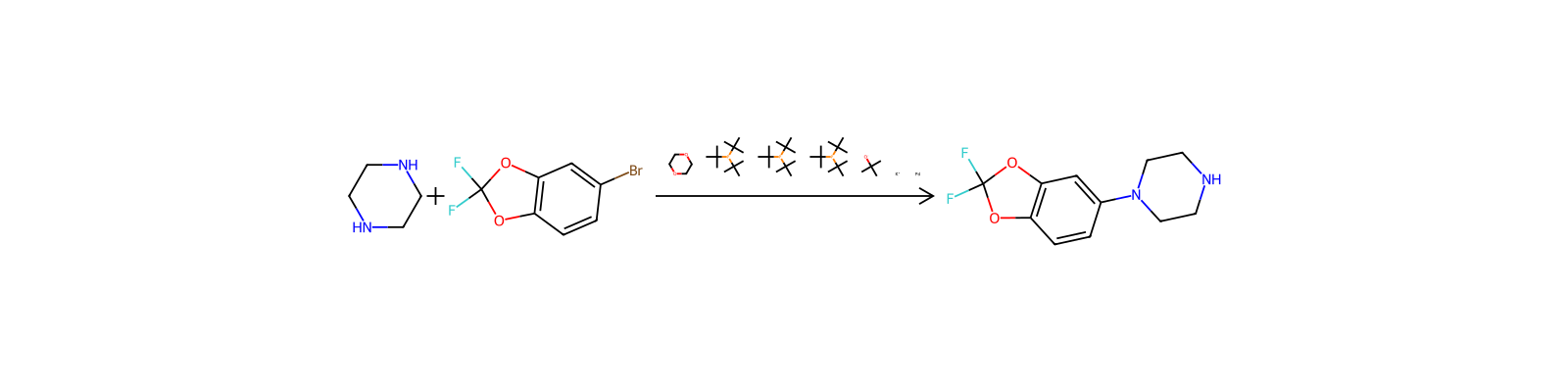
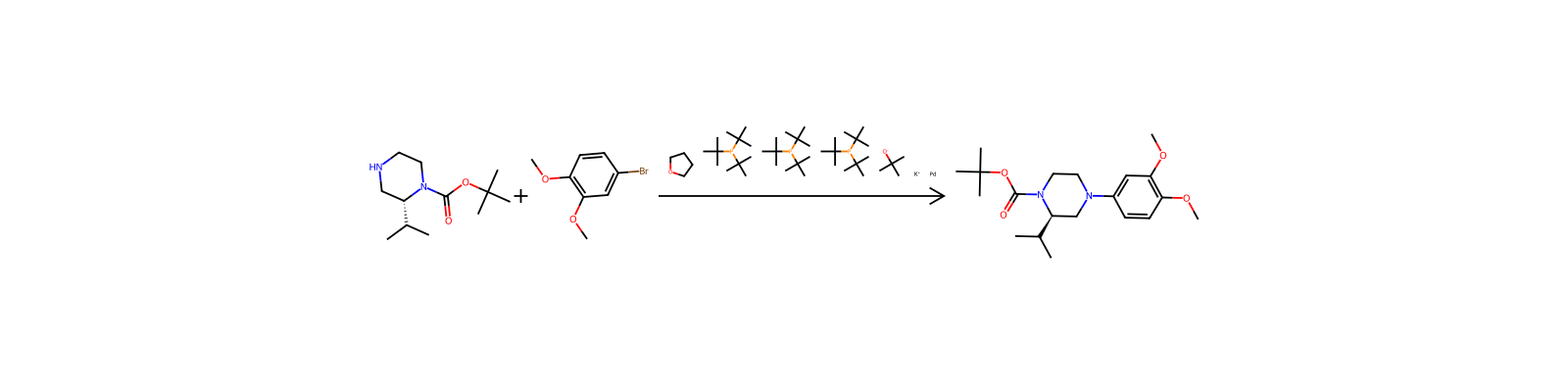
VerwendenBis(tri-tert-butylphosphine)palladium(0) is used in Coupling reactions, Heck couplings. It acts as a palladium catalyst for reductive carbonylation.
Vor- und nachgelagerte Produkte
Vorgelagerte Rohstoffe
Anbieter50 Anbieter
北京华美互利生物化工010-56205725 · [email protected]
梯希爱(上海)化成工业发展有限公司021-67121386 · [email protected]
上海阿拉丁生化科技股份有限公司400-6206333 13167063860 · [email protected]
Baoji Guokang Healthchem co.,ltd+8615604608665 15604608665 · [email protected]
Dayang Chem (Hangzhou) Co.,Ltd.+86-0571-88938639 17705817739 · [email protected]
科瑞迪化学400-821-5857 021-64326257 · [email protected]
上海迈瑞尔生化科技有限公司4006356688 18621169109 · [email protected]
南京药石科技股份有限公司025-86918202 4000255188 · [email protected]
阿法埃莎(中国)化学有限公司400-6106006 · [email protected]
上海德默医药科技有限公司400-021-7337 2355568890 · [email protected]
安耐吉化学&3A(安徽泽升科技股份有限公司)400-0056266 · [email protected]
武汉凯威斯科技有限公司86-027-67849912 · [email protected]
上海瀚鸿科技股份有限公司021-54306202 13764082696 · [email protected]
江苏欣诺科催化剂股份有限公司0512-67216630 67216634 · [email protected]
嘉兴市艾森化工有限公司0573-85285100 18627885956 · [email protected]
武汉丰泰威远科技有限公司+86-27-8746-5837 +86-18627785180 · [email protected]
Zhejiang J&C Biological Technology Co.,Limited+1-2135480471 · [email protected]
陕西瑞科新材料股份有限公司0917-8888777 18691786767
武汉丰泰威远科技有限公司027-87465837 19945049750 · [email protected]
四川库利南科技有限公司400-1166-196 18981987031 · [email protected]
上海钰康生物科技有限公司15618758386 15618758386 · [email protected]
南京维奥化工有限公司Please Send Email 18652950785 · [email protected]
南京辛西亚生物科技有限公司0550-5618439 15951861180 · [email protected]
武汉泰宇凯尚科技有限公司027-027-87680032 18963957250 · [email protected]
艾科试剂4008-755-333 18080918076 · [email protected]
上海思域化工科技有限公司86-21-34053660 · [email protected]
赛默飞世尔科技(中国)有限公司800-810-5118 · [email protected]
北京伊诺凯科技有限公司400-810-7969 010-59572699 · [email protected]
上海健超生物科技有限公司150-2103-5486 18017383231 · [email protected]
TCI AMERICA800-4238616 · [email protected]
TOKYO CHEMICAL INDUSTRY CO., LTD.03-36680489 · [email protected]
TCI Europe320-37350700 · [email protected]
北京格林凯默科技有限公司131-21959385 18804271668 · [email protected]
上海乐晨国际贸易有限公司021-67256163 · [email protected]
苏州爱玛特生物科技有限公司0512-56316828 4008675858 · [email protected]
南京圣赛化工有限公司025-85205967 13951876367 · [email protected]
上海将来实业股份有限公司400-0066400 13621662912 · [email protected]
HBCChem, Inc.+1-510-219-6317 · [email protected]
北京国方鼎盛科技有限公司18610472091 · [email protected]
雷丁试剂0510-85629785 18013409632 · [email protected]
湖南华腾制药有限公司400-8592883 · [email protected]
上海麦克林生化科技股份有限公司15221275939 15221275939 · [email protected]
上海嵩爰化工科技有限公司010-1234567 18521000990 · [email protected]
江苏艾康生物医药研发有限公司025-66028182 17714375163 · [email protected]
上海兴鲁化工科技有限公司02120970332 · [email protected]
池州凯隆进出口贸易有限公司[email protected]
Sigma-Aldrich西格玛奥德里奇(上海)贸易有限公司021-61415566 800-8193336 · [email protected]
上海昭昀生物科技有限公司19983777532 · [email protected]
九鼎化学(上海)科技有限公司4009209199 · [email protected]
Henan Alfa Chemical Co., Ltd+8618339805032 · [email protected]
Zugehörige Reaktionen
1.156





Verknüpfte Notizen
Wird geladen…