
Grundinformationen
- Standard-SMILES
CC(C)(C)OC(=N)C(Cl)(Cl)Cl- InChIKey
CQXDYHPBXDZWBA-UHFFFAOYSA-N- Summenformel
- C6H10Cl3NO
- Durchschnittliche Molmasse
- 218,5 g/mol
- Monoisotopische Masse
- 216,982797
Namen und Bezeichner
- Bevorzugter Name
- Tert-butyl 2,2,2-trichloroethanimidate
- IUPAC
- tert-butyl 2,2,2-trichloroethanimidate
- Englischer Name
- tert-Butyl 2,2,2-trichloroacetimidate
- Summenformel
- C6H10Cl3NO
- Molmasse
- 218.51
Namen und Synonyme
tert-butyl 2,2,2-trichloroethanimidateRefChem:892146629-631-5tert-Butyl 2,2,2-trichloroacetimidate98946-18-0tert-Butyl trichloroacetimidatetert-Butyl-2,2,2-trichloroacetimidateC6H10Cl3NOMFCD000774102,2,2-Trichloroacetimidic Acid tert-Butyl Estert-Butyl trichloroacetimidatet-butyl 2,2,2-trichloroacetimidate
Weitere Namen anzeigen
TBTAFMOC-NH2Tris[(1-benzyl-1H-1,2,3-triazol-4-yl)methyl]aminetert-butyl 2,2,2-trichloroethanecarboximidate9-(FLUORENYLMETHYLCARBONYL) AMIDETert butyl trichloroacetimide ester
1-(tert-butoxy)-2,2,2-trichloroethaniminetert-Butyl2,2,2-trichloroacetimidate2,2,2-Trichloroethanimidic acid tert-butyl ester; O-tert-Butyl trichloroacetimidate; tert-Butyl 2,2,2-trichloroacetimidate; tert-Butyl trichloroacetimidateEthanimidic acid, 2,2,2-trichloro-, 1,1-dimethylethyl estert-butyltrichloroacetimidateA24534t-Butyl trichioroacetimidatet-butyl-trichloroacetimidate
Datenbank-Bezeichner
- CAS
98946-18-0- PubChem CID
- 2734700
- DTXSID
DTXSID40370451- EC Number
- 629-631-5
- Nikkaji
- J254.933F
Eigenschaften
Berechnete Struktureigenschaften
- XLogP
- 3
- Polarare Oberfläche (TPSA)
- 33,1 Ų
- H-Brücken-Donoren
- 1
- H-Brücken-Akzeptoren
- 2
- Frei drehbare Bindungen
- 2
- Schwere Atome
- 11
- Formalladung
- 0
- Komplexität
- 156
Physikochemische Eigenschaften
- Schmelzpunkt
- 21 °C · 21 °C(lit.)
- Siedepunkt
- 65 °C11 · 65 °C11 mm Hg(lit.)
- Dichte
- 1.222 · 1.222
- Brechungsindex
- 20 · n20/D 1.456(lit.)
- Flammpunkt
- 131 °F · 131 °F
- storage temp.
- 2 · 2-8°C
- Löslichkeit
- Soluble in organic solvents, cyclo hexane.
- Aggregatzustand
- Liquid or Low Melting Crystalline Mass
- pka
- 2.49 · 2.49±0.70(Predicted)
- Wichte
- 1.222 · 1.222
- Farbe
- Clear colorless to pale yellow
- BRN
- 1770049 · 1770049
- Stabilität
- Hygroscopic
- InChI
- 1S/C6H10Cl3NO/c1-5(2,3)11-4(10)6(7,8)9/h10H,1-3H3
- InChIKey
- CQXDYHPBXDZWBA-UHFFFAOYSA-N
- SMILES
- CC(C)(C)OC(=N)C(Cl)(Cl)Cl
- CAS Datenbank
- 98946 · 98946-18-0(CAS DataBase Reference)
Sicherheit und Regulatorisches
GHS-Klassifizierung
GHS Classification
Warning
H226 (98%): Flammable liquid and vapor [Warning Flammable liquids];H302 (88%): Harmful if swallowed [Warning Acute toxicity, oral];H315 (100%): Causes skin irritation [Warning Skin corrosion/irritation];H319 (100%): Causes serious eye irritation [Warning Serious eye damage/eye irritation];H335 (98%): May cause respiratory irritation [Warning Specific target organ toxicity, single exposure; Respiratory tract irritation]
P210, P233, P240, P241, P242, P243, P261, P264, P264+P265, P270, P271, P280, P301+P317, P302+P352, P303+P361+P353, P304+P340, P305+P351+P338, P319, P321, P330, P332+P317, P337+P317, P362+P364, P370+P378, P403+P233, P403+P235, P405, and P501 (click each P-code to see the statement)
Aggregated GHS information provided per 50 reports by companies from 8 notifications to the ECHA C&L Inventory. Each notification may be associated with multiple companies.;Information may vary between notifications depending on impurities, additives, and other factors. The percentage value in parenthesis indicates the notified classification ratio from companies that provide hazard codes. Only hazard codes with percentage values above 10% are shown. For more detailed information, please visit ECHA C&L website.
Gefahrenhinweise
Hazard Classes and CategoriesFlam. Liq. 3 (98%);Acute Tox. 4 (88%);Skin Irrit. 2 (100%);Eye Irrit. 2 (100%);STOT SE 3 (98%)
Sicherheitsdaten
- F
- 10-21
- wgk
- 3
- tsca
- No
- ridadr
- UN 1993 3/PG 3
- hs_code
- 29252900
- risk_code
- 10-22-36/37/38
- hazard_code
- Xn,Xi
- hazard_note
- Irritant/Moisture Sensitive
- safety_code
- 26-37/39-16-36/37-24/25
- hazard_class
- 3.2
- packing_group
- III
- Speicherklasse
- 3 - Flammable liquids
- Hazard Classifications
- Acute Tox. 4 OralEye Irrit. 2Flam. Liq. 3Skin Irrit. 2STOT SE 3
Chemie und Industrie
Anwendungen
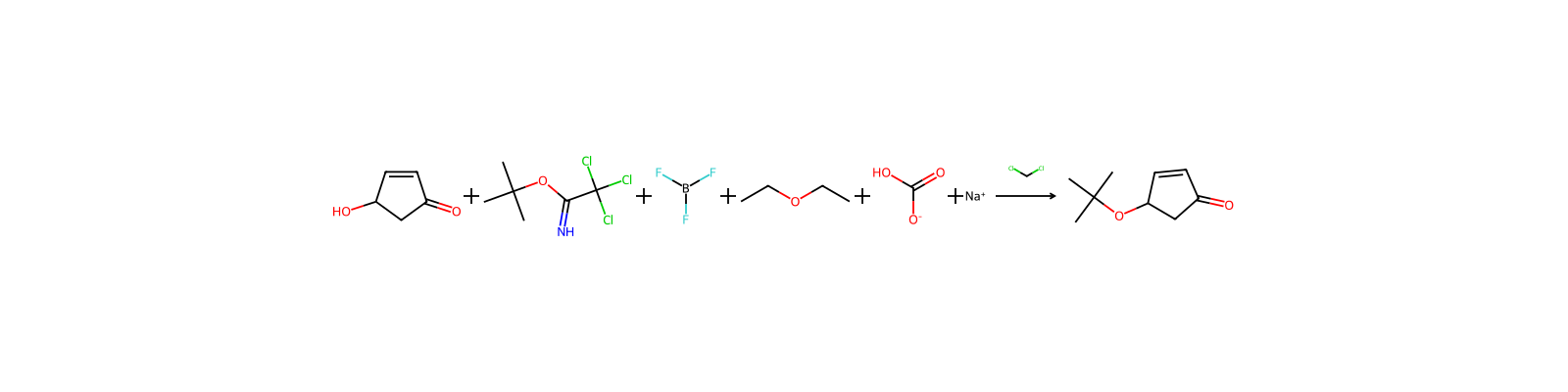
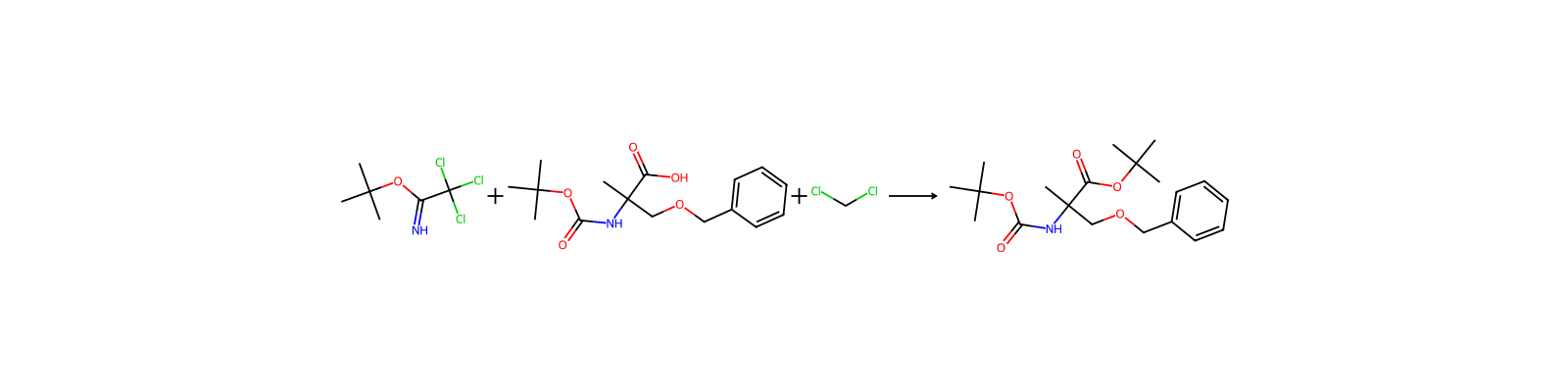
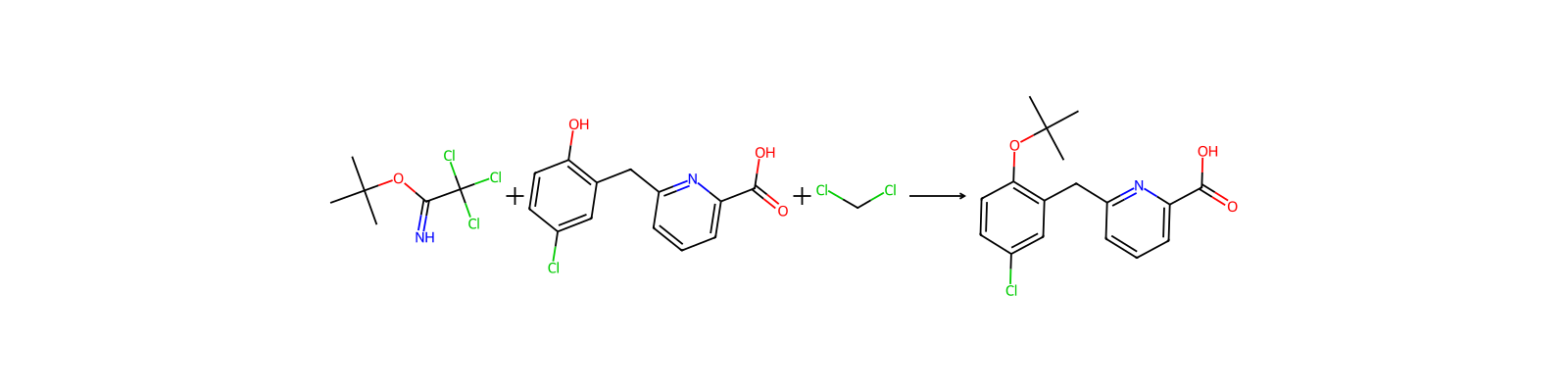
Verwendentert-Butyl 2,2,2-trichloroacetimidate is used to produce di-tert-butyl peroxide at temperature of -5°C. It may be used in the synthesis of N-α-Fmoc-phospho(1-nitrophenylethyl-2-cyanoethyl)-L-serine, caged building block. It may be used in the conversion of alcohols and carboxylic acids to their respective ethers and esters.
Darstellung
synthetischePotassium t-Butoxide (1.68 g, 15 mmol) was dissolved in t-butanol (30 mL) and this solution was added over 15 min to a stirred solution of Trichloroacetonitrile (21.6 g, 15 mL, 15 mmol) in dry diethyl ether (30 mL) cooled to 0 °C under nitrogen. The yellow mixture was allowed to warm to 20 °C over 1 h, and then heated to reflux for 1 h. After the reaction mixture had been cooled to rt, volatiles were removed on the rotary evaporator and the residual oil was dissolved in pentane (30 mL). The solution was filtered and the pentane was removed on the rotary evaporator. The residue was then distilled to yield 23 g (70%), bp 65-69 °C/12 mmHg, which solidified on storage.
Vor- und nachgelagerte Produkte
Vorgelagerte Rohstoffe
Nachgelagerte Produkte
Anbieter50 Anbieter
国药集团化学试剂有限公司86-21-63210123 · [email protected]
梯希爱(上海)化成工业发展有限公司021-67121386 · [email protected]
上海阿拉丁生化科技股份有限公司400-6206333 13167063860 · [email protected]
Shandong chuangyingchemical Co., Ltd.18853181302 · [email protected]
Career Henan Chemica Co+86-0371-86658258 +86-13203830695 · [email protected]
爱斯特(成都)生物制药股份有限公司+86-28-85122536 85324413 · [email protected]
焦作沃恩生物科技有限责任公司0391-3702345 18739121806
Dayang Chem (Hangzhou) Co.,Ltd.+86-0571-88938639 17705817739 · [email protected]
韶远科技(上海)有限公司021-50795510 4000665055 · [email protected]
科瑞迪化学400-821-5857 021-64326257 · [email protected]
Syntechem Co.,Ltd[email protected]
上海迈瑞尔生化科技有限公司4006356688 18621169109 · [email protected]
北京华威锐科化工有限公司0757-86329057 18934348241 · [email protected]
宁波亿诺化学品有限公司86-574-27787657 · [email protected]
阿法埃莎(中国)化学有限公司400-6106006 · [email protected]
上海德默医药科技有限公司400-021-7337 2355568890 · [email protected]
安耐吉化学&3A(安徽泽升科技股份有限公司)400-0056266 · [email protected]
上海瀚鸿科技股份有限公司021-54306202 13764082696 · [email protected]
上海相辉医药科技有限公司13761987713 · [email protected]
上海景颜化工科技有限公司13817811078 · [email protected]
嘉兴市艾森化工有限公司0573-85285100 18627885956 · [email protected]
上海隆盛化工有限公司58099637 13585536065 · [email protected]
郑州研德生物科技有限公司0371-63682289 15538176268 · [email protected]
武汉丰泰威远科技有限公司+86-27-8746-5837 +86-18627785180 · [email protected]
武汉丰泰威远科技有限公司027-87465837 19945049750 · [email protected]
上海瑞一医药科技股份有限公司021-54711706
山东西亚化学有限公司13355009207 13355009207 · [email protected]
湖南汇百侍生物科技有限公司0731-85526065 13308475853 · [email protected]
南京维奥化工有限公司Please Send Email 18652950785 · [email protected]
河南多贝化工有限公司0370-2785118 17550508557 · [email protected]
北京泰亚杰科技有限公司021-33690831-8001 13552411790;18616022633 · [email protected]
上海昊锐医药生物科技有限公司021-58388037;21-58388037 13472507714 · [email protected]
武汉海正工贸发展有限公司027-8866 0053/88660577/88660578
赛默飞世尔科技(中国)有限公司800-810-5118 · [email protected]
北京伊诺凯科技有限公司400-810-7969 010-59572699 · [email protected]
江苏艾康生物医药研发有限公司025-66113011 13913916777 · [email protected]
TCI AMERICA800-4238616 · [email protected]
TOKYO CHEMICAL INDUSTRY CO., LTD.03-36680489 · [email protected]
TCI Europe320-37350700 · [email protected]
Shanghai Witofly Chemical Co.,Ltd[email protected]
上海睿升化工科技有限公司+86-021-50935922
合肥恩立医药科技有限公司0551-66399836 18955197623 · [email protected]
Clearsynth Labs Limited+91-22-26355700 · [email protected]
北京环宇世纪化学科技有限公司hysj_bj.com
上海将来实业股份有限公司021-61552785 · [email protected]
成都零六生物科技有限公司400-1166-196 13458535857 · [email protected]
雷丁试剂0510-85629785 18013409632 · [email protected]
上海创赛科技有限公司400-6087598 15021221957 · [email protected]
上海御略医药科技有限公司021-60345187 13671753212 · [email protected]
上海鑫圭生物科技有限公司15121041756 · [email protected]
Zugehörige Reaktionen
97




Verknüpfte Notizen
Wird geladen…