StartseiteMCPWorkbenchSkills
StartseiteWorkbenchBenachrichtigungenMein Bereich
llms.txt · MCP-AnleitungDatenschutz · Nutzungsbedingungen · Supportv1.8.3
  1. Startseite
  2. /Verbindung

Kalium-O-ethyldithiocarbonat

Potassium ethylxanthate

HCID 2735045
Neue Reaktion
Drucken
GrundinformationenNamen und BezeichnerEigenschaftenSicherheit und RegulatorischesChemie und IndustrieZugehörige ReaktionenNotizen zur Verbindung
TeilstruktursucheÄhnliche Strukturen suchen

Grundinformationen

CAS
140-89-6
Standard-SMILES
CCOC(=S)[S-].[K+]
InChIKey
JCBJVAJGLKENNC-UHFFFAOYSA-M
Summenformel
C3H5KOS2
Durchschnittliche Molmasse
160,3 g/mol
Monoisotopische Masse
159,94188861

Namen und Bezeichner

Bevorzugter Name
Potassium ethylxanthate
IUPAC
potassium ethoxymethanedithioate
Lokaler Name
Kalium-O-ethyldithiocarbonat
Englischer Name
Potassium ethylxanthate
Summenformel
C3H5KOS2
Molmasse
160.3

Namen und Synonyme

POTASSIUM ETHYLXANTHATE140-89-6Potassium ethyl xanthateEthylxanthic acid potassium saltPotassium ethyl xanthogenatePotassium xanthogenatePotassium O-ethyl dithiocarbonatePotassium ethylxanthogenateEthyl potassium xanthateZ 3 (Pesticide)Ethyl potassium xanthogenatePotassium ethyl dithiocarbonate
Weitere Namen anzeigen
KEXPotassium O-ethyl xanthatePotassium ethylxanthogenatpotassium (ethoxymethanethioyl)sulfanide
DTXSID60423151A6K3Y576KDTXCID4022315NSC-4850RefChem:868188205-439-3potassium o-ethyl carbonodithioatePotassium xanthate

Datenbank-Bezeichner

CAS
140-89-6
PubChem CID
2735045
DTXSID
DTXSID6042315
ChEMBL
CHEMBL2380738
UNII
1A6K3Y576K
EC Number
205-439-3
Nikkaji
J2.025G

Eigenschaften

Berechnete Struktureigenschaften

Polarare Oberfläche (TPSA)
42,3 Ų
H-Brücken-Donoren
0
H-Brücken-Akzeptoren
3
Frei drehbare Bindungen
2
Schwere Atome
7
Formalladung
0
Komplexität
56,9

Experimentelle und physikochemische Eigenschaften

Chemical ClassesMetals -> Organic Acids, Metal Salts
Physical DescriptionWhite to light yellow solid; [Merck Index] Light yellow powder with an unpleasant odor; [Alfa Aesar MSDS]

Physikochemische Eigenschaften

Schmelzpunkt
209 · 209-214 °C
Siedepunkt
462.37 ℃[at · 462.37℃[at 101 325 Pa]
Dichte
1 · 1,558 g/cm3
Dampfdruck
0 Pa · 0Pa at 25℃
Flammpunkt
96 °C · 96°C
storage temp.
30 °C · Store below +30°C.
Löslichkeit
alcohol: soluble(lit.)
Aggregatzustand
Crystalline Powder
Farbe
Yellow
PH
9 · 9-10 (100g/l, H2O, 20℃)
Wasserlöslichkeit
Soluble in water.

Sicherheit und Regulatorisches

Sicherheitsangaben dienen nur zur Orientierung und ersetzen weder das Sicherheitsdatenblatt (SDB) des Lieferanten noch geltende Vorschriften oder eine fachliche Bewertung.

GHS-Klassifizierung

GHS Classification · 6 Einträge

This chemical does not meet GHS hazard criteria for 2.3% (2 of 88) of reports.

Danger

H228 (52.3%): Flammable solid [Danger Flammable solids]

P210, P240, P241, P261, P264, P264+P265, P270, P271, P280, P301+P317, P302+P352, P304+P340, P305+P351+P338, P317, P319, P321, P330, P332+P317, P337+P317, P362+P364, P370+P378, P403+P233, P405, and P501 (click each P-code to see the statement)

Aggregated GHS information provided per 88 reports by companies from 16 notifications to the ECHA C&L Inventory. Each notification may be associated with multiple companies.

Danger

Gefahrenhinweise

Regulatory Information · 3 Einträge

Chemical: Carbonodithioic acid, O-ethyl ester, potassium salt

Carbonodithioic acid, O-ethyl ester, potassium salt (1:1) is listed on the EPA's Chemical Data Reporting (CDR) system. Manufacturers and importers of Carbonodithioic acid, O-ethyl ester, potassium salt (1:1) are required to report information about their production and use of this chemical to the EPA under the Toxic Substances Control Act (TSCA). (40 eCFR Part 711)

REACH registered substance: Potassium O-ethyl dithiocarbonate (EC: 205-439-3)

Other Safety InformationIMAP assessments - Sodium and Potassium xanthate salts: Human health tier II assessment
Hazards Summary · 1 Eintrag

Causes somnolence and respiratory depression in oral lethal-dose studies of mice; Causes excitement and muscle contraction or spasticity in oral lethal-dose studies of rats; Causes changes in erythrocyte counts in 26-week oral studies of rats; [RTECS] A skin and strong eye irritant; Toxic by ingestion; [Alfa Aesar MSDS]

Hazard Classes and Categories

Chemie und Industrie

Pharmakologische Informationen

MeSH Pharmacological ClassificationSubstances that prevent infectious agents or organisms from spreading or kill infectious agents in order to prevent the spread of infection.

Verwendung und Herstellung

UsesUsed as a reagent in analytical chemistry; [Merck Index]
U.S. Production2022: 197,000 lb
General Manufacturing InformationCarbonodithioic acid, O-ethyl ester, potassium salt (1:1): ACTIVE

Anwendungen

VerwendenAs reagent in analytical chemistry.

Vor- und nachgelagerte Produkte

Vorgelagerte Rohstoffe

EthanolKaliumhydroxidKohlendisulfid

Nachgelagerte Produkte

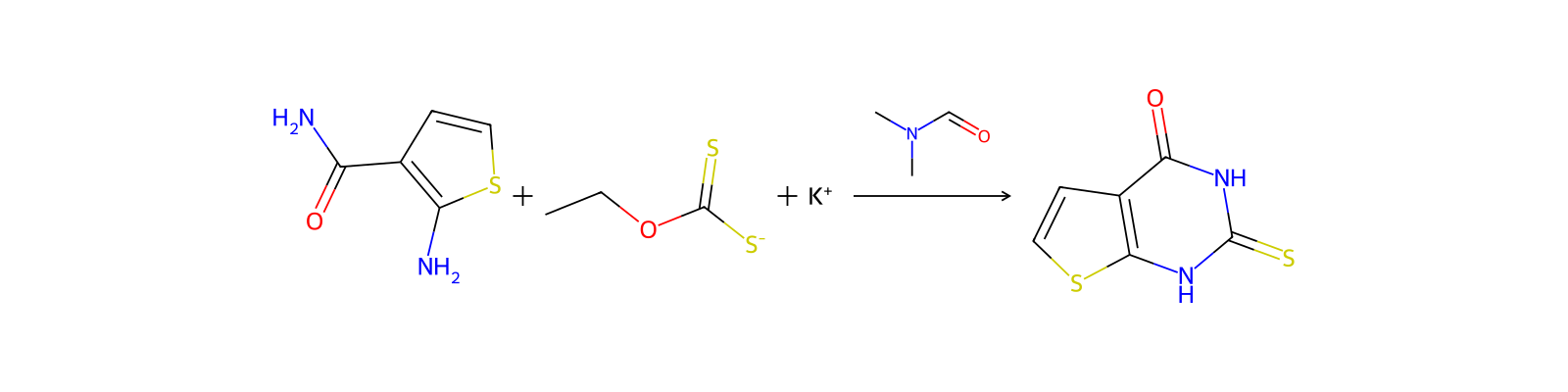
SULCONAZOLE2-((Ethoxythioxo methyl)thio)-2-methylpropanoic acid3-Bromothiophenol2-Mercapto-2-methylpropionsure2-Methoxythiophenol

Zugehörige Reaktionen

261
Reaktionsaufzeichnung erstellen
Reaktionsgleichung von HRID 9576
HRID 9576als Edukt
Reaktionsgleichung von HRID 9578
HRID 9578als Edukt
Reaktionsgleichung von HRID 9767
HRID 9767als Edukt
Reaktionsgleichung von HRID 17437
HRID 17437als Edukt
Reaktionsgleichung von HRID 19568
HRID 19568als Edukt
Reaktionsgleichung von HRID 26555
HRID 26555als Edukt
Reaktionsgleichung von HRID 27449
HRID 27449als Edukt
Reaktionsgleichung von HRID 30891
HRID 30891als Edukt
ZurückSeite 1 von 33

Notizen zur Verbindung

Auf dieser SeiteGrundinformationenNamen und BezeichnerEigenschaftenSicherheit und RegulatorischesChemie und IndustrieZugehörige ReaktionenNotizen zur Verbindung
Merck
14 · 14,7696
BRN
3596974 · 3596974
Stabilität
Stable. Incompatible with strong acids, strong bases, strong oxidizing agents.
InChI
1S/C3H6OS2.K/c1-2-4-3(5)6;/h2H2,1H3,(H,5,6);/q;+1/p-1
InChIKey
JCBJVAJGLKENNC-UHFFFAOYSA-M
SMILES
[K+].CCOC([S-])=S
LogP
-2.24 at · -2.24 at 25℃
CAS Datenbank
140 · 140-89-6(CAS DataBase Reference)
EPA chemische Informationen
Potassium ethyl xanthate (140-89-6)
· 2 Einträge

Flam. Sol. 1 (52.3%)

Skin irritation - category 2

CSL Reaction Information · 6 Einträge

CSL00205

3-[Ethoxylthiocarbonylthio]quinoline; Carbonodithioic acid, O-ethyl S-3-quinolinyl ester + Potassium ethylxanthate + 3-Aminoquinoline

I was attempting to prepare 3-[ethoxy(thiocarbonyl)thio]quinoline by reacting the diazonium salt of 3-aminoquinine with potassium ethyl xanthate when an explosion occurred. Thankfully, the injury I received was minor. I was following the procedure described in the Journal of the Chemical Society, Part III [3, 2384 (1959)] on twice their scale. Jerry March's book "Advanced Organic Chemistry: Reactions, Mechanisms, Structure" (New York: John Wiley & Sons, 1992, 4th edition, page 670) lists the procedure as a customary route for the desired aryl xanthate ester and a convenient method for producing thiophenols. The same procedure is also described in "Organic Syntheses, Collective Volume III" (New York: John Wiley & Sons, page 809. DOI: 10.15227/orgsyn.027.0081), which contains a cautionary note about a reported explosion, although the editors found no unusual reactivity. Since diazo esters were present, the explosion most likely resulted from the diazo ester's tendency to decompose explosively. It is unclear whether the diazo ester is a precursor of the desired product or whether the diazo ester forms through a competitive reaction. The reaction proceeded without event. But unlike the literature preparations, precipitation occurred during product extraction with diethyl ether and was isolated by filtration. A 1H NMR of the wet cake was consistent with the desired structure. The solid was air-dried overnight and weighed 17 g. The detonation occurred when a metal spatula was inserted into the solid. Related work in Tetrahedron Letters [26, 6365 (1985)] successfully demonstrated the safe preparation of diaryl sulfides. However, this was done at 25 ºC (mine at 45 ºC) with care taken to avoid heat, since a reference is cited of an explosion at 60 ºC. Also, the disappearance of the suspected diazo sulfide was monitored by thin layer chromatography, and sluggish reactions were not pushed to conversion. Instead, chromatography was used to remove any intermediates." (reprint of full text)

Explosive

Not Available

In the safety letter above, one substance name - - 3-aminoquinine- may be misspelled. The correct name is 3-Aminoquinoline. See Discussion section of: Cragoe, Edward J., Jr.; Robb, Charles M. 3-Hydroxyquinoline. Org. Synth. 1960, 40, 54. DOI: 10.15227/orgsyn.040.0054

Sicherheitsdaten

wgk
3
tsca
TSCA listed
ridadr
3342
hs_code
2930909099
RTECS-Nr.
FG1575000
risk_code
36/37/38-22-20/22-11
Toxizität
LD50 orally in Rabbit: 1700 mg/kg
hazard_code
Xn,Xi,F
safety_code
37/39-26-37-36-45-36/37-16
hazard_class
4.2
packing_group
II
Speicherklasse
4.2 - Pyrophoric and self-heating hazardous materials
Hazard Classifications
Acute Tox. 4 InhalationAcute Tox. 4 OralEye Irrit. 2Flam. Sol. 1Skin Irrit. 2STOT SE 3
Bis(4-nitrophenyl)sulfid
Omeprazole
2,4-Dichlorbenzolthiol
6-Ethoxy-2-mercaptobenzothiazol
4-(Ethylthio)benzoesaeure
p-Mercaptophenol
(4-Fluorophenylthio)acetic acid
6-Nitro-benzooxazole-2-thiol
(S)-4-Phenyl-1,3-thiazolidine-2-thione
4-Cyanothiophenol
3-(Methylthio)benzoic acid
2-Mercapto-5-methylbenzoxazole
[1,1'-Biphenyl]-4,4'-dithiol

Ergänzende Hinweise

DefinitionColorless or light-yellow crystals. Soluble in water and alcohol; insol- uble in ether.