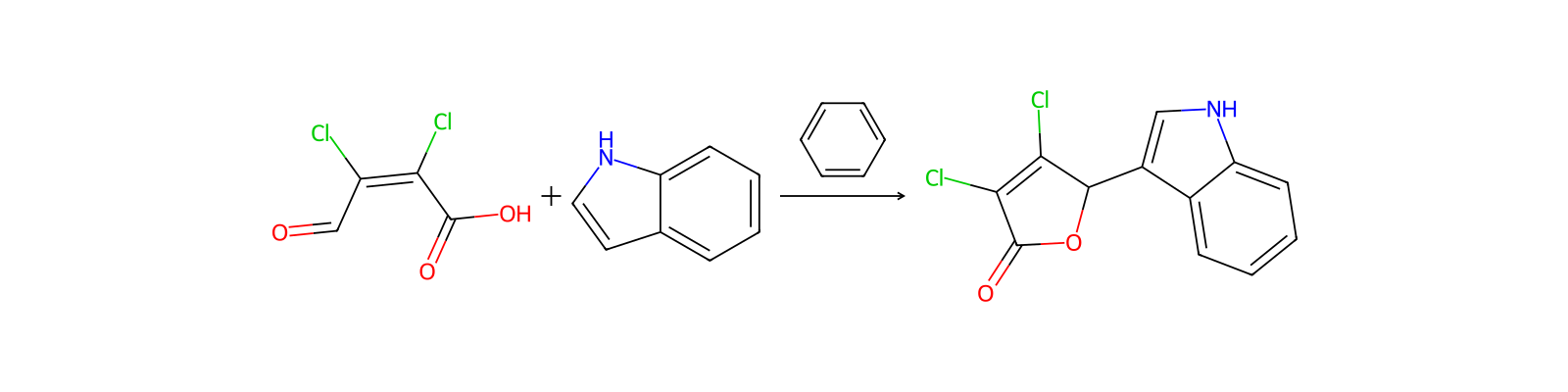

Grundinformationen
- Standard-SMILES
O=C/C(Cl)=C(/Cl)C(=O)O- InChIKey
LUMLZKVIXLWTCI-IHWYPQMZSA-N- Summenformel
- C4H2Cl2O3
- Durchschnittliche Molmasse
- 168,96 g/mol
- Monoisotopische Masse
- 167,93809928
Namen und Bezeichner
- Bevorzugter Name
- Mucochloric Acid
- IUPAC
- (Z)-2,3-dichloro-4-oxobut-2-enoic acid
Namen und Synonyme
Mucochloric acid87-56-92,3-Dichloromaleic aldehyde acidKyselina mukochlorovaDichloromalealdehydic acid2,3-Dichloro-4-oxo-2-butenoic acidAldehydodichloromaleic acidDTXSID7020423alpha,beta-Dichloro-beta-formylacrylic acid(Z)-2,3-Dichloro-4-oxo-2-butenoic acidMalealdehydic acid, dichloro-NSC 15905
Weitere Namen anzeigen
(Z)-Dichloro-4-oxomalealdehydic acid5I5877JHIWalpha,beta-Dichloro-beta-formyl acrylic acidNSC-159053,4-Dichloro-2-hydroxycrotonolactoneDTXCID70423Acrylic acid, 2,3-dichloro-3-formyl-RefChem:159969
Datenbank-Bezeichner
- CAS
57697-64-0、87-56-9- PubChem CID
- 2771871
- DTXSID
DTXSID7020423- ChEMBL
CHEMBL1173058、CHEMBL1879926- UNII
- 5I5877JHIW
- EC Number
- 201-752-4
- Nikkaji
- J3.902K
Eigenschaften
Berechnete Struktureigenschaften
- XLogP
- 1,2
- Polarare Oberfläche (TPSA)
- 54,4 Ų
- H-Brücken-Donoren
- 1
- H-Brücken-Akzeptoren
- 3
- Frei drehbare Bindungen
- 2
- Schwere Atome
- 9
- Formalladung
- 0
- Komplexität
- 173
Experimentelle und physikochemische Eigenschaften
Chemical ClassesOther Classes -> Organic Acids
SpringerMaterials PropertiesNuclear quadrupole resonance spectroscopy
Color/Form
Monoclinic prisms from ether and ligroin
Plates from water
Solubility
Soluble in chlorinated and oxygenated solvents
Slightly soluble in cold water; soluble in hot water, not benzene, alcohol.
Flash Point212 °F (100 °C): closed cup
DecompositionWhen heated to decomposition it emits toxic fumes of /hydrogen chloride/.
Melting Point127 °C
Odor ThresholdThe olfactor threshold for mucochloric acid in solution was reported to be 250 mg/L.
Vapor Pressure0.001 [mmHg]
Physical DescriptionColorless to yellowish solid; [CHEMINFO] Crystalline solid; [MSDSonline]
Dissociation ConstantspKa = 4.20
Sicherheit und Regulatorisches
GHS-Klassifizierung
GHS Classification
Danger
H301 (100%): Toxic if swallowed [Danger Acute toxicity, oral]
P203, P260, P261, P264, P264+P265, P270, P272, P273, P280, P301+P316, P301+P330+P331, P302+P352, P302+P361+P354, P304+P340, P305+P354+P338, P316, P317, P318, P321, P330, P333+P317, P362+P364, P363, P405, and P501 (click each P-code to see the statement)
Aggregated GHS information provided per 150 reports by companies from 6 notifications to the ECHA C&L Inventory. Each notification may be associated with multiple companies.
Danger
H302: Harmful if swallowed [Warning Acute toxicity, oral]
Gefahrenhinweise
Regulatory Information
Chemical: 2-Butenoic acid, 2,3-dichloro-4-oxo-, (Z)-
Status: Active Update: 27-03-2013 https://echa.europa.eu/registration-dossier/-/registered-dossier/10388
Dichloromalealdehydic acid: Does not have an individual approval but may be used under an appropriate group standard
Hazards Summary
A strong skin and eye irritant; A powerful skin sensitizer; [Merck Index] Can cause burns; May cause skin sensitization; Emergency medical treatment: acids; [HSDB] A corrosive substance that can cause injury to the skin and eyes; [CHEMINFO] Search by CAS # found no articles concerning contact dermatitis; [PubMed] A corrosive substance that can cause injury to the skin, eyes, and respiratory tract; Inhalation may cause chemical pneumonitis; [MSDSonline]
Special Reports
European Chemicals Bureau; IUCLID Dataset, Mucochloric acid (87-56-9) (2000 CD-ROM edition) contains information on use, toxicology, and environmental effects of this chemical as supplied to the European Union by industry.
OECD; SIDS Initial Assessment Report for Mucochloric Acid (87-56-9). 191 pp. UNEP Publications, November 2003. This OECD Initial Assessmentis part of a series of OECD SIDS documents published by UNEP Chemicals to facilitate the access to information needed for health and environmental risk assessments of chemicals.
WHO; Environ Health Criteria 216: Disinfectants and Disinfectant by-products. (2000). EHC publications are monographs designed for scientists and administrators responsible for the establishment of safety standards and regulations. This series issued by the International Programme on Chemical Safety (IPCS), provides basic scientific risk evaluation of a wide range of chemicals and groups of chemicals.
Hazard Classes and Categories
Acute Tox. 3 (100%)
Acute toxicity (Oral) - Category 4
Skin, Eye, and Respiratory IrritationsStrong irritant to skin and eyes; ... .
Sicherheit und Schutzausrüstung
Firefighting HazardsEmits toxic fumes under fire conditions.
Fire Fighting Procedures
Protective Equipment: Wear self-contained breathing apparatus and protective clothing to prevent contact with skin and eyes.
EXTINGUISHING MEDIA. Carbon dioxide, dry chemical powder, or appropriate foam.
Storage ConditionsKeep tightly closed. Store in a cool dry place.
Cleanup MethodsCover with dry lime or soda ash, pick up, keep in a closed container, and hold for waste disposal. Ventilate area and wash spill site after material pickup is complete.
Disposal Methods
SRP: The most favorable course of action is to use an alternative chemical product with less inherent propensity for occupational exposure or environmental contamination. Recycle any unused portion of the material for its approved use or return it to the manufacturer or supplier. Ultimate disposal of the chemical must consider: the material's impact on air quality; potential migration in soil or water; effects on animal, aquatic, and plant life; and conformance with environmental and public health regulations.
Dissolve or mix the material with a combustible solvent and burn in a chemical incinerator equipped with an afterburner and scrubber. Observe all federal, state, and local environmental regulations.
Preventive Measures
SRP: The scientific literature for the use of contact lenses in industry is conflicting. The benefit or detrimental effects of wearing contact lenses depend not only upon the substance, but also on factors including the form of the substance, characteristics and duration of the exposure, the uses of other eye protection equipment, and the hygiene of the lenses. However, there may be individual substances whose irritating or corrosive properties are such that the wearing of contact lenses would be harmful to the eye. In those specific cases, contact lenses should not be worn. In any event, the usual eye protection equipment should be worn even when contact lenses are in place.
SRP: When working with strong solutions of acids or bases or other caustic or corrosive materials, always wear a full face mask. When working with caustic or corrosive gases or vapors, a full face mask will not protect the eyes or prevent inhaling the material. A full face respirator is required.
Do not breathe dust. Do not get in eyes, on skin, on clothing. Avoid prolonged or repeated exposure.
Wear self-contained breathing apparatus, rubber boots, and heavy rubber gloves. Wear disposable coveralls and discard them after use. In case of leak or spill, evacuate area.
For more Preventive Measures (Complete) data for MUCOCHLORIC ACID (7 total), please visit the HSDB record page.
Personal Protective Equipment (PPE)
ENGINEERING CONTROLS. Safety shower and eye bath. Use only in a chemical fume hood.
PERSONAL PROTECTIVE EQUIPMENT. Wear appropriate government approved respirator, chemical-resistant gloves, safety goggles, other protective clothing. Faceshield (8-inch minimum).
Toxikologische Informationen
Ecotoxicity ValuesLC50 Leucisus idus 100-220 mg/L/96 hr; static
Environmental Fate
TERRESTRIAL FATE: Based on a classification scheme(1), an estimated Koc value of one(SRC), determined from a structure estimation method(2), indicates that mucochloric acid is expected to have very high mobility in soil(SRC). The pKa of mucochloric acid is 4.20(3), indicating that this compound will almost entirely exist in the anion form in the environment and anions generally do not adsorb more strongly to soils containing organic carbon and clay than their neutral counterparts(4). Volatilization from moist soil is not expected because the acid exists as an anion and anions do not volatilize. Mucochloric acid is not expected to volatilize from dry soil surfaces(SRC) based upon an estimated vapor pressure of 1.0X10⁻³ mm Hg(SRC), determined from a fragment constant method(5). Biodegradataion data were not available(SRC, 2008).
AQUATIC FATE: Based on a classification scheme(1), an estimated Koc value of one(SRC), determined from a structure estimation method(2), indicates that mucochloric acid is not expected to adsorb to suspended solids and sediment(SRC). A pKa of 4.20(3) indicates mucochloric acid will exist almost entirely in the anion form at pH values of 5 to 9(4) and therefore volatilization from water surfaces is not expected to be an important fate process(4). According to a classification scheme(5), an estimated BCF of 3(SRC), from an estimated log Kow of 1.37(6) and a regression-derived equation(7), suggests the potential for bioconcentration in aquatic organisms is low(SRC). Biodegradation data were not available(SRC, 2008).
ATMOSPHERIC FATE: According to a model of gas/particle partitioning of semivolatile organic compounds in the atmosphere(1), mucochloric acid, which has an estimated vapor pressure of 1.0X10⁻³ mm Hg at 25 °C(SRC), determined from a fragment constant method(2), is expected to exist solely as a vapor in the ambient atmosphere. Vapor-phase mucochloric acid is degraded in the atmosphere by reaction with photochemically-produced hydroxyl radicals(SRC); the half-life for this reaction in air is estimated to be 21 hours(SRC), calculated from its rate constant of 1.8X10⁻¹¹ cu cm/molecule-sec at 25 °C(SRC) that was derived using a structure estimation method(3). Mucochloric acid contains chromophores that absorb at wavelengths >290 nm(4) and therefore may be susceptible to direct photolysis by sunlight(SRC).
Adverse EffectsDermatotoxin - Skin burns.
Toxicity Summary
Human Health. There are no reliable experimental data on the toxicokinetic behavior of mucochloric acid (MCA) in vivo available. From the results of acute toxicity studies, it is very likely that MCA itself or its metabolites are systemically available after oral exposure. In vitro, MCA reacted with N-acetylcysteine, cysteine and glutathione (GSH). The acute toxicity (LD50) of MCA was between 300 and 400 mg/kg bw in rats after oral exposure and >200 mg/kg bw (highest tested dose) in rabbits after dermal exposure. The LC50 after 4-hour inhalation exposure of rats was >5.1 mg/L (highest tested concentration). Clinical signs included atonia and ataxia after oral exposure, preening, dyspnea and salivation during inhalation, and skin irritation after dermal exposure. MCA is corrosive to the rabbit skin and eye. A guinea pig sensitization test was negative, but limited experience from occupational exposure in humans indicates a skin sensitizing potential of MCA. There is limited data on repeated dose toxicity available, indicating that irritant/corrosive effects at the site of first contact are the main effects to be expected after repeated exposure. In pregnant rats, no systemic target organ has been identified after oral exposure from day 6 to 19 p.c. (LOAEL: 30 mg/kg bw/day, based on reduced food consumption and body weight gain together with minor clinical symptoms (ptyalism) and whitish foci in the stomach interpreted as local effects due to the corrosive properties of MCA; NOAEL: 5 mg/kg bw/day). No target organ was identified in mice after dietary exposure to 7 mg/kg bw/day for 18 months (only one dose tested). ... In vitro, MCA is a direct acting mutagen and clastogen in mammalian and bacterial cells, and forms exocyclic DNA adducts. In vivo, mucochloric acid caused a slight, but statistically significant increase in the incidence of total nuclear anomalies (including micronuclei, pyknotic nuclei and karyorrhectic nuclei) in the duodenum of mice after a single oral exposure to 60.8 and 79.4 mg/kg bw. MCA induced micronuclei in one animal out of ten per dose group in the duodenum of mice after single oral doses (38.9, 60.8, and 79.4 mg/kg bw). Based on the available in vitro and in vivo data, it can be concluded that MCA has a genotoxic potential. Because of its corrosive properties, and the very limited exposure potential, animal tests with MCA for its effects on fertility were not performed. In an oral developmental study performed in accordance with OECD TG 414 in rats, the NOAEL for maternal toxicity was 5 mg/kg bw/day. The NOAEL for developmental toxicity was 60 mg/kg bw/day, which was the highest dose level applied. There were no signs of developmental toxicity or teratogenicity. MCA did not induce aberrant crypt foci or intestinal tumors when given in drinking water at dose levels of 0.45 and 0.9 mg/mL over 6 weeks to rats or at dose levels of 0.18 and 0.35 mg/mL over 4 weeks with subsequent 12-weeks recovery to mice, respectively. The available data for MCA are not sufficient to judge its carcinogenicity. Given the available data for genotoxicity there are, however, concerns with regard to this endpoint.
Ecotoxicity Excerpts
/AQUATIC SPECIES/ The cytotoxicity, in Salmonella /of/ ... 3-chloro-4-(dichloromethyl)-5-hydroxy-2(5H)-furanone (MX) and its structural analogue 3,4-dichloro-5-hydroxy-2[5H]-furanone (mucochloric acid, MCA), was studied in freshly isolated rainbow trout hepatocytes and gill epithelial cells by determining 86Rb-leakage and decrease in fluorescence intensity in calcein AM-loaded cells. The acute toxicity of the compounds to Daphnia magna was studied by determining the concentration causing immobilization of the organism. MX proved to be more toxic than MCA both in the cellular assays and in the acute toxicity test with D. magna. MX was more toxic to hepatocytes than to gill epithelial cells. The uptake of (14C)MX was also much more efficient in hepatocytes than in gill epithelial cells. The uptake of (14C)MX in hepatocytes was not inhibited by taurocholic acid in excess, indicating that MX is not taken up by the carrier complex responsible for the uptake of taurocholate in the hepatocytes. Both the acute toxicity to D. magna and cytotoxicity of MX and MCA was rather low (EC50 values > 0.1 mM) and /it was concluded/ that it is very unlikely that MX and MCA at concentrations occurring in recipients receiving chlorination effluents from pulp mills or chlorinated domestic sewage, as regards their acute toxicity, implies a risk for aquatic animals.
Effluent ConcentrationsMucochloric acid is a major component of chlorination-stage bleaching liquors from pulp mills, at a concentration of 1,100 ug/L(1).
Soil Adsorption/Mobility
Using a structure estimation method based on molecular connectivity indices(1), the Koc of mucochloric acid can be estimated to be 1(SRC). According to a classification scheme(2), this estimated Koc value suggests that mucochloric acid is expected to have very high mobility in soil. The pKa of mucochloric acid is 4.20(3), indicating that this compound will almost entirely exist in the anion form environment and anions generally do not adsorb more strongly to soils containing organic carbon and clay than their neutral counterparts(4).
Human Toxicity Excerpts
/SIGNS AND SYMPTOMS/ Skin: May cause allergic skin reaction.
/SIGNS AND SYMPTOMS/ ... Symptoms of exposure may include burning sensation, coughing, wheezing, laryngitis, shortness of breath, headache, nausea, and vomiting. Inhalation may result in spasm, inflammation and edema of the larynx and bronchi, chemical pneumonitis, and pulmonary edema. Material is extremely destructive to tissue of the mucous membranes and upper respiratory tract, eyes, and skin.
/SIGNS AND SYMPTOMS/ Strong irritant to skin and eyes; a potent skin sensitizer.
/CASE REPORTS/ Local damage to the skin corresponding to second-degree burns developed within several hours in three people who were contaminated with mucochloric acid in a production plant. After 6 to 10 days, when the healing process had already begun, dyspeptic complaints and slight enlargement of the liver were noted in patients with more extensive local damage, while changes to biochemical parameters, particularly increases in the activities of alanine aminotransferase and lactate dehydrogenase and changes to serum proteins, mucoproteins and their fractions were reported in all patients, lasting up to 2 months in some cases.
For more Human Toxicity Excerpts (Complete) data for MUCOCHLORIC ACID (8 total), please visit the HSDB record page.
Artificial Pollution Sources
Mucochloric acid's production and use as a chemical intermediate(1) may result in its release to the environment through various waste streams(SRC). Its formation in water as a result of chlorine-treatment processes(2) may result in its release to the environment through various waste streams(SRC). Disinfection byproducts are formed when chlorine or other disinfectants, which are used to control contaminants in drinking water, react with naturally occurring organic and inorganic matter present in water(3,4).
Environmental Bioconcentration
An estimated BCF of 3 was calculated in fish for mucochloric acid(SRC), using an estimated log Kow of 1.4(1) and a regression-derived equation(2). According to a classification scheme(3), this BCF suggests the potential for bioconcentration in aquatic organisms is low(SRC).
Volatilization from Water/Soil
A pKa of 4.20(1) indicates mucochloric acid will exist almost entirely in the anion form at pH values of 5 to 9(2) and therefore volatilization from water surfaces is not expected to be an important fate process. Mucochloric acid is not expected to volatilize from dry soil surfaces(SRC) based upon an estimated vapor pressure of 1.0X10⁻³ mm Hg(SRC), determined from a fragment constant method(3).
Non-Human Toxicity Excerpts
/LABORATORY ANIMALS: Acute Exposure/ An approximate LD50 of 300 mg/kg body weight was determined in rats 7 days after the administration of a single oral dose of technical grade mucochloric acid (containing ca. 7 to 10% mother liquor). Reeling and apathy were observed after dosing. Signs of local irritation were evident on post-mortem examination of the animals that died. There were no notable effects on the organs of the animals killed after the 7-day observation period.
/LABORATORY ANIMALS: Acute Exposure/ Groups of 5 rats were treated with mucochloric acid, which was applied to a ca. 30 sq cm area of clipped abdominal skin for one hour. The acid was applied either as the pure product or neutralized with sodium bicarbonate (pH ca. 7), as a 30% aqueous tragacant suspension or aqueous solution, respectively. Treatment with the pure acid led to the deaths of 2 of the 5 rats. The rats died without exhibiting any particular signs of toxicity. The surviving 3 rats were apathetic for 2 days, but free of symptoms from the third day. After application, slight reddening and edema of the abdominal skin occurred locally, with subsequent scab formation. There were no macroscopic effects on the organs at autopsy. Jelly-like changes to the tissues in the area of the application site were observed in one rat. After application of the neutralized acid, apathy was noted after about 4 hrs lasting for 2 days, after which the rats behaved normally. One of the rats died after 5 days. Locally, reddening of the abdominal skin and edema were seen after 24 hr, with subsequent scab formation.
/LABORATORY ANIMALS: Acute Exposure/ After oral application of various specifications of mucochloric acid (MCA) to rats, the LD50 was consistently between 300 and 400 mg/kg bw. The toxicity of neutralized MCA was similar to that of the free acid indicating that the toxic effects are substance-inherent and not due to the acidic properties of MCA. Atonia and ataxia were observed as clinical symptoms of toxicity. Gross pathology after the 7-day post-exposure period showed no effects.
/LABORATORY ANIMALS: Acute Exposure/ In an acute inhalation toxicity study, 10 male and 10 female Sprague-Dawley rats were exposed to a dust aerosol of technical grade mucochloric acid for 4 hours (head-nose exposure) at an analytically determined concentration of 5.1 mg/L. During exposure, the rats made escape attempts, and exhibited muzzle wiping, closed eyes, dyspnea and salivation. At the end of the study they showed an unsteady gait and their heads were coated with the substance. During the 14-day observation period, the rats had muzzles and extremities that were reddened, and some were severely swollen, subsequently developing scabs. There were no abnormalities in any of the animals after 13 days. The LC50 was thus >5.1 mg/L.
For more Non-Human Toxicity Excerpts (Complete) data for MUCOCHLORIC ACID (35 total), please visit the HSDB record page.
Chemie und Industrie
Pharmakologische Informationen
Mechanism of Action
The action of the drinking water mutagen 3,4-dichloro-5-hydroxy-2(5H)-furanone (MCA) on the plasmid phi X174 converted this initially closed circular, supercoiled (SC) DNA to its relaxed (R) and linear (L) forms. Kinetic analysis of this process gave results coinciding with a sequential, two-step cleavage model whereby the SC was cleaved to the R form, which in its turn was cleaved to the L form. The actions of two additional chlorine-substituted 2(5H)-furanones, reduced MCA (RMCA) and the C-5 isopropyl ether of MCA (MCA-IPE), were compared to that of MCA. Incubation of SC-phi X174 with RMCA gave R form only while MCA-IPE had virtually no effect. Likewise, neither methyl methanesulfonate nor sodium azide cleaved SC-phi X174 to its L form, under conditions whereby MCA caused the formation of L form. Also, 3-chloro-4-(dichloromethyl)-5-hydroxy-2(5H)-furanone (MX) caused formation of R form, but no apparent L form. Increasing concentration of glutathione diminished cleavage of SC phi X174 by MCA, but increased cleavage for MX. The DNA cleavage action of MCA was unique, among the several stronger and weaker mutagens investigated, in its action phi X174.
.../It was/ found that /3,4-(dichloro)-5-hydroxy-2(5H)-furanone/ (MA) forms ethenocarbaldehyde derivatives with adenosine and cytidine, with chloroacetaldehyde being an intermediate. ...Ethenocytosine adducts formed by vinyl chloride cause G:C to A:T transitions as reported for MA.
Metabolism/Metabolites
Adduct formation with the DNA bases adenosine, cytidine and guanosine has been shown in vitro. The products were identified as 3-(2'-deoxyribofuranosyl)-7-formylimidazo(2,1-i)purine, chloropropenal derivatives of adenosine and cytidine, etheno derivatives of adenosine, cytidine and guanosine, ethanocarbaldehyde derivatives of adenosine and cytidine and adenosinylethenoadenosine derivatives of adenosine. The later products were postulated to be formed by oxidative properties of mucochloric acid (MCA). The formation of the chloroprenal derivatives, ethanocarbaldehyde derivatives and etheno derivatives from MCA is explained by an initial formation of mucoxychloric acid, which may be further broken down to chloroacetaldehyde, which could proceed via the chloromalonaldehyde that reacts with the nucleosides and forms subsequently the derivatives.
Verwendung und Herstellung
Uses
Used to make dyes, pyridaben (acaricide), and the active ingredient in the production of a specialized herbicides; Also used as a photographic gelatin hardening agent; [HSDB]
Photographic Processing [Category: Other]
Used in the production of an active ingredient produced in the United States to make a herbicide for the control of a unique spectrum of broadleaf weeds and grasses...
Photographic gelatine hardening agent
Vinylogous enamine dyes are obtained by reaction of aromatic amines with mucochloric acid (2,3-dichloro-4-oxo-2-butanoic acid), followed by condensation with quaternary quinaldine.
Used to produce the acaricide pyridaben by reaction with 4-tert-butylmercaptotoluene, followed by cyclocondensation of the resulting malealdehydic acid derivative with N-tert-butylhydrazine.
U.S. Production
2-Butenoic acid, 2,3-dichloro-4-oxo-, (2Z)- is listed as a High Production Volume (HPV) chemical (65FR81686). Chemicals listed as HPV were produced in or imported into the U.S. in >1 million pounds in 1990 and/or 1994. The HPV list is based on the 1990 Inventory Update Rule. (IUR) (40 CFR part 710 subpart B; 51FR21438).
Production volumes for non-confidential chemicals reported under the Inventory Update Rule. [Table#6837]
Methods of Manufacturing
Preparation from beta,gamma-dichloropyromucic acid and bromine water or dilute nitric acid.
... Heating furfural with manganese dioxide and hydrochloric acid.
General Manufacturing Information
2-Butenoic acid, 2,3-dichloro-4-oxo-, (2Z)-: ACTIVE
HPV chemical
Disinfection byproducts are formed when disinfectants used in water treatment plants react with bromide and/or natural organic matter (i.e., decaying vegetation) present in the source water. /Disinfection byproducts/
Zugehörige Reaktionen
34


Verknüpfte Notizen
Wird geladen…