StartseiteMCPWorkbenchSkills
StartseiteWorkbenchBenachrichtigungenMein Bereich
llms.txt · MCP-AnleitungDatenschutz · Nutzungsbedingungen · Supportv1.8.3
  1. Startseite
  2. /Verbindung

3-Pyridinecarboxylic acid, 4-(trifluoromethyl)-

HCID 2777549
Neue Reaktion
Drucken
GrundinformationenÜberblickNamen und BezeichnerEigenschaftenSicherheit und RegulatorischesChemie und IndustrieZugehörige ReaktionenNotizen zur Verbindung
TeilstruktursucheÄhnliche Strukturen suchen

Grundinformationen

CAS
158063-66-2
Standard-SMILES
O=C(O)c1cnccc1C(F)(F)F
InChIKey
LMRJHNFECNKDKH-UHFFFAOYSA-N
Summenformel
C7H4F3NO2
Durchschnittliche Molmasse
191,11 g/mol
Monoisotopische Masse
191,01941286

Überblick

4-(trifluoromethyl)nicotinic acid is a member of pyridines and an aromatic carboxylic acid.

Namen und Bezeichner

Bevorzugter Name
3-Pyridinecarboxylic acid, 4-(trifluoromethyl)-
IUPAC
4-(trifluoromethyl)pyridine-3-carboxylic acid
Englischer Name
4-(Trifluoromethyl)nicotinic acid
Summenformel
C7H4F3NO2
Molmasse
191.11

Namen und Synonyme

158063-66-24-(Trifluoromethyl)pyridine-3-carboxylic acid3-pyridinecarboxylic acid, 4-(trifluoromethyl)-4-Trifluoromethylnicotinic acid4-Trifluoromethylpyridine-3-carboxylic acid04F679X18BDTXSID60380557RefChem:505193DTXCID00331583623-902-14-(Trifluoromethyl)nicotinic acidtfna
Weitere Namen anzeigen
TFNA StandardCAS:158063-66-2BUTTPARK 43\57-42RARECHEM AL BO 0760Flonicamid metabolite TFNATFNA 100 μg/ml AcetonitrileTFNA (flonicamid metabolite)4-(Trifluromethyl)nicotinic acid
Flonicamid (free acid)MFCD000826264-(TRIFLUOROMETHYL)-3-PYRIDINECARBOXYLIC ACID4-Trifluoromethyl-nicotinic acidMaybridge1_0062674-trifluoromethyl nicotinic acidUNII-04F679X18BHMS559E19

Datenbank-Bezeichner

CAS
158063-66-2
PubChem CID
2777549
DTXSID
DTXSID60380557
ChEBI
CHEBI:194252
UNII
04F679X18B
EC Number
623-902-1
Nikkaji
J2.008.074D

Eigenschaften

Berechnete Struktureigenschaften

XLogP
1,3
Polarare Oberfläche (TPSA)
50,2 Ų
H-Brücken-Donoren
1
H-Brücken-Akzeptoren
6
Frei drehbare Bindungen
1
Schwere Atome
13
Formalladung
0
Komplexität
204

Experimentelle und physikochemische Eigenschaften

PesticidesEnvironmental transformation -> Pesticide transformation products (metabolite, successor)

Physikochemische Eigenschaften

Schmelzpunkt
146 · 146-148 °C(lit.)
Siedepunkt
290.4 · 290.4±40.0 °C(Predicted)
Dichte
1.484 · 1.484±0.06 g/cm3(Predicted)
storage temp.
Inert atmosphere,Room Temperature
Löslichkeit
DMSO (Slightly), Methanol (Slightly)
Aggregatzustand
Solid
pka
2.5 · 2.50±0.36(Predicted)
Farbe
Pale Yellow to Dark Yellow
InChI
InChI=1S/C7H4F3NO2/c8-7(9,10)5-1-2-11-3-4(5)6(12)13/h1-3H,(H,12,13)
InChIKey
LMRJHNFECNKDKH-UHFFFAOYSA-N
SMILES
C1=NC=CC(C(F)(F)F)=C1C(O)=O
CAS Datenbank
158063 · 158063-66-2(CAS DataBase Reference)
EPA chemische Informationen
3 · 3-Pyridinecarboxylic acid, 4-(trifluoromethyl)- (158063-66-2)

Sicherheit und Regulatorisches

Sicherheitsangaben dienen nur zur Orientierung und ersetzen weder das Sicherheitsdatenblatt (SDB) des Lieferanten noch geltende Vorschriften oder eine fachliche Bewertung.

GHS-Klassifizierung

GHS Classification · 4 Einträge

Warning

H315 (98.7%): Causes skin irritation [Warning Skin corrosion/irritation]

P261, P264, P264+P265, P271, P280, P302+P352, P304+P340, P305+P351+P338, P319, P321, P332+P317, P337+P317, P362+P364, P403+P233, P405, and P501 (click each P-code to see the statement)

Aggregated GHS information provided per 79 reports by companies from 11 notifications to the ECHA C&L Inventory. Each notification may be associated with multiple companies.

Gefahrenhinweise

Hazard Classes and CategoriesSkin Irrit. 2 (98.7%)

Sicherheitsdaten

wgk
3
hs_code
2933399090
risk_code
36/37/38
hazard_code
Xi
safety_code
26-36-37/39
hazard_class
IRRITANT
Speicherklasse
11 - Combustible Solids
Hazard Classifications
Eye Irrit. 2Skin Irrit. 2STOT SE 3

Chemie und Industrie

Verwendung und Herstellung

Use ClassificationEnvironmental transformation -> Pesticide transformation products (metabolite, successor)
Anwendungen · 1 Eintrag

Verwenden4-(Trifluoromethyl)-3-Pyridinecarboxylic Acid is a useful synthetic intermediate. It can be used to prepare pyridine carboxamides as palm site inhibitors of HCV NS5B polymerase. It can also be used to synthesize pyrazolylcarboxanilides as Ca2+ release-activated Ca2+ (CRAC) channel inhibitors.

Vor- und nachgelagerte Produkte

Vorgelagerte Rohstoffe

PALLADIUM, 10% ON CHARCOAL(Trifluoromethyl)trimethylsilaneStickstoff1-Methyl-2-pyrrolidonAmmoniumformiatKupferiodidKaliumfluoridKohlenstoffdioxidDi-iso-PropylaminTetrahydrofuranMethanolButyllithium2-Chloro-4-iodopyridine2,6-Dichloro-4-trifluoromethyl-nicotinic acid4-(Trifluoromethyl)nicotinamide3-Cyano-2,6-dihydroxy-4-(trifluoromethyl)pyridine4-(Trifluoromethyl)nicotinonitrile4-(Trifluoromethyl)pyridine

Nachgelagerte Produkte

3-Pyridinecarbonyl chloride, 4-(trifluoromethyl)- (9CI)

Zugehörige Reaktionen

53
Reaktionsaufzeichnung erstellen
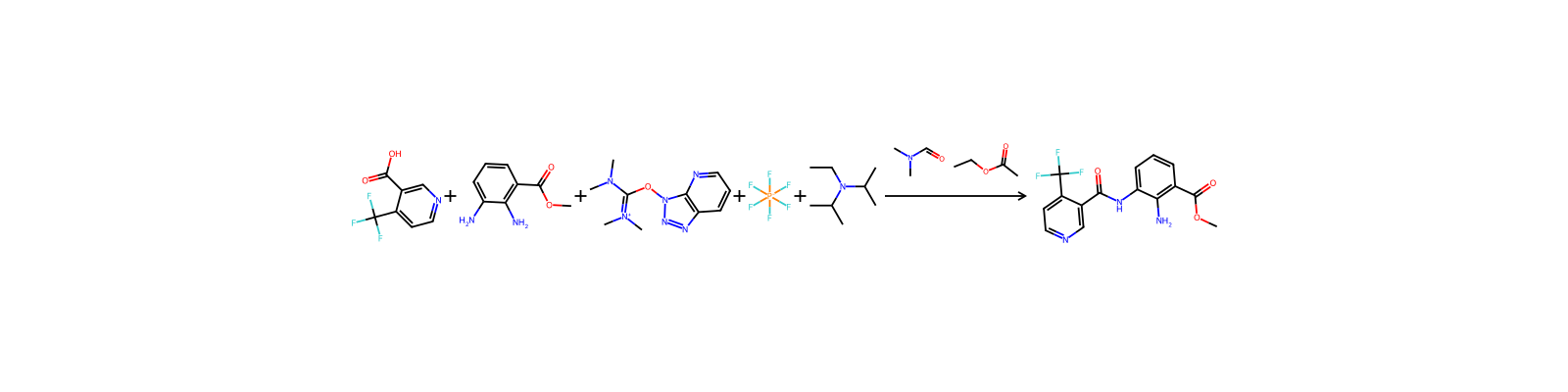
Reaktionsgleichung von HRID 14920
HRID 14920als Edukt
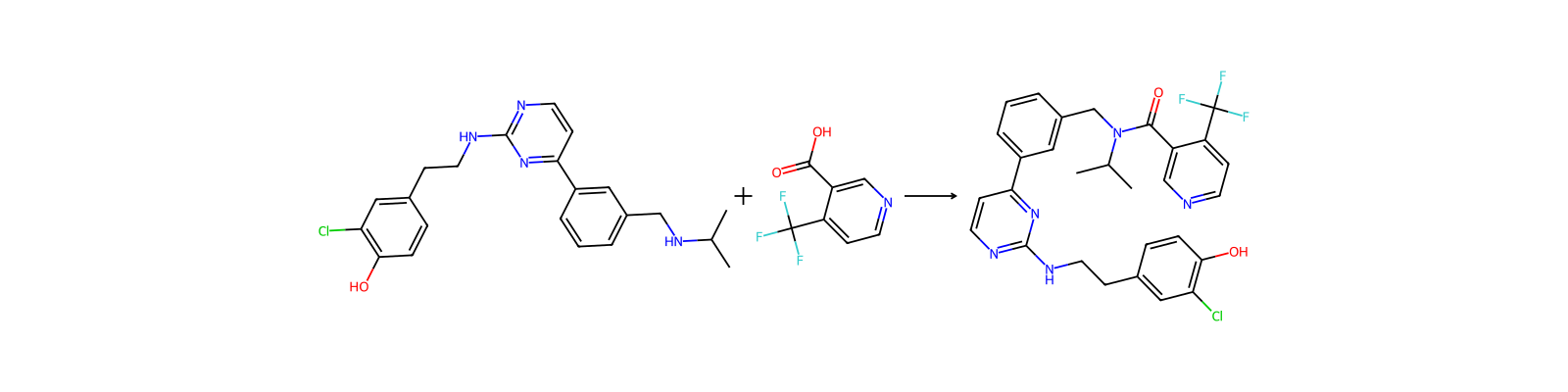
Reaktionsgleichung von HRID 47213
HRID 47213als Edukt
Reaktionsgleichung von HRID 47216
HRID 47216als Edukt
Reaktionsgleichung von HRID 85166
HRID 85166als Edukt
Reaktionsgleichung von HRID 96947
HRID 96947als Edukt
Reaktionsgleichung von HRID 153462
HRID 153462als Edukt
Reaktionsgleichung von HRID 193794
HRID 193794als Edukt
Reaktionsgleichung von HRID 200349
HRID 200349als Edukt
ZurückSeite 1 von 7

Notizen zur Verbindung

Auf dieser SeiteGrundinformationenÜberblickNamen und BezeichnerEigenschaftenSicherheit und RegulatorischesChemie und IndustrieZugehörige ReaktionenNotizen zur Verbindung