StartseiteMCPWorkbenchSkills
StartseiteWorkbenchBenachrichtigungenMein Bereich
llms.txt · MCP-AnleitungDatenschutz · Nutzungsbedingungen · Supportv1.8.0
  1. Startseite
  2. /Verbindung

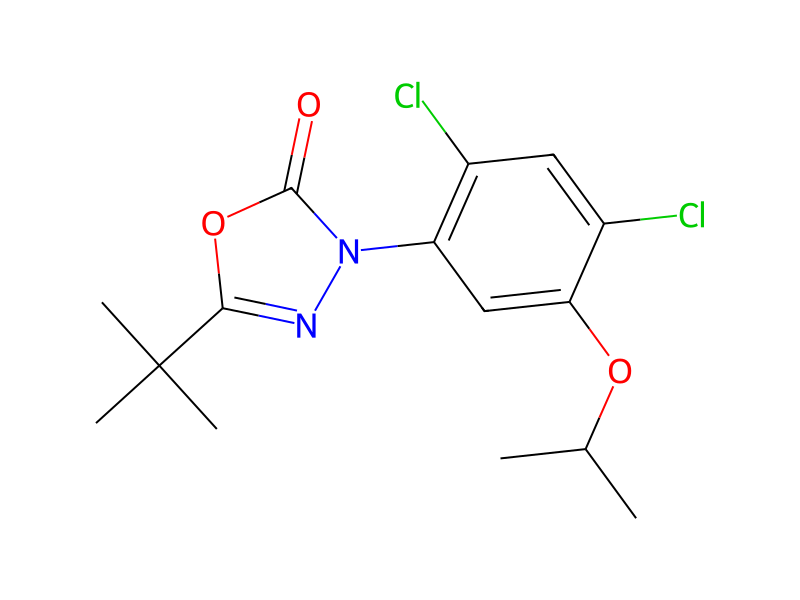
3-[2,4-Dichlor-5-(1-methylethoxy)phenyl]-5-(1,1-dimethylethyl)-1,3,4-oxadiazol-2(3H)-on

Oxadiazon
HCID 29732
Neue NotizNeue ReaktionAnfrage stellen
Druckvorschau
GrundinformationenÜberblickNamen und BezeichnerEigenschaftenSicherheit und RegulatorischesChemie und IndustrieZugehörige ReaktionenNotizen zur Verbindung
TeilstruktursucheÄhnliche Strukturen suchen

Grundinformationen

CAS
19666-30-9
Standard-SMILES
CC(C)Oc1cc(-n2nc(C(C)(C)C)oc2=O)c(Cl)cc1Cl
InChIKey
CHNUNORXWHYHNE-UHFFFAOYSA-N
Summenformel
C15H18Cl2N2O3
Durchschnittliche Molmasse
345,2 g/mol
Monoisotopische Masse
344,0694478

Überblick

Oxadiazon can cause cancer according to an independent committee of scientific and health experts. It can cause developmental toxicity according to The Environmental Protection Agency (EPA).

Namen und Bezeichner

Bevorzugter Name
Oxadiazon
IUPAC
5-tert-butyl-3-(2,4-dichloro-5-propan-2-yloxyphenyl)-1,3,4-oxadiazol-2-one
Lokaler Name
3-[2,4-Dichlor-5-(1-methylethoxy)phenyl]-5-(1,1-dimethylethyl)-1,3,4-oxadiazol-2(3H)-on
Englischer Name
Oxadiazon
Summenformel
C15H18Cl2N2O3
Molmasse
345.22

Namen und Synonyme

OXADIAZON19666-30-9RonstarOxadiazoneRP 17623DTXSID3024239G 315C6U0E0YTP65-tert-Butyl-3-(2,4-dichloro-5-isopropoxyphenyl)-1,3,4-oxadiazol-2(3H)-one2-tert-Butyl-4-(2,4-dichloro-5-isopropyloxyphenyl)-1,3,4-oxadiazolin-5-oneDTXCID3042393-(2,4-Dichloro-5-(1-methylethoxy)phenyl)-5-(1,1-dimethylethyl)-1,3,4-oxadiazol-2(3H)-one
Weitere Namen anzeigen
DOXARLonster17623 RPForesiteHERBSTAR0xadiazon
RP-176233-[2,4-Dichloro-5-(1-methylethoxy)phenyl]-5-(1,1-dimethylethyl)-1,3,4-oxadiazol-2(3H)-oneRefChem:8570192-(tert-butyl)-4-(2,4-dichloro-5-isopropyloxy-phenyl) delta(2)-1,3,4-oxadiazoline-5-one5-tert-butyl-3-(2,4-dichloro-5-(propan-2-yloxy)phenyl)-2,3-dihydro-1,3,4-oxadiazol-2-one243-215-7Oxydiazon5-tert-butyl-3-(2,4-dichloro-5-propan-2-yloxyphenyl)-1,3,4-oxadiazol-2-one

Datenbank-Bezeichner

Eigenschaften

Berechnete Struktureigenschaften

XLogP
4,8
Polarare Oberfläche (TPSA)
51,1 Ų
H-Brücken-Donoren
0
H-Brücken-Akzeptoren
4
Frei drehbare Bindungen
4
Schwere Atome
22
Formalladung
0
Komplexität
462

Experimentelle und physikochemische Eigenschaften

Chemical ClassesTeratogens
SpringerMaterials PropertiesFusion temperature
Pesticides · 6 Einträge

Pesticide -> EPA IRIS

Herbicides

Active substance -> EU Pesticides database: Not approved

Pesticides -> Herbicides, Protox-Inhibiting

Herbicides

Pesticide (Oxadiazon) -> USDA PDB

LogP · 2 Einträge

log Kow = 4.80

4.09

OdorOdorless
Density1.26 mg/l
Color/Form · 2 Einträge

White crystals

Colorless crystals

Solubility · 3 Einträge

Solubility in methanol, ethanol ca 100, cyclohexane 200, acetone, isophorone, methyl ethyl ketone, carbon tetrachloride ca 600, toluene, benzene, chloroform ca 1000 (all in g/l, 20 °C)

Soluble in solvents

In water, 0.7 mg/l @ 24 °C

Sicherheit und Regulatorisches

Sicherheitsangaben dienen nur zur Orientierung und ersetzen weder das Sicherheitsdatenblatt (SDB) des Lieferanten noch geltende Vorschriften oder eine fachliche Bewertung.

GHS-Klassifizierung

GHS Classification · 6 Einträge

Warning

H400: Very toxic to aquatic life [Warning Hazardous to the aquatic environment, acute hazard]

P273, P391, and P501 (click each P-code to see the statement)

Warning

H400 (100%): Very toxic to aquatic life [Warning Hazardous to the aquatic environment, acute hazard]

P273, P391, and P501 (click each P-code to see the statement)

Gefahrenhinweise

Regulatory Information · 6 Einträge

Hazard Traits - Carcinogenicity; Developmental Toxicity

Commission Regulation (EC) No 1490/2002

Oxadiazon is listed in the dataset of EPA Human Health Benchmarks for Pesticides under the Safe Drinking Water Act (40 eCFR 141)

2008/69/EC, 2010/39/EU, Reg. (EU) 2022/801, Reg. (EU) No 540/2011

Oxadiazon: Does not have an individual approval but may be used under an appropriate group standard

The New Jersey Worker and Community Right to Know Act requires public and private employers to provide information about hazardous substances at their workplaces. (N.J.S.A. 34:5A-1 et. seq.)

Other Safety InformationIMAP assessments - 1,3,4-Oxadiazol-2(3H)-one, 3-[2,4-dichloro-5-(1-methylethoxy)phenyl]-5-(1,1-dimethylethyl)-: Human health tier I assessment
DOT LabelClass 9
Fire HazardsExcerpt from ERG Guide 171 [Substances (Low to Moderate Hazard)]:
Health HazardsExcerpt from ERG Guide 171 [Substances (Low to Moderate Hazard)]:
Hazards Summary · 1 Eintrag

The protox inhibitor herbicides (Fomesafen,Oxadiazon, Lactofen, Sulfentrazone, Carfentrazone-ethyl, Oxyfluorofen and Bifenox) can disrupt porphyrin metabolism; It has been speculated that a transient form of porphyria variegate may occur following a massive exposure or long-term exposure to lower doses. A mild eye irritant; [HSDB] An eye irritant; [eChemPortal: ERMA] An irritant; Targets the liver; [MSDSonline] See Fluthiacet-methyl.

Chemie und Industrie

Pharmakologische Informationen

Metabolism/MetabolitesAlthough, examples of all oxadiazole isomers are known, only the biotransformation pathways of compounds containing 1,2,4-oxdiazole rings have been reported so far. (A15200)

Verwendung und Herstellung

Uses · 5 Einträge

Used as selective pre-emergence herbicide; [Merck Index]

Farming (Pesticides) [Category: Industry]

For Oxadiazon (USEPA/OPP Pesticide Code: 109001) ACTIVE products with label matches. /SRP: Registered for use in the U.S. but approved pesticide uses may change periodically and so federal, state and local authorities must be consulted for currently approved uses./

Herbicide

This is a man-made compound that is used as an herbicide.

Methods of Manufacturing · 2 Einträge

Prepn: Brit. Pat 1,110,500 corresp to J. Metivier, R. Boesch, U.S. pat 3,385,862 (both 1968 to Rhone Poulenc).

1,2,4,5-Tetrachlorobenzene + isopropanol + hydrazine + pivaloyl chloride + phosgene (ether formation/amine formation/amide formation/phosgenation)

Formulations/Preparations · 3 Einträge

USEPA/OPP Pesticide Code 109001; Trade Names: Ronstar; RP-17623; G315.

Emulsifiable concentrates, granules, flowable, wettable powder

Tech. is greater than/equal to 94% pure

Use ClassificationHerbicides
General Manufacturing InformationNot to be used on red fescue, bentgrass turf, dichronda or centipedegrass.

Anwendungen

VerwendenA commonly used herbicide/pesticide.

Vor- und nachgelagerte Produkte

Zugehörige Reaktionen

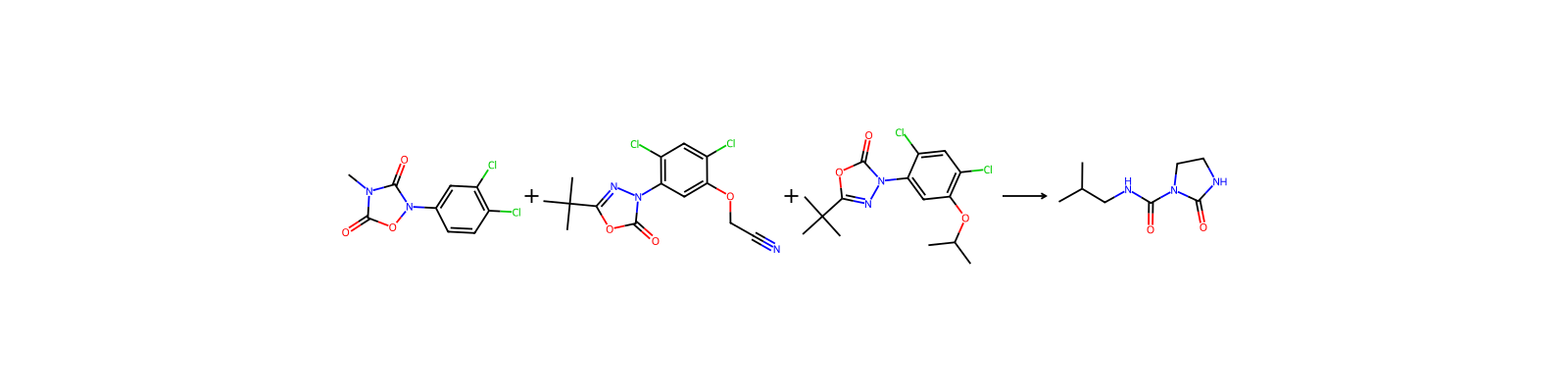
7

Reaktionsaufzeichnung erstellen
Reaktionsgleichung von HRID 229949
HRID 229949als Eduktuspto-grants-2009_07
Reaktionsgleichung von HRID 255484
HRID 255484als Produktuspto-grants-1987_10
Reaktionsgleichung von HRID 993475
HRID 993475als Eduktuspto-grants-2002_10
Reaktionsgleichung von HRID 1005321
HRID 1005321als Eduktuspto-grants-2000_04
Reaktionsgleichung von HRID 1007151
HRID 1007151als Eduktuspto-grants-2004_09
Reaktionsgleichung von HRID 1089102
HRID 1089102als Produktuspto-grants-1990_10
Reaktionsgleichung von HRID 1263443
HRID 1263443als Eduktuspto-grants-2003_04

Notizen zur Verbindung

Wird geladen…

Auf dieser SeiteGrundinformationenÜberblickNamen und BezeichnerEigenschaftenSicherheit und RegulatorischesChemie und IndustrieZugehörige ReaktionenNotizen zur Verbindung
Weitere Aktionen
Neue NotizNeue ReaktionAnfrage stellen
CAS
19666-30-9
PubChem CID
29732
DTXSID
DTXSID3024239
ChEMBL
CHEMBL1080648
ChEBI
CHEBI:81786
UNII
C6U0E0YTP6
EC Number
243-215-7
Nikkaji
J1.867H
Endocrine Disruptors
Potential endocrine disrupting compound
Melting Point90 °C
Vapor Pressure · 2 Einträge

0.00000011 [mmHg]

1.15X10⁻⁷ mm Hg @ 22 °C

Physical Description · 2 Einträge

Oxydiazon is a crystalline solid. Used as an herbicide.

White odorless solid; [Merck Index]

Physikochemische Eigenschaften

Schmelzpunkt
88 · 88-90°C
Siedepunkt
417 · 417.0±55.0 °C(Predicted)
Dichte
1.413 · 1.4130 (rough estimate)
Brechungsindex
1.614 · 1.6140 (estimate)
storage temp.
2 · Sealed in dry,2-8°C
Löslichkeit
Chloroform (Slightly), Ethyl Acetate (Slightly)
Aggregatzustand
Waxy Solid
pka
-2.73 · -2.73±0.40(Predicted)
Farbe
Light yellow to yellow
Wasserlöslichkeit
0.7 mg/L · 0.7mg/L(24 ºC)
BRN
558070 · 558070
Henry's Law Constant
1.4 · 1.4×102 mol/(m3Pa) at 25℃, HSDB (2015)
InChI
1S/C15H18Cl2N2O3/c1-8(2)21-12-7-11(9(16)6-10(12)17)19-14(20)22-13(18-19)15(3,4)5/h6-8H,1-5H3
InChIKey
CHNUNORXWHYHNE-UHFFFAOYSA-N
SMILES
CC(C)Oc1cc(N2N=C(OC2=O)C(C)(C)C)c(Cl)cc1Cl
CAS Datenbank
19666 · 19666-30-9(CAS DataBase Reference)
NIST chemische Informationen
Oxadiazon(19666-30-9)
EPA chemische Informationen
Oxadiazon (19666-30-9)
Reactive GroupAzo, Diazo, Azido, Hydrazine, and Azide Compounds
FIFRA Requirements · 1 Eintrag

Tolerances are established for combined residues of the herbicide oxadiazon (2-tert-butyl-4-(2,4-dichloro-5-isopropoxyphenyl)delta2-1,3,4-oxadiazolin-5-one) and its metabolites (2-tert-butyl-4-(2,4-dichloro-5-hydroxyphenyl)delta2-1,3,4-oxadiazolin-5-one) and 2-carboxyisopropyl-4-(2,4-dichloro-5-isopropoxyphenyl)delta2-1,3,4-oxadiazolin-5 -one) in or on raw agricultural commodities as follows: in milk fat; in the meat, fat, and meat byproducts of cattle, goats, hogs, horses, and sheep.

Reactivity AlertsExplosive
Reactivity Profile · 1 Eintrag

OXYDIAZON is a diazo compound. Azo, diazo, azido compounds can detonate. This applies in particular to organic azides that have been sensitized by the addition of metal salts or strong acids. Toxic gases are formed by mixing materials of this class with acids, aldehydes, amides, carbamates, cyanides, inorganic fluorides, halogenated organics, isocyanates, ketones, metals, nitrides, peroxides, phenols, epoxides, acyl halides, and strong oxidizing or reducing agents. Flammable gases are formed by mixing materials in this group with alkali metals. Explosive combination can occur with strong oxidizing agents, metal salts, peroxides, and sulfides.

Air and Water ReactionsDust may form an explosive mixture in air.
Hazard Classes and Categories · 5 Einträge

Aquatic Acute 1 (100%)

Hazardous to the aquatic environment (acute) - category 1

Reproductive toxicity - Category 2

Teratogens

Aquatic Acute 1

Sicherheit und Schutzausrüstung

Fire FightingExcerpt from ERG Guide 171 [Substances (Low to Moderate Hazard)]:
First AidExcerpt from ERG Guide 171 [Substances (Low to Moderate Hazard)]:
Nonfire Spill ResponseExcerpt from ERG Guide 171 [Substances (Low to Moderate Hazard)]:
Disposal Methods · 1 Eintrag

SRP: At the time of review, criteria for land treatment or burial (sanitary landfill) disposal practices are subject to significant revision. Prior to implementing land disposal of waste residue (including waste sludge), consult with environmental regulatory agencies for guidance on acceptable disposal practices.

Preventive Measures · 1 Eintrag

SRP: The scientific literature for the use of contact lenses in industry is conflicting. The benefit or detrimental effects of wearing contact lenses depend not only upon the substance, but also on factors including the form of the substance, characteristics and duration of the exposure, the uses of other eye protection equipment, and the hygiene of the lenses. However, there may be individual substances whose irritating or corrosive properties are such that the wearing of contact lenses would be harmful to the eye. In those specific cases, contact lenses should not be worn. In any event, the usual eye protection equipment should be worn even when contact lenses are in place.

Isolation and EvacuationExcerpt from ERG Guide 171 [Substances (Low to Moderate Hazard)]:
Allowable Tolerances · 1 Eintrag

Tolerances are established for combined residues of the herbicide oxadiazon (2-tert-butyl-4-(2,4-dichloro-5-isopropoxyphenyl)delta2-1,3,4-oxadiazolin-5-one) and its metabolites (2-tert-butyl-4-(2,4-dichloro-5-hydroxyphenyl)delta2-1,3,4-oxadiazolin-5-one) and 2-carboxyisopropyl-4-(2,4-dichloro-5-isopropoxyphenyl)delta2-1,3,4-oxadiazolin-5 -one) in or on raw agricultural commodities as follows: 0.1 ppm in milk fat (reflecting negligible residues in milk); 0.01 ppm (negligible residue) in the meat, fat, and meat byproducts of cattle, goats, hogs, horses, and sheep.

Personal Protective Equipment (PPE)Excerpt from ERG Guide 171 [Substances (Low to Moderate Hazard)]:

Toxikologische Informationen

Target OrgansHematologic
Environmental Fate · 3 Einträge

TERRESTRIAL FATE: Based on a classification scheme(1), reported Koc values ranging from 676 to 3,236(2-4), indicate that oxadiazon is expected to have only low or slight mobility in soil(SRC). In laboratory studies using TLC(5) and column leaching(6) methods, oxadiazon was determined to be immobile in a total of six soils. Volatilization of oxadiazon from moist soil surfaces is not expected to be an important fate process(4). Oxadiazon is not expected to volatilize from dry soil surfaces(SRC) based upon its vapor pressure of 1.15X10⁻⁷ mm Hg(7). Oxadiazon photodegrades on soil in natural sunlight with a half-life of 4.65 days(8). The photodegradation of oxadiazon results in three photoproducts with the loss of chlorine as the dominant process and the participation of hydroxyl(8). Biodegradation in soil is not expected to be an important fate process with a reported half-life of oxadiazon in aerobic soil of 3-6 months(9).

AQUATIC FATE: Based on a classification scheme(1), reported Koc values ranging from 676 to 3,236(2-4) indicate that oxadiazon is expected to adsorb to suspended solids and sediment(SRC). Volatilization from water surfaces is not expected(5) based upon an estimated Henry's Law constant of 7X10⁻⁸ atm-cu m/mole(SRC), estimated based on its vapor pressure, 1.15X10⁻⁷ mm Hg(6), and water solubility, 0.7 mg/l(7). According to a classification scheme(8), BCF values in the range of 24.1 to 708 measured in fish(9,10), suggests bioconcentration in aquatic organisms is low to high(SRC). Oxadiazon (1 ppm) photodegrades in water in natural sunlight with a half-life of 2.65 days(11). The photodegradation of oxadiazon results in three photoproducts with the loss of chlorine as the dominant process and the participation of hydroxyl(11). Oxadiazon is stable to hydrolysis at neutral and acidic pHs, but degrades slowly at pH 9, with a half-life of 38 days(12). Only 7% biodegradation was observed in a river die-away test using water from Ashai River, Japan after 50 days(13), suggesting biodegradation is slow in water.

ATMOSPHERIC FATE: According to a model of gas/particle partitioning of semivolatile organic compounds in the atmosphere(1), oxadiazon, which has a vapor pressure of 1.15X10⁻⁷ mm Hg at 22 °C(2), is expected to exist in both the vapor and particulate phases in the ambient atmosphere. Vapor-phase oxadiazon is degraded in the atmosphere by reaction with photochemically-produced hydroxyl radicals(SRC); the half-life for this reaction in air is estimated to be 16 hours(SRC), calculated from its rate constant of 24.3X10⁻¹² cu cm/molecule-sec at 25 °C(SRC) determined using a structure estimation method(3). Particulate-phase oxadiazon is removed from the air by wet and dry deposition(SRC). There is the potential for the photodegradation of oxadiazon in air based upon its photodegradation in water(4); however, the rate at which this may occur is not known.

Food Survey Values · 1 Eintrag

In a 1992-1993 FDA monitoring study of oxadiazon residues in pears, the compound was not detected in any of the 710 domestic or 949 imported pear samples tested(1). Oxadiazon was not detected in a monitoring study of 6970 samples (80% domestic, 20 % foreign) of 81 commodities, including 71 pear samples, collected in Texas during 1989-1991(2).

Adverse EffectsOccupational hepatotoxin - Secondary hepatotoxins: the potential for toxic effect in the occupational setting is based on cases of poisoning by human ingestion or animal experimentation.
Exposure RoutesInhalation; dermal. (L2081)
Toxicity Summary · 1 Eintrag

'Oxadiazon is a member of the oxadiazole class of herbicides. While current data are limited, EPA has evidence that compounds within a class may share a common mechanism of toxicity. At this time, the Agency does not have sufficient data concerning common mechanism issues to determine whether or not oxadiazon shares a common mechanism of toxicity with other substances, including other oxadiazoles or other probable human carcinogens.' (L2081)

EPA IRIS Information · 3 Einträge

Oxadiazon

Hematologic

5 x 10 ^-3 mg/kg-day

Soil Adsorption/Mobility · 1 Eintrag

The Koc of oxadiazon is reported as ranging from 676 to 3236(1-3). According to a classification scheme(4), this estimated Koc value suggests that oxadiazon is expected to have only low or slight mobility in soil. In laboratory studies using TLC(5) and column leaching(6) methods, oxadiazon was determined to be immobile in a total of six soils. In a study of the adsorption of oxadiazon (concn of 0.1-100 ppm) to soil and container (potting) media, 98-99% of the applied oxadiazon was adsorbed at all treatment rates, indicating that adsorption was not dependent on concn(7).

Atmospheric Concentrations · 1 Eintrag

URBAN/SUBURBAN: Oxadiazon was not detected in the air in Kitakyashu City, Japan, an urban area 10 miles from an agricultural area, in samples collected during July 1991 and April 1992 using a single 24-hr sampling at a flow rate of 500 L/min(1).

Artificial Pollution SourcesOxadiazon's production and use as an herbicide(1) is expected to result in its release to the environment through various waste streams(SRC).
Environmental Biodegradation · 2 Einträge

AEROBIC: Oxadiazon, present at 100 mg/l, reached 16% of its theoretical BOD in two weeks using an activated sludge inoculum at 30 mg/l and a modified Japanese MITI test(1). In an aerobic degradation study using non-acclimated microbes in a mixed inoculum obtained from activated sludge, field soil and river sediment, oxadiazon was observed to be relatively stable to aerobic microbial degradation, with reported half-lives of 100-321 days(2). The half-life of oxadiazon in aerobic soil (loam and fine sandy loam) is reported to be 3-6 months(3). No biodegradation of oxadiazon at a concn of 0.00555 ppm occurred in Lake Kojima, Japan water samples incubated in the dark for 20 days(4). Using Ashai River, Japan water samples incubated at 10 °C, 7% biodegradation was observed after 50 days at a concn of 0.01 ppm(4).

ANAEROBIC: In an anaerobic degradation study using non-acclimated microbes in a mixed inoculum obtained from activated sludge, field soil and river sediment, oxadiazon was observed to be relatively stable to metabolic degradation, with reported half-lives of 107-577 days(1). Therefore, this compound is not expected to biodegrade rapidly in the environment under anaerobic conditions.

Sediment/Soil Concentrations · 1 Eintrag

SEDIMENT: Oxadiazon was detected in river sediment (organic carbon contents of 0.49-4.05 mg/g) samples collected from the Koise River tributaries in Japan during a rice cultivation period between May and September 1985 at a maximum concn of 10 ug/kg during August(1).

Regulatorische Informationen

FIFRA Requirements · 1 Eintrag

Tolerances are established for combined residues of the herbicide oxadiazon (2-tert-butyl-4-(2,4-dichloro-5-isopropoxyphenyl)delta2-1,3,4-oxadiazolin-5-one) and its metabolites (2-tert-butyl-4-(2,4-dichloro-5-hydroxyphenyl)delta2-1,3,4-oxadiazolin-5-one) and 2-carboxyisopropyl-4-(2,4-dichloro-5-isopropoxyphenyl)delta2-1,3,4-oxadiazolin-5 -one) in or on raw agricultural commodities as follows: in milk fat; in the meat, fat, and meat byproducts of cattle, goats, hogs, horses, and sheep.

Sicherheitsdaten

wgk
2
ridadr
UN3077 9/PG 3
hs_code
29349990
RTECS-Nr.
RO0874000
risk_code
50/53
Toxizität
LD50 orally in rats, bobwhite quail, mallard duck: 8000, 6000, 1000 mg/kg (Lim)
hazard_code
N
safety_code
60-61
Speicherklasse
11 - Combustible Solids
Giftige Stoffe Daten
19666-30-9(Hazardous Substances Data)
Hazard Classifications
Aquatic Acute 1Aquatic Chronic 1

Vorgelagerte Rohstoffe

Xylol, IsomerengemischToluol2,4-DichlorphenolTetrachlormethanNatriumnitritPivaloylchloridCarbonylchloridSalpetersureEMULSIFIEREisenSchwefelsure

Nachgelagerte Produkte

Acetochlor+Oxadiazon,E.C.