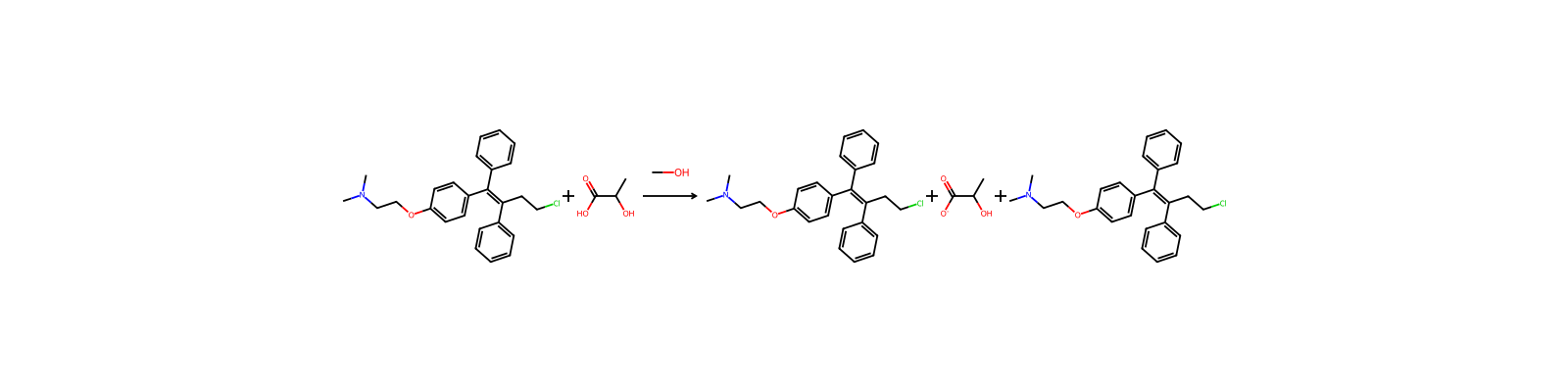
HRID 2297328als Edukt
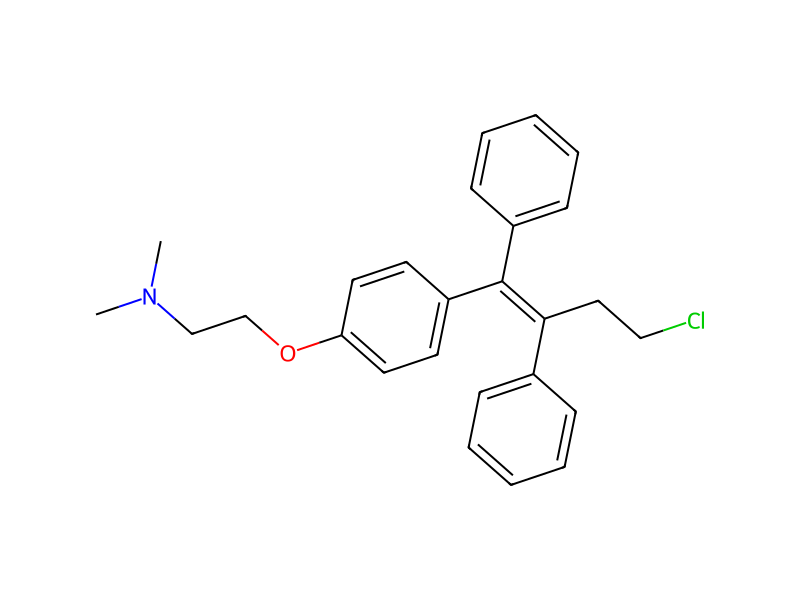
89778-26-7CN(C)CCOc1ccc(/C(=C(/CCCl)c2ccccc2)c2ccccc2)cc1XFCLJVABOIYOMF-QPLCGJKRSA-NToremifene is a tertiary amine, an aromatic ether and an organochlorine compound. It has a role as an antineoplastic agent, a bone density conservation agent, an estrogen receptor modulator and an estrogen antagonist. It derives from a hydride of a stilbene.
EMA approved medicines: Human medicine
Pharmaceuticals
108-110 °C
108 - 110 °C
Sicherheitsangaben dienen nur zur Orientierung und ersetzen weder das Sicherheitsdatenblatt (SDB) des Lieferanten noch geltende Vorschriften oder eine fachliche Bewertung.
Toremifene has been associated with mild-to-moderate serum ALT or AST elevations in 5% to 19% of patients, but these abnormalities are usually transient and not associated with symptoms or jaundice. Elevations above 5 times the ULN are uncommon (
Toremifene
Group 3: Not classifiable as to its carcinogenicity to humans
Volume 66: (1996) Some Pharmaceutical Drugs
1996
1996
Benchmark Dataset for the Liver Toxicity Knowledge Base (LTKB)
toremifene
Fareston
Antineoplastic agents
3
less-DILI-concern drugs
L - Antineoplastic and immunomodulating agents
QL - Antineoplastic and immunomodulating agents
Toremifene is an antineoplastic hormonal agent primarily used in the treatment of advanced breast cancer. Toremifene is a nonsteroidal agent that has demonstrated potent antiestrogenic properties in animal test systems. The antiestrogenic effects may be related to its ability to compete with estrogen for binding sites in target tissues such as breast. Toremifene inhibits the induction of rat mammary carcinoma induced by dimethylbenzanthracene (DMBA) and causes the regression of already established DMBA-induced tumors. In this rat model, Toremifene appears to exert its antitumor effects by binding the estrogen receptors. In cytosols derived from human breast adenocarcinomas, Toremifene competes with estradiol for estrogen receptor protein.
Toremifene is a nonsteroidal triphenylethylene derivative. Toremifene binds to estrogen receptors and may exert estrogenic, antiestrogenic, or both activities, depending upon the duration of treatment, animal species, gender, target organ, or endpoint selected. The antitumor effect of toremifene in breast cancer is believed to be mainly due to its antiestrogenic effects, in other words, its ability to compete with estrogen for binding sites in the cancer, blocking the growth-stimulating effects of estrogen in the tumor. Toremifene may also inhibit tumor growth through other mechanisms, such as induction of apoptosis, regulation of oncogene expression, and growth factors.
Hepatic. Mainly by CYP3A4 to N-demethyltoremifene, which exhibits antiestrogenic effects but has weak antitumor potency in vivo.
Toremifene has known human metabolites that include N-desmethyltoremifene.
89778-26-7DTXSID3023689CHEMBL1655CHEBI:96357NFE54O27T
TOREMIFENE
Established Pharmacologic Class [EPC] - Estrogen Agonist/Antagonist
Mechanisms of Action [MoA] - Selective Estrogen Receptor Modulators
Toremifene is an Estrogen Agonist/Antagonist. The mechanism of action of toremifene is as a Selective Estrogen Receptor Modulator.
Antineoplastic agents that are used to treat hormone-sensitive tumors. Hormone-sensitive tumors may be hormone-dependent, hormone-responsive, or both. A hormone-dependent tumor regresses on removal of the hormonal stimulus, by surgery or pharmacological block. Hormone-responsive tumors may regress when pharmacologic amounts of hormones are administered regardless of whether previous signs of hormone sensitivity were observed. The major hormone-responsive cancers include carcinomas of the breast, prostate, and endometrium; lymphomas; and certain leukemias. (From AMA Drug Evaluations Annual 1994, p2079)
A structurally diverse group of compounds distinguished from ESTROGENS by their ability to bind and activate ESTROGEN RECEPTORS but act as either an agonist or antagonist depending on the tissue type and hormonal milieu. They are classified as either first generation because they demonstrate estrogen agonist properties in the ENDOMETRIUM or second generation based on their patterns of tissue specificity. (Horm Res 1997;48:155-63)
Agents that inhibit BONE RESORPTION and/or favor BONE MINERALIZATION and BONE REGENERATION. They are used to heal BONE FRACTURES and to treat METABOLIC BONE DISEASES such as OSTEOPOROSIS.
Well absorbed
Toremifene is extensively metabolized, principally by CYP3A4 to N-demethyltoremifene, which is also antiestrogenic but with weak in vivo antitumor potency.
580 L
5 L/h
BeschreibungToremifene is an antiestrogenic anticancer agent effective in the treatment of advanced recurrent breast cancer in postmenopausal patients. It is claimed to be more effective than tamoxifen in several rat mammary tumor models. Side-effects are mild, including hot flushes and sweating.
VerwendenAn antiestrogen and antineoplastic. Nonsteroidal antiestrogen structurally similar to tamoxifen