StartseiteMCPWorkbenchSkills
StartseiteWorkbenchBenachrichtigungenMein Bereich
llms.txt · MCP-AnleitungDatenschutz · Nutzungsbedingungen · Supportv1.8.3
  1. Startseite
  2. /Verbindung

Zinkchlorid

Sinkkikloridi

HCID 3007855
Neue Reaktion
Drucken
GrundinformationenÜberblickNamen und BezeichnerEigenschaftenSicherheit und RegulatorischesChemie und IndustrieZugehörige ReaktionenNotizen zur Verbindung
TeilstruktursucheÄhnliche Strukturen suchen

Grundinformationen

CAS
7646-85-7
Standard-SMILES
[Cl-].[Cl-].[Zn+2]
InChIKey
JIAARYAFYJHUJI-UHFFFAOYSA-L
Summenformel
Cl2Zn
Durchschnittliche Molmasse
136,3 g/mol
Monoisotopische Masse
133,866847

Überblick

Zinc dichloride is a compound of zinc and chloride ions in the ratio 1:2. It exists in four crystalline forms, in each of which the Zn2+ ions are trigonal planar coordinated to four chloride ions. It has a role as a Lewis acid, a disinfectant, an astringent and an EC 5.3.3.5 (cholestenol Delta-isomerase) inhibitor. It is a zinc molecular entity and an inorganic chloride.

Namen und Bezeichner

Bevorzugter Name
Sinkkikloridi
IUPAC
zinc dichloride
Lokaler Name
Zinkchlorid
Englischer Name
Zinc chloride
Summenformel
Cl2Zn
Molmasse
136.3

Namen und Synonyme

SinkkikloridiSinkklorioZinkkloridCloruro de cincCloreto de zincoChlorure de zinc anhydreDichlorek cynku (Chlorek cynku)zincchloridezinc;dichlorideCl2Znzinc-chloridezink chloride
Weitere Namen anzeigen
ZnCl2TRIS BASEZnCl2-AMINO-2-(HYDROXYMETHYL)PROPANE-1,3-DIOLTRIS BUFFERTRIZMA BASETRIS AMINOTRISAMINETRIS(HYDROXYMETHYL)METHYLAMINEZinc chloride, anhydrous
zinc(II)chloridezinc(II)-chloridezinc(2+) chloridezinc (II) chlorideSCHEMBL704ZINC CHLORIDE, ACSZINC CHLORIDE [II]ZINC CHLORIDE [MI]

Datenbank-Bezeichner

CAS
7646-85-7
PubChem CID
3007855
DTXSID
DTXSID2035013
ChEMBL
CHEMBL1200679
ChEBI
CHEBI:49976
UNII
86Q357L16B
Nikkaji
J3.744C

Eigenschaften

Berechnete Struktureigenschaften

Polarare Oberfläche (TPSA)
0 Ų
H-Brücken-Donoren
0
H-Brücken-Akzeptoren
2
Frei drehbare Bindungen
0
Schwere Atome
3
Formalladung
0
Komplexität
0

Physikochemische Eigenschaften

Schmelzpunkt
293 °C · 293 °C (lit.)
Siedepunkt
732 °C · 732 °C (lit.)
Dichte
1.01 g/mL · 1.01 g/mL at 20 °C
Dampfdruck
1 mm · 1 mm Hg ( 428 °C)
Flammpunkt
732 °C · 732°C
storage temp.
2 · 2-8°C
Löslichkeit
2 O: · H2O: 4 M at 20 °C, clear, colorless
Aggregatzustand
crystalline
pka
6.06 · pKa 6.06 (Uncertain)
Wichte
2.91 · 2.91
Farbe
white
PH
5 · 5 (100g/l, H2O, 20℃)
Geruch (Odor)
wh. cubic cryst., odorless
Wasserlöslichkeit
432 g/100 · 432 g/100 mL (25 ºC)
Spezifische Wärmekapazität
0.52 J/ · Cp(crystal): 0.52 J/(g·K), at 25℃
Merck
14 · 14,10132
Stabilität
hygroscopic
Kosmetik-Inhaltsstoffe Funktionen
SOOTHINGANTIMICROBIALORAL CAREASTRINGENT
InChI
1S/2ClH.Zn/h2*1H;/q;;+2/p-2
InChIKey
JIAARYAFYJHUJI-UHFFFAOYSA-L
SMILES
[Cl-].[Cl-].[Zn++]
CAS Datenbank
7646 · 7646-85-7(CAS DataBase Reference)
NIST chemische Informationen
Zinc dichloride(7646-85-7)
EPA chemische Informationen
Zinc chloride (7646-85-7)

Sicherheit und Regulatorisches

Sicherheitsangaben dienen nur zur Orientierung und ersetzen weder das Sicherheitsdatenblatt (SDB) des Lieferanten noch geltende Vorschriften oder eine fachliche Bewertung.

Sicherheitsdaten

F
3
OEB
C
OEL
TWA: 1 mg/m3, STEL: 2 mg/m3
wgk
2
IDLA
50 mg/m3
tsca
TSCA listed
ridadr
UN 2331 8/PG III (ZINC CHLORIDE, ANHYDROUS)
hs_code
28273600
RTECS-Nr.
TY2900000
risk_code
36/37/38-50/53-34-22-51/53-67-66-19-12-11-40
Toxizität
Inhalation of zinc chloride fumes can injure lungs and respiratory tract. Dusts or fumes also cause dermatitis, boils, conjunctivitis, and gastrointestinal tract upset (Lewis(Sr), R.J. 1996. Sax’s Dangerous Properties of Industrial Materials, 9th ed. New York: Van Nostrand Reinhold). LD50 oral (rat): 350mg/kg LCLO (inhalation): 1.960 g/m3/10 min
hazard_code
Xi,N,C,F+,F,Xn
safety_code
26-36-61-60-45-36/37/39-16-36/37
hazard_class
3
packing_group
I
Speicherklasse
8B - Non-combustible corrosive hazardous materials
Giftige Stoffe Daten
7646-85-7(Hazardous Substances Data)
Hazard Classifications
Acute Tox. 4 OralAquatic Acute 1Aquatic Chronic 1Eye Dam. 1Skin Corr. 1BSTOT SE 3

Chemie und Industrie

Pharmakologische Informationen

Protein BindingZinc is 70% protein bound in plasma, partially to serum albumin.
Pharmacodynamics · 1 Eintrag

Zinc is a cofactor in many enzymes and mediates a number of catalytic, structural, and regulatory roles in the body. It has a wide therapeutic index and long duration of action, as most zinc in the body is reabsorbed. Patients should be counselled regarding the risk of administration in patients with severe kidney dysfunction.

Mechanism of Action · 1 Eintrag

Zinc performs catalytic, structural, and regulatory roles in the body. Zinc is a component of approximately 3000 human proteins. Zinc is cytoprotective against reactive oxygen species mediated apoptosis through the action of metallothioneins. In a promyelocytic leukemia cell line, zinc enhances the up-regulation of A20 mRNA, which, via the TRAF pathway, decreases NF-kappaB activation, leading to decreased gene expression and generation of TNF-α, IL-1β, and IL-8. In patients with diarrhea, zinc restores mucosal barrier integrity, restores enterocyte brush-border enzyme activity, promotes the production of antibodies, and promotes the production of circulating lymphocytes against intestinal pathogens. Zinc also directly affects ion channels as a potassium channel blocker of cAMP-mediated chlorine secretion. Zinc deficiency decreases thymulin, inhibiting T-helper cell maturation and decreased Th-1 cytokines like IL-2. Decreased IL-2 decreases the activity of NK cells and CD8+ T cells. Zinc deficiency also leads to the generation of CD4+ T cells, decreased NF-κB activation, decreased phosphorylation of IκB, and decreased binding of NF-κB to DNA.

Biological Half-LifeUsing a two compartment model, zinc has once half life of 4.5-26 days and a second half life of 387-478 days.
Metabolism/MetabolitesZinc chloride dissociates into ions _in vivo_ and does not undergo further metabolism.
Absorption, Distribution and Excretion · 3 Einträge

Zinc is approximately 33% orally bioavailable in humans but bioavailability can vary between patients and depending on current zinc levels. Further data regarding the pharmacokinetics of zinc chloride are not readily available.

Zinc is predominantly eliminated in the feces. Gastrointestinal elimination of zinc is responsible for approximately half of all zinc elimination.

In one study of healthy patients, the clearance of zinc was found to be 0.63 ± 0.39 μg/min.

Anwendungen · 2 Einträge

BeschreibungZinc chloride is a white deliquescent salt. It forms acidic solutions in water and in polar organic solvents such as ethanol, acetone, and ether. Anhydrous zinc chloride hydrolyzes with moisture to form hydrochloric acid. It also forms complex ions with water, ammonia, and some organic solvents.Zinc chloride reacts with sulphide to minimise release of H2S gas in waste treatment facilities. Zinc chloride 50% solution also serves as a high-quality mercerising agent for cotton. Zinc chloride is incompatible with strong oxidising agents, moisture, cyanides, sulphides, and potassium.

VerwendenZinc chloride is used as a wood preservative and in fireproofing timber. Other uses are as a deodorant in disinfecting fluids; in dental cements; in electroplating; in etching metals and glass; as flux for soldering; as a mordant in printing and dyeing textiles; in making dry batteries; in denaturing alcohols; in vulcanizing rubber; in manufacturing parchment; in making artificial silk; in making activated carbon and cold-water glues; and in refining petroleum. Also, zinc chloride is used as a dehydrating and condensing agent in organic syntheses. In medicine it is used as an astringent and antiseptic.

Darstellung

synthetischeZinc chloride is prepared by the reaction of zinc oxide or zinc metal with dilute hydrochloric acid, followed by crystallization: ZnO + 2HCl → ZnCl2 + H2O Zn + 2HCl → ZnCl2 + H2

Vor- und nachgelagerte Produkte

Vorgelagerte Rohstoffe

ZinkBarium chloride dihydrateZinkoxidTellurHydrogenchloridKaliumpermanganatKaliumchloratBariumchloridGraphit

Nachgelagerte Produkte

2-Aminonicotinsaeure1H-Pyrazolo[3,4-b]pyridine,3-methyl-(9CI)2-Amino-3-cyanopyridine2',4'-Dihydroxyhexanophenon1-Chlor-2-methylpropan2-Methyoxy-3-methyl-2-phenyl-4H-benzo-g-pyranone4-Chlorodiphenylmethane-dimethylamino diphenyl ketone">4, 4^-dimethylamino diphenyl ketonepolysulfone anion exchange membraneExifon7-Hydroxy-3-methylflavone4-Butylanilin4-Hexylresorcin2-Amino-5-chlor-2'-fluorbenzophenonAnion exchange resin,strong basic styrene2-(1-Cyclohexen-1-yl)cyclohexan-1-onPhenolrot3-Amino-2-naphthoesurefluorescent whitening agent SWN7-Amino-4-(trifluormethyl)-2-benzopyronKresolrotChlortrifluorethylen2-Chloro-5-chloromethylthiophene4-Decylanilin6-tert-Butyl-m-kresol4-(methoxymethyl)benzyl chloride3,3-Bis(4-hydroxy-m-tolyl)phthalid1,1-Dichlorethan1-Chlorpropan (1)Diethylzinkfast black salt Gstyrene type polyethylene homogeneous anion exchange membrane(4-(4-Aminophenyl)(4-iminocyclohexa-2,5-dienyliden)methyl)-2-methylanilinhydrochlorid4-(Chlormethyl)-3,5-dimethylisoxazol5-Methoxy-2-methylindol6-Methoxy-4-methylquinoline1-Chlorpentan2-(4-Chlorophenyl)indole1-(2-Furyl)propan-1-on1H-Pyrazolo[3,4-b]pyridine
Ergänzende Hinweise · 1 Eintrag

Definitionzinc chloride: A white crystalline compound, ZnCl2. The anhydrous salt, which is deliquescent, can be made by the action of hydrogen chloride gas on hot zinc; r.d. 2.9; m.p. 283°C; b.p. 732°C. It has a relatively low melting point and sublimes easily, indicating that it is a molecular compound rather than ionic. Various hydrates also exist. Zinc chloride is used as a catalyst, dehydrating agent, and Ûux for hard solder. It was once known as butter of zinc.


Zugehörige Reaktionen

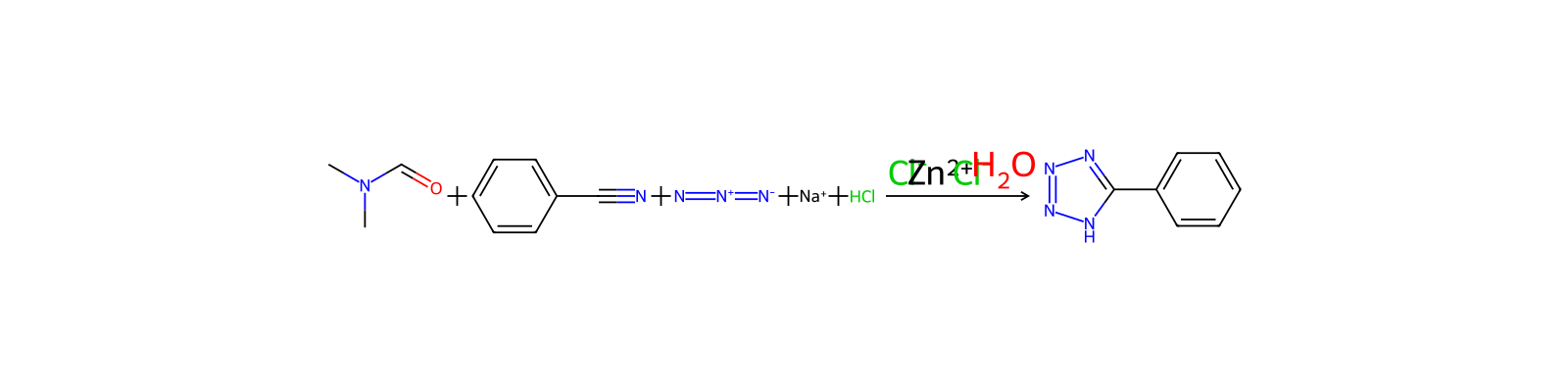
3.209
Reaktionsaufzeichnung erstellen
Reaktionsgleichung von HRID 1125
HRID 1125als Katalysator
Reaktionsgleichung von HRID 1175
HRID 1175als Katalysator
Reaktionsgleichung von HRID 1368
HRID 1368als Katalysator
Reaktionsgleichung von HRID 1369
HRID 1369als Katalysator
Reaktionsgleichung von HRID 1385
HRID 1385als Katalysator
Reaktionsgleichung von HRID 1391
HRID 1391als Katalysator
Reaktionsgleichung von HRID 1650
HRID 1650als Katalysator
Reaktionsgleichung von HRID 1901
HRID 1901als Katalysator
ZurückSeite 1 von 402

Notizen zur Verbindung

Auf dieser SeiteGrundinformationenÜberblickNamen und BezeichnerEigenschaftenSicherheit und RegulatorischesChemie und IndustrieZugehörige ReaktionenNotizen zur Verbindung