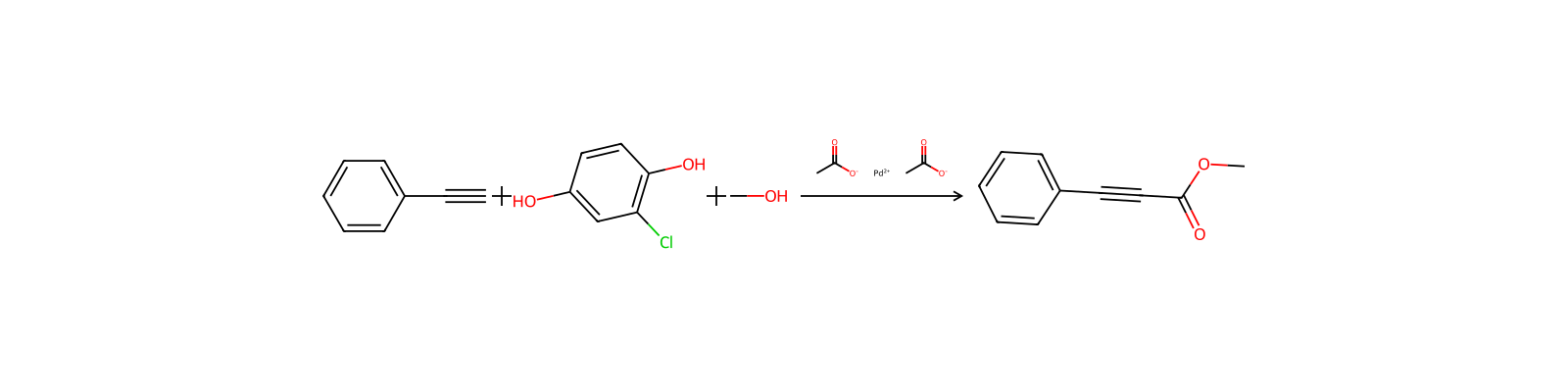
Chlorhydrochinon
Chlorohydroquinone

Grundinformationen
- CAS
615-67-8- Standard-SMILES
Oc1ccc(O)c(Cl)c1- InChIKey
AJPXTSMULZANCB-UHFFFAOYSA-N- Summenformel
- C6H5ClO2
- Durchschnittliche Molmasse
- 144,55 g/mol
- Monoisotopische Masse
- 143,99780708
Überblick
Chlorohydroquinone is a benzenediol that consists of hydroquinone bearing a single chloro substituent. It has a role as a metabolite. It is a member of chlorohydroquinones and a member of monochlorobenzenes.
Namen und Bezeichner
- Bevorzugter Name
- Chlorohydroquinone
- IUPAC
- 2-chlorobenzene-1,4-diol
- Lokaler Name
- Chlorhydrochinon
- Englischer Name
- Chlorohydroquinone
- Summenformel
- C6H5ClO2
- Molmasse
- 144.56
Namen und Synonyme
chlorohydroquinone615-67-82-chlorobenzene-1,4-diol2-ChlorohydroquinoneChloroquinolMonochlorohydroquinone2-Chloro-1,4-benzenediol1,4-Benzenediol, 2-chloro-Hydroquinone, chloro-2-Chloro-1,4-dihydroxybenzene2,5-Dihydroxychlorobenzene1,4-Dihydroxy-2-chlorobenzene
Weitere Namen anzeigen
chlorhydrochinonCHLOROHYDROCHINONchloro-hydroquinon2-Chlorohydroquininechloro-p-hydroquinoneChlorohydroquinone,99%
2-Chloro-1,4-hydroxyquinone1,4-Dihydroxyl-2-chlorobenzeneNSC-42793SNN9E3372-CHLORO-1,4-HYDROQUINONENSC-5934DTXSID4060656CHEBI:27675
Datenbank-Bezeichner
- CAS
615-67-8- PubChem CID
- 301
- DTXSID
DTXSID4060656- ChEBI
CHEBI:27675- UNII
Eigenschaften
Berechnete Struktureigenschaften
- XLogP
- 1,4
- Polarare Oberfläche (TPSA)
- 40,5 Ų
- H-Brücken-Donoren
- 2
- H-Brücken-Akzeptoren
- 2
- Frei drehbare Bindungen
- 0
- Schwere Atome
- 9
- Formalladung
- 0
- Komplexität
- 97,1
Experimentelle und physikochemische Eigenschaften
Chemical ClassesOther Classes -> Halogenated Monoaromatics
SpringerMaterials PropertiesBoiling point
LogP
log Kow = 1.40
1.4
Color/FormWHITE TO LIGHT-TAN FINE CRYSTALS
SolubilityVERY SOL IN WATER AND ALC, SLIGHTLY SOL IN ETHER
Boiling Point263 °C
DecompositionWhen heated to decomposition it emits toxic fumes ... .
Melting Point100 °C
Physical DescriptionWhite to light tan solid; [Hawley] Light brown powder; [MSDSonline]
Physikochemische Eigenschaften
Sicherheit und Regulatorisches
Sicherheitsangaben dienen nur zur Orientierung und ersetzen weder das Sicherheitsdatenblatt (SDB) des Lieferanten noch geltende Vorschriften oder eine fachliche Bewertung.
GHS-Klassifizierung
GHS Classification
Danger
H302 (18.4%): Harmful if swallowed [Warning Acute toxicity, oral]
P261, P262, P264, P264+P265, P270, P271, P272, P280, P301+P317, P302+P352, P304+P340, P305+P351+P338, P316, P319, P321, P330, P332+P317, P333+P317, P337+P317, P361+P364, P362+P364, P403+P233, P405, and P501 (click each P-code to see the statement)
Aggregated GHS information provided per 49 reports by companies from 7 notifications to the ECHA C&L Inventory. Each notification may be associated with multiple companies.
Gefahrenhinweise
Regulatory InformationTP - indicates a substance that is the subject of a proposed TSCA section 4 test rule.
Hazards SummaryNot mutagenic in assays with Ames salmonella TA100 strain; Emergency medical treatment: see Hydroquinone-quinone; [HSDB] An irritant; [MSDSonline] See Hydroquinone.
Hazard Classes and CategoriesAcute Tox. 4 (18.4%)
Sicherheit und Schutzausrüstung
Disposal Methods
SRP: At the time of review, criteria for land treatment or burial (sanitary landfill) disposal practices are subject to significant revision. Prior to implementing land disposal of waste residue (including waste sludge), consult with environmental regulatory agencies for guidance on acceptable disposal practices.
Toxikologische Informationen
Chemie und Industrie
Pharmakologische Informationen
Metabolism/MetabolitesYIELDS 3-CHLORO-4-HYDROXYPHENYL-BETA-D-GLUCURONIDE IN RABBIT. /FROM TABLE/
Verwendung und Herstellung
Uses
Used as photographic developer, organic intermediate, bactericide, and in dyestuffs; [Hawley]
Using Disinfectants or Biocides [Category: Clean]
PHOTOGRAPHIC DEVELOPER; ORGANIC INTERMEDIATE; IN DYESTUFFS; BACTERICIDE
Methods of ManufacturingChlorination of hydroquinone.
Formulations/Preparations
EDWAL LIQUID CHQ- CHLOROHYDROQUINONE, 10% SOLN.
GRADES: PHOTOGRAPHIC; COMMERCIAL.
General Manufacturing Information1,4-Benzenediol, 2-chloro-: INACTIVE
Anwendungen
VerwendenChlorohydroquinone is a component of polyethers based on organotin with potential application to breast cancer treatment via growth inhibition. Also a component in the synthesis of contraceptive agents in pharmaceutical compounds. It is also used within hydroxylation and catalysis organic reactions in the synthesis of pharmacologically active phenolic compounds.
Darstellung
synthetischeChlorohydroquinone is obtained by reacting p-benzoquinone with hydrochloric acid. First dissolve p-benzoquinone with chloroform and pass dry hydrogen chloride gas under cooling to obtain.
Vor- und nachgelagerte Produkte
Zugehörige Reaktionen
10


Notizen zur Verbindung
Wird geladen…