
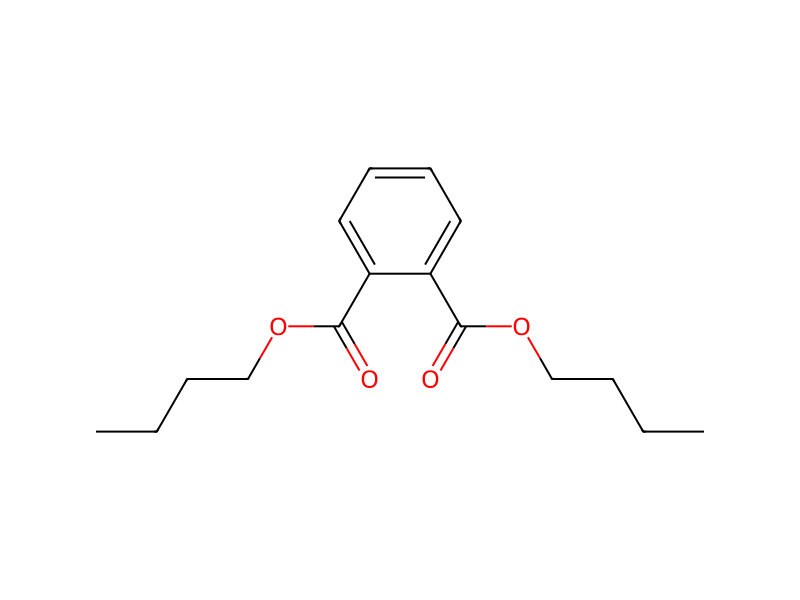
Grundinformationen
- Standard-SMILES
CCCCOC(=O)c1ccccc1C(=O)OCCCC- InChIKey
DOIRQSBPFJWKBE-UHFFFAOYSA-N- Summenformel
- C16H22O4
- Durchschnittliche Molmasse
- 278,34 g/mol
- Monoisotopische Masse
- 278,15180918
Überblick
Di-n-phtalate is a manufactured chemical that does not occur naturally. It is an odorless and oily liquid that is colorless to faint yellow in color. It is slightly soluble in water and does not evaporate easily. Di-n-phtalate is used to make plastics more flexible and is also in carpet backings, paints, glue, insect repellents, hair spray, nail polish, and rocket fuel.
Namen und Bezeichner
- Bevorzugter Name
- Dibutyl Phthalate
- IUPAC
- dibutyl benzene-1,2-dicarboxylate
- Englischer Name
- Di-n-Butyl phthalate
- Summenformel
- C16H22O4
- Molmasse
- 278.34348
Namen und Synonyme
dibutyl phthalate84-74-2Di-n-butyl phthalaten-Butyl phthalateButyl phthalateGenoplast BPalatinol CCelluflex DPBUnimoll DBDIBUTYLPHTHALATEStaflex DBPElaol
Weitere Namen anzeigen
Ergoplast FDBHexaplas M/Bdibutyl benzene-1,2-dicarboxylateWitcizer 300Kodaflex DBPDibutyl 1,2-benzenedicarboxylateDibutyl-o-phthalateDBP (ester)
Datenbank-Bezeichner
- CAS
52953-84-1、84-74-2- PubChem CID
- 3026
- DTXSID
DTXSID2021781- ChEMBL
CHEMBL272485- ChEBI
CHEBI:34687- UNII
- 2286E5R2KE
- EC Number
- 201-557-4
- Nikkaji
- J3.882B
Eigenschaften
Berechnete Struktureigenschaften
- XLogP
- 4,7
- Polarare Oberfläche (TPSA)
- 52,6 Ų
- H-Brücken-Donoren
- 0
- H-Brücken-Akzeptoren
- 4
- Frei drehbare Bindungen
- 10
- Schwere Atome
- 20
- Formalladung
- 0
- Komplexität
- 271
Experimentelle und physikochemische Eigenschaften
Chemical Classes
Hazardous Air Pollutants (HAPs)
Teratogens
Phthalate
Semi-Volatile Organic Compound (SVOC)
Polymers
Plastics & Rubber -> Phthalate Esters
Plastics -> PUR; PVC (soft)
Plastics -> Plasticisers
Cosmetics
Cosmetics ingredient -> Solvent
Cosmetic ingredients (Dibutyl Phthalate) -> CIR (Cosmetic Ingredient Review)
SpringerMaterials PropertiesAngular frequency
PesticidesPesticide -> EPA IRIS
LogP
log Kow = 4.50
4.50
4.72
4.39
OdorSlight, aromatic odor
PlasticizersPlasticizer
TasteTastes strong and bitter
Density
1.049 at 68 °F (USCG, 1999) - Denser than water; will sink
1.0459 and 1.0465 at 20 °C
Relative density (water = 1): 1.05
1.05
1.0465 @ 20°C
1.05
Viscosity0.203 poise at 20 °C
Color/FormColorless to faint yellow, oily liquid
Sicherheit und Regulatorisches
GHS-Klassifizierung
GHS Classification
Danger
H360Df: May damage the unborn child; Suspected of damaging fertility [Danger Reproductive toxicity]
P203, P273, P280, P318, P391, P405, and P501 (click each P-code to see the statement)
This chemical does not meet GHS hazard criteria for < 0.1% (1 of 1322) of reports.
Danger
H360 (97.1%): May damage fertility or the unborn child [Danger Reproductive toxicity]
Gefahrenhinweise
Regulatory Information
Chemical: 1,2-Benzenedicarboxylic acid, 1,2-dibutyl ester
Hazard Traits - Developmental Toxicity; Endocrine Toxicity; Hepatotoxicity and Digestive System Toxicity; Immunotoxicity; Other Toxicological Hazard Traits; Reproductive Toxicity; Respiratory Toxicity
Regulation (EC) No 178/2002 (amended)
1,2-Benzenedicarboxylic acid, 1,2-dibutyl ester is listed on the EPA's Chemical Data Reporting (CDR) system. Manufacturers and importers of 1,2-Benzenedicarboxylic acid, 1,2-dibutyl ester are required to report information about their production and use of this chemical to the EPA under the Toxic Substances Control Act (TSCA). (40 eCFR Part 711)
Status: Active Update: 31-12-2021 https://echa.europa.eu/registration-dossier/-/registered-dossier/14862
Restricted substance: Dibutyl phthalate (DBP)
Other Safety InformationPEC / SN / Other assessments - Dibutyl phthalate (DBP): Health
DOT LabelClass 9
Fire Hazards
Combustible. (USCG, 1999)
Combustible.
Fire PotentialCombustible
Health HazardsExcerpt from ERG Guide 171 [Substances (Low to Moderate Hazard)]:
Hazards Summary
Di-n-phtalate is a manufactured chemical that does not occur naturally. It is an odorless and oily liquid that is colorless to faint yellow in color. It is slightly soluble in water and does not evaporate easily. Di-n-phtalate is used to make plastics more flexible and is also in carpet backings, paints, glue, insect repellents, hair spray, nail polish, and rocket fuel.
Dibutyl phthalate is used in making flexible plastics that are found in a variety of consumer products. It appears to have relatively low acute (short-term) and chronic (long-term) toxicity. No information is available regarding the effects in humans from inhalation or oral exposure to dibutyl phthalate, and only minimal effects have been noted in animals exposed by inhalation. No studies are available on the reproductive, developmental, or carcinogenic effects of dibutyl phthalate in humans. Animal studies have reported developmental and reproductive effects from oral exposure. EPA has classified dibutyl phthalate as a Group D, not classifiable as to human carcinogenicity.
The heated compound is an irritant to the eyes and respiratory tract. [ACGIH] Allergic contact dermatitis reported in workers handling epoxy resins; [Kanerva, p. 1779] Causes contact urticaria; [Kanerva, p. 219] In high-dose reproductive studies of rats and mice, DEHP and other phthalates cause testicular damage to males and increased fetal losses and malformations to pregnant females. [Frazier, p. 350-2]
The major hazards encountered in the use and handling of dibutyl phthalate stem from its toxicologic properties. Toxic by all routes (ie, inhalation, ingestion, dermal contact), exposure to this colorless-to-yellow, oily liquid may occur from its use as a plasticizer or solvent in lacquers, elastomers, chlorinated rubbers, polyvinyl acetate, explosives, nail polish, perfumes, resins, printing inks, paper coatings, and adhesives. Effects from exposure may include contact burns to the skin and eyes, dermatitis, nausea, and dizziness. Both the OSHA PEL and the ACGIH TLV have been set at 5 mg/cu m. Odor thresholds have been found as low as 0.26 mg/cu m. Ventilation should be used to maintain acceptable levels. In activities where over-exposure may occur, wear a self-contained breathing apparatus and protective clothing. If contact should occur, immediately flush affected skin and eyes with running water for at least 15 minutes. While dibutyl phthalate does not ignite easily, it may burn with the production of irritating or poisonous gases. Fires involving dibutyl phthalate may be extinguished with dry chemical, CO2, or Halon. Standard foam or water fog, if used, should be applied with caution, as each may cause violent frothing. Dibutyl phthalate may be shipped via air, rail, road, and water. If small amounts of dibutyl phthalate should spill, take up with sand or other noncombustible absorbent and place into containers for later disposal. For large spills, first dike far ahead of the area with soil, sand bags, foamed polyurethane, or foamed concrete, then absorb bulk material with fly ash or cement powder. For large spills in bodies of water, first use natural barriers or oil spill control booms to limit spill motion, then apply detergent, soap, or alcohols to thicken material. Apply "universal" gelling agent and remove trapped material with suction hoses. If dissolved, apply activated charcoal, and use mechanical dredges or lifts to remove immobilized masses. Before implementing land disposal of waste dibutyl phthalate, consult with environmental regulatory agencies for guidance. Also, dibutyl phthalate is a good candidate for liquid injection, rotary kiln, and fluidized bed forms of incineration.
FDA RequirementsDibutyl phthalate is an indirect food additive for use only as a component of adhesives.
Reactive GroupEsters, Sulfate Esters, Phosphate Esters, Thiophosphate Esters, and Borate Esters
EC ClassificationSymbol: T, N; R: 61-62-50; S: 53-45-61
UN ClassificationUN Hazard Class: 9; UN Pack Group: III
Special Reports
PIERCE ET AL; PHTHALATE ESTERS IN THE AQUATIC ENVIRONMENT; NATL RES COUNC CAN ASSOC COMM SCI CRITER ENVIRON QUAL PUBL 0 (17583): 1 (1980). THE PHYSICAL-CHEMICAL PROPERTIES, ANALYTICAL DETERMINATION & ENVIRONMENTAL DYNAMICS OF PHTHALATE ESTERS (INDUSTRIAL PLASTICIZERS) ARE REVIEWED.
AUTAIN J; ENVIRON HEALTH PERSPECT 4:3 (1973). TOXICITY AND HEALTH THREATS OF PHTHALATE ESTERS: REVIEW OF THE LITERATURE.
DHHS/ATSDR; Toxicological Profile for Di-n-butylphthalate (1990) ATSDR/TP-90/10
USEPA/ECAO; Phthalate Atlas Report (1980)
For more Special Reports (Complete) data for DIBUTYL PHTHALATE (12 total), please visit the HSDB record page.
Sicherheit und Schutzausrüstung
Fire Fighting
Excerpt from ERG Guide 171 [Substances (Low to Moderate Hazard)]:
Use foam, dry powder, carbon dioxide.
First Aid Measures
Fresh air, rest.
Remove contaminated clothes. Rinse skin with plenty of water or shower.
First rinse with plenty of water for several minutes (remove contact lenses if easily possible), then refer for medical attention.
Rinse mouth. Refer for medical attention .
First Aid
EYES: First check the victim for contact lenses and remove if present. Flush victim's eyes with water or normal saline solution for 20 to 30 minutes while simultaneously calling a hospital or poison control center. Do not put any ointments, oils, or medication in the victim's eyes without specific instructions from a physician. IMMEDIATELY transport the victim after flushing eyes to a hospital even if no symptoms (such as redness or irritation) develop.
(General first aid procedures)
Safe StorageSeparated from strong oxidants.
Firefighting HazardsAerosols from heated dibutyl phthalate may cause irritation of the eyes and upper-respiratory tract.
Exposure Control and Personal Protection0.58 [mg/m3] (can also occur as vapor and aerosol)[German Research Foundation (DFG)]
Fire Fighting Procedures
Extinguish with dry chemicals ... or carbon dioxide.
/Wear/ self-contained breathing apparatus with a full facepiece operated in pressure-demand or other positive pressure mode.
If material on fire or involved in fire: Do not extinguish fire unless flow can be stopped. Use water in flooding quantities as fog. Solid streams of water may spread fire. Cool all affected containers with flooding quantities of water. Apply water from as far a distance as possible. Use foam, dry chemical, or carbon dioxide.
Water or foam may cause frothing.
For more Fire Fighting Procedures (Complete) data for DIBUTYL PHTHALATE (6 total), please visit the HSDB record page.
Storage ConditionsKeep container tightly closed in a dry and well-ventilated place. Containers which are opened must be carefully resealed and kept upright to prevent leakage.
Cleanup Methods
1) Remove all ignition sources. 2) Ventilate area ... 3) for small quant, absorb on paper towels. Evaporate in a safe place (such as fume hood). Allow sufficient time for evaporating vapors to completely clear hood ductwork. Burn paper in a suitable location ... large quant ... atomized in ... combustion chamber.
Environmental considerations-land spill: Dig a pit, pond, lagoon, or holding area to contain liquid or solid material. /SRP: If time permits, pits, ponds, lagoons, soak holes, or holding areas should be sealed with an impermeable flexible membrane liner./ Dike surface flow using soil, sand bags, foamed polyurethane, or foamed concrete. Absorb bulk liquid with fly ash or cement powder.
Environmental considerations-water spill: Use natural barriers or oil spill control booms to limit spill travel. Use surface active agent (eg detergent, soaps, alcohols) if approved by EPA. Inject "universal" gelling agent to solidify encircled spill and increase effectiveness of booms. Remove trapped material with suction hoses. If dissolved, in region of 10 ppm or greater concentration, apply activated carbon at ten times the spilled amount. Use mechanical dredges or lifts to remove immobilized masses of pollutants and precipitates.
Environmental considerations-air spill: Apply water spray or mist to knock down vapors.
ACCIDENTAL RELEASE MEASURES Personal precautions, protective equipment and emergency procedures Use personal protective equipment. Avoid breathing vapours, mist or gas. Ensure adequate ventilation. Evacuate personnel to safe areas. For personal protection see section Environmental precautions Prevent further leakage or spillage if safe to do so. Do not let product enter drains. Discharge into the environment must be avoided. Methods and materials for containment and cleaning up Soak up with inert absorbent material and dispose of as hazardous waste. Keep in suitable, closed containers for disposal.
Nonfire Spill ResponseExcerpt from ERG Guide 171 [Substances (Low to Moderate Hazard)]:
Disposal Methods
Generators of waste (equal to or greater than 100 kg/mo) containing this contaminant, EPA hazardous waste number U069, must conform with USEPA regulations in storage, transportation, treatment and disposal of waste.
Good candidate for incineration by liquid injection with a temperature of 650-1600 °C with a residence time of 0.1-2 seconds; rotary kiln with a temperature of 820-1,600 °C with a residence time for liquids and gases: seconds, solids: hours; fluidized bed with a temperature of 450-980 °C with a residence time for liquids and gases: seconds, solids: longer.
Chemical Treatability of Dibutyl Phthalate; Concentration Process: Activated Carbon; Chemical Classification: Phthalates; Scale of Study: Batch flow, Laboratory scale; Type of Wastewater Used: Pure compound (one solute in a solvent); Results of Study: 100% reduction; 38% desorbed from carbon by elutriation with solvent; (Calgon FS-300 used. Solvents included pentane-acetone, diethyl ether, methylene chloride-acetone, chloroform-acetone, and acetone.)
Chemical Treatability of Dibutyl Phthalate; Concentration Process: Resin Adsorption; Chemical Classification: Phthalates; Scale of Study: Batch flow, Laboratory Scale; Type of Wastewater Used: Pure compound (one solute in a solvent; Results of Study: 100% reduction; 108% desorbed from resin by elutriation with solvent. (Amberlite XAD-2 used. Solvents included pentane- acetone, diethyl ether, methylene chloride-acetone, chloroform-acetone, and acetone.)
For more Disposal Methods (Complete) data for DIBUTYL PHTHALATE (6 total), please visit the HSDB record page.
Spillage Disposal
Do NOT let this chemical enter the environment. Collect leaking and spilled liquid in covered containers as far as possible. Absorb remaining liquid in vermiculite, sand or inert absorbent. Then store and dispose of according to local regulations.
Toxikologische Informationen
Toxicological InformationCDC-ATSDR Toxicological Profile
Body Burden
Dibutyl phthalate was found in human adipose tissue at 0.10-0.30 ppm(1) and 0.57-0.79 ppm(2). Dibutyl phthalate was detected in human tissue and blood(3). Dibutyl phthalate was identified in adipose tissue and/or milk in non occupationally exposed humans(4). Dibutyl phthalate was found in the serum of 13 of 41 young (17-47 months) Puerto Rican girls with premature breast development at 15-276 ug/L(5). Dibutyl phthalate had a mean concentration of 0.03 ug/g in breast milk(6). The degradation product of dibutyl phthalate, mono-isobutyl phthalate, was detected in the serum of all 501 female and 501 of 502 male seniors from Uppsala, Sweden at concentrations of 2.7-1820 and 3.22-1390 ng/mL, respectively(7). The degradation product of dibutyl phthalate, monobutyl phthalate (MBP), was detected (detection limit 0.6 ug/L) in 99% of 2540 urine samples collected in the United States National Health and Nutrition Examination Survey (1999-2000)(8). MBP was detected in >90% of the urine samples collected from 3236 people (ages 6-49 years old) during the Canadian Health Measures Survey 2007-2009(9). Dibutyl phthalate was measured in expired air samples of pregnant New York women at 0.11-4.1 ug/cu m in samples taken Mar to Sept 2000 and in pregnant Krakow, Poland women at 0.75-15 ug/cu m in samples taken Nov 2000 to Mar 2001(10).
The dibutyl phthalate degradation product, monobutyl phthalate, was analyzed in urine, breast milk and cord blood to determine exposure(1). Urine samples from 100 pregnant women were collected in the third trimester (Dec 2001-Nov 2002) and monobutyl phthalate was detected in 99% of the samples at 26.8-569 ug/g. Urine samples from 30 two to three year olds (2003-2004) contained monobutyl phthalate in 59% of the samples at 129-1929 ug/g. Urine samples from 59 five to six year olds (2006-2007) contained monobutyl phthalate in 26% of the samples at 36.76-168.42 ug/g. Monobutyl phthalate was detected in all 30 cord blood samples that were collected upon delivery at 13.10-39.70 ug/L. Monobutyl phthalate was also detected in 70% of the 30 breast milk samples, from this same population, at <0.50-32.03 ug/L. All samples were collected from residents of central Taiwan(1).
Interactions
An antagonistic interaction was observed in houseflies upon simultaneous application of di-2-ethylhexyl phthalate or dibutyl phthalate with 21 organophosphates.
DBP applied to female house flies topically or by injection at a concentration of 20 ug/fly (1000 ug/g body weight) was not toxic, causing a mortality of less than 16% after 24 hr ... . Antagonistic interactions were observed when flies were treated simultaneously with DBP and various organophosphate insecticides, while synergistic interactions were observed when flies were pretreated with the phthalate 30 min before exposure to the pesticides. DBP inhibited the metabolism of organophosphate pesticides, accounting for the synergistic effects. When the phthalate and insecticides were applied simultaneously, the resulting increase in the total lipophilic pool by DBP may have resulted in an internal concentration of insecticide below the toxicity threshold.
... Adsorption of dimethyl, di-n-butyl, and di(2-ethylhexyl) phthalates using everted gut sac preparation from rat small intestine /was studied/. Monoesters were absorbed more rapidly than corresponding diesters. Esterases of the mucosal epithelium hydrolyzed the diesters to mono esters during absorption. When esterase ... inhibited by an organo-phosphate, absorption of di-n-butyl phthalate was significantly reduced.
/The objective of this study was/ to investigate the relationship between atopic allergy and depression and the role of DBP in the development of depression. BALB/c mice were randomly divided into eight groups: saline; ovalbumin (OVA)-immunized; saline+DBP (0.45 mg/kg /per/ d); saline+DBP (45 mg/kg /per/ d); DBP (0.45 mg/kg /per/d) OVA-immunized; DBP (45 mg/kgod) OVA-immunized; saline+hydrocortisone (30 mg/kg /per/d); and hydrocortisone (30 mg/kg /per/d)-exposed OVA-immunized. Behavior (e.g. open-field, tail suspension, and forced swimming tests), viscera coefficients (brain and spleen), oxidative damage [e.g. reactive oxygen species (ROS), malondialdehyde (MDA), and glutathione (GSH)], as well as levels of IgE and IL-4, were then analyzed. In the saline and OVA groups, the degree of depression symptoms in mice increased with increasing DBP concentration. Additionally, the OVA-immunity groups were associated with more serious depressive behavior compared with the same exposure concentration in the saline group. Oxidative damage was associated with a dose-dependent increase in DBP in the different groups. IL-4 and IgE levels were associated with low-dose DBP stimulation, which changed to high-dose inhibition with increasing DBP exposure, possibly due to spleen injury seen at high DBP concentrations. Development of an atopic allergy has the potential to increase the risk of depression in mice, and it seems that DBP helps OVA to exert its effect in present model.
For more Interactions (Complete) data for DIBUTYL PHTHALATE (10 total), please visit the HSDB record page.
Target Organs
Developmental (effects during periods when organs are developing) , Reproductive (Producing Children)
Eyes, respiratory system, gastrointestinal tract
Health Effects
Adverse effects from di-n-butyl phthalate exposure have not yet been reported in humans. However, animals studies have shown that di-n-butyl phthalate can affect reproductive ability by decreasing sperm count and causing birth defects. (L133)
Ecotoxicity Values
LC50; Species: Anas platyrhynchos (Mallard duck) age 10 days; oral >5000 ppm for 8 days
LC50; Species: Eisenia fetida (earthworm); contact test in which DBP was applied to filter paper 1.4 mg/sq cm for 48 hr
LC50; Species: Scenedesmus acutus var. acutus (Green Algae) 5-6x 10+5 cells/mL; Conditions: freshwater, static, 25 °C; Concentration: 210 ug/L for 96 hr
EC50; Species: Scenedesmus subspicatus (Green Algae) exponential growth phase; Conditions: freshwater, static, 24 °C, pH 8.0-9.3; Concentration: 3500 ug/L for 48 hr; Effect: population, decreased biomass /formulation/
For more Ecotoxicity Values (Complete) data for DIBUTYL PHTHALATE (82 total), please visit the HSDB record page.
Environmental Fate
TERRESTRIAL FATE: Based on a classification scheme(1), log Koc values of 3.05-3.14(2-3), indicate that dibutyl phthalate is expected to have low mobility in soil(SRC). Volatilization of dibutyl phthalate from moist soil surfaces is expected given a Henry's Law constant of 1.81X10⁻⁶ atm-cu m/mole(4). Dibutyl phthalate is not expected to volatilize from dry soil surfaces(SRC) based upon a vapor pressure of 2.01X10⁻⁵ mm Hg at 25 °C(5). In clay loam and sand, 98 and 66% loss occurred in 26 weeks, respectively, as a result of biodegradation(6). Indigenous soil from gardens degraded dibutyl phthalate 66% in 30 days(7).
AQUATIC FATE: Based on a classification scheme(1), a log Koc value of 3.8 for suspended particulate matter in lake water(2), indicates that dibutyl phthalate is expected to adsorb to suspended solids and sediment(SRC). Volatilization from water surfaces is expected(3) based upon a Henry's Law constant of 1.81X10⁻⁶ atm-cu m/mole(4). Using this Henry's Law constant and an estimation method(3), volatilization half-lives for a model river and model lake are 34 and 250 days, respectively(SRC). However, volatilization from water surfaces is expected to be attenuated by adsorption to suspended solids and sediment in the water column. The estimated volatilization half-life from a model pond is 22 years if adsorption is considered(5). A base-catalyzed second-order hydrolysis rate constant of 0.064 L/mole-sec(SRC) was estimated using a structure estimation method(6); this corresponds to half-lives of 3.4 years and 125 days at pH values of 7 and 8, respectively(6). BCFs of 12(7), 167(8) and 172(8) were reported in fathead minnows (Pimephales promelas), 3.1-176 in carp (Cyprinus carpio)(8-9) and 117 in bluegill fish (Lepomis macrochirus)(10). According to a classification scheme(11), BCF values of zero to 30 are low and from 100 to 1,000 are high. In natural waters, the biodegradation half-life of dibutyl phthalate is estimated as 1 day and anaerobic biodegradation half-life of 2 days(12). Dibutyl phthalate had an average aerobic and anaerobic biodegradation half-lives of 2.9 and 14.4 days, respectively, calculated in 6 river sediment samples taken from Taiwan rivers(13).
ATMOSPHERIC FATE: According to a model of gas/particle partitioning of semivolatile organic compounds in the atmosphere(1), dibutyl phthalate, which has a vapor pressure of 2.01X10⁻⁵ mm Hg at 25 °C(2), will exist in both the vapor and particulate phases in the ambient atmosphere. Vapor-phase dibutyl phthalate is degraded in the atmosphere by reaction with photochemically-produced hydroxyl radicals(SRC); the half-life for this reaction in air is estimated to be 42 hours(SRC), calculated from its rate constant of 9.3X10⁻¹² cu cm/molecule-sec at 25 °C(SRC) that was derived using a structure estimation method(3). Particulate-phase dibutyl phthalate may be removed from the air by wet and dry deposition(SRC). Dibutyl phthalate contains chromophores that absorb at wavelengths >290 nm(4) and, therefore, may be susceptible to direct photolysis by sunlight(SRC). Dibutyl phthalate had an atmospheric lifetime (time it takes for the reaction concentration to decrease 37%) of <1 day(5) and a photodegradation half-life of <2 days(6). Dibutyl phthalate had an atmospheric residence half-life of 34 hours over land and 19 hours over sea and a photodegradation half-life of 43 hours(7).
Food Survey Values
Dibutyl phthalate was found in canned tuna at 0-78 ppb and canned salmon at <37 ppb in samples collected in Canada(1). Dibutyl phthalate was found in egg white from Japan-retail stores at <150 ppb(2). Dibutyl phthalate was found in fresh and processed food in Japan: the average concentration in meat, fish and eggs were 100, 180 and 80 ppb, respectively, with 70% of samples positive(3). Dibutyl phthalate is used as a plasticizer in food wrappings and food containers and it can migrate from the plastic packaging into foods(4). It has been estimated that 150 mg of dibutyl phthalate will migrate into 1 kg cheese with 15% fat content(4). United Kingdom Ministry of Agriculture, Fisheries and Food's surveillance of phthalates found dibutyl phthalate in infant formula at 0.08-0.40 ug/g in 12 powders tested(5). Dibutyl phthalate was not detected in 16 different cheese packages from 13 US cities, but was found in 3 cheese packaging containers with labels and color or printing at 5.8-9.5 ug/g(5). Dibutyl phthalate was found in 2 of 6 infant formulas in the US at 7-11 ng/g(5). Dibutyl phthalate was identified, not quantified, in bacon(6). Dibutyl phthalate was detected in 18 of 50 vodka samples at 22-204 ug/L and not detected in 7 grain neutral spirits stored in plastic containers(7). Dibutyl phthalate was found in 1 of 234 ready to eat food products at 2.5 ug/g(8). Dibutyl phthalate was identified, not quantified, in the volatiles of beef, mutton and chicken(9). Dibutyl phthalate was found at 42.5 ug/g in flour tortilla(10).
Dibutyl phthalate mean concentrations in various foods from the USA, Europe and Japan/Asia(1).[Table#2436]
Dibutyl phthalate concentrations in various food samples collected over four days from University P&M restaurant, Paris, France. The compound was not detected (detection limit 4 ng/g wet weight) in mixed salad, mixed steak, fried potatoes, plain yogurt, Gruyere cheese and Camembert cheese(1).[Table#2437]
Adverse Effects
Reproductive Toxin - A chemical that is toxic to the reproductive system, including defects in the progeny and injury to male or female reproductive function. Reproductive toxicity includes developmental effects. See Guidelines for Reproductive Toxicity Risk Assessment.
Exposure Routes
The substance can be absorbed into the body by inhalation of its aerosol and by ingestion.
inhalation, ingestion, skin and/or eye contact
Oral (L133) ; inhalation (L133) ; dermal (L133)
Milk Concentrations
ENVIRONMENTAL: Dibutyl phthalate was not detected in bovine milk in Japan(1). Dibutyl phthalate had a mean of 0.012 ug/g in bovine milk and 0.03 ug/g in human breast milk; samples not separated into geographical regions but reported as combined results from samples collected in Canada, the US, Europe and Japan/Asia(2).
ENVIRONMENTAL: Dibutyl phthalate mean concentrations in milk from the USA, Europe and Japan/Asia(1).[Table#2439]
ENVIRONMENTAL: Dibutyl phthalate was detected in human breast milk sampled five times in 21 women from Kingston, Ontario, Canada; samples were collected 2003 to 2004(1).[Table#2440]
Toxicity Summary
Safe in the present practices of use and concentration. Ingredient, concentration, and use information are available in documents discoverable at https://cir-reports.cir-safety.org
IDENTIFICATION AND USE: Dibutyl phthalate (DBP) is a colorless to faint yellow, oily liquid. It is used as plasticizer; solvent for oil-soluble dyes, insecticides and other organics; antifoam agent; textile fiber lubricant; fragrance fixative; insect repellent. HUMAN EXPOSURE AND TOXICITY: DBP appears to have little potential to irritate skin or eyes or to induce sensitization. In humans, a few cases of sensitization after exposure to DBP have been reported. In vitro studies showed human skin has been found to be less permeable than rat skin to this compound. A case described in which a chemical worker accidentally swallowed about 10 g of DBP. Delayed signs and symptoms included nausea, vomiting, and dizziness, followed later by headache, pain, and irritation in the eyes, lacrimation, photophobia, and conjunctivitis. Complete recovery occurred within 2 wk. There was evidence of a slight effect on the kidney, which may have been the result of systemic hydrolysis of the ester and cumulative effects of the alcohol and the acid, as well as their oxidation and decomposition products. A recent report described increases in the incidences of hypospadias (p<0.05), cryptorchidism (p<0.05) and breast cancer (p<0.05) in the children of New Zealand soldiers who served in Malaya (1948-1960) and were exposed to DBP applied daily to their clothing as an acaricide to prevent tick-transmitted bush typhus. In other study high exposure to DBP was associated with earlier age at pubarche in boys. DBP exposure in human leukocyte cultures did not result in chromatid aberrations. DBP induced proliferation in estrogen-responsive breast cancer cell lines MCF-7 and ZR-75. ANIMAL STUDIES: The profile of effects following exposure to DBP is similar to that of other phthalate esters, which, in susceptible species, can induce hepatomegaly, increased numbers of hepatic peroxisomes, fetotoxicity, teratogenicity, and testicular damage. The acute toxicity of DBP in rats and mice is low. Signs of acute toxicity in laboratory animals include depression of activity, labored breathing, and lack of coordination. In short-term repeated-dose toxicity studies, effects in rats after oral administration included peroxisome proliferation and hepatomegaly. In longer-term studies, the effects in rats included reduced rate of weight gain, increase in relative liver weight, peroxisomal proliferation with increased peroxisomal enzyme activity, as well as alteration in testicular enzymes and degeneration of testicular germinal cells of rats. There are considerable species differences in effects on the testes following exposure to DBP, minimal effects being observed in mice and hamsters. In a continuous breeding protocol results suggest that the adverse effects of DBP are more marked in animals exposed during development and maturation than in animals exposed as adults only. DBP generally induces fetotoxic effects in the absence of maternal toxicity. Available data also indicate that DBP is teratogenic at high doses and that susceptibility to teratogenesis varies with developmental state and period of administration. DBP is not genotoxic. Since DBP causes peroxisomal proliferation, it is possible that it might be a rodent liver carcinogen, although it is much weaker in inducing hepatomegaly and peroxisome proliferation than diethylhexyl phthalate. In rats, following ingestion, DBP is metabolized by nonspecific esterases mainly in the small intestine to yield mono-n-butyl phthalate with limited subsequent biochemical oxidation of the alkyl side chain. Mono-n-butyl phthalate is stable and resistant to hydrolysis of the second ester group. Mono-n-butyl phthalate and other metabolites are excreted in the urine mainly as glucuronide conjugates. ECOTOXICITY STUDIES: The risk to aquatic organisms associated with the present mean concentrations of DBP in surface water is low. However, in highly polluted rivers the safety margin is much smaller. Recent data show that a continuous exposure to subacute concentrations of DBP for 7 d can cause antiestrogenicity in female adult Murray rainbowfish. For DBP fed ring dove (Streptophelia risoria) eggs were examined in a 3-week experiment. Egg shell thickness was found to be decreased (10%), whereas the water permeability increased (23%). Vapor of dibutyl phthalate in light produces disturbances in carotenoid synthesis of green plants resulting in chlorophyll deficiency and in extreme cases completely chlorophyll-free leaves having a white color.
The most characteristic effect of di-n-butyl phthalate is testicular atrophy. Di-n-butyl phthalate exposure causes both the release of iron from hemoglobin and/or transferrin in the liver and spleen, and the subsequent depletion of iron in the blood and testes. The decreased amount of available iron results in a decrease in succinate dehydrogenase activity in the Sertoli cells. This results in disturbances in the energy transfer system between Sertoli cells and germ cells, which is required for the differentiation of male germ cells and their progression through the seminiferous epithelium and release as mature spermatozoa. Di-n-butyl phthalate may also exhibit weak estrogenic activity. It has been shown to exhibit toxic effects in liver mitochondria by uncoupling energy-linked processes and inhibiting succinate dehydrogenase. (L133, A105)
Regulatorische Informationen
FDA RequirementsDibutyl phthalate is an indirect food additive for use only as a component of adhesives.
RCRA Requirements
U069; As stipulated in 40 CFR 261.33, when 1,2-benzenedicarboxylic acid, dibutyl ester, as a commercial chemical product or manufacturing chemical intermediate or an off-specification commercial chemical product or a manufacturing chemical intermediate, becomes a waste, it must be managed according to Federal and/or State hazardous waste regulations. Also defined as a hazardous waste is any residue, contaminated soil, water, or other debris resulting from the cleanup of a spill, into water or on dry land, of this waste. Generators of small quantities of this waste may qualify for partial exclusion from hazardous waste regulations (40 CFR 261.5).
TSCA Requirements
A testing consent order is in effect for di-n-butyl phthalate for environmental effects testing. FR citation: 1/9/89.
Pursuant to section 8(d) of TSCA, EPA promulgated a model Health and Safety Data Reporting Rule. The section 8(d) model rule requires manufacturers, importers, and processors of listed chemical substances and mixtures to submit to EPA copies and lists of unpublished health and safety studies. 1,2-Benzenedicarboxylic acid, dibutyl ester is included on this list. Efffective date 10/04/82; Sunset date 10/04/92.
FIFRA Requirements
As the federal pesticide law FIFRA directs, EPA is conducting a comprehensive review of older pesticides to consider their health and environmental effects and make decisions about their continued use. Under this pesticide reregistration program, EPA examines newer health and safety data for pesticide active ingredients initially registered before November 1, 1984, and determines whether the use of the pesticide does not pose unreasonable risk in accordance to newer safety standards, such as those described in the Food Quality Protection Act of 1996. Pesticides for which EPA had not issued Registration Standards prior to the effective date of FIFRA '88 were divided into three lists based upon their potential for human exposure and other factors, with List B containing pesticides of greater concern than those on List C, and with List C containing pesticides of greater concern than those on List D. Dibutyl phthalate is found on List C. Case No: 3112; Case Status: OPP is reviewing data from the pesticide's producers regarding its human health and/or environmental effects, or OPP is determining the pesticide's eligibility for reregistration and developing the Reregistration Eligibility Decision (RED) document.; Active ingredient (AI): Dibutyl phthalate; AI Status: The active ingredient is no longer contained in any registered pesticide products ... "cancelled".
Atmospheric Standards
Listed as a hazardous air pollutant (HAP) generally known or suspected to cause serious health problems. The Clean Air Act, as amended in 1990, directs EPA to set standards requiring major sources to sharply reduce routine emissions of toxic pollutants. EPA is required to establish and phase in specific performance based standards for all air emission sources that emit one or more of the listed pollutants. Dibutyl phthalate is included on this list.
CERCLA Reportable Quantities
Persons in charge of vessels or facilities are required to notify the National Response Center (NRC) immediately, when there is a release of this designated hazardous substance, in an amount equal to or greater than its reportable quantity of 10 lb or 4.54 kg. The toll free number of the NRC is (800) 424-8802. The rule for determining when notification is required is stated in 40 CFR 302.4 (section IV.D.3.b).
Clean Water Act Requirements
Protection of human health from the toxic properties of dibutyl phthalate ingested through water and contaminated organisms, the ambient water criterion is calculated at 34 mg/L.
For the protection of human health from the toxic properties of dibutyl phthalate ingested through contaminated aquatic organisms alone, the ambient water criterion is determined to be 154 mg/L.
Dibutyl phthalate is designated as a hazardous substance under section 311(b)(2)(A) of the Federal Water Pollution Control Act and further regulated by the Clean Water Act Amendments of 1977 and 1978. These regulations apply to discharges of this substance. This designation includes any isomers and hydrates, as well as any solutions and mixtures containing this substance.
State Drinking Water Guidelines
(ME) MAINE 700 ug/L
(FL) FLORIDA 700 ug/L
(MN) MINNESOTA 700 ug/L
(NH) NEW HAMPSHIRE 800 ug/L
(WI) WISCONSIN 100 ug/L
Sicherheitsdaten
- ridadr
- 3082
- hazard_class
- 9
- packing_group
- III
Chemie und Industrie
Pharmakologische Informationen
ATC CodeP - Antiparasitic products, insecticides and repellents
Mechanism of Action
One proposed mechanism of /testicular/ toxicity involves a disturbance in the interaction between germ cells and Sertoli cells. The Sertoli cell-germ cell interaction is generally considered to be required for the differentiation of male germ cells and their progression through the seminiferous epithelium and release as mature spermatozoa. Exposure to di-n-butyl phthalate is associated with both the release of iron from hemoglobin and/or transferrin in the liver and spleen, and the subsequent depletion of iron in the blood and testes. The decreased amount of available iron results in a decrease in succinate dehydrogenase activity in the Sertoli cells, resulting in disturbances in the energy transfer system between Sertoli cells and germ cells; anoxia due to iron depletion and/or disturbances in the energy supply may induce the sloughing of germ cells. Decreases in testicular sorbitol, fructose, and glucose levels have been observed in the testes 3-12 hours post exposure. Two days after exposure, there were significant decreases in sorbitol dehydrogenase and succinate dehydrogenase activities and decreases in testicular iron and zinc levels.
Biological Half-LifeWhole body (animal studies): virtually all eliminated within 48 hours; [TDR, p. 473]
Metabolism/Metabolites
An individual (male, 36 years, 87 kg) ingested two separate doses of di-n-butyl phthalate (DnBP) and diisobutyl phthalate (DiBP) at a rate of approximately 60 ug/kg. Key monoester and oxidized metabolites were identified and quantified in urine continuously collected until 48 hr post-dose. For both DnBP and DiBP, the majority of the dose was excreted in the first 24 hr (92.2 % of DnBP, 90.3 % of DiBP), while only <1 % of the dose was excreted in urine on day 2. In each case, the simple monoesters were the major metabolites (MnBP, 84 %; MiBP, 71 %). For DnBP, approximately 8 % was excreted as various side chain oxidized metabolites. For DiBP, approximately 20 % was excreted mainly as the oxidized side chain metabolite 2OH-MiBP, indicating that the extent of oxidative modification is around 2.5 times higher for DiBP than for DnBP. All DnBP and DiBP metabolites reached peak concentrations between 2 and 4 hr post-exposure, followed by a monotonic decline. For DnBP metabolites, the elimination halftime of MnBP was 2.6 hr; longer elimination halftimes were estimated for the oxidized metabolites (2.9-6.9 hr). For DiBP metabolites, MiBP had the shortest halftime (3.9 hr), and the oxidized metabolites had somewhat longer halftimes (4.1 and 4.2 hr). Together with the simple monoesters, secondary oxidized metabolites are additional and valuable biomarkers of phthalate exposure. This study provides basic human metabolism and toxicokinetic data for two phthalates that have to be considered human reproductive toxicants and that have been shown to be omnipresent in humans.
Main urinary metabolite of (14)C-dibutyl phthalate in the rat, guinea pig and hamster ... the monoester, MBP and its glucuronide. ... small amount of phthalic acid, unchanged DBP and omega and omega-1 oxidation products of MBP.
Metabolites found in rat urine after a single oral dose of (14)C-dibutyl phthalate included: phthalic acid, mono-butyl phthalate, mono-(3-hydroxy-butyl) phthalate, and mono-(4-hydroxy butyl) phthalate.
The primary route of MBuP, the major DBP metabolite, elimination in rodents and humans is urinary excretion. The monobutylphthalate glucuronide appears to be the primary metabolite identified in rat urine ... . MBuP is excreted into the bile (about 45%), but only about 5% is eliminated in the feces, indicating that efficient enterohepatic recirculation occurs ... . Biliary metabolites of DBP include monobutylphthalate, monobutylphthalate glucuronide, and oxidized monobutylphthalate glucuronide metabolites ... . Mice are known to excrete higher amounts of glucuronidated phthalate ester metabolites than rats and primates excrete higher levels of glucuronidated phthalate ester metabolites than mice. ...
For more Metabolism/Metabolites (Complete) data for DIBUTYL PHTHALATE (21 total), please visit the HSDB record page.
Di-n-butyl phthalate is absorbed via oral, inhalation, and dermal routes. It is rapidly distributed and cleared from the body. Metabolism of di-n-butyl phthalate proceeds mainly by nonspecific esterases in the gastrointestinal tract, which hydrolyze of one butyl ester bond to yield mono-n-butyl phthalate, the primary toxic metabolite. Mono-n-butyl phthalate is conjugated with glucuronic acid via glucuronosyltransferase and excreted in the urine. (L133)
MeSH Pharmacological Classification
Materials incorporated mechanically in plastics (usually PVC) to increase flexibility, workability or distensibility; due to the non-chemical inclusion, plasticizers leach out from the plastic and are found in body fluids and the general environment.
Absorption, Distribution and Excretion
Dibutyl phthalate administered orally to rats and mice /was/ rapidly absorbed and excreted in urine and feces within 48 hr. Max concentrations in blood /SRP: not DBP itself but a metabolite/ plasma & various organs /occurred/ at 20-30 min; /concentrations were/ greater in liver than fat and spleen.
Dibutyl phthalate given orally to rats was excreted in urine 30.6-43.5% and in feces 20.0-22.0% in 24 hr. Amounts absorbed by fetuses were approximately /the/ same as by fat tissues.
Dibutyl phthalate was detected in the bile of rats after oral administration. ... A small part of the dose was absorbed intact through the intestine.
The presence of phthalate esters in the blood of individuals /who had/ ingested food /that/ had been in contact with flexible plastics ... dibutyl phthalate levels detected in the blood were much higher than prior to eating the food in the plastic packaging system ... dibutyl phthalate levels in blood /were/ 0.35 ppm ... compared to an average value of 0.02 ppm prior to the meals.
For more Absorption, Distribution and Excretion (Complete) data for DIBUTYL PHTHALATE (25 total), please visit the HSDB record page.
Cellular LocationsMembrane
Verwendung und Herstellung
Uses
CIR ingredient: Dibutyl Phthalate
Dibutyl phthalate is used to help make plastics soft and flexible. It is used in shower curtains, raincoats, food wraps, bowls, car interiors, vinyl fabrics, floor tiles, and other products.
Plasticizer (added to polymers to effect flexibility and/or toughness); also used as an insect repellant in clothing and a solvent for perfumes, oils, and textiles; [ACGIH] Used in epoxy resins as a non-reactive solvent; [Kanerva, p. 1779]
Textiles (Fiber & Fabric Manufacturing) [Category: Industry]
Congress has permanently banned three types of phthalates (DEHP, DBP, BBP) in any amount greater than 0.1 percent (computed for each phthalate, individually) in (1) children's toys and (2) certain child care articles. di-(2-ethylhexyl) phthalate (DEHP), dibutyl phthalate (DBP), or benzyl butyl phthalate (BBP).
For dibutyl phthalate (USEPA/OPP Pesticide Code: 028001) there are 0 labels match. /SRP: Not registered for current use in the U.S., but approved pesticide uses may change periodically and so federal, state and local authorities must be consulted for currently approved uses./
Impurities
ca 0.01% (w/w) butyl benzoate
ca 0.01% (w/w) butan-1-ol
U.S. Imports
(1977) 7.47X10+8 G (PRINCPL CUSTMS DISTS)
(1977) 358,6000 pounds (162,700 kg)
(1981) 3.03X10+8 G (PRINCPL CUSTMS DISTS)
(1998) 567,600 pounds (257,500 kg)
U.S. Production
2023: 1,000,000 - <2,500,000 lb
(1993) 6,662,000 lbs (includes diisobutyl phthalate)
(1977) 7.72X10+9 G
(1982) 7.72X10+9 G
Production volumes for non-confidential chemicals reported under the Inventory Update Rule. [Table#2444]
For more U.S. Production (Complete) data for DIBUTYL PHTHALATE (7 total), please visit the HSDB record page.
Consumption PatternsPRIMARY USE IS AS A PLASTICIZER IN POLYVINYL ACETATE EMULSIONS
Consumer UsesNot Known or Reasonably Ascertainable
Industry UsesAdhesion/cohesion promoter
Methods of Manufacturing
Di-n-butyl phthalate can be manufactured via the esterification of phthalic acid with n-butyl alcohol in the presence of a catalyst such as sulfuric acid or p-toluene sulfonic acid. This reaction is generally performed at a temperature of 150 °C along with agitation. Water from this process is either recovered for other operations or treated and discharged as waste water. Di-n-butyl phthalate is finally purified by vacuum distillation and/or with activated charcoal.
By treating n-butyl alcohol with phthalic anhydride followed by purification, which results in a product unusually free from odor and color.
Formulations/Preparations
Grade: Technical, 99-100% dibutyl phthalate.
Vestinol C (trade name)
NUOPLAZ 6938 Plasticizer: 21.9% dibutylphthalate, near 61.2% n-butyl cyclohexyl phthalate, 15.2% dicyclohexylphthalate and 1.7 % dimethylphthalate.
Trade names: Caswell No. 292; Uniflex DBP; Celluflex DBP; Ergoplast FDB; Polycizer DBP; Genoplast B; Staflex DBP; Palatinol C; Hexaplast M/B; PX 104; RC Plasticizer DBP
Household Products
Cosmetics product ingredient: Dibutyl phthalate (DBP) (Di-n-butyl phthalate)
Information on 39 consumer products that contain Dibutyl phthalate in the following categories is provided:
Use Classification
Chemical Classes -> Phthalates
Plastics -> Plasticisers
Plastics -> Polymer Type -> PUR; PVC (soft)
PLASTICIZERS
General Manufacturing Information
Plastics Product Manufacturing
1,2-Benzenedicarboxylic acid, 1,2-dibutyl ester: ACTIVE
Release of DBP to the environment can occur during its production and also during the incorporation of the phthalate into plastics, adhesives, or dyes. Because DBP is not bound to the final product ...
... Widely used as plasticizer, since it is compatible with ... number of resins. ... It is one of most common plasticizers for nitrocellulose, ethylcellulose, & benzylcellulose. ... /Gives/ long life to outside varnishes exposed to sun & weather. ... Plasticizer ... for polyvinyl acetate & polymethylmethacrylate.
Anbieter50 Anbieter
国药集团化学试剂有限公司86-21-63210123 · [email protected]
北京华美互利生物化工010-56205725 · [email protected]
梯希爱(上海)化成工业发展有限公司021-67121386 · [email protected]
衢州润东化工有限公司0570-8789886 18892685668 · [email protected]
上海阿拉丁生化科技股份有限公司400-6206333 13167063860 · [email protected]
山东隆汇化工有限公司531-88613858 15562516958 · [email protected]
上海炎泽化工有限公司15345144255 19975051755 · [email protected]
Syntechem Co.,Ltd[email protected]
上海迈瑞尔生化科技有限公司4006356688 18621169109 · [email protected]
阿法埃莎(中国)化学有限公司400-6106006 · [email protected]
安耐吉化学&3A(安徽泽升科技股份有限公司)400-0056266 · [email protected]
上海瀚鸿科技股份有限公司021-54306202 13764082696 · [email protected]
上海景颜化工科技有限公司13817811078 · [email protected]
嘉兴市艾森化工有限公司0573-85285100 18627885956 · [email protected]
合肥天健化工有限公司551-65418679 15856988503;15837135945 · [email protected]
武汉丰泰威远科技有限公司027-87465837 19945049750 · [email protected]
孝感深远化工有限公司15527621225; 15527621225 · [email protected]
云南西力生物技术股份有限公司0871-65217109 · [email protected]
山东西亚化学有限公司13355009207 13355009207 · [email protected]
玛雅试剂+86 (573) 82222445 (0)18006601000 452520369 · [email protected]
四川库利南科技有限公司400-1166-196 18981987031 · [email protected]
天津希恩思生化科技有限公司400 638 7771 · [email protected]
斯百全化学(上海)有限公司021-021-021-67601398-809-809-809 15221380277 · [email protected]
上海源叶生物科技有限公司13636370518 · [email protected]
艾科试剂4008-755-333 18080918076 · [email protected]
上海思域化工科技有限公司86-21-34053660 · [email protected]
赛默飞世尔科技(中国)有限公司800-810-5118 · [email protected]
北京伊诺凯科技有限公司400-810-7969 010-59572699 · [email protected]
TCI AMERICA800-4238616 · [email protected]
TOKYO CHEMICAL INDUSTRY CO., LTD.03-36680489 · [email protected]
TCI Europe320-37350700 · [email protected]
深圳振强药物研发有限公司0755-66853366 13670046396 · [email protected]
北京环宇世纪化学科技有限公司hysj_bj.com
上海将来实业股份有限公司400-0066400 13621662912 · [email protected]
天津阿尔塔科技有限公司022-65378550-8551 · [email protected]
HBCChem, Inc.+1-510-219-6317 · [email protected]
日照力德士化工有限公司010-51268198 · [email protected]
美岚实业(上海)有限公司021-58958189 · [email protected]
上海石洋化工有限公司021-56795766 · [email protected]
上海爱蝶实业有限公司021-58957966 18930537195 · [email protected]
成都零六生物科技有限公司400-1166-196 13458535857 · [email protected]
湖北瑞今化学有限公司027 83642615 13995607107 · [email protected]
广拓化学(上海)有限公司021-60899189-8001 18918189673 · [email protected]
上海麦克林生化科技股份有限公司15221275939 15221275939 · [email protected]
上海永叶生物科技有限公司86-021-61559134 15921386130 · [email protected]
上海有朋化工有限公司021-69005955 13701776567 · [email protected]
北京海力扬化学科技有限公司13718199399 · [email protected]
北京欣赛维化学科技有限公司010-56218822 13717722232 · [email protected]
四川海诺威科技有限公司13708085536 13708085536 · [email protected]
上海凯赛化工有限公司021-33516722 13701817765 · [email protected]
Zugehörige Reaktionen
13




Verknüpfte Notizen
Wird geladen…