
Grundinformationen
- Standard-SMILES
N#Cc1nccc2ccccc12- InChIKey
HJHXYSBRTVFEDD-UHFFFAOYSA-N- Summenformel
- C10H6N2
- Durchschnittliche Molmasse
- 154,17 g/mol
- Monoisotopische Masse
- 154,0530982
Namen und Bezeichner
- Bevorzugter Name
- 1-Isoquinolinecarbonitrile
- IUPAC
- isoquinoline-1-carbonitrile
- Englischer Name
- 1-Isoquinolinecarbonitrile
- Summenformel
- C10H6N2
- Molmasse
- 154.17
Namen und Synonyme
1-IsoquinolinecarbonitrileRefChem:433383627-280-2isoquinoline-1-carbonitrile1198-30-71-CyanoisoquinolineIsoquinaldonitrileMFCD00134166isoquinolinecarbonitrileY94LJ44YSDUNII-Y94LJ44YSDNSC 203335
Weitere Namen anzeigen
1-IsoquinoLTIMTEC-BB SBB002487ISOQUINOLIN-4-YLAMINE1-Cyanoisoquinoline98%1-Cyanoisoquinoline 98%soquinoline-1-carbonitrile
NSC-203335isoquinaldinic nitrile1-cyano-isoquinolineNSC203335Maybridge1_0021141-isoquinoline carbonitrileBIDD:GT0021SCHEMBL251028
Datenbank-Bezeichner
- CAS
1198-30-7- PubChem CID
- 306057
- DTXSID
DTXSID20308378- UNII
- Y94LJ44YSD
- EC Number
- 627-280-2
- Nikkaji
- J100.139F
Eigenschaften
Berechnete Struktureigenschaften
- XLogP
- 2,3
- Polarare Oberfläche (TPSA)
- 36,7 Ų
- H-Brücken-Donoren
- 0
- H-Brücken-Akzeptoren
- 2
- Frei drehbare Bindungen
- 0
- Schwere Atome
- 12
- Formalladung
- 0
- Komplexität
- 203
Physikochemische Eigenschaften
- Schmelzpunkt
- 90 · 90-92 °C (lit.)
- Siedepunkt
- 348.9 · 348.9±15.0 °C(Predicted)
- Dichte
- 1.21 · 1.21±0.1 g/cm3(Predicted)
- storage temp.
- Sealed in dry,Room Temperature
- pka
- -0.48 · -0.48±0.30(Predicted)
- Wasserlöslichkeit
- Insoluble in water.
- BRN
- 119104 · 119104
- InChI
- InChI=1S/C10H6N2/c11-7-10-9-4-2-1-3-8(9)5-6-12-10/h1-6H
- InChIKey
- HJHXYSBRTVFEDD-UHFFFAOYSA-N
- SMILES
- C1(C#N)C2=C(C=CC=C2)C=CN=1
- CAS Datenbank
- 1198 · 1198-30-7(CAS DataBase Reference)
Sicherheit und Regulatorisches
GHS-Klassifizierung
GHS Classification
Warning
H302 (100%): Harmful if swallowed [Warning Acute toxicity, oral];H312 (91.3%): Harmful in contact with skin [Warning Acute toxicity, dermal];H315 (95.7%): Causes skin irritation [Warning Skin corrosion/irritation];H319 (95.7%): Causes serious eye irritation [Warning Serious eye damage/eye irritation];H332 (91.3%): Harmful if inhaled [Warning Acute toxicity, inhalation];H335 (95.7%): May cause respiratory irritation [Warning Specific target organ toxicity, single exposure; Respiratory tract irritation]
P261, P264, P264+P265, P270, P271, P280, P301+P317, P302+P352, P304+P340, P305+P351+P338, P317, P319, P321, P330, P332+P317, P337+P317, P362+P364, P403+P233, P405, and P501 (click each P-code to see the statement)
Aggregated GHS information provided per 46 reports by companies from 5 notifications to the ECHA C&L Inventory. Each notification may be associated with multiple companies.;Information may vary between notifications depending on impurities, additives, and other factors. The percentage value in parenthesis indicates the notified classification ratio from companies that provide hazard codes. Only hazard codes with percentage values above 10% are shown. For more detailed information, please visit ECHA C&L website.
Gefahrenhinweise
Hazard Classes and CategoriesAcute Tox. 4 (100%);Acute Tox. 4 (91.3%);Skin Irrit. 2 (95.7%);Eye Irrit. 2 (95.7%);Acute Tox. 4 (91.3%);STOT SE 3 (95.7%)
Sicherheitsdaten
- wgk
- 3
- ridadr
- 3276
- hs_code
- 2933499090
- risk_code
- 20/21/22-36/37/38
- hazard_code
- Xn,Xi
- hazard_note
- Irritant
- safety_code
- 26-37/39
- hazard_class
- 6.1
- packing_group
- III
- Speicherklasse
- 11 - Combustible Solids
- Hazard Classifications
- Acute Tox. 4 DermalAcute Tox. 4 InhalationAcute Tox. 4 OralEye Irrit. 2Skin Irrit. 2STOT SE 3
Chemie und Industrie
Anwendungen
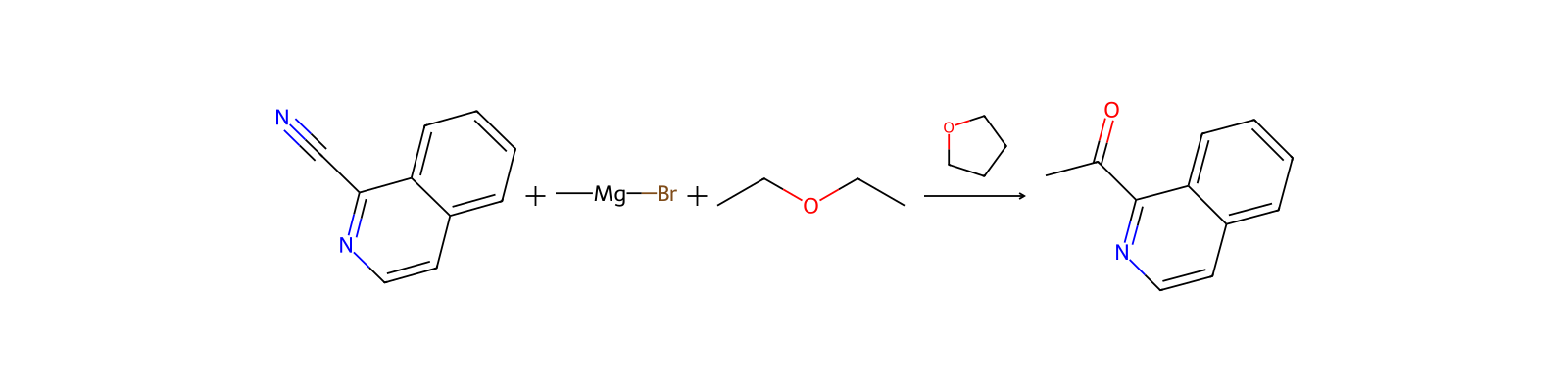
Verwenden1-Isoquinolinecarbonitrile may be used as starting reagent in the syntheses of imidazo[5,1-a]isoquinolines.
Darstellung
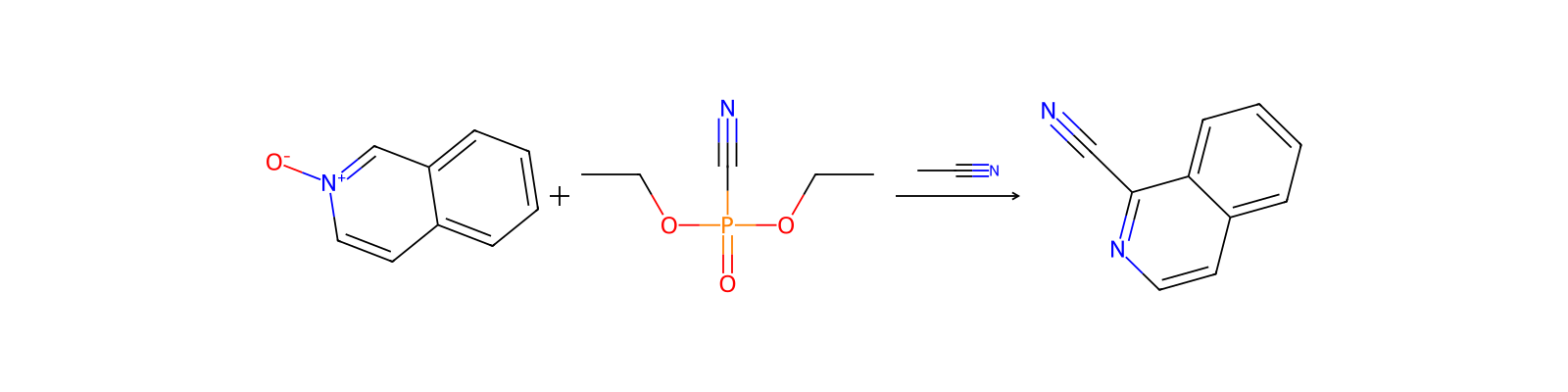
synthetischePhosphoryl chloride (0.54 g, 3.5 mmol) in chloroform (5 mL) was added dropwise to a solution of the requisite carbaldoxime (0.2 g, 1.2 mmol) in chloroform (10 mL) under ice-cooling. The mixture was heated under reflux for 4 h, treated with iced water, and the resulting precipitate was filtered off. The filtrate was basified with 28% ammonia and then extracted with chloroform to give 1-cyanoisoquinoline 1440; yield 0.17 g (95%).
Vor- und nachgelagerte Produkte
Vorgelagerte Rohstoffe
Anbieter50 Anbieter
阿诺西(上海)生物技术有限公司400-1107768 15058188853 · [email protected]
Hebei Chuanghai Biotechnology Co., Ltd+86-17732866630 · [email protected]
毕佳索(上海毕得医药科技股份有限公司)400-6005915 · [email protected]
上海麦克林生化科技股份有限公司021-50706066 15221275939 · [email protected]
郑州汇聚化工有限公司13393710386 · [email protected]
郑州鸿晟医药科技有限公司0371-55695890 15637198702 · [email protected]
上海海皋科技有限公司021-57646680 18306277365 · [email protected]
韶远科技(上海)有限公司021-50795510 4000665055 · [email protected]
上海迈瑞尔生化科技有限公司4006356688 18621169109 · [email protected]
阿法埃莎(中国)化学有限公司400-6106006 · [email protected]
安耐吉化学&3A(安徽泽升科技股份有限公司)400-0056266 · [email protected]
湖北长耀生物科技有限公司17683887209 17683887209 · [email protected]
苏州新瑞生物科技有限公司13401437572 · [email protected]
山东西亚化学有限公司13355009207 13355009207 · [email protected]
TargetMol 中国(陶术生物)400-821-0310 15002144251 · [email protected]
上海遐瑞医药科技有限公司+86 21 61551611
南京诺利斯医药科技有限公司13901585132 · [email protected]
盐城奥科联合医药科技有限公司0515-89701588 13770166955 · [email protected]
上海毕得医药科技股份有限公司400-164-7117 18317119277 · [email protected]
郑州阿尔法化工有限公司0371-53732842 15981811963 · [email protected]
北京奥秘佳得医药科技有限公司+86-13522808617 · [email protected]
济南泺合医药技术有限公司86-0531-68658065 15726150375 · [email protected]
杭州杰恒化工有限公司0571-87396432 · [email protected]
上海寰川实业有限公司021-61478794 · [email protected]
青岛海智微元生物科技有限公司18317699790 18317699790 · [email protected]
Sigma-Aldrich西格玛奥德里奇(上海)贸易有限公司021-61415566 800-8193336 · [email protected]
宁波智锐新材料有限公司0574-87487840-805 15888368997
上海凯睿生物科技有限公司021-5068 3667/17749785980/1029026415; 17749785980 · [email protected]
Henan Alfa Chemical Co., Ltd+8618339805032 · [email protected]
河南普赛化工产品有限公司0371-63357898 · [email protected]
HANGZHOU LEAP CHEM CO., LTD.+86-571-87711850 +86-15355479329 · [email protected]
嘉兴市德亿化工有限公司0573-85866609 13325730825 · [email protected]
上海阿拉丁生化科技股份有限公司6206333 13167063860 · [email protected]
南京科晟祥科技有限公司18252089365 · [email protected]
盐城康迪森医药科技有限公司13812573443;18052965989 · [email protected]
上海源叶生物科技有限公司13636370518 · [email protected]
上海瀚思化工有限公司17717618050 · [email protected]
广州市金华大化学试剂有限公司020-84383047 · [email protected]
武汉易谊化学科技有限公司0711-3617768 13308685235 · [email protected]
山东小野化学股份有限公司0539-6362799 20)
杭州摩库生物医药科技有限公司400-711-5280 86-571-81025280 · [email protected]
北京索莱宝科技有限公司010-50973130 17801761073 · [email protected]
江苏艾康生物医药研发有限公司025-58859352 13913916777 · [email protected]
上海皓鸿生物医药科技有限公司400-8210725 400821072 · [email protected]
厦门盈融达化工有限公司+86-0592-6210733 · [email protected]
天津希恩思生化科技有限公司400-6387771-6039 18920764717 · [email protected]
湖北康鑫源顺医药化工有限公司027-51831887 15337167856 · [email protected]
艾览(上海)化工科技有限公司400-668-9898 · [email protected]
career henan chemical co+86-0371-86658258 · [email protected]
深圳利斯康医药科技有限公司+86-755-89396905 +86-15013857715 · [email protected]
Zugehörige Reaktionen
29






Verknüpfte Notizen
Wird geladen…