

Grundinformationen
- Standard-SMILES
Cc1ccccc1CC#N- InChIKey
WMGVPDQNPUQRND-UHFFFAOYSA-N- Summenformel
- C9H9N
- Durchschnittliche Molmasse
- 131,17 g/mol
- Monoisotopische Masse
- 131,07349929
Namen und Bezeichner
- Bevorzugter Name
- 2-(o-Tolyl)acetonitrile
- IUPAC
- 2-(2-methylphenyl)acetonitrile
- Lokaler Name
- o-Tolylacetonitril
- Englischer Name
- 2-Methylbenzyl cyanide
- Summenformel
- C9H9N
- Molmasse
- 131.17
Namen und Synonyme
2-Methylbenzyl cyanide22364-68-72-(o-Tolyl)acetonitrileo-Tolylacetonitrile2-Methylphenylacetonitrileo-MethylphenylacetonitrileBenzeneacetonitrile, 2-methyl-ACETONITRILE, o-TOLYL-2-Methylbenzeneacetonitrileo-MethylbenzylcyanideEINECS 244-937-5NSC 75859
Weitere Namen anzeigen
O-XYLYL CYANIDETolylacetonitrile(2-METHYLPHENYL)ACETONITRILE2-Tolylacetonitrileo-tolyl-acetonitril-Methylbenzylcyanide2-Methylbenzyl cyani2-tolylmethylnitrile
BRN 0907182P36Y8LY38YAI3-33244NSC-75859O-METHYLBENZYL NITRILEDTXSID801768984-09-00-01791 (Beilstein Handbook Reference)RefChem:461603
Datenbank-Bezeichner
- CAS
22364-68-7- PubChem CID
- 31155
- DTXSID
DTXSID80176898- ChEBI
CHEBI:27982- UNII
- P36Y8LY38Y
- EC Number
- 244-937-5
- Nikkaji
- J55.009D
Eigenschaften
Berechnete Struktureigenschaften
- XLogP
- 2,1
- Polarare Oberfläche (TPSA)
- 23,8 Ų
- H-Brücken-Donoren
- 0
- H-Brücken-Akzeptoren
- 1
- Frei drehbare Bindungen
- 1
- Schwere Atome
- 10
- Formalladung
- 0
- Komplexität
- 142
Physikochemische Eigenschaften
- Schmelzpunkt
- 142 · 142-143 °C
- Siedepunkt
- 244 · 244-250 °C
- Dichte
- 1.056 g/mL · 1.056 g/mL at 25 °C(lit.)
- Brechungsindex
- 1.5264 · 1.5264-1.5284
- Flammpunkt
- 110 °C · >110°C
- storage temp.
- Sealed in dry,Room Temperature
- Aggregatzustand
- clear liquid
- Farbe
- Colorless to Almost colorless
- Wichte
- 1.056 · 1.056
- Wasserlöslichkeit
- Slightly soluble in water. Soluble in benzene, ethyl ether, ethanol.
- BRN
- 907182 · 907182
- LogP
- 1.91 · 1.910 (est)
- CAS Datenbank
- 22364 · 22364-68-7(CAS DataBase Reference)
- NIST chemische Informationen
- 2 · 2-Methylbenzyl cyanide(22364-68-7)
Sicherheit und Regulatorisches
GHS-Klassifizierung
GHS Classification
Warning
H302 (95.7%): Harmful if swallowed [Warning Acute toxicity, oral];H312 (95.7%): Harmful in contact with skin [Warning Acute toxicity, dermal];H315 (95.7%): Causes skin irritation [Warning Skin corrosion/irritation];H319 (95.7%): Causes serious eye irritation [Warning Serious eye damage/eye irritation];H332 (95.7%): Harmful if inhaled [Warning Acute toxicity, inhalation];H335 (95.7%): May cause respiratory irritation [Warning Specific target organ toxicity, single exposure; Respiratory tract irritation]
P261, P264, P264+P265, P270, P271, P280, P301+P317, P302+P352, P304+P340, P305+P351+P338, P317, P319, P321, P330, P332+P317, P337+P317, P362+P364, P403+P233, P405, and P501 (click each P-code to see the statement)
Aggregated GHS information provided per 46 reports by companies from 6 notifications to the ECHA C&L Inventory. Each notification may be associated with multiple companies.;Information may vary between notifications depending on impurities, additives, and other factors. The percentage value in parenthesis indicates the notified classification ratio from companies that provide hazard codes. Only hazard codes with percentage values above 10% are shown. For more detailed information, please visit ECHA C&L website.
Gefahrenhinweise
Hazard Classes and CategoriesAcute Tox. 4 (95.7%);Acute Tox. 4 (95.7%);Skin Irrit. 2 (95.7%);Eye Irrit. 2 (95.7%);Acute Tox. 4 (95.7%);STOT SE 3 (95.7%)
Sicherheitsdaten
- ridadr
- 3439
- hs_code
- 29269090
- RTECS-Nr.
- AM2290000
- risk_code
- 20/21/22-36/37/38
- Toxizität
- mouse,LD50,intravenous,56mg/kg (56mg/kg),U.S. Army Armament Research & Development Command, Chemical Systems Laboratory, NIOSH Exchange Chemicals. Vol. NX#02089,
- hazard_code
- Xn
- safety_code
- 36/37-37/39-27-26
- hazard_class
- 6.1
- packing_group
- III
Chemie und Industrie
Anwendungen
Verwendeno-Tolylacetonitrile is used as an important raw material and intermediate in organic Synthesis, pharmaceuticals, agrochemicals and dyestuff. It is also used as an organic and chemical intermediate.
Vor- und nachgelagerte Produkte
Vorgelagerte Rohstoffe
Nachgelagerte Produkte
Anbieter50 Anbieter
梯希爱(上海)化成工业发展有限公司021-67121386 · [email protected]
Career Henan Chemica Co+86-0371-86658258 +86-13203830695 · [email protected]
武汉欣扬瑞和化学科技有限公司13720274133 · [email protected]
武汉欣扬瑞和化学科技有限公司153-07155313 15307155313 · [email protected]
温州共赢化学有限公司+86-0086-577-64498589 +86-15355981851 · [email protected]
Dayang Chem (Hangzhou) Co.,Ltd.+86-0571-88938639 17705817739 · [email protected]
科瑞迪化学400-821-5857 021-64326257 · [email protected]
Syntechem Co.,Ltd[email protected]
阿法埃莎(中国)化学有限公司400-6106006 · [email protected]
安耐吉化学&3A(安徽泽升科技股份有限公司)400-0056266 · [email protected]
武汉凯威斯科技有限公司86-027-67849912 · [email protected]
常州科化生物科技有限公司0519-68985668 13685222090 · [email protected]
上海瀚鸿科技股份有限公司021-54306202 13764082696 · [email protected]
上海隆盛化工有限公司58099637 13585536065 · [email protected]
上海攀鸿化工科技有限公司021-56491756 13512199871 · [email protected]
山东西亚化学有限公司13355009207 13355009207 · [email protected]
玛雅试剂+86 (573) 82222445 (0)18006601000 452520369 · [email protected]
四川库利南科技有限公司400-1166-196 18981987031 · [email protected]
Xiamen AmoyChem Co., Ltd+86-86-5926051114 · [email protected]
武汉艾瑞尔化学科技有限公司18986259541 18986259541 · [email protected]
艾科试剂4008-755-333 18080918076 · [email protected]
TOKYO CHEMICAL INDUSTRY CO., LTD.03-36680489 · [email protected]
卡迪亚医药科技有限公司0371-86615086 18203638366 0371-86159066 13526786601
上海贤鼎生物科技有限公司4009209199 · [email protected]
深圳康特腾科技有限公司86-0755-86635001 · [email protected]
上海睿升化工科技有限公司+86-021-50935922
北京环宇世纪化学科技有限公司hysj_bj.com
安徽科迪达化工有限公司0554-2106669 · [email protected]
南京克迪特贸易有限公司025-52164950 · [email protected]
济南泺合医药技术有限公司86-0531-68658065 15726150375 · [email protected]
上海麦克林生化科技股份有限公司15221275939 15221275939 · [email protected]
上海乾劲化工科技有限公司021-20900665 17321230821 · [email protected]
杭州杰恒化工有限公司0571-87396432 · [email protected]
上海有朋化工有限公司021-69005955 13701776567 · [email protected]
江苏艾康生物医药研发有限公司025-66028182 17714375163 · [email protected]
上海凯赛化工有限公司021-33516722 13701817765 · [email protected]
上海彤源化工有限公司021-021-69182866 13701855675 · [email protected]
上海容立化学科技有限公司021-69992220 13701886816 · [email protected]
上海康拓化工有限公司021-69185552 13701777608 · [email protected]
湖北巨胜科技有限公司027-59599241 18871490274 · [email protected]
桦特昇生物科技(武汉)有限公司027-59207879 1972026995 18140587686 · [email protected]
Candia Pharmatech Co. , Ltd.+86-371-55216238
上海博熠生物医药科技有限公司021-021-54331997 18321536537 · [email protected]
武汉鑫儒化工有限公司15927387915 15337108568
厦门志信化学有限公司+86-5922680277 +86-13806087780 · [email protected]
上海岚克医药科技发展有限公司0086-21-58956006
南京艾比克斯生化科技有限公司025-87193546 18652950785 · [email protected]
上海思言生物科技有限公司021-50908862,442785678,326799392 18721037013 · [email protected]
南京熙朗化工产品有限公司18936048580 · [email protected]
北京华威锐科化工科技有限公司89508211 18501085097 · [email protected]
Ergänzende Hinweise
DefinitionChEBI: A nitrile that is acetonitrile where one of the methyl hydrogens is substituted by a 2-methylphenyl group.
Zugehörige Reaktionen
17


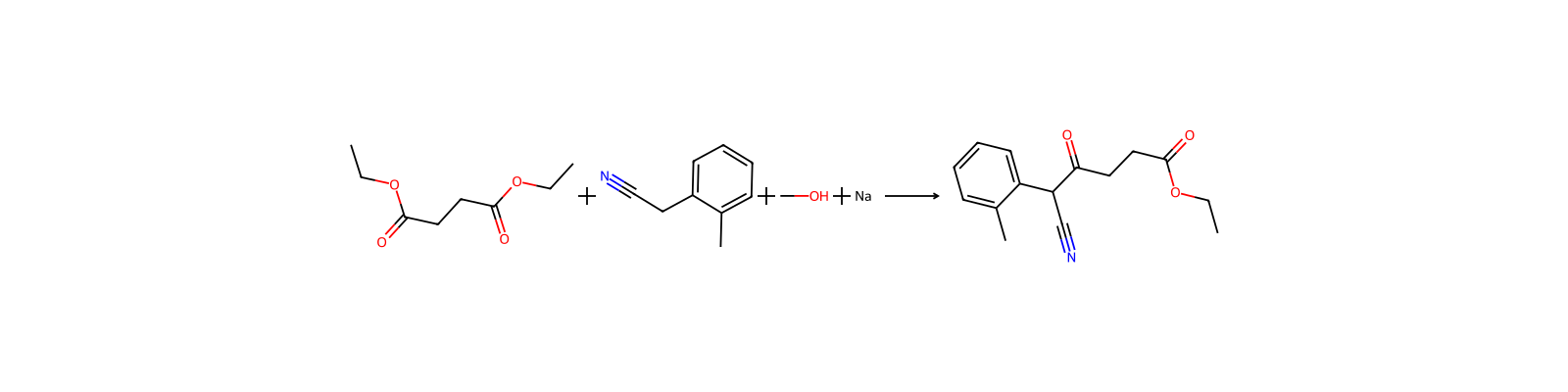

Verknüpfte Notizen
Wird geladen…