StartseiteMCPWorkbenchSkills
StartseiteWorkbenchBenachrichtigungenMein Bereich
llms.txt · MCP-AnleitungDatenschutz · Nutzungsbedingungen · Supportv1.8.3
  1. Startseite
  2. /Verbindung

4-(4-Hydroxy-3-methoxyphenyl)butan-2-on

Zingerone

HCID 31211
Neue Reaktion
Drucken
GrundinformationenÜberblickNamen und BezeichnerEigenschaftenSicherheit und RegulatorischesChemie und IndustrieZugehörige ReaktionenNotizen zur Verbindung
TeilstruktursucheÄhnliche Strukturen suchen

Grundinformationen

CAS
122-48-5
Standard-SMILES
COc1cc(CCC(C)=O)ccc1O
InChIKey
OJYLAHXKWMRDGS-UHFFFAOYSA-N
Summenformel
C11H14O3
Durchschnittliche Molmasse
194,23 g/mol
Monoisotopische Masse
194,0942943

Überblick

Zingerone is a methyl ketone that is 4-phenylbutan-2-one in which the phenyl ring is substituted at positions 3 and 4 by methoxy and hydroxy groups respectively. The major pungent component in ginger. It has a role as an antioxidant, a flavouring agent, a fragrance, an antiemetic, a radiation protective agent, an anti-inflammatory agent and a plant metabolite. It is a monomethoxybenzene, a member of phenols and a methyl ketone.

Namen und Bezeichner

Bevorzugter Name
Zingerone
IUPAC
4-(4-hydroxy-3-methoxyphenyl)butan-2-one
Lokaler Name
4-(4-Hydroxy-3-methoxyphenyl)butan-2-on
Englischer Name
Vanillylacetone
Summenformel
C11H14O3
Molmasse
194.23

Namen und Synonyme

ZINGERONEVanillylacetone122-48-54-(4-Hydroxy-3-methoxyphenyl)butan-2-oneZingiberone4-(4-Hydroxy-3-methoxyphenyl)-2-butanoneZingheroneGingeroneVanillyl acetone2-Butanone, 4-(4-hydroxy-3-methoxyphenyl)-[0]-Paradol4-Hydroxy-3-methoxybenzylacetone
Weitere Namen anzeigen
FEMA 3124ZingaroneNSC 15335
3-Methoxy-4-hydroxybenzylacetone(4-Hydroxy-3-methoxyphenyl)ethyl methyl ketone(0)-Paradol4-(3-Methoxy-4-hydroxyphenyl)-2-butanoneFEMA No. 3124DTXSID80474202-(4-Hydroxy-3-methoxyphenyl)ethyl methyl ketoneNSC-15335

Datenbank-Bezeichner

CAS
122-48-5
PubChem CID
31211
DTXSID
DTXSID8047420
ChEMBL
CHEMBL25894
ChEBI
CHEBI:68657
UNII
4MMW850892
EC Number
204-548-3
Nikkaji
J5.356B

Eigenschaften

Berechnete Struktureigenschaften

XLogP
0,8
Polarare Oberfläche (TPSA)
46,5 Ų
H-Brücken-Donoren
1
H-Brücken-Akzeptoren
3
Frei drehbare Bindungen
4
Schwere Atome
14
Formalladung
0
Komplexität
191

Experimentelle und physikochemische Eigenschaften

Chemical ClassesOther Uses -> Food Additives
FragrancesFragrance Ingredient (Zingerone) -> IFRA transparency List
Odor · 2 Einträge

STRONG, PUNGENT ODOR REMINISCENT OF GINGER

SWEET, SPICY AROMA

Taste · 2 Einträge

SHARP TASTE SIMILAR TO GINGER

SWEET, SPICY TASTE

Food AdditivesFLAVOR ENHANCER, FLAVORING AGENT OR ADJUVANT -> FDA Substance added to food
Density1.138-1.139 @ 25 °C
Flavoring AgentsEU Flavoring substances
Color/FormCrystals from acetone, petroleum ether, ether plus petroleum ether
Solubility · 5 Einträge

Sparingly sol in water, petroleum ether; sol in ether, dil alkalies

Very soluble in ethyl ether

SOLUBILITY 1:1 IN 50% ALCOHOL

slightly soluble in water

moderately soluble (in ethanol)

Flash PointAPPROX 102 °C
Endocrine DisruptorsPotential endocrine disrupting compound
Boiling Point · 3 Einträge

187-188 °C @ 14 mm Hg

141.00 to 0.50 °C. @ 0.00 mm Hg

187-188 °C (14 mm Hg)

Physikochemische Eigenschaften

Schmelzpunkt
40 · 40-41 °C(lit.)
Siedepunkt
141 °C0.5 · 141 °C0.5 mm Hg(lit.)
Dichte
1.14 g/mL · 1.14 g/mL at 25 °C(lit.)
Brechungsindex
20 · n20/D 1.541(lit.)
FEMA
3124 · 3124 | ZINGERONE
Flammpunkt
230 °F · >230 °F
storage temp.
2 · Sealed in dry,2-8°C
Löslichkeit
Acetonitrile (Slightly), DMSO (Slightly), Methanol (Slightly)
Aggregatzustand
Solid
pka
10.03 · 10.03±0.20(Predicted)
Farbe
White to Pale Yellow
Geruch (Odor)
100 % · at 100.00 %. sweet spicy phenolic ginger vanilla woody
Geruchsart
spicy
Biologische Quelle
synthetic
JECFA Number
730 · 730
Merck
14 · 14,10166
Henry's Law Constant
1.2 · 1.2×104 mol/(m3Pa) at 25℃, McFall et al. (2020)
Major Application
flavors and fragrances
Kosmetik-Inhaltsstoffe Funktionen
FLAVOURING
InChI
1S/C11H14O3/c1-8(12)3-4-9-5-6-10(13)11(7-9)14-2/h5-7,13H,3-4H2,1-2H3
InChIKey
OJYLAHXKWMRDGS-UHFFFAOYSA-N
SMILES
COc1cc(CCC(C)=O)ccc1O
LogP
0.64 · 0.64
CAS Datenbank
122 · 122-48-5(CAS DataBase Reference)
NIST chemische Informationen
2 · 2-Butanone, 4-(4-hydroxy-3-methoxyphenyl)-(122-48-5)
EPA chemische Informationen
2 · 2-Butanone, 4-(4-hydroxy-3-methoxyphenyl)- (122-48-5)

Sicherheit und Regulatorisches

Sicherheitsangaben dienen nur zur Orientierung und ersetzen weder das Sicherheitsdatenblatt (SDB) des Lieferanten noch geltende Vorschriften oder eine fachliche Bewertung.

GHS-Klassifizierung

GHS Classification · 3 Einträge

This chemical does not meet GHS hazard criteria for 99.4% (1413 of 1421) of all reports.

Not Classified

Aggregated GHS information provided per 1421 reports by companies from 4 notifications to the ECHA C&L Inventory.

Gefahrenhinweise

Regulatory Information · 3 Einträge

Chemical: 2-Butanone, 4-(4-hydroxy-3-methoxyphenyl)-

Regulation (EC) No 1831/2003 (amended)

2-Butanone, 4-(4-hydroxy-3-methoxyphenyl)-: Does not have an individual approval but may be used under an appropriate group standard

Other Safety InformationIMAP assessments - 2-Butanone, 4-(4-hydroxy-3-methoxyphenyl)-: Environment tier I assessment
Hazards SummaryOral LD50 (rat) = 2580 mg/kg; [HSDB] An irritant; [MSDSonline]
FDA Requirements · 2 Einträge

Zingerone is a food additive permitted for direct addition to food for human consumption as a synthetic flavoring substance and adjuvant in accordance with the following conditions: a) they are used in the minimum quantity required to produce their intended effect, and otherwise in accordance with all the principles of good manufacturing practice, and 2) they consist of one or more of the following, used alone or in combination with flavoring substances and adjuvants generally recognized as safe in food, prior-sanctioned for such use, or regulated by an appropriate section in this part.

OF DIRECT FOOD ADDITIVES- LIMITATIONS: SYNTHETIC FLAVOR.

Hazard Classes and CategoriesNot Classified

Sicherheit und Schutzausrüstung

Disposal Methods · 1 Eintrag

SRP: At the time of review, criteria for land treatment or burial (sanitary landfill) disposal practices are subject to significant revision. Prior to implementing land disposal of waste residue (including waste sludge), consult with environmental regulatory agencies for guidance on acceptable disposal practices.

Toxikologische Informationen

Natural Pollution Sources · 2 Einträge

REPORTED FOUND IN ESSENTIAL OIL OF ZINGIBER OFFICINALE.

Isolated from ginger root...

Regulatorische Informationen

FDA Requirements · 2 Einträge

Zingerone is a food additive permitted for direct addition to food for human consumption as a synthetic flavoring substance and adjuvant in accordance with the following conditions: a) they are used in the minimum quantity required to produce their intended effect, and otherwise in accordance with all the principles of good manufacturing practice, and 2) they consist of one or more of the following, used alone or in combination with flavoring substances and adjuvants generally recognized as safe in food, prior-sanctioned for such use, or regulated by an appropriate section in this part.

OF DIRECT FOOD ADDITIVES- LIMITATIONS: SYNTHETIC FLAVOR.

Sicherheitsdaten

wgk
2
tsca
TSCA listed
hs_code
2914509090
RTECS-Nr.
EL8900000
risk_code
36/37/38
safety_code
26-36
Speicherklasse
11 - Combustible Solids
Giftige Stoffe Daten
122-48-5(Hazardous Substances Data)

Chemie und Industrie

Pharmakologische Informationen

Metabolism/Metabolites · 3 Einträge

ORAL OR IP ADMIN OF 100 MG/KG /TO RATS/ RESULTED IN URINARY EXCRETION...MAINLY AS GLUCURONIDE AND/OR SULFATE CONJUGATES. WHILST UNCHANGED ZINGERONE ACCOUNTED FOR 50-55% OF DOSE, REDN TO CARBINOL (11-13%) ALSO OCCURRED.

/AFTER ORAL OR IP ADMIN OF 100 MG/KG ZINGERONE TO RATS/ SIDE CHAIN OXIDN TOOK PLACE AT THE 3 FEASIBLE SITES, AND OXIDN IN 3-POSITION PREDOMINATED TO YIELD C-6--C-2 METABOLITES. IDENTIFIED METABOLITES ACCOUNTED FOR 95-97% OF DOSE.

BILIARY STUDIES AND INVESTIGATIONS WITH CECAL MICRO-ORGANISMS IN VITRO /IN RATS/ INDICATED THAT SEVERAL OF THE URINARY O-DEMETHYLATED METABOLITES /OF ZINGERONE/ WERE OF BACTERIAL ORIGIN.

Cellular LocationsCytoplasm

Verwendung und Herstellung

Uses · 3 Einträge

Obtained from ginger root or prepared from vanillin and acetone; Used in fragrances, flavors, cosmetics, and spice oils; [Merck Index]

FLAVOR INGREDIENT

Flavoring

Methods of Manufacturing · 1 Eintrag

Isolated from ginger root or prepared from vanillin and acetone followed by catalytic hydrogenation: Nomura, J Chem Soc 111, 769 (1917); Nomura, US patents 1,263,796 (1918), 1,306,710 (1919); Cotton, US patent 2,381,210 (1945 to Penn Coal Prod Co).

Formulations/PreparationsCOMMERCIAL PRODUCT CONTAINS A MINIMUM OF 93% ZINGERONE.
Use Classification · 6 Einträge

Fragrance Ingredients

Flavouring Agent -> FLAVOURING_AGENT -> JECFA Functional Classes

Flavoring Agents -> JECFA Flavorings Index

Flavouring Agent -> FLAVOURING_AGENT -> JECFA Functional Classes

Flavouring Agent -> FLAVOURING_AGENT -> JECFA Functional Classes

Flavouring Agent -> FLAVOURING_AGENT -> JECFA Functional Classes

General Manufacturing Information · 2 Einträge

2-Butanone, 4-(4-hydroxy-3-methoxyphenyl)-: ACTIVE

FEMA NUMBER 3124; IT IS USED IN NON-ALCOHOLIC BEVERAGES (6.9 PPM); ICE CREAM, ICES, ETC (7.8 PPM); CANDY (11 PPM); BAKED GOODS (11 PPM); CHEWING GUM (15 PPM).

Anwendungen

OccurrenceReported found in the essential oil of Zingiber officinale. Also reported found in cranberry, raspberry, ginger and mango.

Darstellung

synthetischeBy condensation of vanillin with acetone followed by hydrogenation.

Vor- und nachgelagerte Produkte

Vorgelagerte Rohstoffe

2-Butanone, 4-[3-methoxy-4-(phenylmethoxy)phenyl]-2-Propenal, 3-[4-[[(1,1-dimethylethyl)dimethylsilyl]oxy]-3-methoxyphenyl]-, (2E)-4-(4-Hydroxy-3-methoxyphenyl)butan-2-ol4-(4-Hydroxy-3-methoxyphenyl)-3-buten-2-on4'-Hydroxy-3'-methoxycinnamaldehyd

Ergänzende Hinweise

DefinitionChEBI: A ketone that is 4-phenylbutan-2-one in which the phenyl ring is substituted at positions 3 and 4 by methoxy and hydroxy groups respectively. The major pungent component in ginger.

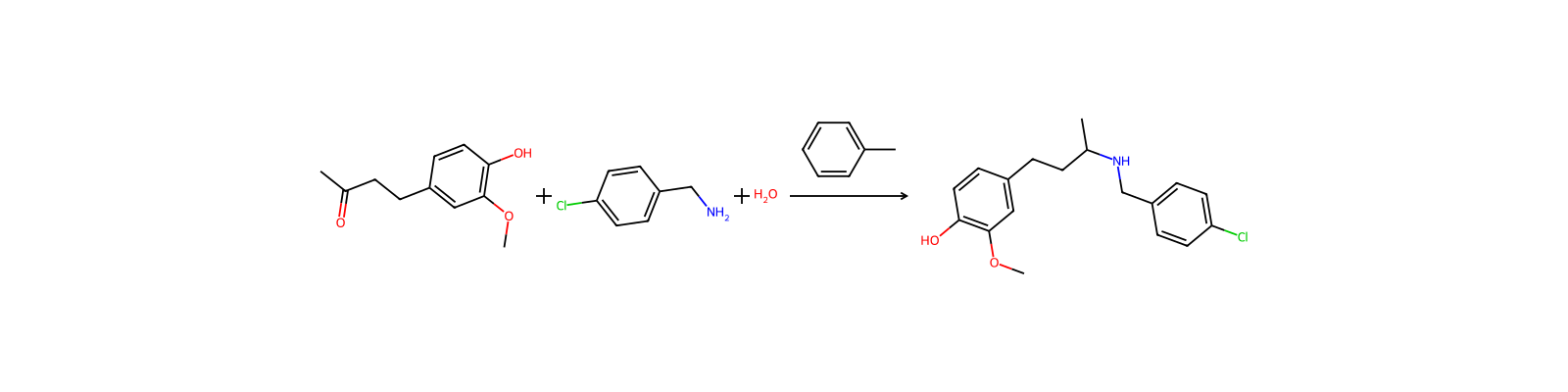
Zugehörige Reaktionen

2
Reaktionsaufzeichnung erstellen
Reaktionsgleichung von HRID 2201611
HRID 2201611als Edukt
Reaktionsgleichung von HRID 2201612
HRID 2201612als Edukt

Notizen zur Verbindung

Auf dieser SeiteGrundinformationenÜberblickNamen und BezeichnerEigenschaftenSicherheit und RegulatorischesChemie und IndustrieZugehörige ReaktionenNotizen zur Verbindung