

Grundinformationen
- Standard-SMILES
CC(C)(CO)CO- InChIKey
SLCVBVWXLSEKPL-UHFFFAOYSA-N- Summenformel
- C5H12O2
- Durchschnittliche Molmasse
- 104,15 g/mol
- Monoisotopische Masse
- 104,08372962
Überblick
2,2-dimethylpropane-1,3-diol is a white crystalline solid. Melting point 130 °C.
Namen und Bezeichner
- Bevorzugter Name
- Neopentyl glycol
- IUPAC
- 2,2-dimethylpropane-1,3-diol
- Lokaler Name
- 2,2-Dimethylpropan-1,3-diol
- Englischer Name
- neopentyl glycol
- Summenformel
- C5H12O2
- Molmasse
- 104.15
Namen und Synonyme
Neopentyl glycol126-30-72,2-Dimethylpropane-1,3-diol2,2-DIMETHYL-1,3-PROPANEDIOLDimethylolpropaneNeopentanediolNeopentylene glycol1,3-Propanediol, 2,2-dimethyl-NeopentylglycolNeolDimethyltrimethylene glycolHydroxypivalyl alcohol
Weitere Namen anzeigen
NEOPENTYL GLYCONPG Glycol2,2-Dimethyl-1
2,2-Dimethyltrimethylene glycolNexcoat 6002,2-Dimethyl-1,3 propanediolDTXSID8027036QI80HXD6S5ORISTAR NPGNSC-63661,3-Dihydroxy-2,2-dimethylpropane
Datenbank-Bezeichner
- CAS
126-30-7- PubChem CID
- 31344
- DTXSID
DTXSID8027036- ChEMBL
CHEMBL3184801- ChEBI
CHEBI:143768- UNII
- QI80HXD6S5
- EC Number
- 204-781-0
- Nikkaji
- J2.511I
Eigenschaften
Berechnete Struktureigenschaften
- XLogP
- 0
- Polarare Oberfläche (TPSA)
- 40,5 Ų
- H-Brücken-Donoren
- 2
- H-Brücken-Akzeptoren
- 2
- Frei drehbare Bindungen
- 2
- Schwere Atome
- 7
- Formalladung
- 0
- Komplexität
- 44
Experimentelle und physikochemische Eigenschaften
PolymersOther Classes -> Alcohols and Polyols, Other
SpringerMaterials PropertiesBoiling point
LogP
log Kow = 0.12
-0.84
OdorSweetish
Density
1.1 g/cu cm
1.1 g/cm³
Relative density of the vapour/air-mixture at 20 °C (air = 1): 1.0
1.06 @25 °C
Color/Form
Needles from benzene
Crystalline solid
Solubility
In water, 83 g/100 mL at 20 °C
Solubility in water approximately 65% wet weight
Soluble in water
Freely soluble in alcohol, ether
For more Solubility (Complete) data for Neopentyl glycol (6 total), please visit the HSDB record page.
Solubility in water, g/100ml at 20 °C: 83
Flash Point
225 °F (USCG, 1999)
265 °F (129 °C) (open cup)
107 °C
Boiling Point
406.4 °F at 760 mmHg (USCG, 1999)
207 °C
210 °C
206 °C @760 [mm Hg]
DecompositionWhen heated to decomposition it emits acrid smoke and irritating fumes.
Melting Point
260.6 °F (USCG, 1999)
129.3 °C
127 °C
Vapor Density
3.6 (Air =1)
Relative vapor density (air = 1): 3.6
Physikochemische Eigenschaften
- Schmelzpunkt
- 126 · 126-128 °C
- Siedepunkt
- 208 °C · 208 °C
- Dichte
- 1.06 · 1.06
- Dampfdichte
- 3.6 · 3.6 (vs air)
- Dampfdruck
- 0.8 mm · <0.8 mm Hg ( 20 °C)
- Brechungsindex
- 1.4406 · 1.4406 (estimate)
- Flammpunkt
- 107 °C · 107 °C
- storage temp.
- Inert atmosphere,Room Temperature
- Löslichkeit
- 830 g/l · 830g/l
- Aggregatzustand
- Crystalline Chunks
- pka
- 14.57 · 14.57±0.10(Predicted)
- Farbe
- White
- Explosionsgrenze
- 1.34 %, · 1.34%, 149°F
- Wasserlöslichkeit
- 830 g/L · 830 g/L (20 ºC)
- Merck
- 14 · 14,6458
- BRN
- 605291 · 605291
- Henry's Law Constant
- 4 · 4.0×102 mol/(m3Pa) at 25℃, Wang et al. (2017)
- Stabilität
- Stable. Incompatible with strong oxidizing agents, acetic anhydride, acid chlorides, moisture. Combustible.
- Kosmetik-Inhaltsstoffe Funktionen
- SOLVENTPLASTICISER
- InChI
- 1S/C5H12O2/c1-5(2,3-6)4-7/h6-7H,3-4H2,1-2H3
- InChIKey
- SLCVBVWXLSEKPL-UHFFFAOYSA-N
- SMILES
- CC(C)(CO)CO
- LogP
- -0.15 at · -0.15 at 25℃
- CAS Datenbank
- 126 · 126-30-7(CAS DataBase Reference)
- NIST chemische Informationen
- 1 · 1,3-Propanediol, 2,2-dimethyl-(126-30-7)
- EPA chemische Informationen
- Neopentyl glycol (126-30-7)
Sicherheit und Regulatorisches
GHS-Klassifizierung
GHS Classification
This chemical does not meet GHS hazard criteria for 1.9% (19 of 1013) of reports.
Danger
H315 (21.1%): Causes skin irritation [Warning Skin corrosion/irritation]
P264, P264+P265, P280, P302+P352, P305+P351+P338, P305+P354+P338, P317, P321, P332+P317, P337+P317, and P362+P364 (click each P-code to see the statement)
Aggregated GHS information provided per 1013 reports by companies from 9 notifications to the ECHA C&L Inventory. Each notification may be associated with multiple companies.
Danger
Gefahrenhinweise
Regulatory Information
Chemical: 1,3-Propanediol, 2,2-dimethyl-
1,3-Propanediol, 2,2-dimethyl- is listed on the EPA's Chemical Data Reporting (CDR) system. Manufacturers and importers of 1,3-Propanediol, 2,2-dimethyl- are required to report information about their production and use of this chemical to the EPA under the Toxic Substances Control Act (TSCA). (40 eCFR Part 711)
Status: Active Update: 28-03-2023 https://echa.europa.eu/registration-dossier/-/registered-dossier/15079
1,3-Propanediol, 2,2-dimethyl-: Does not have an individual approval but may be used under an appropriate group standard
Other Safety InformationIMAP assessments - 1,3-Propanediol, 2,2-dimethyl-: Human health tier I assessment
DOT LabelPoison
Fire Hazards
Special Hazards of Combustion Products: Emits toxic fumes under fire condition. (USCG, 1999)
Combustible. Finely dispersed particles form explosive mixtures in air.
Fire PotentialCombustible when exposed to heat or flame.
Health Hazards
May be harmful by ingestion or skin absorption. Causes eye and skin irritation. Material is irritating to mucous membrane and upper respiratory tract. INHALATION: Call for medical aid. Remove to fresh air. If breathing has stopped, give artificial respiration. If breathing is difficult, give oxygen. (USCG, 1999)
Hazards Summary
An eye and respiratory tract irritant; [ICSC] Effects to male liver and kidney but no reproductive or developmental toxicity observed in oral study of rats; [JECDB] An irritant; May cause smarting and reddening of skin if spilled and allowed to remain on clothes; High vapor concentrations may cause mild smarting of eyes and respiratory system; [CHRIS] A severe eye irritant that may cause injury; [Alfa Aesar MSDS]
Reactive GroupAlcohols and Polyols
EPA Safer ChemicalChemical: Neopentyl glycol
Reactivity Profile
2,2-DIMETHYLPROPANE-1,3-DIOL may generate toxic gases in combination of with alkali metals, nitrides, and strong reducing agents. Reacts with inorganic acids and carboxylic acids to form esters plus water. Converted to aldehydes or acids by oxidizing agents. May initiate the polymerization of isocyanates and epoxides.
Chemical DangersReacts violently with oxidants.
Physical DangersDust explosion possible if in powder or granular form, mixed with air.
Sicherheit und Schutzausrüstung
Fire Fighting
Fire Extinguishing Agents: Water sprays, dry chemical powder, alcohol or polymer foam. (USCG, 1999)
Use water spray, powder.
First Aid Measures
Fresh air, rest.
Remove contaminated clothes. Rinse and then wash skin with water and soap.
First rinse with plenty of water for several minutes (remove contact lenses if easily possible), then refer for medical attention.
Rinse mouth.
First AidEYES: Flush with copious amounts of water.
Safe StorageSeparated from oxidants. Dry.
Fire Fighting Procedures
Water or foam may cause frothing.
Suitable extinguishing media: Use water spray, alcohol-resistant foam, dry chemical or carbon dioxide. Advice for firefighters: Wear self contained breathing apparatus for fire fighting if necessary.
Storage ConditionsKeep container tightly closed in a dry and well-ventilated place. Hygroscopic.
Cleanup Methods
ACCIDENTAL RELEASE MEASURES; Personal precautions, protective equipment and emergency procedures: Use personal protective equipment. Avoid dust formation. Avoid breathing vapors, mist or gas. Ensure adequate ventilation. Evacuate personnel to safe areas. Avoid breathing dust. Environmental precautions: Do not let product enter drains. Methods and materials for containment and cleaning up: Pick up and arrange disposal without creating dust. Sweep up and shovel. Keep in suitable, closed containers for disposal.
Nonfire Spill ResponseExcerpt from ERG Guide 154 [Substances - Toxic and/or Corrosive (Non-Combustible)]:
Disposal Methods
SRP: Recycle any unused portion of the material for its approved use or return it to the manufacturer or supplier. Ultimate disposal of the chemical must consider: the material's impact on air quality; potential migration in air, soil or water; effects on animal, aquatic and plant life; and conformance with environmental and public health regulations. If it is possible or reasonable use an alternative chemical product with less inherent propensity for occupational harm/injury/toxicity or environmental contamination.
Product: Contact a licensed professional waste disposal service to dispose of this material. Offer surplus and non-recyclable solutions to a licensed disposal company. Contaminated packaging: Dispose of as unused product.
Spillage DisposalPersonal protection: P2 filter respirator for harmful particles. Sweep spilled substance into covered containers. Remove gas with fine water spray.
Preventive Measures
Gloves must be inspected prior to use. Use proper glove removal technique (without touching glove's outer surface) to avoid skin contact with this product. Dispose of contaminated gloves after use in accordance with applicable laws and good laboratory practices. Wash and dry hands.
Avoid formation of dust and aerosols. Provide appropriate exhaust ventilation at places where dust is formed.
ACCIDENTAL RELEASE MEASURES; Personal precautions, protective equipment and emergency procedures: Use personal protective equipment. Avoid dust formation. Avoid breathing vapors, mist or gas. Ensure adequate ventilation. Evacuate personnel to safe areas. Avoid breathing dust. Environmental precautions: Do not let product enter drains.
Handle in accordance with good industrial hygiene and safety practice. Wash hands before breaks and at the end of workday.
SRP: Local exhaust ventilation should be applied wherever there is an incidence of point source emissions or dispersion of regulated contaminants in the work area. Ventilation control of the contaminant as close to its point of generation is both the most economical and safest method to minimize personnel exposure to airborne contaminants. Ensure that the local ventilation moves the contaminant away from the worker.
Isolation and EvacuationExcerpt from ERG Guide 154 [Substances - Toxic and/or Corrosive (Non-Combustible)]:
Toxikologische Informationen
Environmental Fate
TERRESTRIAL FATE: Based on a classification scheme(1), an estimated Koc value of 1(SRC), determined from a structure estimation method(2), indicates that neopentyl glycol is expected to have very high mobility in soil(SRC). Volatilization of neopentyl glycol from moist soil surfaces is not expected to be an important fate process(SRC) given an estimated Henry's Law constant of 3.1X1-07 atm-cu m/mole(SRC), developed using a fragment constant estimation method(2). Neopentyl glycol is not expected to volatilize from dry soil surfaces(SRC) based upon a vapor pressure of 1.27X10⁻² mm Hg at 25 °C(3). Utilizing the Japanese MITI test, 1.2% of the Theoretical BOD was reached in 2 weeks(4) indicating that biodegradation is not an important environmental fate process in soil(SRC).
AQUATIC FATE: Based on a classification scheme(1), an estimated Koc value of 1(SRC), determined from a structure estimation method(2), indicates that neopentyl glycol is not expected to adsorb to suspended solids and sediment(SRC). Volatilization from water surfaces is expected(3) based upon an estimated Henry's Law constant of 3.1X10⁻⁷ atm-cu m/mole(SRC), developed using a fragment constant estimation method(2). Using this Henry's Law constant and an estimation method(3), volatilization half-lives for a model river and model lake are 122 and 890 days, respectively(SRC). According to a classification scheme(4), a BCF range of 0.3-0.5(5) suggests bioconcentration in aquatic organisms is low(SRC). Utilizing the Japanese MITI test, 1.2% of the Theoretical BOD was reached in 2 weeks(5) indicating that biodegradation is not an important environmental fate process in water(SRC).
ATMOSPHERIC FATE: According to a model of gas/particle partitioning of semivolatile organic compounds in the atmosphere(1), neopentyl glycol, which has a estimated vapor pressure of 1.27X10⁻² mm Hg at 25 °C(2), is expected to exist solely as a vapor in the ambient atmosphere. Vapor-phase neopentyl glycol is degraded in the atmosphere by reaction with photochemically-produced hydroxyl radicals(SRC); the half-life for this reaction in air is estimated to be 44 hrs(SRC), calculated from its rate constant of 8.7X10⁻¹² cu cm/molecule-sec at 25 °C(SRC) that was derived using a structure estimation method(3). Neopentyl glycol does not contain chromophores that absorb at wavelengths >290 nm(4) and, therefore, is not expected to be susceptible to direct photolysis by sunlight(SRC).
Exposure RoutesThe substance can be absorbed into the body by inhalation of its aerosol and by ingestion.
Toxicity Summary
IDENTIFICATION AND USE: Neopentyl glycol (NPG) is a solid. It is used in chemical synthesis, and in polyester manufacture. An insect repellent. HUMAN STUDIES: There are no data available. ANIMAL STUDIES: NPG was not irriating to skin in rabbits, and non sensitizing to the skin in the Murine Local Lymph Node Assay. NPG was practically non-toxic in acute studies in rats and guinea pigs. No treatment-related, adverse findings were observed at clinical examinations, clinical pathology and pathology up to a dose level of 1000 mg/kg bw/d in 90 day oral gavage studies in rats. In other rat study reproductive performance of the parent generation and development of the F1 generation were not affected after oral application of dose levels up to 1000 mg/kg bw/day. In male rats single i.p. injection of 2000 mg/kg bw resulted in a mid level of ataxia but no loss of righting reflex. NPG had no mutagenic activity in Salmonella typhimurium TA 100, TA 1535, TA 98, TA 1537, or in Escherichia coli WP2 uvrA tested with and without metabolic activation at dose levels up to 5000 ug/plate. NPG was not mutagenic in the HPRT locus assay under in vitro conditions in CHO cells in the absence and the presence of metabolic activation.
Signs and Symptoms
Cough.
Redness.
Redness. Pain.
Burning sensation.
Ongoing Test Status
EPA has released the Interactive Chemical Safety for Sustainability (iCSS) Dashboard. The iCSS Dashboard provides an interactive tool to explore rapid, automated (or in vitro high-throughput) chemical screening data generated by the Toxicity Forecaster (ToxCast) project and the federal Toxicity Testing in the 21st century (Tox21) collaboration. /The title compound was tested by ToxCast and/or Tox21 assays/[USEPA; ICSS Dashboard Application; Available from, as of August 9, 2018: http://actor.epa.gov/dashboard/]
Effluent Concentrations
Neopentyl glycol was detected at a concentraiton of 14.7 ug/L in an industrial landfill leachate sampled Decemeber 1996. It was not detected in in an industrial effluent from a petrochemical plant taken in July 1996, January 1997, or March 1997 (landfill leachate); detection limit = 1.0 ug/L(1).
Soil Adsorption/Mobility
Using a structure estimation method based on molecular connectivity indices(1), the Koc of neopentyl glycol can be estimated to be 1(SRC). According to a classification scheme(2), this estimated Koc value suggests that neopentyl glycol is expected to have very high mobility in soil(SRC).
Human Toxicity Excerpts
/BIOMONITORING/ Patients attending a general hospital for various reasons were screened for raised serum gamma glutamyltransferase (gamma-GT) and positive blood alcohol concentration (BAC). The results served as objective biochemical tests of heavy drinking. Among 419 individuals, 50 (11.9%) met these requirements and blood samples were used to determine the presence of low molecular mass aliphatic diols. 1,2-Propanediol, 2,3-butanediol and 2,2-dimethyl-1,3-propanediol were determined by gas liquid chromatography-mass spectrometry (GC-MS). In patients with blood ethanol concentration less than 2 mmol/L, 1,2-propanediol and 2,2-dimethyl-1, 3-propanediol mainly occurred together at median concentrations of about 200 umol/L. When blood ethanol was 2-42 mmol/L, 2,3-butanediol was also present covering a wide concentration range: three patients had concentrations between 6 and 10 mmol/L. There was no apparent correlation between the concentration of 2,3-butanediol and the concentration of blood ethanol. The diols were below the limits of detection in blood from nonintoxicated control individuals and hospital in-patients.
Artificial Pollution SourcesNeopentyl glycol's production and use in the production of plasticizers and polyesters and as a modifier of alkyd resins(1) may result in its release to the environment through various waste streams(SRC).
Environmental Biodegradation
AEROBIC: Neopently glycol has been identified as considered nonbiodegradable in a relatively short time frame(1). Neopentyl glycol, present at 100 mg/L, reached 1.2% of its theoretical BOD in 2 weeks using an activated sludge inoculum at 30 mg/L in the Japanese MITI test(2).
ANAEROBIC: Neopentyl glycol was 1% biodegraded following a lag of >60 days when incubated with an anaerobic digesting sludge from the Reading Sewage Works, Berkshire, UK(1).
Environmental Bioconcentration
A BCF range of 0.3-0.5 was calculated in fish for neopentyl glycol at 10 ppm using carp (Cyprinus carpio) which were exposed over an 6-week period(1). According to a classification scheme(2), this BCF suggests the potential for bioconcentration in aquatic organisms is low(SRC).
Volatilization from Water/Soil
The Henry's Law constant for neopentyl glycol is estimated as 3.1X10⁻⁷ atm-cu m/mole(SRC) developed using a fragment constant estimation method(1). This Henry's Law constant indicates that neopentyl glycol is expected to volatilize from water surfaces(2). Based on this Henry's Law constant, the volatilization half-life from a model river (1 m deep, flowing 1 m/sec, wind velocity of 3 m/sec)(2) is estimated as 122 days(SRC). The volatilization half-life from a model lake (1 m deep, flowing 0.05 m/sec, wind velocity of 0.5 m/sec)(2) is estimated as 890 days(SRC). Neopentyl glycol's Henry's Law constant indicates that volatilization from moist soil surfaces may occur(SRC). Neopentyl glycol is is not expected to volatilize from dry soil surfaces(SRC) based upon a vapor pressure of 1.27X10⁻² mm Hg(3).
Sicherheitsdaten
- F
- 3
- wgk
- 1
- tsca
- TSCA listed
- hs_code
- 29053990
- RTECS-Nr.
- TY5775000
- risk_code
- 36/37/38-36-41
- Toxizität
- rat,LCLo,inhalation,39000ppm/6H (39000ppm),Kodak Company Reports. Vol. 21MAY1971,
- hazard_code
- Xi
- safety_code
- 26-36-39
- Speicherklasse
- 11 - Combustible Solids
- Giftige Stoffe Daten
- 126-30-7(Hazardous Substances Data)
- Hazard Classifications
- Eye Dam. 1
- Selbstentzündungstemperatur
- 750 °F
Chemie und Industrie
Pharmakologische Informationen
Metabolism/Metabolites
4 rabbits were gavaged with 1000 -1500 mg/kg bw unlabelled neopentyl glycol and excretion of the test substance and their metabolites via urine was determined the following 24 hr (pooled data). After oral application 62% (range 53-67%) of the applied dose was found in the 24-hr urine as the conjugate of glucuronic acid indicating rapid absorption. Only 1.9% of the applied dose was excreted as 3-hydroxy-2,2-dimethylpropionic acid and 0.7% as unchanged neopentyl glycol. Conclusion: Rapid absorption of the test substance after oral exposure followed by conjugation with glucuronic acid and excretion via urine.
Absorption, Distribution and Excretion
4 rabbits were gavaged with 1000 -1500 mg/kg bw unlabelled neopentyl glycol and excretion of the test substance and their metabolites via urine was determined the following 24 hr (pooled data). After oral application 62% (range 53-67%) of the applied dose was found in the 24-hr urine as the conjugate of glucuronic acid indicating rapid absorption. Only 1.9% of the applied dose was excreted as 3-hydroxy-2,2-dimethylpropionic acid and 0.7% as unchanged neopentyl glycol. Conclusion: Rapid absorption of the test substance after oral exposure followed by conjugation with glucuronic acid and excretion via urine.
Verwendung und Herstellung
Uses
Used to make plasticizers and polyesters and as modifier of alkyd resins; [Merck Index] Used in chemical synthesis and in the polymers industry; [IUCLID] Used to make large scale and fine chemicals, rubber products, plastic products, textiles, leather, fur, wood and wood products, pulp-paper and paper products, non-metallic mineral products (i.e. plasters and cement), in printing and reproduction of recorded media, building and construction work, scientific research and development, and consumer construction chemicals; [ECHA REACH Registrations]
Pulp and Paper Processing [Category: Industry]
In the manufacture of plasticizers, polyesters, as modifier of alkyd resins.
Used in polyester manufacture. An insect repellent.
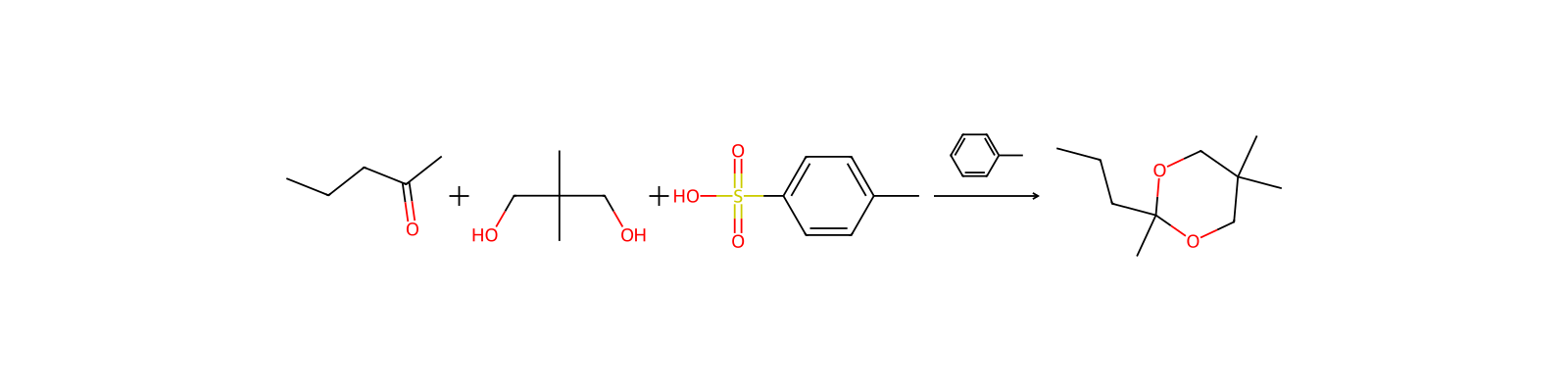
Application: 2,2-Dimethyl-1,3-propanediol may be used in the synthesis of: 2,2-dimethyl-1,3-propanediol cyclic phosphorochloridate; 2,2-dimethyl-1,3-propanediol cyclic phenylphosphonate; [1',3'-(2',2'-dimethylpropylene)]-2-iodo-3-octyl-5-thienylboronate; cyclic carbonate; 2,2-dimethyl-1,3-propanediol bis(cyclic-2,2-dimethyltrimethylene phosphite)
Synthetic lubricants.
ImpuritiesImpurities may include neopentyl glycol monoformate, neopentyl glycol monoisobutyrate, 2,2,4-trimethyl-1,3-pentanediol, and the cyclic acetal from the reaction of hydroxypivaldehyde and neopentyl glycol.
U.S. Production
2023: 100,000,000 - <250,000,000 lb
Non-confidential 2016 Chemical Data Reporting (CDR) information on the production and use of chemicals manufactured or imported into the United States. Chemical: 1,3-Propanediol, 2,2-dimethyl-:
Consumer UsesPlasticizer
Industry UsesIntermediate
Methods of Manufacturing
The aldol addition of isobutyraldehyde (2-methylpropanal) and formaldehyde gives hydroxypivaldehyde (3-hydroxy-2,2- dimethylpropanal), which is then reduced to neopentyl glycol. ... Both aldol addition and subsequent reduction are exothermic. Hydroxypivaldehyde can be reduced either by a crossed Cannizzaro reaction with equimolar amounts of formaldehyde and a base, or by catalytic hydrogenation.
Use Classification
EPA Safer Chemical Functional Use Classes -> Solvents
Safer Chemical Classes -> Green circle - The chemical has been verified to be of low concern
General Manufacturing Information
All Other Basic Organic Chemical Manufacturing
1,3-Propanediol, 2,2-dimethyl-: ACTIVE
2,2-Dimethyl-1,3-propanediol readily absorbs moisture on exposure to air.
Anwendungen
Verwenden2,2-Dimethyl-1,3-propanediol may be used in the synthesis of:2,2-dimethyl-1,3-propanediol cyclic phosphorochloridate2,2-dimethyl-1,3-propanediol cyclic phenylphosphonate[1′,3′-(2′,2′-dimethylpropylene)]-2-iodo-3-octyl-5-thienylboronatecyclic carbonate2,2-dimethyl-1,3-propanediol bis(cyclic-2,2-dimethyltrimethylene phosphite)
Vor- und nachgelagerte Produkte
Vorgelagerte Rohstoffe
Nachgelagerte Produkte
Anbieter50 Anbieter
国药集团化学试剂有限公司86-21-63210123 · [email protected]
梯希爱(上海)化成工业发展有限公司021-67121386 · [email protected]
衢州润东化工有限公司0570-8789886 18892685668 · [email protected]
上海阿拉丁生化科技股份有限公司400-6206333 13167063860 · [email protected]
山东飞扬化工有限公司18954855616 · [email protected]
北京安司莫森技术有限公司010-82954736 13391601435 · [email protected]
韶远科技(上海)有限公司021-50795510 4000665055 · [email protected]
上海将来实业股份有限公司400-0066400 13621662912 · [email protected]
Syntechem Co.,Ltd[email protected]
上海迈瑞尔生化科技有限公司4006356688 18621169109 · [email protected]
大连美仑生物技术有限公司0411-62910999 13889544652 · [email protected]
阿法埃莎(中国)化学有限公司400-6106006 · [email protected]
太原市瑞和丰科贸有限公司+86 351 7031519 · [email protected]
安耐吉化学&3A(安徽泽升科技股份有限公司)400-0056266 · [email protected]
北京绿百草科技发展有限公司010-61136123 · [email protected]
上海瀚鸿科技股份有限公司021-54306202 13764082696 · [email protected]
上海柯维化学技术有限公司021-64609169 18901607656 · [email protected]
南通合润生物科技有限公司18362409333 · [email protected]
上海景颜化工科技有限公司13817811078 · [email protected]
嘉兴市艾森化工有限公司0573-85285100 18627885956 · [email protected]
Pure Chemistry Scientific Inc.001-857-928-2050 or 1-888-588-9418 · [email protected]
山东西亚化学有限公司13355009207 13355009207 · [email protected]
玛雅试剂+86 (573) 82222445 (0)18006601000 452520369 · [email protected]
四川库利南科技有限公司400-1166-196 18981987031 · [email protected]
上海耐士化工科技有限公司400-188-0725 +86 21 34310725 13611771617
天津希恩思生化科技有限公司400 638 7771 · [email protected]
南京维奥化工有限公司Please Send Email 18652950785 · [email protected]
斯百全化学(上海)有限公司021-021-021-67601398-809-809-809 15221380277 · [email protected]
艾科试剂4008-755-333 18080918076 · [email protected]
上海思域化工科技有限公司86-21-34053660 · [email protected]
赛默飞世尔科技(中国)有限公司800-810-5118 · [email protected]
北京伊诺凯科技有限公司400-810-7969 010-59572699 · [email protected]
上海健超生物科技有限公司150-2103-5486 18017383231 · [email protected]
TCI AMERICA800-4238616 · [email protected]
TOKYO CHEMICAL INDUSTRY CO., LTD.03-36680489 · [email protected]
TCI Europe320-37350700 · [email protected]
深圳振强药物研发有限公司0755-66853366 13670046396 · [email protected]
深圳康特腾科技有限公司86-0755-86635001 · [email protected]
山东新华制药股份有限公司0533- 2196801 18853385675 · [email protected]
上海汇凯化学科技有限公司021-61995394 18916691159 · [email protected]
北京环宇世纪化学科技有限公司hysj_bj.com
深圳菲斯生物科技有限公司0755-83725350 13380397412 · [email protected]
上海将来实业股份有限公司021-61552785 · [email protected]
安徽科迪达化工有限公司0554-2106669 · [email protected]
HBCChem, Inc.+1-510-219-6317 · [email protected]
日照力德士化工有限公司010-51268198 · [email protected]
郑州阿尔法化工有限公司0371-53732842 15981811963 · [email protected]
上海石洋化工有限公司021-56795766 · [email protected]
上海爱蝶实业有限公司021-58957966 18930537195 · [email protected]
成都零六生物科技有限公司400-1166-196 13458535857 · [email protected]
Zugehörige Reaktionen
251


Verknüpfte Notizen
Wird geladen…