
Zinc(2+)
Daten werden ergänzt – lade die Seite später neu, um den aktuellen Stand zu sehen
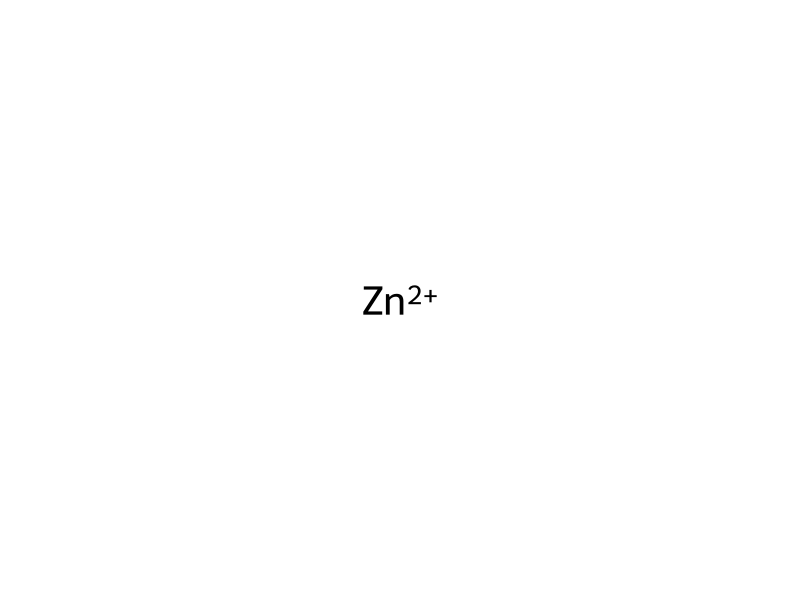
Grundinformationen
- CAS
1492823-75-2- Standard-SMILES
[Zn+2]- InChIKey
PTFCDOFLOPIGGS-UHFFFAOYSA-N- Summenformel
- Zn+2
- Durchschnittliche Molmasse
- 65,4 g/mol
- Monoisotopische Masse
- 63,92804504
Überblick
Zinc(2+) is a monoatomic dication, a divalent metal cation and a zinc cation. It has a role as a cofactor and a human metabolite.
Namen und Bezeichner
- Bevorzugter Name
- Zinc(2+)
- IUPAC
- zinc(2+)
- Englischer Name
- zinc(+2) cation
- Summenformel
- Zn+2
- Molmasse
- 65.39
Namen und Synonyme
zinc ionzinc(2+)Zinc cation23713-49-7Zinc, ion (Zn2+)zinc(II)Zinc ionsZinc ion(2+)Zinc 2+13S1S8SF37Zn(II)CHEBI:29105
Weitere Namen anzeigen
RefChem:1101172CHEBI:27365CHEBI:63056Velmanase Alfa9025-42-7Topostin BZn2+Lamazym
Datenbank-Bezeichner
- CAS
1492823-75-2、23713-49-7、7440-66-6- PubChem CID
- 32051
- DTXSID
DTXSID40920495- ChEMBL
CHEMBL1236970- ChEBI
CHEBI:29105- UNII
- 13S1S8SF37
- Nikkaji
- J3.745.259I
Eigenschaften
Berechnete StruktureigenschaftenWird ergänzt
- Polarare Oberfläche (TPSA)
- 0 Ų
- H-Brücken-Donoren
- 0
- H-Brücken-Akzeptoren
- 0
- Frei drehbare Bindungen
- 0
- Schwere Atome
- 1
- Formalladung
- 2
- Komplexität
- 0
Experimentelle und physikochemische Eigenschaften
Melting Point419.5 °C
Physical DescriptionSolid
Physikochemische Eigenschaften
- EPA chemische Informationen
- Zinc, ion (Zn2+) (23713-49-7)
Sicherheit und Regulatorisches
Sicherheitsangaben dienen nur zur Orientierung und ersetzen weder das Sicherheitsdatenblatt (SDB) des Lieferanten noch geltende Vorschriften oder eine fachliche Bewertung.
Sicherheit und Schutzausrüstung
Minimum Risk LevelIntermediate Oral: 0.3 mg/kg/day (L134)
Chronic Oral: 0.3 mg/kg/day (L134)
Toxikologische Informationen
TreatmentZinc poisoning is treated symptomatically, often by administering fluids such as water or milk, or with gastric lavage. (L49)
Health Effects
Chronic exposure to zinc causes anemia, atazia, lethargy, and decreases the level of HDL (good) cholesterol in the body. It is also believed to cause pancreatic and reproductive damages. Unbalanced levels of copper and zinc binding to Cu,Zn-superoxide dismutase have been linked to amyotrophic lateral sclerosis (ALS). (L49)
Exposure RoutesOral (L49) ; inhalation (L49) ; dermal (113)
Toxicity Summary
Excessive zinc intake alters copper and iron absorption, most likely through competitive binding in intestinal mucosal cells. Stomach acid dissolves metallic zinc, producing zinc chloride, which is a corrosive product damaging the stomach lining. Metal fume fever is thought to be an immune response to inhaled zinc. (L48, L49, A49)
Signs and Symptoms
Ingestion of large doses of zinc causes stomach cramps, nausea, and vomiting. Acute inhalation of large amounts of zinc causes metal fume fever, which is characterized by chills, fever, headache, weakness, dryness of the nose and throat, chest pain, and coughing. Dermal contact with zinc results in skin irritation. (L49)
Carcinogen ClassificationNo indication of carcinogenicity to humans (not listed by IARC).
Chemie und Industrie
Pharmakologische Informationen
ATC Code
A - Alimentary tract and metabolism
QA - Alimentary tract and metabolism
Protein BindingThere is no information.
Pharmacodynamics
Velmanase alfa is an enzyme replacement therapy that aims to reduce oligosaccharide levels in patients with alpha-mannosidosis. In clinical trials, reduced serum oligosaccharide levels and improvements in biochemical and functional measures were seen at 18 months and for up to four years of treatment. Reversing the organ damage or showing improvements in alpha-mannosidosis becomes increasingly difficult as the accumulation of end-organ damage progresses over time. Velmanase alfa has no effects on irreversible complications of the disorder, such as skeletal deformities, dysostosis multiplex, neurological manifestations, and impaired cognitive function.
Mechanism of Action
Alpha-mannosidosis is a rare autosomal recessive lysosomal storage disorder: it is a multi-systemic disease, characterized by a wide range of clinical manifestations including skeletal abnormalities, motor function impairment, intellectual disability, hearing loss, respiratory dysfunction, recurrent infections, and immunodeficiency usually presenting in early childhood. Alpha-mannosidosis is caused by pathogenic sequence variants in the MAN2B1 gene, leading to the deficiency of the lysosomal enzyme, alpha-mannosidase. Alpha-mannosidase is a lysosomal enzyme involved in glycoprotein catabolism. Deficient alpha-mannosidase results in the accumulation of mannose-rich oligosaccharides, causing impaired cellular function and apoptosis in all tissues. Velmanase alfa is a recombinant form of human alpha-mannosidase. Upon administration, velmanase alfa supplements or replaces natural alpha-mannosidase to properly break down hybrid and complex high-mannose oligosaccharides in the lysosome, reducing the amount of accumulated mannose-rich oligosaccharides.
Biological Half-LifeAt the end of intravenous infusion, velmanase alfa plasma concentrations fell in a biphasic fashion with a mean terminal elimination half-life of about 30 hours.
Zugehörige Reaktionen
1.105


Notizen zur Verbindung
Wird geladen…