

Grundinformationen
- Standard-SMILES
O=c1ccc2ccccc2o1- InChIKey
ZYGHJZDHTFUPRJ-UHFFFAOYSA-N- Summenformel
- C9H6O2
- Durchschnittliche Molmasse
- 146,14 g/mol
- Monoisotopische Masse
- 146,03677943
Namen und Bezeichner
- Bevorzugter Name
- Coumarin
- IUPAC
- chromen-2-one
- Lokaler Name
- 1-Benzopyran-2-on
- Englischer Name
- Coumarin
- Summenformel
- C9H6O2
- Molmasse
- 146.14
Namen und Synonyme
coumarin91-64-52H-Chromen-2-one2H-1-Benzopyran-2-onecumarin1,2-Benzopyronechromen-2-oneTonka bean camphorRattexCoumarinic anhydrideCoumarinecis-o-Coumarinic acid lactone
Weitere Namen anzeigen
coumarin powder1-BENZOPYRAN-2-ONE
Coumarinic lactoneo-Hydroxycinnamic acid lactoneBenzo-alpha-pyrone5,6-Benzo-2-pyroneo-Hydroxycinnamic lactone2-Oxo-1,2-benzopyranKumarin2H-Benzo(b)pyran-2-one
Datenbank-Bezeichner
- CAS
91-64-5- PubChem CID
- 323
- DTXSID
DTXSID7020348- ChEMBL
CHEMBL6466- ChEBI
CHEBI:28794- UNII
- A4VZ22K1WT
- EC Number
- 202-086-7
- Nikkaji
- J3.218B
Eigenschaften
Berechnete Struktureigenschaften
- XLogP
- 1,4
- Polarare Oberfläche (TPSA)
- 26,3 Ų
- H-Brücken-Donoren
- 0
- H-Brücken-Akzeptoren
- 2
- Frei drehbare Bindungen
- 0
- Schwere Atome
- 11
- Formalladung
- 0
- Komplexität
- 196
Physikochemische Eigenschaften
- Schmelzpunkt
- 68 · 68-73 °C (lit.)
- Siedepunkt
- 298 °C · 298 °C (lit.)
- Dichte
- 0.935 · 0.935
- Dampfdruck
- 0.01 mm · 0.01 mm Hg ( 47 °C)
- Brechungsindex
- 1.51 · 1.5100 (estimate)
- Flammpunkt
- 162 °C · 162 °C
- storage temp.
- 30 °C · Store below +30°C.
- Löslichkeit
- 1.7 g/l · 1.7g/l
- Aggregatzustand
- Crystals or Crystalline Powder
- Farbe
- White
- Geruch (Odor)
- 10 % · at 10.00 % in dipropylene glycol. sweet hay tonka new mown hay
- Geruchsart
- tonka
- Biologische Quelle
- synthetic
- Wasserlöslichkeit
- 1.7 g/L · 1.7 g/L (20 ºC)
- Merck
- 14 · 14,2562
- BRN
- 383644 · 383644
- Henry's Law Constant
- 9.9 · 9.9×101 mol/(m3Pa) at 25℃, Duchowicz et al. (2020)
- Major Application
- color filter, organic electroluminescent devices, liquid crystal displays, field emission displays, inks, nickel plating, detergents, deodorant for shoes, petroleum products, cigarettes, personal care products, cosmetics, sunscreen cream, perfumes, nucleic acid sequencing, antiinflammatory agent, treatment of cancer, neurotransmission disorders, bleeding disorders, cerebrovascular disease, thrombosis, hemorrhoids, rheumatic disease, arthritic disease, epilepsy, vaginitis, painkiller, teeth whitening agent, skin whitening agent, wound healing promoter
- Kosmetik-Inhaltsstoffe Funktionen
- PERFUMING
- InChI
- 1S/C9H6O2/c10-9-6-5-7-3-1-2-4-8(7)11-9/h1-6H
- InChIKey
- ZYGHJZDHTFUPRJ-UHFFFAOYSA-N
- SMILES
- O=C1Oc2ccccc2C=C1
- LogP
- 1.39 at · 1.39 at 25℃
- CAS Datenbank
- 91 · 91-64-5(CAS DataBase Reference)
- NIST chemische Informationen
- Coumarin(91-64-5)
- EPA chemische Informationen
- Coumarin (91-64-5)
Sicherheit und Regulatorisches
Sicherheitsdaten
- wgk
- 1
- tsca
- TSCA listed
- ridadr
- UN 2811 6.1/PG 3
- hs_code
- 29322010
- RTECS-Nr.
- GN4200000
- risk_code
- 22-40-36/37/38-20/21/22-43
- Toxizität
- LD50 orally in rats, guinea pigs: 680, 202 mg/kg (Jenner)
- hazard_code
- Xn
- safety_code
- 36-36/37-26
- hazard_class
- 6.1
- packing_group
- III
- Speicherklasse
- 6.1C - Combustible acute toxic Cat.3toxic compounds or compounds which causing chronic effects
- Giftige Stoffe Daten
- 91-64-5(Hazardous Substances Data)
- Hazard Classifications
- Acute Tox. 3 DermalAcute Tox. 3 OralSkin Sens. 1
Chemie und Industrie
Anwendungen
BeschreibungCoumarin is a naturally occurring Benzopyrone compound. It is found in a large number of plants belonging to many different families including tonka beans, woodruff, lavender oil, cassia, melilot (sweet clover), and other plants. It is found in edible plants such as strawberries, cinnamon, peppermint, green tea, carrots, and celery, as well as in partially fermented tea, red wine, beer, and other foodstuffs. Concentrations range from 87 000 ppm in cassia and 40 000 ppm in cinnamon to 20 ppm in peppermint and 5 ppb in tangerines.
OccurrenceFound in many plants and essential oils such as cassia, melilot, orchid, lavender and balsam of Peru (Spth, 1937; Gildemeister & Hoffman, 1966).
Verwendencoumarin is considered a blood thinner, it can also increase blood flow. Some sources cite anti-oxidant capacities, as well. It is a specific plant constituent and is what creates the fragrance of freshly mowed hay. Coumarin is found in such plants as cherries, lavender, licorice, and sweet clover.
Darstellung
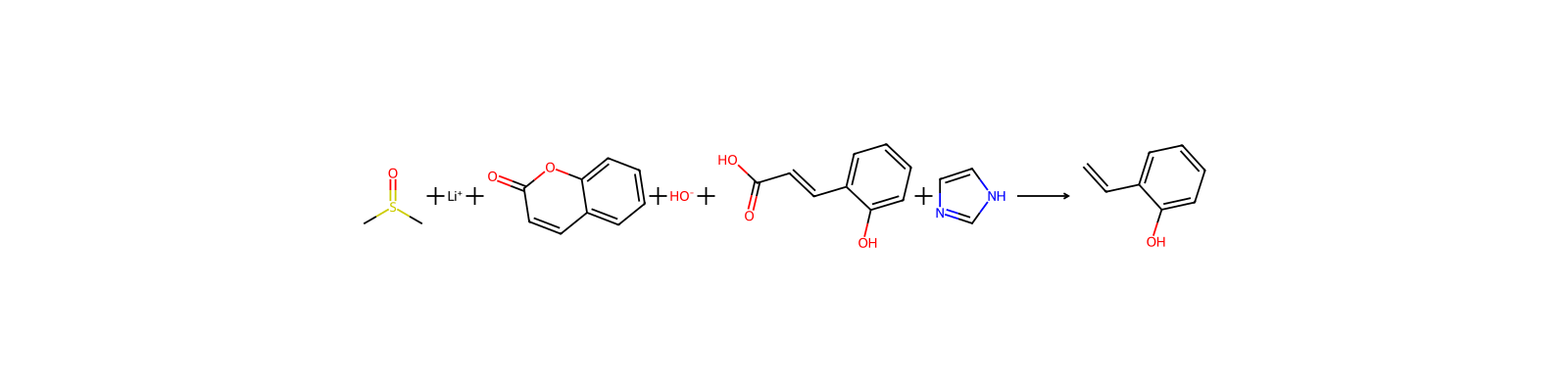
synthetischeCoumarin is currently produced by Perkin synthesis from salicylaldehyde. In the presence of sodium acetate, salicylaldehyde reacts with acetic anhydride to produce coumarin and acetic acid. The reaction is carried out in the liquid phase at elevated temperature.A process for the production of coumarin from hexahydrocoumarin by dehydrogenation has also been elaborated.Since the odor of coumarin is relatively weak, strong-smelling by-products (e.g., vinylphenol) must be removed. Many purification methods have been reported and patented.
Vor- und nachgelagerte Produkte
Vorgelagerte Rohstoffe
Nachgelagerte Produkte
Anbieter50 Anbieter
国药集团化学试剂有限公司86-21-63210123 · [email protected]
北京华美互利生物化工010-56205725 · [email protected]
梯希爱(上海)化成工业发展有限公司021-67121386 · [email protected]
上海阿拉丁生化科技股份有限公司400-6206333 13167063860 · [email protected]
上海如吉生物科技发展有限公司+86-21-65211385-8001 36031160 · [email protected]
韶远科技(上海)有限公司021-50795510 4000665055 · [email protected]
科瑞迪化学400-821-5857 021-64326257 · [email protected]
Syntechem Co.,Ltd[email protected]
上海迈瑞尔生化科技有限公司4006356688 18621169109 · [email protected]
武汉易泰科技有限公司上海分公司18930552037 · [email protected]
宁波亿诺化学品有限公司86-574-27787657 · [email protected]
大连美仑生物技术有限公司0411-62910999 13889544652 · [email protected]
阿法埃莎(中国)化学有限公司400-6106006 · [email protected]
安耐吉化学&3A(安徽泽升科技股份有限公司)400-0056266 · [email protected]
上海瀚鸿科技股份有限公司021-54306202 13764082696 · [email protected]
上海柯维化学技术有限公司021-64609169 18901607656 · [email protected]
上海诗丹德标准技术服务有限公司021-021-57127007-6622-6622 17621252073 · [email protected]
成都普菲德生物技术有限公司028-82610909 13388174823 · [email protected]
吉良化学21-62165282 · [email protected]
深圳虹彩祥根生物科技有限公司+86-0755-89668383 · [email protected]
武汉丰泰威远科技有限公司027-87465837 19945049750 · [email protected]
云南西力生物技术股份有限公司0871-65217109 · [email protected]
山东西亚化学有限公司13355009207 13355009207 · [email protected]
唐山默内德贸易有限公司0315-8309571 15633399667 · [email protected]
四川库利南科技有限公司400-1166-196 18981987031 · [email protected]
天津希恩思生化科技有限公司400 638 7771 · [email protected]
湖南汇百侍生物科技有限公司0731-85526065 13308475853 · [email protected]
北京泰亚杰科技有限公司021-33690831-8001 13552411790;18616022633 · [email protected]
上海源叶生物科技有限公司13636370518 · [email protected]
艾科试剂4008-755-333 18080918076 · [email protected]
成都锦然生物科技有限公司028-83311324 1278112614 · [email protected]
上海思域化工科技有限公司86-21-34053660 · [email protected]
赛默飞世尔科技(中国)有限公司800-810-5118 · [email protected]
北京伊诺凯科技有限公司400-810-7969 010-59572699 · [email protected]
AdooQ BioScience, LLC+1 (866) 930-6790 · [email protected]
江苏艾康生物医药研发有限公司025-66113011 13913916777 · [email protected]
TCI AMERICA800-4238616 · [email protected]
TOKYO CHEMICAL INDUSTRY CO., LTD.03-36680489 · [email protected]
TCI Europe320-37350700 · [email protected]
上海贤鼎生物科技有限公司4009209199 · [email protected]
南京杜莱生物技术有限公司025-84699383-8003;025-846993838003-8003 18013301590 · [email protected]
成都瑞芬思德丹生物科技有限公司2355253622; 18981954830 · [email protected]
上海倍卓生物科技有限公司021-61119791,13386096464 · [email protected]
北京环宇世纪化学科技有限公司hysj_bj.com
上海将来实业股份有限公司400-0066400 13621662912 · [email protected]
上海将来实业股份有限公司021-61552785 · [email protected]
HBCChem, Inc.+1-510-219-6317 · [email protected]
上海笛柏生物科技有限公司400-008-9730,021-54359730 400-008-9730 · [email protected]
日照力德士化工有限公司010-51268198 · [email protected]
美岚实业(上海)有限公司021-58958189 · [email protected]
Ergänzende Hinweise
DefinitionA colorless crystalline compound with a pleasant odor, used in making perfumes. On hydrolysis with sodium hydroxide it forms coumarinic acid.
Zugehörige Reaktionen
72


Verknüpfte Notizen
Wird geladen…