
Flurbiprofen
Daten werden ergänzt – lade die Seite später neu, um den aktuellen Stand zu sehen
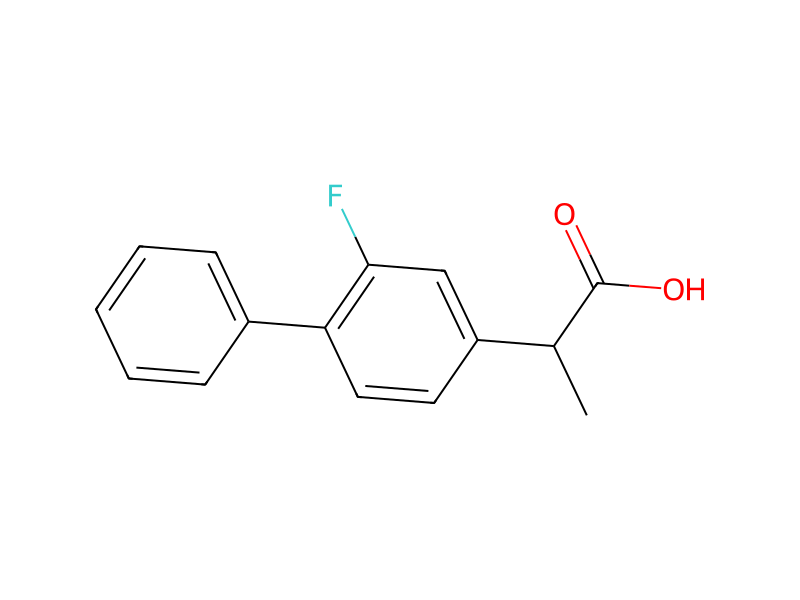
Grundinformationen
- CAS
5104-49-4- Standard-SMILES
CC(C(=O)O)c1ccc(-c2ccccc2)c(F)c1- InChIKey
SYTBZMRGLBWNTM-UHFFFAOYSA-N- Summenformel
- C15H13FO2
- Durchschnittliche Molmasse
- 244,26 g/mol
- Monoisotopische Masse
- 244,08995788
Überblick
Flurbiprofen can cause developmental toxicity and female reproductive toxicity according to state or federal government labeling requirements.
Namen und Bezeichner
- Bevorzugter Name
- Flurbiprofen
- IUPAC
- 2-(3-fluoro-4-phenylphenyl)propanoic acid
- Lokaler Name
- Flurbiprofen
- Englischer Name
- Flurbiprofen
- Summenformel
- C15H13FO2
- Molmasse
- 244.26
Namen und Synonyme
flurbiprofen5104-49-4AnsaidFrobenAntadys2-(3-fluoro-4-phenylphenyl)propanoic acid2-(2-fluorobiphenyl-4-yl)propanoic acidCebutidZepolasFlubiprofenFlurbiprofeneFlurbiprofeno
Weitere Namen anzeigen
2-(2-Fluoro-[1,1'-biphenyl]-4-yl)propanoic acidrac-Flurbiprofenfp70ANSIDEAdfeed
3-Fluoro-4-phenylhydratropic acidFlurbiprofenumBTS-18322U-27182BTS 183222-Fluoro-alpha-methyl-(1,1'-biphenyl)-4-acetic acid(+-)-2-Fluoro-alpha-methyl-4-biphenylacetic acidDTXSID0037231
Datenbank-Bezeichner
- CAS
5104-49-4、51543-38-5- PubChem CID
- 3394
- DTXSID
DTXSID0037231- ChEMBL
CHEMBL563- ChEBI
CHEBI:5130- UNII
- 5GRO578KLP
- EC Number
- 225-827-6、257-262-6
- Nikkaji
- J73.105F
Eigenschaften
Berechnete StruktureigenschaftenWird ergänzt
- XLogP
- 4,2
- Polarare Oberfläche (TPSA)
- 37,3 Ų
- H-Brücken-Donoren
- 1
- H-Brücken-Akzeptoren
- 3
- Frei drehbare Bindungen
- 3
- Schwere Atome
- 18
- Formalladung
- 0
- Komplexität
- 286
Experimentelle und physikochemische Eigenschaften
Drugs
Pharmaceuticals -> Musculo-skeletal system -> Anti-inflammatory and antirheumatic products
Pharmaceuticals
Pharmaceuticals -> Analgesics and anti-inflammatories
LogP3.8
Solubility2.49e-02 g/L
Human Drugs
Breast Feeding; Lactation; Milk, Human; Analgesic Agents; Anti-inflammatory Agents, Nonsteroidal
FDA approved drugs -> Active ingredient
FDA approved drugs -> Active ingredient
Pharmaceuticals
Melting Point
110-111 °C
110 - 111 °C
Physical DescriptionSolid
Dissociation Constants
4.03
4.22
4.3
Collision Cross Section155.9 Ų [M+K]+ [CCS Type: TW; Method: calibrated with polyalanine and drug standards]
Sicherheit und Regulatorisches
Sicherheitsangaben dienen nur zur Orientierung und ersetzen weder das Sicherheitsdatenblatt (SDB) des Lieferanten noch geltende Vorschriften oder eine fachliche Bewertung.
GHS-Klassifizierung
GHS Classification
Danger
H301 (98.2%): Toxic if swallowed [Danger Acute toxicity, oral]
P203, P261, P264, P264+P265, P270, P271, P280, P301+P316, P302+P352, P304+P340, P305+P351+P338, P318, P319, P321, P330, P332+P317, P337+P317, P362+P364, P403+P233, P405, and P501 (click each P-code to see the statement)
Aggregated GHS information provided per 114 reports by companies from 15 notifications to the ECHA C&L Inventory. Each notification may be associated with multiple companies.
Gefahrenhinweise
Regulatory InformationHazard Traits - Developmental Toxicity; Reproductive Toxicity
Other Safety InformationIMAP assessments - [1,1'-Biphenyl]-4-acetic acid, 2-fluoro-.alpha.-methyl-: Environment tier I assessment
Hazard Classes and CategoriesAcute Tox. 3 (98.2%)
Toxikologische Informationen
Treatment
Patients should be managed by symptomatic and supportive care following overdose with a nonsteroidal anti-inflammatory drug. There are no specific antidotes. Emesis and/or activated charcoal (60 to 100 g in adults, 1 to 2 g/kg in children) and/or osmotic cathartic may be indicated in patients seen within 4 hours of ingestion with symptoms, or following a large overdose (5 to 10 times the usual dose). Forced diuresis, alkalization of urine, hemodialysis, or hemoperfusion may not be useful due to high protein binding. (L1712)
Hepatotoxicity
Prospective studies show that mild elevations in serum aminotransferase levels can occur in up to 15% of patients taking NSAIDs such as flurbiprofen, but the abnormalities are generally transient, mild and asymptomatic, often resolving even with drug continuation. Marked aminotransferase elevations above 3 times the upper limit of normal (ULN) occur in less than 1% of patients. Clinically apparent liver injury with jaundice from flurbiprofen is rare and only individual case descriptions have been published. The latency to onset is within 1 to 4 weeks of starting. The pattern of enzyme elevations is typically cholestatic, but hepatocellular cases have been described. Immunoallergic features are present in some cases (low grade fever, rash), but are generally not prominent, and autoantibody formation is rare. Most cases resolve promptly on stopping therapy. Flurbiprofen is not mentioned in large case series on drug induced liver injury or acute liver failure from the United States, but was listed as the second most common agent implicated in drug-induced liver injury in a case series from Turkey, one of which was fatal.
Chemie und Industrie
Pharmakologische Informationen
ATC Code
R02AX01
S - Sensory organs
M - Musculo-skeletal system
M - Musculo-skeletal system
R - Respiratory system
QM - Musculo-skeletal system
Protein Binding> 99% bound, primarily to albumin. Binds to a different primary binding site on albumin than anticoagulants, sulfonamides and phenytoin.
Pharmacodynamics
Flurbiprofen, a nonsteroidal anti-inflammatory agent (NSAIA) of the propionic acid class, is structually and pharmacologically related to fenoprofen, ibuprofen, and ketoprofen, and has similar pharmacological actions to other prototypica NSAIAs. Flurbiprofen exhibits antiinflammatory, analgesic, and antipyretic activities. The commercially available flurbiprofen is a racemic mixture of (+)S- and (-) R-enantiomers. The S-enantiomer appears to possess most of the anti-inflammatory, while both enantiomers may possess analgesic activity.
Mechanism of Action
Similar to other NSAIAs, the anti-inflammatory effect of flurbiprofen occurs via reversible inhibition of cyclooxygenase (COX), the enzyme responsible for the conversion of arachidonic acid to prostaglandin G2 (PGG2) and PGG2 to prostaglandin H2 (PGH2) in the prostaglandin synthesis pathway. This effectively decreases the concentration of prostaglandins involved in inflammation, pain, swelling and fever. Flurbiprofen is a non-selective COX inhibitor and inhibits the activity of both COX-1 and -2. It is also one of the most potent NSAIAs in terms of prostaglandin inhibitory activity.
Biological Half-LifeR-flurbiprofen, 4.7 hours; S-flurbiprofen, 5.7 hours
Metabolism/Metabolites
Hepatic. Cytochrome P450 2C9 plays an important role in the metabolism of flurbiprofen to its major metabolite, 4’-hydroxy-flurbiprofen. The 4’-hydroxy-flurbiprofen metabolite showed little anti-inflammatory activity in animal models of inflammation.
Hepatic. Cytochrome P450 2C9 plays an important role in the metabolism of flurbiprofen to its major metabolite, 4’-hydroxy-flurbiprofen. The 4’-hydroxy-flurbiprofen metabolite showed little anti-inflammatory activity in animal models of inflammation. Route of Elimination: Flurbiprofen is poorly excreted into human milk. Following dosing with flurbiprofen, less than 3% of flurbiprofen is excreted unchanged in the urine, with about 70% of the dose eliminated in the urine as parent drug and metabolites. Renal elimination is a significant pathway of elimination of flurbiprofen metabolites. Half Life: R-flurbiprofen, 4.7 hours; S-flurbiprofen, 5.7 hours
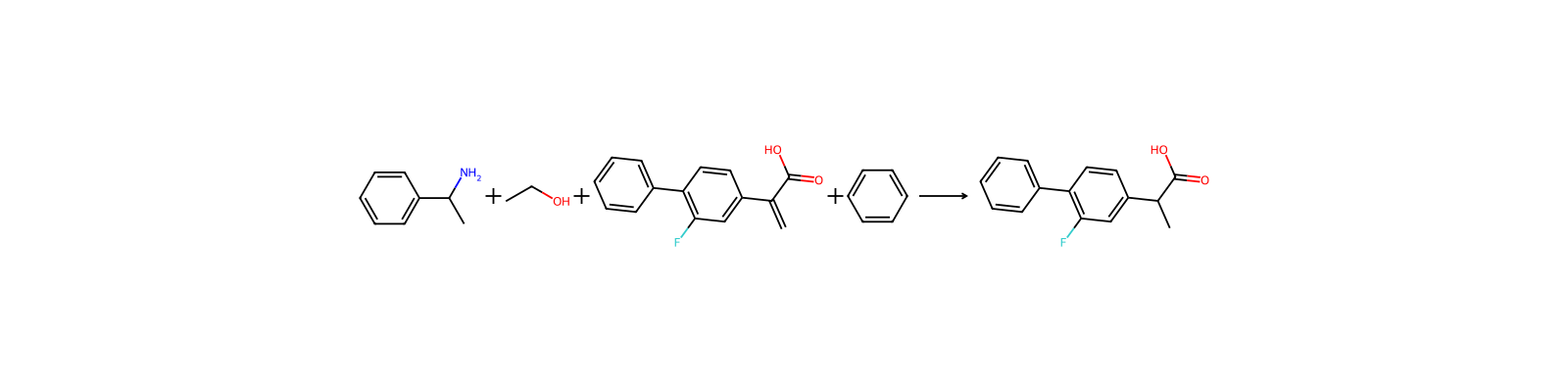
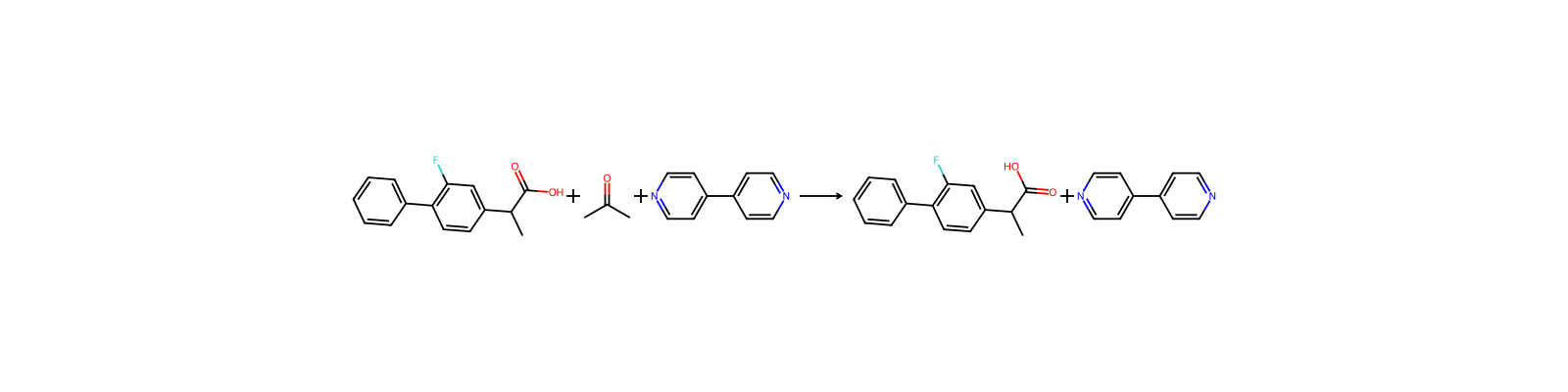
Zugehörige Reaktionen
717



Notizen zur Verbindung
Wird geladen…