
Platindioxid
Adams' catalyst

Grundinformationen
- CAS
1314-15-4- Standard-SMILES
[O]=[Pt]=[O]- InChIKey
YKIOKAURTKXMSB-UHFFFAOYSA-N- Summenformel
- O2Pt
- Durchschnittliche Molmasse
- 227,08 g/mol
- Monoisotopische Masse
- 226,95462034
Namen und Bezeichner
- Bevorzugter Name
- Adams' catalyst
- IUPAC
- dioxoplatinum
- Lokaler Name
- Platindioxid
- Englischer Name
- Platinum dioxide
- Summenformel
- O2Pt
- Molmasse
- 227.08
Namen und Synonyme
Platinum(IV) oxide1314-15-4dioxoplatinumAdams' catalystAdams CatalystPlatinic oxideplatinum (iv) oxidePlatinium oxideMFCD00011184platinum(iv) dioxidePlatinium oxide, PtO2Platinum(iv)oxide
Weitere Namen anzeigen
PtO2PLATINUM OXIDE1341-15-4ADAM'S CATALYSTplatinum(iv) oxide monohydrate, adams catalyst
Bis(oxido)platinumplatinum (IV)oxideplatinum(IV)-oxidePlatinum-(IV)-oxidePlatinum (1V) oxideplatinum (IV) dioxidePlatinum( cento) oxideSCHEMBL72223
Datenbank-Bezeichner
- CAS
1314-15-4- PubChem CID
- 345198
- DTXSID
DTXSID40904275- EC Number
- 215-223-0
- Nikkaji
- J96.441G
Eigenschaften
Berechnete Struktureigenschaften
- Polarare Oberfläche (TPSA)
- 34,1 Ų
- H-Brücken-Donoren
- 0
- H-Brücken-Akzeptoren
- 2
- Frei drehbare Bindungen
- 0
- Schwere Atome
- 3
- Formalladung
- 0
- Komplexität
- 18,3
Experimentelle und physikochemische Eigenschaften
Chemical ClassesMetals -> Metals, Inorganic Compounds
Food Contact SubstancesFCS -> FDA Inventory of Effective Food Contact Substance (FCS) Notifications
Physical DescriptionMonohydrate: Black solid; [Merck Index] Black odorless powder; Insoluble in water; [MSDSonline]
Physikochemische Eigenschaften
- Schmelzpunkt
- 450 °C · 450 °C (lit.)
- Dichte
- 10.2 · 10.2
- storage temp.
- 2 · under inert gas (nitrogen or Argon) at 2-8°C
- Aggregatzustand
- crystalline
- Farbe
- Dark brown
- Wasserlöslichkeit
- Soluble in caustic potash solution. Insoluble in water, acid, aquaregia.
- Merck
- 14 · 14,7527
- Stabilität
- Contact with combustible material may cause fire. Incompatible with organic materials, powdered metals.
- InChI
Sicherheit und Regulatorisches
Sicherheitsangaben dienen nur zur Orientierung und ersetzen weder das Sicherheitsdatenblatt (SDB) des Lieferanten noch geltende Vorschriften oder eine fachliche Bewertung.
GHS-Klassifizierung
GHS Classification
This chemical does not meet GHS hazard criteria for 3% (8 of 269) of reports.
Danger
H271 (75.5%): May cause fire or explosion; strong Oxidizer [Danger Oxidizing liquids; Oxidizing solids]
P210, P220, P264+P265, P280, P283, P305+P351+P338, P306+P360, P337+P317, P370+P378, P371+P380+P375, P420, and P501 (click each P-code to see the statement)
Aggregated GHS information provided per 269 reports by companies from 9 notifications to the ECHA C&L Inventory. Each notification may be associated with multiple companies.
Gefahrenhinweise
Regulatory Information
Chemical: Platinum oxide (PtO2)
Status: Active Update: 27-01-2022 https://echa.europa.eu/registration-dossier/-/registered-dossier/18998
Platinum (IV) oxide: Does not have an individual approval but may be used under an appropriate group standard
Other Safety InformationIMAP assessments - Platinum oxide (PtO2): Environment tier I assessment
Hazards SummaryA skin irritant; Corrosive to eyes; [eChemPortal: ERMA] An oxidizing agent; May cause fire on contact with combustible material; An irritant; May cause skin sensitization; [MSDSonline]
Hazard Classes and CategoriesOx. Sol. 1 (75.5%)
Toxikologische Informationen
Adverse EffectsSkin Sensitizer - An agent that can induce an allergic reaction in the skin.
Sicherheitsdaten
Chemie und Industrie
Verwendung und Herstellung
Uses
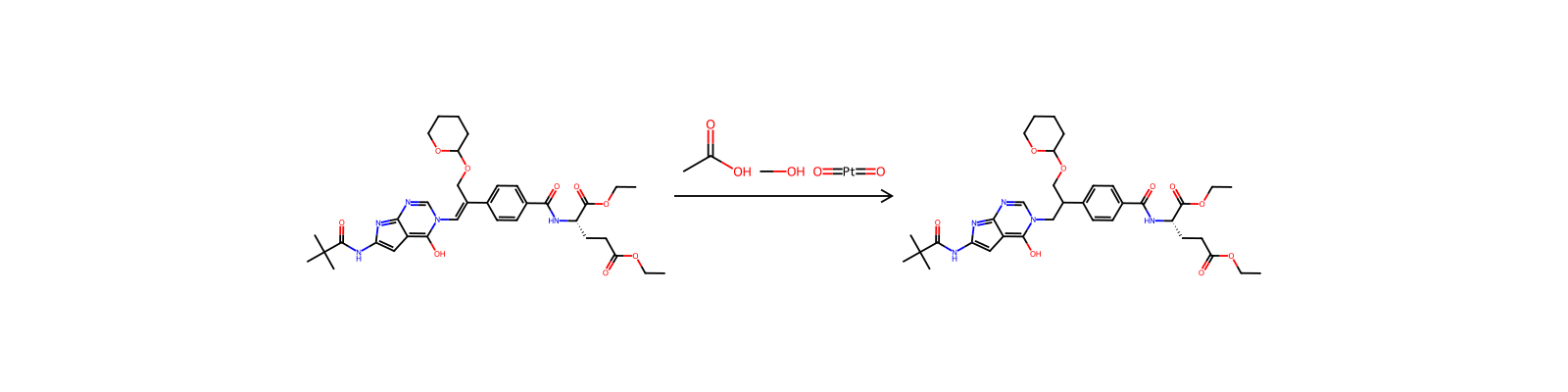
Used as a hydrogenation catalyst; [Merck Index] Platinum(IV) oxide hydrate (PtO2.H2O) is a hydrogenation catalyst. Other platinum oxides have little commercial use: Platinum(II) oxide (PtO) and platinum(II) oxide hydrate (PtO.H2O). [Ullmann]
General Manufacturing InformationPlatinum oxide (PtO2): ACTIVE
Anwendungen
VerwendenAs catalyst in hydrogenations. The actual catalyst is platinum black which is formed in situ by reduction of the PtO2 by the hydrogen used for the hydrogenation. Especially useful for reduction at room tempereture and hydrogen pressures up to 4 atmospheres. Suitable for the reduction of double and triple bonds, aromatic nuclei, carbonyl groups, nitro groups, and nitriles.
Vor- und nachgelagerte Produkte
Vorgelagerte Rohstoffe
Nachgelagerte Produkte
Zugehörige Reaktionen
2.325



Notizen zur Verbindung
Wird geladen…