
Phloroglucin
Phloroglucinol
Daten werden ergänzt – lade die Seite später neu, um den aktuellen Stand zu sehen
Grundinformationen
- CAS
108-73-6- Standard-SMILES
Oc1cc(O)cc(O)c1- InChIKey
QCDYQQDYXPDABM-UHFFFAOYSA-N- Summenformel
- C6H6O3
- Durchschnittliche Molmasse
- 126,11 g/mol
- Monoisotopische Masse
- 126,03169405
Überblick
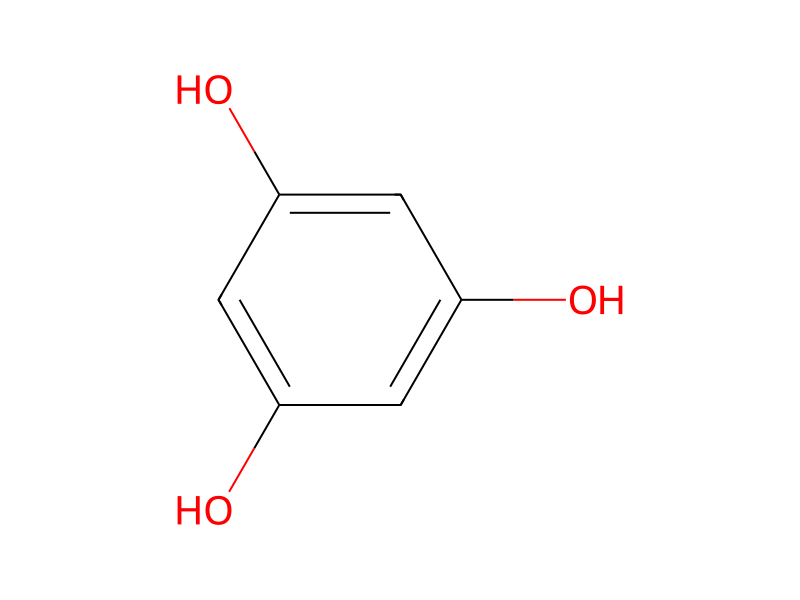
Phloroglucinol is a benzenetriol with hydroxy groups at position 1, 3 and 5. It has a role as an algal metabolite. It is a phenolic donor and a benzenetriol.
Namen und Bezeichner
- Bevorzugter Name
- Phloroglucinol
- IUPAC
- benzene-1,3,5-triol
- Lokaler Name
- Phloroglucin
- Englischer Name
- Phloroglucinol
- Summenformel
- C6H6O3
- Molmasse
- 126.11
Namen und Synonyme
phloroglucinol108-73-6Benzene-1,3,5-triol1,3,5-benzenetriol1,3,5-trihydroxybenzenePhloroglucinPhloroglucineSpasfon-LyocDilospan Ssym-Trihydroxybenzenes-TrihydroxybenzeneBenzene, trihydroxy
Weitere Namen anzeigen
3,5-DIHYDROXYPHENOLAnhydrous PhloroglucinolNero
FloroglucinFloroglucinolDHD7FFG6YSBenezene-1,3,5-triolNSC-1572DTXSID9048354CHEBI:16204RefChem:6129
Datenbank-Bezeichner
- CAS
108-73-6- PubChem CID
- 359
- DTXSID
DTXSID9048354- ChEMBL
CHEMBL473159- ChEBI
CHEBI:16204- UNII
- DHD7FFG6YS
- EC Number
- 203-611-2
- Nikkaji
- J2.866E
Eigenschaften
Berechnete StruktureigenschaftenWird ergänzt
- XLogP
- 0,2
- Polarare Oberfläche (TPSA)
- 60,7 Ų
- H-Brücken-Donoren
- 3
- H-Brücken-Akzeptoren
- 3
- Frei drehbare Bindungen
- 0
- Schwere Atome
- 9
- Formalladung
- 0
- Komplexität
- 63,3
Experimentelle und physikochemische Eigenschaften
Chemical ClassesOther Classes -> Phenols
DrugsPharmaceuticals -> Listed in ZINC15
Cosmetics
Cosmetic ingredients (Phloroglucinol) -> CIR (Cosmetic Ingredient Review)
Hair dyeing
SpringerMaterials Properties13C nuclear magnetic resonance spectrum
LogP
0.16
0.16
Solubility10.6 mg/mL at 20 °C
Endocrine DisruptorsPotential endocrine disrupting compound
Melting Point218.5 °C
Vapor Pressure0.00016 [mmHg]
Physical Description
White solid; Discolored by light; [Merck Index] White or cream colored powder; [MSDSonline] Crystallizes in anhydrous or dihydrate form; Sweet tasting crystals; [Ullmann]
Sicherheit und Regulatorisches
Sicherheitsangaben dienen nur zur Orientierung und ersetzen weder das Sicherheitsdatenblatt (SDB) des Lieferanten noch geltende Vorschriften oder eine fachliche Bewertung.
GHS-Klassifizierung
GHS Classification
This chemical does not meet GHS hazard criteria for 1.9% (2 of 108) of reports.
Warning
H315 (81.5%): Causes skin irritation [Warning Skin corrosion/irritation]
P203, P261, P264, P264+P265, P271, P272, P273, P280, P302+P352, P304+P340, P305+P351+P338, P318, P319, P321, P332+P317, P333+P317, P337+P317, P362+P364, P403+P233, P405, and P501 (click each P-code to see the statement)
Aggregated GHS information provided per 108 reports by companies from 23 notifications to the ECHA C&L Inventory. Each notification may be associated with multiple companies.
Gefahrenhinweise
Regulatory Information
Chemical: 1,3,5-Benzenetriol
Status: Active Update: 25-08-2022 https://echa.europa.eu/registration-dossier/-/registered-dossier/23677
Phloroglucinol: Does not have an individual approval but may be used under an appropriate group standard
Other Safety InformationIMAP assessments - 1,3,5-Benzenetriol: Environment tier I assessment
Hazards SummaryA skin and eye irritant; [eChemPortal: ERMA] An irritant; [MSDSonline] Oral LD50 (mouse) = 4550 mg/kg; [Ullmann]
Hazard Classes and CategoriesSkin Irrit. 2 (81.5%)
Toxikologische Informationen
Toxicity Summary
On the basis of the available data, the CIR Panel cannot conclude that Phloroglucinol is safe for use in cosmetic products until the appropriate safety data have been obtained and evaluated.
Chemie und Industrie
Pharmakologische Informationen
ATC Code
A - Alimentary tract and metabolism
QA - Alimentary tract and metabolism
Metabolism/MetabolitesPhloroglucinol is a known human metabolite of Epicatechin and 2-(4-Hydroxyphenyl)-1-(2,4,6-trihydroxyphenyl)prop-2-en-1-one.
MeSH Pharmacological Classification
Substances used for the detection, identification, analysis, etc. of chemical, biological, or pathologic processes or conditions. Indicators are substances that change in physical appearance, e.g., color, at or approaching the endpoint of a chemical titration, e.g., on the passage between acidity and alkalinity. Reagents are substances used for the detection or determination of another substance by chemical or microscopical means, especially analysis. Types of reagents are precipitants, solvents, oxidizers, reducers, fluxes, and colorimetric reagents. (From Grant & Hackh's Chemical Dictionary, 5th ed, p301, p499)
Verwendung und Herstellung
Uses
CIR ingredient: Phloroglucinol
Used to decalcify bones, to make pharmaceuticals and dyes, to preserve cut flowers, and to dye and print textiles; [Hawley] Used in diazo-type printing, cosmetics (antioxidant), hair colorants, chemical reagents, cloud seeding, tree and shrub rooting, and pharmaceuticals (antispasmodic); [Merck Index] Isolated from bark of fruit trees in 1855; [Ullmann]
Textiles (Printing, Dyeing, or Finishing) [Category: Industry]
Use ClassificationCosmetics -> Hair dyeing
General Manufacturing Information1,3,5-Benzenetriol: ACTIVE
Anwendungen
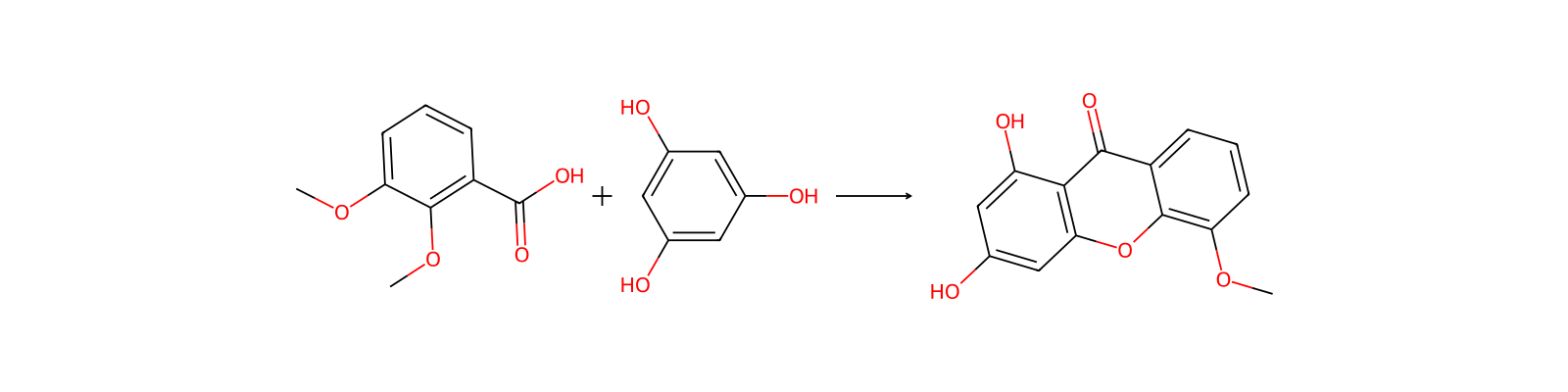
Zugehörige Reaktionen
99



Notizen zur Verbindung
Wird geladen…