StartseiteMCPWorkbenchSkills
StartseiteWorkbenchBenachrichtigungenMein Bereich
llms.txt · MCP-AnleitungDatenschutz · Nutzungsbedingungen · Supportv1.8.0
  1. Startseite
  2. /Verbindung

Amikacin

HCID 37768
Neue NotizNeue ReaktionAnfrage stellen
Druckvorschau
GrundinformationenÜberblickNamen und BezeichnerEigenschaftenSicherheit und RegulatorischesChemie und IndustrieZugehörige ReaktionenNotizen zur Verbindung
TeilstruktursucheÄhnliche Strukturen suchen

Grundinformationen

CAS
37517-28-5
Standard-SMILES
NCC[C@H](O)C(=O)N[C@@H]1C[C@H](N)[C@@H](O[C@H]2O[C@H](CN)[C@@H](O)[C@H](O)[C@H]2O)[C@H](O)[C@H]1O[C@H]1O[C@H](CO)[C@@H](O)[C@H](N)[C@H]1O
InChIKey
LKCWBDHBTVXHDL-RMDFUYIESA-N
Summenformel
C22H43N5O13
Durchschnittliche Molmasse
585,6 g/mol
Monoisotopische Masse
585,28573644

Überblick

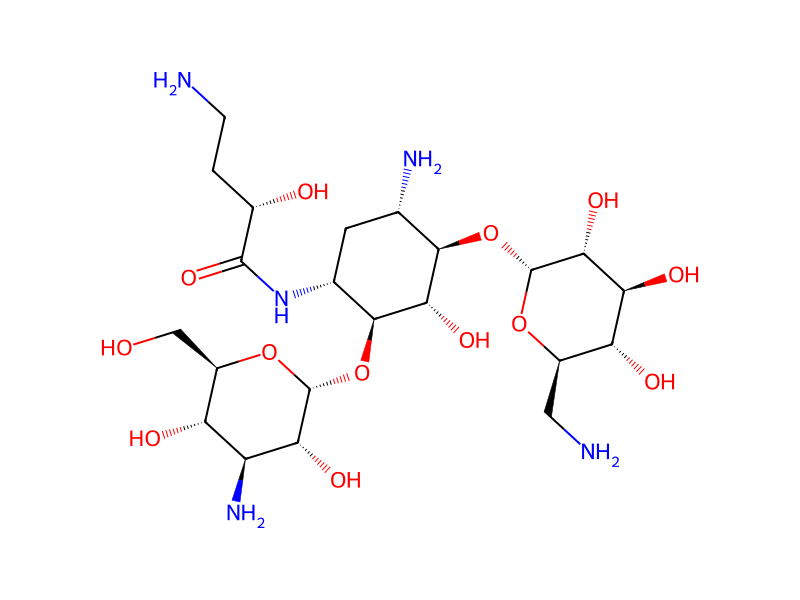
Amikacin is an amino cyclitol glycoside that is kanamycin A acylated at the N-1 position by a 4-amino-2-hydroxybutyryl group. It has a role as an antimicrobial agent, an antibacterial drug and a nephrotoxic agent. It is an alpha-D-glucoside, an amino cyclitol glycoside, a carboxamide and an aminoglycoside. It is functionally related to a kanamycin A. It is a conjugate base of an amikacin(4+).

Namen und Bezeichner

Bevorzugter Name
Amikacin
IUPAC
(2S)-4-amino-N-[(1R,2S,3S,4R,5S)-5-amino-2-[(2S,3R,4S,5S,6R)-4-amino-3,5-dihydroxy-6-(hydroxymethyl)oxan-2-yl]oxy-4-[(2R,3R,4S,5S,6R)-6-(aminomethyl)-3,4,5-trihydroxyoxan-2-yl]oxy-3-hydroxycyclohexyl]-2-hydroxybutanamide
Lokaler Name
Amikacin
Englischer Name
AMIKACIN
Summenformel
C22H43N5O13
Molmasse
585.6

Namen und Synonyme

amikacin37517-28-5LukadinamikacineAmikacinaAmikacinumPotentoxAmiklin1-N-(L(-)-gamma-Amino-alpha-hydroxybutyryl)kanamycin ABAY 41-6551BiclinDTXSID3022586
Weitere Namen anzeigen
AMKamikacin hydrateAmikacin baseamikinamicacinAmikacin CRSAndraMine-d12
CHEBI:2637(2S)-4-amino-N-[(1R,2S,3S,4R,5S)-5-amino-2-[(2S,3R,4S,5S,6R)-4-amino-3,5-dihydroxy-6-(hydroxymethyl)oxan-2-yl]oxy-4-[(2R,3R,4S,5S,6R)-6-(aminomethyl)-3,4,5-trihydroxyoxan-2-yl]oxy-3-hydroxycyclohexyl]-2-hydroxybutanamide84319SGC3CNSC-177001DTXCID002586(2S)-4-amino-N-[(1R,2S,3S,4R,5S)-5-amino-2-{[(2S,3R,4S,5S,6R)-4-amino-3,5-dihydroxy-6-(hydroxymethyl)oxan-2-yl]oxy}-4-{[(2R,3R,4S,5S,6R)-6-(aminomethyl)-3,4,5-trihydroxyoxan-2-yl]oxy}-3-hydroxycyclohexyl]-2-hydroxybutanamideD-Streptamine, O-3-amino-3-deoxy-alpha-D-glucopyranosyl-(1->6)-O-(6-amino-6-deoxy-alpha-D-glucopyranosyl-(1->4))-N(sup 1)-(4-amino-2-hydroxy-1-oxobutyl)-2-deoxy-, (S)-D-Streptamine, O-3-amino-3-deoxy-alpha-D-glucopyranosyl-(1-6)-O-(6-amino-6-deoxy-alpha-D-glucopyranosyl-(1-4))-N1-(4-amino-2-hydroxy-1-oxobutyl)-2-deoxy-, (S)-

Eigenschaften

Berechnete Struktureigenschaften

XLogP
-7,9
Polarare Oberfläche (TPSA)
332 Ų
H-Brücken-Donoren
13
H-Brücken-Akzeptoren
17
Frei drehbare Bindungen
10
Schwere Atome
40
Formalladung
0
Komplexität
819

Experimentelle und physikochemische Eigenschaften

Drugs · 3 Einträge

Pharmaceuticals -> Listed in ZINC15

Pharmaceuticals -> Antibiotics

Pharmaceuticals -> Antibiotics

LogP-7.4
Color/FormWhite crystalline powder from methanol-isopropanol
Solubility · 2 Einträge

In water, 1.85X10+5 mg/L at 25 °C

4.97e+01 g/L

Human Drugs · 3 Einträge

Breast Feeding; Lactation; Milk, Human; Antibacterial Agents; Anti-infective Agents; Aminoglycosides

EMA approved medicines: Human medicine (Orphan designations)

Access group antibiotics

Decomposition · 2 Einträge

When heated to decomposition it emits toxic fumes of /nitrogen oxides/.

/Sulfate/ melts at ... about 225 °C with decomp. /Amikacin sulfate/

Melting Point · 2 Einträge

203-204 °C (sesquihydrate)

203 - 204 °C

Optical Rotation · 2 Einträge

Sicherheit und Regulatorisches

Sicherheitsangaben dienen nur zur Orientierung und ersetzen weder das Sicherheitsdatenblatt (SDB) des Lieferanten noch geltende Vorschriften oder eine fachliche Bewertung.

GHS-Klassifizierung

GHS Classification · 4 Einträge

Danger

H317 (75%): May cause an allergic skin reaction [Warning Sensitization, Skin]

P203, P260, P261, P264, P264+P265, P270, P271, P272, P280, P302+P352, P304+P340, P305+P354+P338, P317, P318, P319, P321, P333+P317, P362+P364, P405, and P501 (click each P-code to see the statement)

Aggregated GHS information provided per 4 reports by companies from 4 notifications to the ECHA C&L Inventory. Each notification may be associated with multiple companies.

Gefahrenhinweise

Regulatory InformationREACH registered substance: Amikacin (EC: 253-538-5)
FDA Requirements · 5 Einträge

The Approved Drug Products with Therapeutic Equivalence Evaluations identifies currently marketed prescription drug products, including amikacin, approved on the basis of safety and effectiveness by FDA under sections 505 of the Federal Food, Drug, and Cosmetic Act.

The Approved Drug Products with Therapeutic Equivalence Evaluations identifies currently marketed prescription drug products, including amikacin, approved on the basis of safety and effectiveness by FDA under sections 505 of the Federal Food, Drug, and Cosmetic Act. /Amikacin sulfate/

The Generic Animal Drug and Patent Restoration act requires that each sponsor of an approved animal drug must submit to the FDA certain information regarding patents held for the animal drug or its method of use. The Act requires that this information, as well as a list of all animal drug products approved for safety and effectiveness, be made available to the public. Amikacin sulfate is included on this list. /Amikacin sulfate/

Implantation or injectable dosage form new animal drugs. Amikacin. ... Indications for use. For treatment of genitourinary tract infections (cystitis) caused by susceptible strains of Escherichia coli and Proteus spp. and skin and soft tissue infections caused by susceptible strains of Pseudomonas spp. and E. coli. ... Limitations. Do not use in horses intended for human consumption. Federal law restricts this drug to use by or on the order of a licensed veterinarian.

Chemie und Industrie

Pharmakologische Informationen

ATC Code · 6 Einträge

S - Sensory organs

D - Dermatologicals

J - Antiinfectives for systemic use

QS - Sensory organs

QD - Dermatologicals

QJ - Antiinfectives for systemic use

Protein BindingThe protein binding of amikacin in serum is ≤ 10%.
Pharmacodynamics · 1 Eintrag

Amikacin is an aminoglycoside antibiotic. Aminoglycosides bind to the bacteria, causing misreading of t-RNA, leaving bacteria unable to synthesize proteins vital to their growth. Aminoglycosides are useful mainly in the treatment infections involving aerobic, Gram-negative bacteria, such as Pseudomonas, Acinetobacter, and Enterobacter. In addition, some mycobacteria, including the bacteria that cause tuberculosis, are susceptible to aminoglycosides. Infections caused by Gram-positive bacteria can also be treated with aminoglycosides, however, other antibiotics may be more potent and less toxic to humans.

Mechanism of Action · 3 Einträge

The primary mechanism of action of amikacin is the same as that for all aminoglycosides. It binds to bacterial 30S ribosomal subunits and interferes with mRNA binding and tRNA acceptor sites, interfering with bacterial growth. This leads to disruption of normal protein synthesis and production of non-functional or toxic peptides. Other actions have been postulated for drugs of this class. Amikacin, as well as the rest of the aminoglycosides, are generally bacteriocidal against gram-positive and gram-negative bacteria.

Aminoglycosides are usually bactericidal in action. Although the exact mechanism of action has not been fully elucidated, the drugs appear to inhibit protein synthesis in susceptible bacteria by irreversibly binding to 30S ribosomal subunits. /Aminoglycosides/

... Aminoglycosides are aminocyclitols that kill bacteria by inhibiting protein synthesis as they bind to the 16S rRNA and by disrupting the integrity of bacterial cell membrane. Aminoglycoside resistance mechanisms include: (a) the deactivation of aminoglycosides by N-acetylation, adenylylation or O-phosphorylation, (b) the reduction of the intracellular concentration of aminoglycosides by changes in outer membrane permeability, decreased inner membrane transport, active efflux, and drug trapping, (c) the alteration of the 30S ribosomal subunit target by mutation, and (d) methylation of the aminoglycoside binding site. ... /Aminoglycosides/

Zugehörige Reaktionen

11
Reaktionsaufzeichnung erstellen
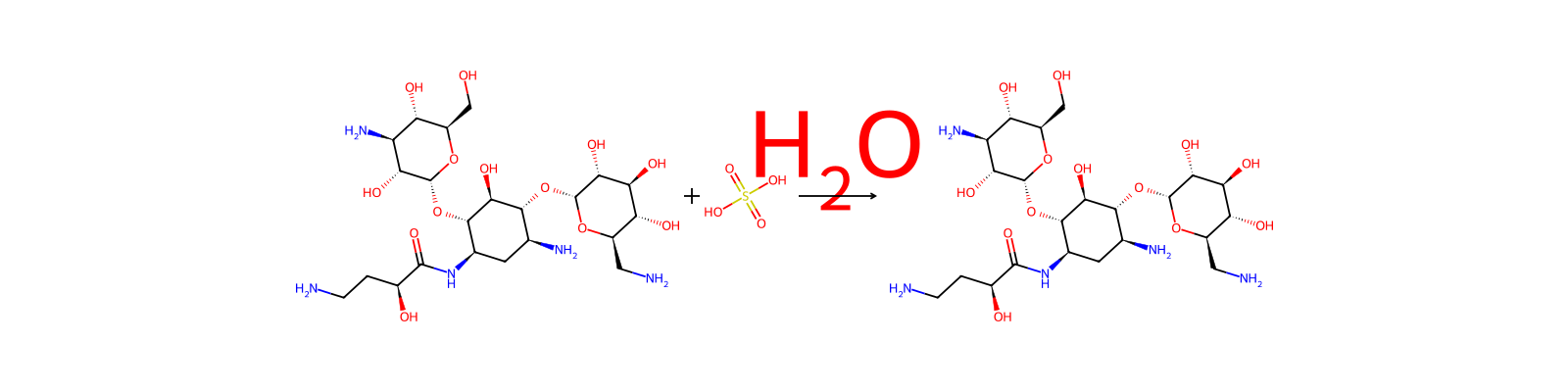
Reaktionsgleichung von HRID 388198
HRID 388198als Produktuspto-grants-2013_02
Reaktionsgleichung von HRID 402208
HRID 402208als Produktuspto-grants-2014_06
Reaktionsgleichung von HRID 543865
HRID 543865als Produktuspto-grants-1984_05
Reaktionsgleichung von HRID 1183228
HRID 1183228als Produktuspto-grants-2014_03
Reaktionsgleichung von HRID 1527649
HRID 1527649als Produktuspto-grants-2015_07
Reaktionsgleichung von HRID 1664086
HRID 1664086als Produktuspto-grants-2011_10
Reaktionsgleichung von HRID 1936519
HRID 1936519als Produktuspto-grants-2002_05
Reaktionsgleichung von HRID 2088289
HRID 2088289als Produktuspto-grants-2013_05
Seite 1 von 2

Notizen zur Verbindung

Wird geladen…

Auf dieser SeiteGrundinformationenÜberblickNamen und BezeichnerEigenschaftenSicherheit und RegulatorischesChemie und IndustrieZugehörige ReaktionenNotizen zur Verbindung
Weitere Aktionen
Neue NotizNeue ReaktionAnfrage stellen

Datenbank-Bezeichner

CAS
37517-28-5
PubChem CID
37768
DTXSID
DTXSID3022586
ChEMBL
CHEMBL177
ChEBI
CHEBI:2637
UNII
84319SGC3C
EC Number
253-538-5
Nikkaji
J19.345C

Amorphous form, dec 220-230 °C,Specific optical rotation: +74.75 deg at 22 °C/D (in water), Freely soluble in water /Amikacin sulfate/

Specific optical rotation: +99 deg at 23 °C/D (c = 1.0 in water)

Physical DescriptionSolid
Dissociation Constants · 2 Einträge

8.1

pKa1 = 6.7 (primary amine); pKa2 = 8.4 (primary amine); pKa3 = 8.4 (primary amine); pKa4 = 9.7 (primary amine)

Collision Cross Section235.1 Ų [M+H]+ [CCS Type: TW; Method: calibrated with Waters Major Mix]

Physikochemische Eigenschaften

Schmelzpunkt
203 ℃ · 203℃
Siedepunkt
642.23 °C · 642.23°C (rough estimate)
Dichte
1.3764 · 1.3764 (rough estimate)
Brechungsindex
1.75 · 1.7500 (estimate)
storage temp.
2 · 2-8°C
Löslichkeit
2 O: · H2O: 50 mg/mL, clear, colorless
pka
8.1 · pKa 8.1 (Uncertain)
Aggregatzustand
solid
Farbe
white to off-white
Wasserlöslichkeit
Soluble in water (partly).
Merck
13 · 13,404
BRN
1445422 · 1445422
Stabilität
Hygroscopic
Major Application
pharmaceutical (small molecule)
InChIKey
LKCWBDHBTVXHDL-RMDFUYIESA-N
SMILES
N([C@H]1[C@@H]([C@H]([C@@H]([C@H](C1)N)O[C@H]3O[C@@H]([C@H]([C@@H]([C@H]3O)O)O)CN)O)O[C@H]2O[C@@H]([C@H]([C@@H]([C@H]2O)N)O)CO)C(=O)[C@@H](O)CCN
EPA chemische Informationen
Amikacin (37517-28-5)

Certain other dosage form new animal drugs. Amikacin. ... Indications for use. For treating genital tract infections (endometritis, metritis, and pyometra) in mares caused by susceptible organisms including Escherichia coli, Pseudomonas spp., and Klebsiella spp. ... Limitations. Do not use in horses intended for human consumption. Federal law restricts this drug to use by or on the order of a licensed veterinarian.

Hazard Classes and CategoriesSkin Sens. 1 (75%)

Sicherheit und Schutzausrüstung

Storage ConditionsStore at 20 deg to 25 °C (68 deg to 77 °F); excursions permitted between 15 deg to 30 °C (59 deg to 86 °F)
Disposal Methods · 1 Eintrag

SRP: Expired or waste pharmaceuticals shall carefully take into consideration applicable DEA, EPA, and FDA regulations. It is not appropriate to dispose by flushing the pharmaceutical down the toilet or discarding to trash. If possible return the pharmaceutical to the manufacturer for proper disposal being careful to properly label and securely package the material. Alternatively, the waste pharmaceutical shall be labeled, securely packaged and transported by a state licensed medical waste contractor to dispose by burial in a licensed hazardous or toxic waste landfill or incinerator.

Toxikologische Informationen

Interactions · 5 Einträge

A single amikacin dose has potentiated the neuromuscular blocking effects of a single intubating dose of rocuronium.

Concomitant and/or sequential use of an aminoglycoside and other systemic, oral, or topical drugs that have neurotoxic, ototoxic, or nephrotoxic effects (e.g., other aminoglycosides, acyclovir, amphotericin B, bacitracin, capreomycin, certain cephalosporins, colistin, cisplatin, methoxyflurane, polymyxin B, vancomycin) may result in additive toxicity and should be avoided, if possible. /Aminoglycosides/

Because of the possibility of an increased risk of ototoxicity due to additive effects or altered serum and tissue aminoglycoside concentrations, aminoglycosides should not be given concomitantly with potent diuretics such as ethacrynic acid, furosemide, urea, or mannitol. It has been suggested that concomitant use of certain anti-emetics that suppress nausea and vomiting of vestibular origin and vertigo (e.g., dimenhydrinate, meclizine) may mask symptoms of aminoglycoside-associated vestibular ototoxicity. /Aminoglycosides/

Concurrent use of an aminoglycoside with general anesthetics or neuromuscular blocking agents (e.g., succinylcholine, rocuronium, tubocurarine) may potentiate neuromuscular blockade and cause respiratory paralysis. ... Aminoglycosides should be used with caution in patients receiving anesthetics or neuromuscular blocking agents, and patients should be closely observed for signs of respiratory depression. /Aminoglycosides/

For more Interactions (Complete) data for Amikacin (12 total), please visit the HSDB record page.

Hepatotoxicity · 1 Eintrag

Intravenous and intramuscular therapy with amikacin has not been linked to serum alkaline phosphatase or aminotransferase elevations, and no convincing cases of symptomatic or icteric hepatotoxicity due to amikacin have been published. Other aminoglycosides have been linked to very rare cases of cholestatic hepatitis, that typically arise within 1 to 3 weeks of starting therapy, often associated with skin rash, fever and sometimes eosinophilia. Recovery typically occurs within 1 to 2 months and chronic injury has not been described. Amikacin as well as other aminoglycosides are not mentioned in large case series of drug induced liver disease and acute liver failure; thus, hepatic injury due to amikacin is very rare if it occurs at all.

Environmental Fate · 3 Einträge

TERRESTRIAL FATE: Based on a classification scheme(1), an estimated Koc value of 10(SRC), determined from a structure estimation method(2), indicates that amikacin is expected to have very high mobility in soil(SRC). However, reported pKa values of 6.7, 8.4, 8.4 and 8.9 for the amine moities(3) indicate that this compound will exist almost entirely in the cation form in the environment and cations generally adsorb more strongly to soils containing organic carbon and clay than their neutral counterparts(4). Volatilization from moist soil is not expected because the compound exists as a cation and cations do not volatilize. Amikacin is not expected to volatilize from dry soil surfaces(SRC) based upon an estimated vapor pressure of 5.8X10⁻²⁸ mm Hg at 25 °C(SRC), determined from a fragment constant method(2). Biodegradation data in soil were not available(SRC, 2017).

AQUATIC FATE: Based on a classification scheme(1), an estimated Koc value of 10(SRC), determined from a structure estimation method(2), indicates that amikacin is not expected to adsorb to suspended solids and sediment(SRC). Reported pKa values of 6.7, 8.4, 8.4 and 8.9(3) indicate amikacin will exist almost entirely in the cation form at pH values of 5 to 9 and, therefore, volatilization from water surfaces is not expected to be an important fate process(SRC). According to a classification scheme(4), an estimated BCF of 3(SRC), from an estimated log Kow of -8.78(2) and a regression-derived equation(2), suggests the potential for bioconcentration in aquatic organisms is low(SRC). Biodegradation data in water were not available(SRC, 2017).

ATMOSPHERIC FATE: According to a model of gas/particle partitioning of semivolatile organic compounds in the atmosphere(1), amikacin, which has an estimated vapor pressure of 5.8X10⁻²⁸ mm Hg at 25 °C(SRC), determined from a fragment constant method(2), is expected to exist solely in the particulate phase. Particulate-phase amikacin may be removed from the air by wet and dry deposition(SRC). Amikacin contains chromophores that absorb at wavelengths >290 nm(4) and, therefore, may be susceptible to direct photolysis by sunlight(SRC).

Adverse EffectsMajor Adverse Effects
Toxicity Summary · 2 Einträge

IDENTIFICATION AND USE: Amikacin is an aminoglycoside anti-bacterial agent. Amikacin is used for the short-term treatment of serious infections caused by susceptible gram-negative bacteria. HUMAN EXPOSURE AND TOXICITY: Elevation of serum creatinine, albuminuria, presence of red and white cells, casts, azotemia, and oliguria have been reported. Renal function changes are usually reversible when the drug is discontinued. Reports of toxic nephropathy and acute renal failure have been received during postmarketing surveillance. Toxic effects on the eighth cranial nerve can result in hearing loss, loss of balance, or both. Amikacin primarily affects auditory function. Cochlear damage includes high frequency deafness and usually occurs before clinical hearing loss can be detected. Acute muscular paralysis and apnea can occur following treatment with aminoglycoside drugs. Aminoglycosides can cause fetal harm when administered to a pregnant woman. ANIMAL STUDIES: The cochleotoxic effects of aminoglycosides, such as amikacin, are well-established. Reduced cochlear activity compared to the pre-treatment state was described in rabbits treated with i.m. amikacin. Long term studies in animals to evaluate carcinogenic potential have not been performed, and mutagenicity has not been studied. In zebrafish, amikacin induced embryonic toxicity and reduced survival rate. Amikacin administered subcutaneously to rats did not impair male or female fertility.

No antidote for toxicity is available, only 20% dialyzable; however, this is variable based on hemodialysis filter. Avoid potentially toxic prolonged peak concentrations above 35 mcg/mL.

Ongoing Test Status · 1 Eintrag

EPA has released the Interactive Chemical Safety for Sustainability (iCSS) Dashboard. The iCSS Dashboard provides an interactive tool to explore rapid, automated (or in vitro high-throughput) chemical screening data generated by the Toxicity Forecaster (ToxCast) project and the federal Toxicity Testing in the 21st century (Tox21) collaboration. /The title compound was tested by ToxCast and/or Tox21 assays/[USEPA; ICSS Dashboard Application; Available from, as of December 8, 2016: http://actor.epa.gov/dashboard/]

Soil Adsorption/Mobility · 1 Eintrag

Using a structure estimation method based on molecular connectivity indices(1), the Koc of amikacin can be estimated to be 10(SRC). According to a classification scheme(2), this estimated Koc value suggests that amikacin is expected to have very high mobility in soil. The pKa values of amikacin are 6.7, 8.4, 8.4 and 8.9(3), indicating that this compound will exist almost entirely in the cation form in the environment and cations generally adsorb more strongly to soils containing organic carbon and clay than their neutral counterparts(4).

Human Toxicity Excerpts · 5 Einträge

/SIGNS AND SYMPTOMS/ Elevation of serum creatinine, albuminuria, presence of red and white cells, casts, azotemia, and oliguria have been reported. Renal function changes are usually reversible when the drug is discontinued. As would be expected with any aminoglycoside, reports of toxic nephropathy and acute renal failure have been received during postmarketing surveillance.

/SIGNS AND SYMPTOMS/ Clostridium difficile associated diarrhea (CDAD) has been reported with use of nearly all antibacterial agents, including Amikacin Sulfate Injection USP, and may range in severity from mild diarrhea to fatal colitis. Treatment with antibacterial agents alters the normal flora of the colon leading to overgrowth of C. difficile.

/SIGNS AND SYMPTOMS/ Toxic effects on the eighth cranial nerve can result in hearing loss, loss of balance, or both. Amikacin primarily affects auditory function. Cochlear damage includes high frequency deafness and usually occurs before clinical hearing loss can be detected.

/SIGNS AND SYMPTOMS/ Acute muscular paralysis and apnea can occur following treatment with aminoglycoside drugs. /Aminoglycoside/

For more Human Toxicity Excerpts (Complete) data for Amikacin (10 total), please visit the HSDB record page.

Artificial Pollution SourcesAmikacin's production and administration as a veterinary and human medication(1) may result in its release to the environment through various waste streams(SRC).
Drug Induced Liver Injury · 5 Einträge

Drug-Induced Liver Injury Severity and Toxicity (DILIst)

amikacin

DILI Negative

Intravenous

DOI:10.1016/j.drudis.2019.09.022

Environmental Bioconcentration · 1 Eintrag

An estimated BCF of 3 was calculated in fish for amikacin(SRC), using an estimated log Kow of -8.78(1) and a regression-derived equation(1). According to a classification scheme(2), this BCF suggests the potential for bioconcentration in aquatic organisms is low(SRC).

Volatilization from Water/Soil · 1 Eintrag

The pKa values of 6.7, 8.4, 8.4 and 8.9(1) indicate amikacin will exist almost entirely in the cation form at pH values of 5 to 9 and, therefore, volatilization from water surfaces is not expected to be an important fate process. Amikacin is not expected to volatilize from dry soil surfaces(SRC) based upon an estimated vapor pressure of 5.8X10⁻²⁸ mm Hg(SRC), determined from a fragment constant method(2).

Regulatorische Informationen

FDA Requirements · 5 Einträge

The Approved Drug Products with Therapeutic Equivalence Evaluations identifies currently marketed prescription drug products, including amikacin, approved on the basis of safety and effectiveness by FDA under sections 505 of the Federal Food, Drug, and Cosmetic Act.

The Approved Drug Products with Therapeutic Equivalence Evaluations identifies currently marketed prescription drug products, including amikacin, approved on the basis of safety and effectiveness by FDA under sections 505 of the Federal Food, Drug, and Cosmetic Act. /Amikacin sulfate/

The Generic Animal Drug and Patent Restoration act requires that each sponsor of an approved animal drug must submit to the FDA certain information regarding patents held for the animal drug or its method of use. The Act requires that this information, as well as a list of all animal drug products approved for safety and effectiveness, be made available to the public. Amikacin sulfate is included on this list. /Amikacin sulfate/

Implantation or injectable dosage form new animal drugs. Amikacin. ... Indications for use. For treatment of genitourinary tract infections (cystitis) caused by susceptible strains of Escherichia coli and Proteus spp. and skin and soft tissue infections caused by susceptible strains of Pseudomonas spp. and E. coli. ... Limitations. Do not use in horses intended for human consumption. Federal law restricts this drug to use by or on the order of a licensed veterinarian.

Certain other dosage form new animal drugs. Amikacin. ... Indications for use. For treating genital tract infections (endometritis, metritis, and pyometra) in mares caused by susceptible organisms including Escherichia coli, Pseudomonas spp., and Klebsiella spp. ... Limitations. Do not use in horses intended for human consumption. Federal law restricts this drug to use by or on the order of a licensed veterinarian.

Sicherheitsdaten

F
10-34
wgk
2
hs_code
29419090
RTECS-Nr.
WK1955000
risk_code
36/37/38
Toxizität
LD50 in mice of solns pH 6.6, pH 7.4 (mg/kg): 340, 560 i.v. (Kawaguchi)
hazard_code
Xi
safety_code
26-36-24/25
Speicherklasse
11 - Combustible Solids
Giftige Stoffe Daten
37517-28-5(Hazardous Substances Data)
Hazard Classifications
Skin Sens. 1
Biological Half-Life · 2 Einträge

The plasma elimination half-life of amikacin is usually 2-3 hours in adults with normal renal function and is reported to range from 30-86 hours in adults with severe renal impairment.

The plasma elimination half-life of amikacin usually is 2-3 hours in adults with normal renal function and is reported to range from 28-86 hours in adults with severe renal impairment. The plasma elimination half-life of amikacin is reported to be 4-5 hours in full-term infants 7 days of age or older and 7-8 hours in low birth-weight infants 1-3 days of age. In preterm neonates, half-life is inversely related to postconceptional age and has ranged from 4.5-15.6 hours. In one study in infants and children 20 days to 6 years of age, mean plasma half-life after a single 7.5-mg/kg IM dose was about 2 hours.

Metabolism/Metabolites · 2 Einträge

Amikacin's structure has been altered to reduce the possible route of enzymatic deactivation, thus reducing bacterial resistance. Many strains of Gram-negative organisms resistant to gentamicin and tobramycin have shown to be sensitive to amikacin in vitro.

Aminoglycosides are not metabolized and are excreted unchanged in the urine primarily by glomerular filtration. /Aminoglycosides/

FDA Pharmacological Classification · 6 Einträge

84319SGC3C

AMIKACIN

Established Pharmacologic Class [EPC] - Aminoglycoside Antibacterial

Chemical Structure [CS] - Aminoglycosides

Amikacin is an Aminoglycoside Antibacterial.

AMIKACIN

MeSH Pharmacological ClassificationSubstances that inhibit the growth or reproduction of BACTERIA.
Absorption, Distribution and Excretion · 6 Einträge

Rapidly absorbed after intramuscular administration. Rapid absorption occurs from the peritoneum and pleura. Poor oral and topical absorption. Poorly absorbed from bladder irrigations and intrathecal administration. The bioavailability of this drug is expected to vary primarily from individual differences in nebulizer efficiency and airway pathology. Following IM administration of a single dose of amikacin of 7.5 mg/kg in adults with normal renal function, peak plasma amikacin concentrations of 17-25 micrograms/mL are attained within 45 minutes to 2 hours. Following IV infusion of the same dose given over 1 hour peak plasma concentrations of the drug average 38 micrograms/mL immediately following the infusion, 5.5 micrograms/mL at 4 hours, and 1.3 micrograms/mL at 8 hours.

This drug is eliminated by the kidneys. In adults with normal renal function, 94-98% of a single IM or IV dose of amikacin is excreted unchanged by glomerular filtration in the kidney within 24 hours. Amikacin can be completely recovered within approximately 10-20 days in patients with normal, healthy renal function. In patients with impaired renal function, the clearance of amikacin is found to be decreased; the more severe the impairment, the slower the clearance. The interval between doses of amikacin should be adjusted according to the level of renal impairment. Endogenous creatinine clearance rate and serum creatinine which have a high correlation with serum half-life of amikacin, may be used as a guide for dosing.

24 L (28% of body weight healthy adult subjects). Following administration of usual dosages of amikacin, amikacin has been found in bone, heart, gallbladder, and lung tissue. Amikacin is also distributed into bile, sputum, bronchial secretions, and interstitial, pleural, and synovial fluids.

The mean serum clearance rate is about 100 mL/min and the renal clearance rate is 94 mL/min in subjects with normal renal function.

Emergence of a multiply drug resistant Enterobacter cloacae during a seven-week period in 1980 caused amikacin to become the aminoglycoside of choice in the initial management of suspected sepsis in a neonatal intensive care unit. Recommended doses (7.5-10 mg/kg loading; 15 mg/kg in two divided doses IV) were given to 5 infants < or = 1,000 gm and to 13 larger babies. Trough levels 11.5 hours after a dose were 16.6 +/- 11.9 ug/mL in infants < or = 1,000 gm and 6.5 +/- 4.3 ug/mL in the larger infants (P < 0.02). Peak levels one hour postinfusion exceeded 40 ug/mL in 3 of 5 < or = 1,000-gm babies and 4 of 12 > 1,000-gm infants (P = NS). Overall, 7 of 10 peak and/or trough levels in < or = 1,000-gm infants were in the range considered toxic in adults, versus 7 of 24 in larger babies (P = 0.03). These data show that ... excessive blood levels of amikacin are likely in infants < or = 1,000 gm and may also occur in larger infants using currently recommended dosage schedules. These ... findings emphasize the need to monitor drug levels and individualize therapy in very low birthweight infants.

Amikacin is poorly absorbed from the GI tract. Amikacin is rapidly absorbed following IM administration. Following IM administration of a single 7.5-mg/kg dose of amikacin in adults with normal renal function, peak plasma amikacin concentrations are attained within about 0.5-2 hours and average 17-25 ug/mL; plasma concentrations 10 hours after the dose average 2.1 ug/mL.

Cellular LocationsCytoplasm
Metabolite PathwaysAmikacin Action Pathway

Verwendung und Herstellung

Uses · 4 Einträge

MEDICATION

MEDICATION(VET)

Anti-Bacterial Agents

Use (kg; approx.) in Germany (2009): >25

Methods of Manufacturing · 2 Einträge

Amikacin, the 1-L-(-)-4-amino-2-hydroxybutyryl derivative of kanamycin, is obtained by acylation of the C-1 amino group of the 2-deoxystreptamine moiety of kanamycin with L-(-)-4-amino-2-hydroxybutyric acid.

Preparation: H. Kawaguchi, T. Naito, German patent 2234315; H. Kawaguchi et al., United States of America patent 3781268 (both 1973 to Bristol-Myers).

Formulations/PreparationsTable: Amikacin Sulfate Preparations [Table#4646]
Anwendungen · 2 Einträge

BeschreibungAmikacin is made semisynthetically from kanamycin A. Interestingly, the L-hydroxyaminobutyryl amide (HABA) moiety attached to N-3 inhibits adenylation and phosphorylation in the distant amino sugar ring (at C-2′and C-3′), even though the HABA substituent is not where the enzymatic reaction takes place. This effect is attributed to decreased binding to the R factor–mediated enzymes.

VerwendenAmikacin is a semi-synthetic derivative of kanamycin. It is much less sensitive to the enzymes that inactivate aminoglycoside antibiotics. The spectrum is similar to that of gentamicin. Amikacin principally finds use in the treatment of infections arising from bacteria that are resistant to gentamicin and/or tobramycin.

Vor- und nachgelagerte Produkte

Vorgelagerte Rohstoffe

SchwefelsureNatriumhydroxidBenzylchlorformiatWasserstoffPalladiumdihydroxidN-Hydroxysuccinimid

Nachgelagerte Produkte

Amikacinbis(sulfat)

Ergänzende Hinweise

DefinitionChEBI: An amino cyclitol glycoside that is kanamycin A acylated at the N-1 position by a 4-amino-2-hydroxybutyryl group.