m-Phenoxybenzaldehyd
3-Phenoxybenzaldehyde
Daten werden ergänzt – lade die Seite später neu, um den aktuellen Stand zu sehen
Grundinformationen
- CAS
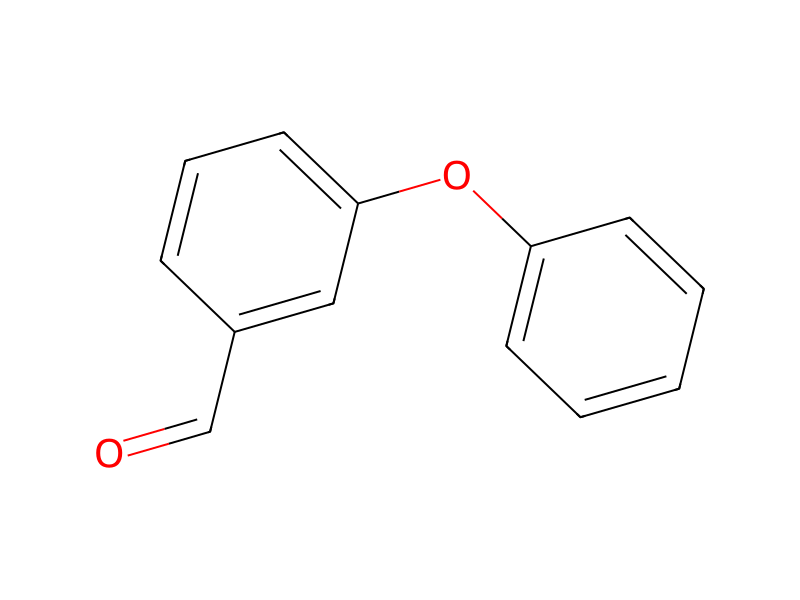
39515-51-0- Standard-SMILES
O=Cc1cccc(Oc2ccccc2)c1- InChIKey
MRLGCTNJRREZHZ-UHFFFAOYSA-N- Summenformel
- C13H10O2
- Durchschnittliche Molmasse
- 198,22 g/mol
- Monoisotopische Masse
- 198,06807956
Überblick
3-phenoxybenzaldehyde has been reported in Streptomyces aureus with data available.
Namen und Bezeichner
- Bevorzugter Name
- 3-Phenoxybenzaldehyde
- IUPAC
- 3-phenoxybenzaldehyde
- Lokaler Name
- m-Phenoxybenzaldehyd
- Englischer Name
- 3-Phenoxybenzaldehyde
- Summenformel
- C13H10O2
- Molmasse
- 198.22
Namen und Synonyme
3-PHENOXYBENZALDEHYDE39515-51-0m-PhenoxybenzaldehydeBenzaldehyde, 3-phenoxy-m-(Phenyloxy)benzaldehydeDTXSID3028005DTXCID8080052ZI2173196RefChem:504775254-487-13-Phenoxy-benzaldehyde3-Formyldiphenyl Ether
Weitere Namen anzeigen
META PHENOXY BENZALDEHYE3-PhenoxybenzaLAKOS BBS-00003181Phenoxybenzaldehyde3-Phenoxy-benzaldehy3-phenoxy-benzaldehydM-PHENOXY BENZALDEHYDE
MFCD000033535-phenoxybenzaldehydeUNII-2ZI2173196SCHEMBL98478PHENOXYBENZALDEHYDE, 3-MRLGCTNJRREZHZ-UHFFFAOYSA-DS-0482AC-10909
Datenbank-Bezeichner
- CAS
39515-51-0- PubChem CID
- 38284
- DTXSID
DTXSID3028005- ChEMBL
CHEMBL22531- UNII
- 2ZI2173196
Eigenschaften
Berechnete StruktureigenschaftenWird ergänzt
- XLogP
- 3,4
- Polarare Oberfläche (TPSA)
- 26,3 Ų
- H-Brücken-Donoren
- 0
- H-Brücken-Akzeptoren
- 2
- Frei drehbare Bindungen
- 3
- Schwere Atome
- 15
- Formalladung
- 0
- Komplexität
- 197
Experimentelle und physikochemische Eigenschaften
Chemical ClassesOther Classes -> Other Aromatic Compounds
PesticidesEnvironmental transformation -> Pesticide transformation products (metabolite, successor)
LogP3.38
Vapor Pressure0.000164 [mmHg]
Physical DescriptionYellow liquid; [Alfa Aesar MSDS]
Physikochemische Eigenschaften
- Schmelzpunkt
- 13 °C · 13 °C
- Siedepunkt
- 169 · 169-169.5 °C11 mm Hg(lit.)
- Dichte
- 1.147 g/mL · 1.147 g/mL at 25 °C(lit.)
- Brechungsindex
- 20 · n20/D 1.595(lit.)
- Flammpunkt
- 230 °F · >230 °F
- storage temp.
- Keep in dark place,Sealed in dry,Room Temperature
Sicherheit und Regulatorisches
Sicherheitsangaben dienen nur zur Orientierung und ersetzen weder das Sicherheitsdatenblatt (SDB) des Lieferanten noch geltende Vorschriften oder eine fachliche Bewertung.
GHS-Klassifizierung
GHS Classification
Danger
H302 (100%): Harmful if swallowed [Warning Acute toxicity, oral]
P260, P264, P270, P271, P273, P280, P284, P301+P317, P302+P352, P304+P340, P316, P317, P320, P321, P330, P362+P364, P391, P403+P233, P405, and P501 (click each P-code to see the statement)
Aggregated GHS information provided per 134 reports by companies from 10 notifications to the ECHA C&L Inventory. Each notification may be associated with multiple companies.
Gefahrenhinweise
Regulatory Information
Chemical: Benzaldehyde, 3-phenoxy-
Status: Cease Manufacture Update: 02-12-2020 https://echa.europa.eu/registration-dossier/-/registered-dossier/2116
3-Phenoxybenzaldehyde: Does not have an individual approval but may be used under an appropriate group standard
Hazards Summary
Causes somnolence, dyspnea, and salivary gland changes in inhalation lethal-concentration studies of rats; Causes CNS effects in 17-week inhalation study of rats; [RTECS] An irritant; Toxic by ingestion; May be fatal by inhalation; [Alfa Aesar MSDS]
Hazard Classes and CategoriesAcute Tox. 4 (100%)
Toxikologische Informationen
Adverse EffectsNeurotoxin - Other CNS neurotoxin
Toxicity DataLC50 (rat) = 270 mg/m3/4hr
Sicherheitsdaten
Chemie und Industrie
Verwendung und Herstellung
Use ClassificationEnvironmental transformation -> Pesticide transformation products (metabolite, successor)
General Manufacturing InformationBenzaldehyde, 3-phenoxy-: ACTIVE
Anwendungen
Verwenden3-phenoxybenzaldehyde is an important intermediate for the synthesis of pyrethroid pesticides phenothrin, cypermethrin, deltamethrin,fenvalerate, fenpropathrin, flucythrinate, cyhalothrin, etc.
Darstellung
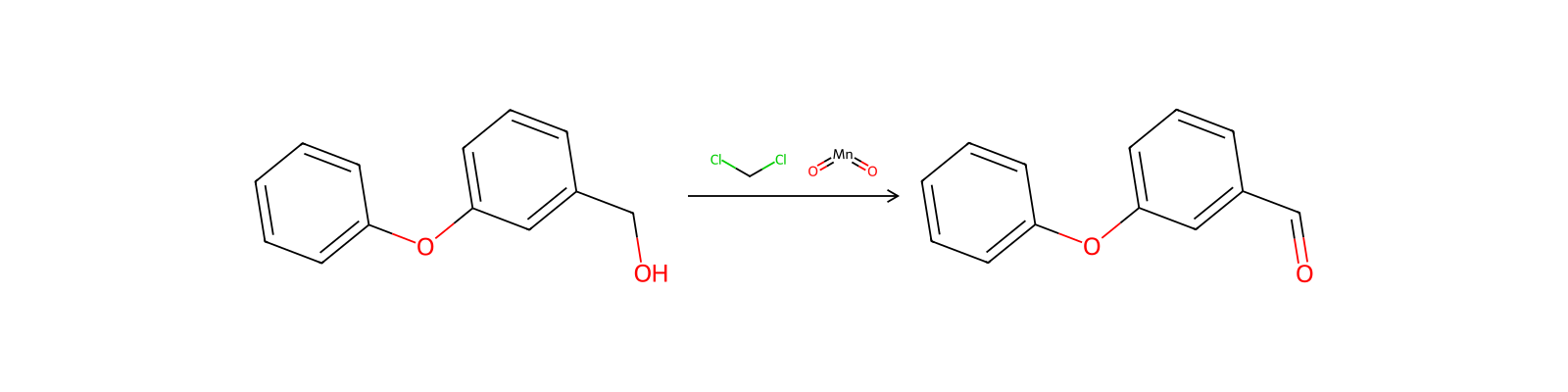
synthetischeSynthesis of 3-Phenoxybenzaldehyde: 3-phenoxybenzoic acid is generated by catalytic oxidation of 3-phenoxytoluene, followed by electrolytic reduction to obtain Phenoxybenzyl alcohol , and then selective oxidation with sodium hypochlorite to obtain 3-Phenoxybenzaldehyde.
Vor- und nachgelagerte Produkte
Vorgelagerte Rohstoffe
Zugehörige Reaktionen
189







Notizen zur Verbindung
Wird geladen…