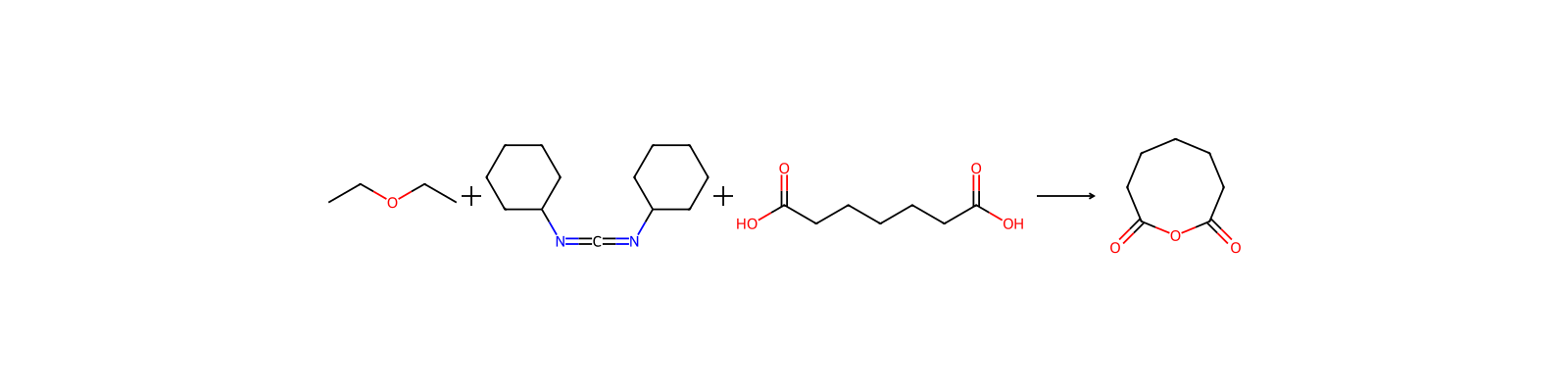
Pimelinsure
Pimelic Acid
HCID 385

Grundinformationen
- CAS
111-16-0- Standard-SMILES
O=C(O)CCCCCC(=O)O- InChIKey
WLJVNTCWHIRURA-UHFFFAOYSA-N- Summenformel
- C7H12O4
- Durchschnittliche Molmasse
- 160,17 g/mol
- Monoisotopische Masse
- 160,07355886
Überblick
Pimelic acid is an alpha,-dicarboxylic acid that is pentane with two carboxylic acid groups at positions C-1 and C-5. It has a role as an Escherichia coli metabolite and a Daphnia magna metabolite. It is a dicarboxylic fatty acid and an alpha,omega-dicarboxylic acid. It is a conjugate acid of a pimelate and a pimelate(1-).
Namen und Bezeichner
- Bevorzugter Name
- Pimelic Acid
- IUPAC
- heptanedioic acid
- Lokaler Name
- Pimelinsure
- Englischer Name
- Pimelic acid
- Summenformel
- C7H12O4
- Molmasse
- 160.17
Namen und Synonyme
pimelic acidHeptanedioic acid111-16-01,5-Pentanedicarboxylic acidPileric acidHeptandioic acidDTXSID5021598BZQ96WX25FNSC-30112DTXCID001598CHEBI:30531Acid, Pimelic
Weitere Namen anzeigen
PimeLheptanedioatePiMelic acipilericacidDimelic acid
RefChem:863290203-840-8pimelateHeptane-1,7-dioic acid6-carboxyhexanoate1,7-Heptanedioic acidMFCD000044251,7-Heptanedioate
Datenbank-Bezeichner
- CAS
111-16-0- PubChem CID
- 385
- DTXSID
DTXSID5021598- ChEMBL
CHEMBL1235351- ChEBI
CHEBI:30531- UNII
- BZQ96WX25F
- EC Number
- 203-840-8
- Nikkaji
- J5.105E
Eigenschaften
Berechnete Struktureigenschaften
- XLogP
- 0,5
- Polarare Oberfläche (TPSA)
- 74,6 Ų
- H-Brücken-Donoren
- 2
- H-Brücken-Akzeptoren
- 4
- Frei drehbare Bindungen
- 6
- Schwere Atome
- 11
- Formalladung
- 0
- Komplexität
- 125
Experimentelle und physikochemische Eigenschaften
Chemical ClassesOther Classes -> Organic Acids
DrugsPharmaceuticals -> Listed in ZINC15
LipidsFatty Acyls [FA] -> Fatty Acids and Conjugates [FA01] -> Dicarboxylic acids [FA0117]
SpringerMaterials PropertiesBoiling point
LogP
0.61
0.61
PlasticizersPlasticizer
Solubility50.0 mg/mL
Boiling Point342.00 °C. @ 760.00 mm Hg
Melting Point103 - 106 °C
Physical Description
Other Solid
Solid; [Merck Index] White powder; [Alfa Aesar MSDS]
Solid
Sicherheit und Regulatorisches
Sicherheitsangaben dienen nur zur Orientierung und ersetzen weder das Sicherheitsdatenblatt (SDB) des Lieferanten noch geltende Vorschriften oder eine fachliche Bewertung.
GHS-Klassifizierung
GHS Classification
This chemical does not meet GHS hazard criteria for 3.9% (7 of 179) of reports.
Warning
H315 (27.9%): Causes skin irritation [Warning Skin corrosion/irritation]
P261, P264, P264+P265, P271, P280, P302+P352, P304+P340, P305+P351+P338, P319, P321, P332+P317, P337+P317, P362+P364, P403+P233, P405, and P501 (click each P-code to see the statement)
Aggregated GHS information provided per 179 reports by companies from 11 notifications to the ECHA C&L Inventory. Each notification may be associated with multiple companies.
Gefahrenhinweise
Regulatory Information
Chemical: Heptanedioic acid
Heptanedioic acid is listed on the EPA's Chemical Data Reporting (CDR) system. Manufacturers and importers of Heptanedioic acid are required to report information about their production and use of this chemical to the EPA under the Toxic Substances Control Act (TSCA). (40 eCFR Part 711)
REACH registered substance: Pimelic acid (EC: 203-840-8)
Pimelic acid: Does not have an individual approval but may be used under an appropriate group standard
Other Safety InformationEvaluation - Chemicals that are unlikely to require further regulation to manage risks to environment
Hazards SummaryA skin and strong eye irritant; [Alfa Aesar MSDS]
Hazard Classes and CategoriesSkin Irrit. 2 (27.9%)
Sicherheitsdaten
- wgk
- 2
- tsca
- TSCA listed
Chemie und Industrie
Pharmakologische Informationen
Cellular LocationsMembrane
Verwendung und Herstellung
U.S. Production2023: 250,000 - <550,000 lb
Industry UsesPlasticizer
General Manufacturing Information
Petroleum Lubricating Oil and Grease Manufacturing
Heptanedioic acid: ACTIVE
Anwendungen
BeschreibungPimelic acid is the organic compound with the formula HO2C(CH2)5CO2H which has been synthesized from cyclohexanone and from salicylic acid. In the former route, the additional carbon is supplied by dimethyloxalate, which reacts with the enolate.This acid (heptanedioic acid), from the Greek pimelh (pimele fat), as adipic acid, was isolated from oxidized fats. It was obtained in 1884 by Ganttner F et al. as a product of ricinoleic acid (hydroxylated oleic acid) from castor oil.
VerwendenThe major uses of pimelic acid are in plasticizers and polymers.
Vor- und nachgelagerte Produkte
Vorgelagerte Rohstoffe
Zugehörige Reaktionen
13