
Loxoprofen
Daten werden ergänzt – lade die Seite später neu, um den aktuellen Stand zu sehen

Grundinformationen
- CAS
68767-14-6- Standard-SMILES
CC(C(=O)O)c1ccc(CC2CCCC2=O)cc1- InChIKey
YMBXTVYHTMGZDW-UHFFFAOYSA-N- Summenformel
- C15H18O3
- Durchschnittliche Molmasse
- 246,3 g/mol
- Monoisotopische Masse
- 246,12559444
Überblick
Loxoprofen is a monocarboxylic acid that is propionic acid in which one of the hydrogens at position 2 is substituted by a 4-[(2-oxocyclopentyl)methyl]phenyl group. A prodrug that is rapidly converted into its active trans-alcohol metabolite following oral administration. It has a role as a non-steroidal anti-inflammatory drug, a non-narcotic analgesic, an antipyretic, an EC 1.14.99.1 (prostaglandin-endoperoxide synthase) inhibitor and a prodrug. It is a monocarboxylic acid and a member of cyclopentanones. It is functionally related to a propionic acid. It is a conjugate acid of a loxoprofen(1-).
Namen und Bezeichner
- Bevorzugter Name
- Loxoprofen
- IUPAC
- 2-[4-[(2-oxocyclopentyl)methyl]phenyl]propanoic acid
- Englischer Name
- Loxoprofen
- Summenformel
- C15H18O3
- Molmasse
- 246.31
Namen und Synonyme
Loxoprofen68767-14-62-(4-((2-Oxocyclopentyl)methyl)phenyl)propanoic acidLoxoprofeneLoxoprofenoLoxoprofen acidLoxoprofenum2-{4-[(2-oxocyclopentyl)methyl]phenyl}propanoic acid2-[4-[(2-oxocyclopentyl)methyl]phenyl]propanoic acid3583H0GZAPDTXSID1045164CS-600
Weitere Namen anzeigen
IOXOPROFEN2-[4-(2-OXO-CYCLOPENTYLMETHYL)-PHENYL]-PROPIONIC ACIDA-METHYL-4-[(2-OXOCYCLOPENTYL)METHYL]BENZENEACETIC ACIDLoxoprofen-d6Loxoprofen RS
DTXCID9025164CHEBI:761722-(4-((2-oxocyclopentyl)methyl)phenyl)propionic acid2-OCPPP2-[4-[(2-Oxocyclopentyl)methyl]phenyl]propionic Acidalpha-Methyl-4-((2-oxocyclopentyl)methyl)benzeneacetate sodium salt dihydrateRefChem:924941Koloxo
Datenbank-Bezeichner
- CAS
68767-14-6、80382-23-6- PubChem CID
- 3965
Eigenschaften
Berechnete StruktureigenschaftenWird ergänzt
- XLogP
- 2,4
- Polarare Oberfläche (TPSA)
- 54,4 Ų
- H-Brücken-Donoren
- 1
- H-Brücken-Akzeptoren
- 3
- Frei drehbare Bindungen
- 4
- Schwere Atome
- 18
- Formalladung
- 0
- Komplexität
- 316
Experimentelle und physikochemische Eigenschaften
DrugsPharmaceutical
Physikochemische Eigenschaften
- Schmelzpunkt
- 108.5 · 108.5-111°
- Siedepunkt
- 0.3 · bp0.3 190-195°
- Dichte
- 1.182 · 1.182±0.06 g/cm3(Predicted)
- storage temp.
- Sealed in dry,Room Temperature
- Löslichkeit
- Chloroform (Slightly), Methanol (Slightly)
- Aggregatzustand
- solid
- pka
- 4.39 · 4.39±0.10(Predicted)
- Farbe
- White to Off-White
- Merck
- 14 · 14,5589
- InChI
- InChI=1S/C15H18O3/c1-10(15(17)18)12-7-5-11(6-8-12)9-13-3-2-4-14(13)16/h5-8,10,13H,2-4,9H2,1H3,(H,17,18)
- InChIKey
- YMBXTVYHTMGZDW-UHFFFAOYSA-N
- SMILES
- C(C1CCCC1=O)C1C=CC(C(C)C(=O)O)=CC=1
Sicherheit und Regulatorisches
Sicherheitsangaben dienen nur zur Orientierung und ersetzen weder das Sicherheitsdatenblatt (SDB) des Lieferanten noch geltende Vorschriften oder eine fachliche Bewertung.
GHS-Klassifizierung
GHS ClassificationNot Classified
Gefahrenhinweise
Hazard Classes and CategoriesNot Classified
Toxikologische Informationen
Drug Induced Liver Injury
Drug-Induced Liver Injury Severity and Toxicity (DILIst)
Loxoprofen
DILI Positive
DOI:10.1016/j.drudis.2019.09.022
Sicherheitsdaten
- wgk
- 3
- hs_code
- 2918.99.3000
- safety_code
- 22-24/25
- Speicherklasse
- 11 - Combustible Solids
Chemie und Industrie
Pharmakologische Informationen
ATC Code
M - Musculo-skeletal system
M - Musculo-skeletal system
QM - Musculo-skeletal system
QM - Musculo-skeletal system
Protein Binding99% albumin-bound. At doses of loxoprofen greater than 500 mg/day, clearance of the drug increases as saturation of plasma protein binding occurs at higher doses.
Pharmacodynamics
Loxoprofen is a non-selective inhibitor of cyclooxygenase enzymes, which are responsible for the formation of various biologically active pain, fever, and inflammatory mediators. These include prostaglandins, prostacyclin, thromboxane, and arachidonic acid.
Mechanism of Action
Loxoprofen itself is a prodrug and carries little-to-no pharmacological activity - it is rapidly metabolized to its trans-alcohol form, which is a potent and non-selective inhibitor of cyclooxygenase. Cyclooxygenase (COX) is present in 2 forms, COX-1 and COX-2, with each serving different functions. COX-1 is present in human cells and is constitutively released, performing cellular housekeeping functions such as mucus production and platelet aggregation. COX-2 is induced in human cells post-injury or due to other stimuli, is triggered to appear in large quantities at the sites of injury/stimuli, and is ultimately responsible for the mediation of inflammation and pain. Loxoprofen's active metabolite inhibits both COX isoforms, resulting in reduced expression of several mediators of pain, inflammation, and fever (e.g. prostaglandins, prostacyclin, thromboxane, etc).
Biological Half-LifeThe elimination half-life of Loxoprofen is approximately 15 hours. Steady concentration is achieved after 2-3 doses.
Metabolism/Metabolites
Loxoprofen is a prodrug that is rapidly converted to its active trans-alcohol metabolite by carbonyl reductase in the liver. This same process also results in a cis-alcohol metabolite, though this isomer carries little pharmacological activity. The parent drug has also been observed to undergo oxidation via CYP3A4/5 to two hydroxylated metabolites (M3 and M4) and glucuronidation by UGT2B7 to two glucuronide metabolites (M5 and M6). The alcohol metabolites of loxoprofen also undergo glucuronide conjugation via UGT2B7 to two glucuronide metabolites (M7 and M8) prior to excretion. When applied in topical formulations, loxoprofen is metabolized to its active trans-alcohol form by carbonyl reductase in the skin.
Zugehörige Reaktionen
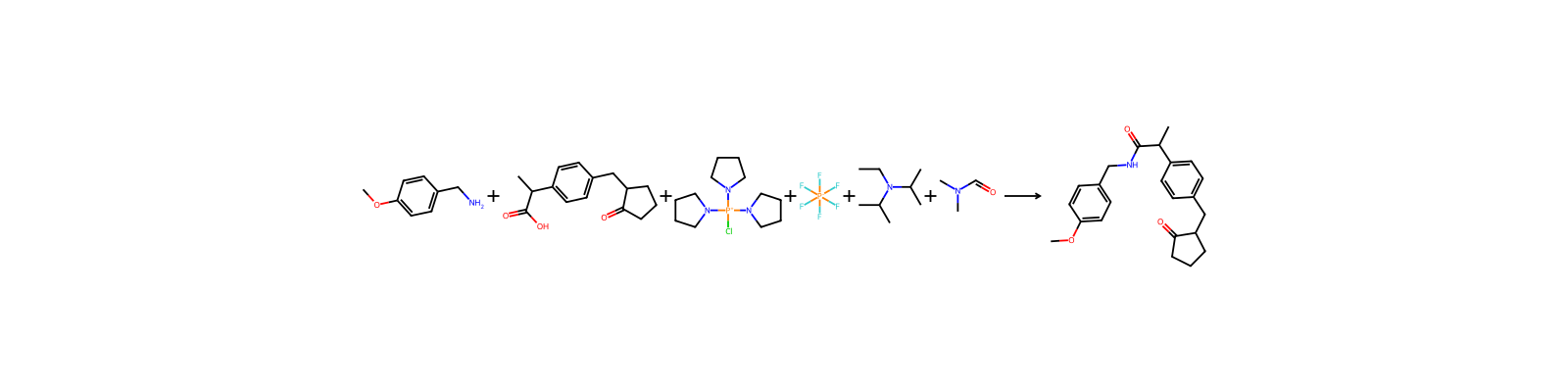
643




Notizen zur Verbindung
Wird geladen…