

Grundinformationen
- Standard-SMILES
O=[PH2]O- InChIKey
ACVYVLVWPXVTIT-UHFFFAOYSA-N- Summenformel
- H3O2P
- Durchschnittliche Molmasse
- 65,996 g/mol
- Monoisotopische Masse
- 65,98706597
Überblick
Hypophosphorous acid appears as colorless oily liquid or deliquescent crystals with a sour odor. Density 1.439 g / cm3. Melting point 26.5 °C. Inhalation of vapors irritates or burns the respiratory tract. Liquid and vapors may irritate or burn eyes and skin.
Namen und Bezeichner
- Bevorzugter Name
- Phosphinic Acid
- IUPAC
- phosphinic acid
- Englischer Name
- Hypophosphorous acid
- Summenformel
- HO2P
- Molmasse
- 63.980501
Namen und Synonyme
Acid, PhosphinicRefChem:929168DTXCID401012094228-601-56303-21-58B1RL9B4ZJCHEBI:29031DTXSID90873902Hydroxyphosphine oxideHypophosphorous acidHypophosphorus acidNSC-41904
Weitere Namen anzeigen
H3PO2HYPOPHOSPHORIC ACIDhypophosphorousHypophoaphoeous acidHypophosphorous acid 50%HYPOPHOSPOROUS ACIDphosphinic acid 50%Hypophosphorous acid solution
Phosphine oxide, hydroxy-Phosphinic Acid
Datenbank-Bezeichner
- CAS
6303-21-5- PubChem CID
- 4124402
- DTXSID
DTXSID90873902- ChEMBL
CHEMBL2105054- EC Number
- 228-601-5
- Nikkaji
- J95.183H
Eigenschaften
Berechnete Struktureigenschaften
- XLogP
- -1,1
- Polarare Oberfläche (TPSA)
- 37,3 Ų
- H-Brücken-Donoren
- 1
- H-Brücken-Akzeptoren
- 2
- Frei drehbare Bindungen
- 0
- Schwere Atome
- 3
- Formalladung
- 0
- Komplexität
- 10,3
Experimentelle und physikochemische Eigenschaften
Chemical ClassesToxic Gases & Vapors -> Acids, Inorganic
pHpH = 0.71 at 37 °C (100 g/L solution)
Density
Marketed in aqueous solutions of varying concentrations, 50% (density 1.274), 30-32% (density 1.13), 10% (density 1.04)
1.439 @25 °C
Viscosity58.4 mN/m (60% aqueous solution)
Color/Form
Hygroscopic crystals or colorless oily liquid
Water free acid forms deliquescent crystals; supercools to a colorless oily liquid
Solubility
Miscible with water
Miscible with alcohol
Boiling Point
Decomposes upon heating >133 °C
130 °C @760 [mm Hg]
Decomposition
Hazardous decomposition products formed under fire conditions - Oxides of phosphorus. /Hypophosphorous acid solution/
Dec by heat into /phosphoric acid/ and spontaneously flammable /phosphine/.
When heated to decomposition it emits toxic fumes of /phosphorous oxides/.
Melting Point
26.5 °C
26.5 °C
Vapor Pressure0.00323 mmg Hg at 25 °C (effusion method: vapor pressure balance)
Food Contact SubstancesFCS -> FDA Cumulative Estimated Daily Intake (CEDI)
Physical Description
Hypophosphorous acid appears as colorless oily liquid or deliquescent crystals with a sour odor. Density 1.439 g / cm3. Melting point 26.5 °C. Inhalation of vapors irritates or burns the respiratory tract. Liquid and vapors may irritate or burn eyes and skin.
Liquid
Deliquescent solid (from the water-free acid); Supercools to colorless odorless liquid; mp = 26.5 deg C; [Merck Index] Colorless odorless solution; [MSDSonline]
Physikochemische Eigenschaften
- Schmelzpunkt
- -25 °C · -25 °C
- Siedepunkt
- 108 °C · 108 °C (759.8513 mmHg)
- Dichte
- 1.206 g/mL · 1.206 g/mL at 20 °C(lit.)
- Dampfdruck
- 17 mmHg · <17 mmHg ( 20 °C)
- storage temp.
- no restrictions.
- Löslichkeit
- 2 O, · very soluble in H2O, ethanol, ethyl ether
- pka
- 1 · pK1 1.1.
- Aggregatzustand
- hygroscopic crystals or colorless oily liquid
- Farbe
- Colorless
- PH
- 1 · pKa1= 1.00(25℃)
- Wasserlöslichkeit
- SOLUBLE
- Merck
- 13 · 13,4894
- Stabilität
- 100 C · Stable. Incompatible with strong bases. Reacts violently with oxidizing agents, strong bases, mercury (II) nitrate and mercury (II) oxide. Do not heat above 100 C.
- InChI
- 1S/H3O2P/c1-3-2/h3H2,(H,1,2)
- InChIKey
- GQZXNSPRSGFJLY-UHFFFAOYSA-N
- SMILES
- O[PH2]=O
- CAS Datenbank
- 6303 · 6303-21-5(CAS DataBase Reference)
- NIST chemische Informationen
- Hypophosphorous acid(6303-21-5)
- EPA chemische Informationen
- Phosphinic acid (6303-21-5)
Sicherheit und Regulatorisches
GHS-Klassifizierung
GHS Classification
This chemical does not meet GHS hazard criteria for 1.5% (16 of 1039) of reports.
Danger
H290 (35.4%): May be corrosive to metals [Warning Corrosive to Metals]
P234, P260, P264, P264+P265, P280, P301+P330+P331, P302+P361+P354, P304+P340, P305+P354+P338, P316, P317, P321, P363, P390, P405, P406, and P501 (click each P-code to see the statement)
Aggregated GHS information provided per 1039 reports by companies from 13 notifications to the ECHA C&L Inventory. Each notification may be associated with multiple companies.
Danger
Gefahrenhinweise
Regulatory Information
Chemical: Phosphinic acid
List I Chemical: A chemical specified by regulation that, in addition to legitimate uses, is used in manufacturing a controlled substance in violation of the Act and is important to the manufacture of a controlled substance. (21 eCFR 1310.02)
Phosphinic acid is listed on the EPA's Chemical Data Reporting (CDR) system. Manufacturers and importers of Phosphinic acid are required to report information about their production and use of this chemical to the EPA under the Toxic Substances Control Act (TSCA). (40 eCFR Part 711)
Status: Active Update: 05-05-2022 https://echa.europa.eu/registration-dossier/-/registered-dossier/14343
Hypophosphorous acid: Does not have an individual approval but may be used under an appropriate group standard
Other Safety InformationIMAP assessments - Phosphinic acid: Environment tier I assessment
DOT LabelCorrosive
Fire HazardsExcerpt from ERG Guide 154 [Substances - Toxic and/or Corrosive (Non-Combustible)]:
Health HazardsExcerpt from ERG Guide 154 [Substances - Toxic and/or Corrosive (Non-Combustible)]:
Hazards Summary
A strong reducing agent; [Merck Index] Fire and explosion hazard in contact with oxidizing agents; [Hawley] A strong reducing agent; May cause irritation or burns to skin, eye, and respiratory tract; [CAMEO] Corrosive to skin and eyes; [eChemPortal: ERMA] A corrosive substance that can cause injury to the skin, eyes, and respiratory tract; Inhalation may cause chemical pneumonitis; [MSDSonline]
FDA Requirements
The following chemicals have been specifically designated by the Administrator of the Drug Enforcement Administration as the listed chemicals subject to the provisions of this part and parts 1309 and 1313 of this chapter. Each chemical has been assigned the DEA Chemical Code Number set forth opposite it. Hypophosphorous acid and its salts (Including ammonium hypophosphite, calcium hypophosphite, iron hypophosphite, potassium hypophosphite, manganese hypophosphite, magnesium hypophosphite and sodium hypophosphite) (DEA Code Number: 6797) are included on List 1 chemicals.
Reactive GroupReducing Agents, Strong
Reactivity AlertsStrong Reducing Agent
Reactivity Profile
HYPOPHOSPHOROUS ACID decomposes when heated into phosphoric acid and spontaneously flammable phosphine. Is oxidized by sulfuric acid with release of sulfur dioxide and sulfur. Reacts explosively with mercury(II) oxide [Mellor, 1940, Vol. 4, 778]. Reacts violently with mercury(II) nitrate [Mellor, 1940, Vol. 4, 993]. Neutralizes bases in exothermic reactions.
Air and Water ReactionsDeliquescent. Water soluble.
Hazard Classes and CategoriesMet. Corr. 1 (35.4%)
Sicherheit und Schutzausrüstung
Fire FightingExcerpt from ERG Guide 154 [Substances - Toxic and/or Corrosive (Non-Combustible)]:
First AidExcerpt from ERG Guide 154 [Substances - Toxic and/or Corrosive (Non-Combustible)]:
Fire Fighting Procedures
Suitable extinguishing media: Use water spray, alcohol-resistant foam, dry chemical or carbon dioxide. /Hypophosphorous acid solution/
Advice for firefighters: Wear self-contained breathing apparatus for firefighting if necessary. /Hypophosphorous acid solution/
If material on fire or involved in fire: Use water in flooding quantities as fog. Use "alcohol" foam, dry chemical or carbon dioxide.
Storage ConditionsKeep container tightly closed in a dry and well-ventilated place. Containers which are opened must be carefully resealed and kept upright to prevent leakage. /Hypophosphorous acid solution/
Cleanup Methods
ACCIDENTAL RELEASE MEASURES: Personal precautions, protective equipment and emergency procedures: Use personal protective equipment. Avoid breathing vapors, mist or gas. Ensure adequate ventilation. Evacuate personnel to safe areas. Environmental precautions: Do not let product enter drains. Methods and materials for containment and cleaning up: Soak up with inert absorbent material and dispose of as hazardous waste. Keep in suitable, closed containers for disposal. /Hypophosphorous acid solution/
Environmental considerations - Land spill: Dig a pit, pond, lagoon, holding area to contain liquid or solid material. Dike surface flow using soil, sand bags, foamed polyurethane, or foamed concrete. Absorb bulk liquid with fly ash, cement powder, or commercial sorbents.
Environmental considerations - Water spill: Use natural barriers or oil control booms to limit spill travel. Use natural deep water pockets, excavated lagoons, or sand bag barriers to trap material at bottom. Add ferric chloride (FeCl3). Use mechanical dredges or lifts to remove immobilized masses of pollutants and precipitates.
Environmental considerations - Air spill: Apply water spray or mist to knock down vapors. Disperse vapors using fans or blowers.
Nonfire Spill ResponseExcerpt from ERG Guide 154 [Substances - Toxic and/or Corrosive (Non-Combustible)]:
Disposal Methods
SRP: Recycle any unused portion of the material for its approved use or return it to the manufacturer or supplier. Ultimate disposal of the chemical must consider: the material's impact on air quality; potential migration in air, soil or water; effects on animal, aquatic and plant life; and conformance with environmental and public health regulations. If it is possible or reasonable use an alternative chemical product with less inherent propensity for occupational harm/injury/toxicity or environmental contamination.
Product: Offer surplus and non-recyclable solutions to a licensed disposal company. Contact a licensed professional waste disposal service to dispose of this material. Dissolve or mix the material with a combustible solvent and burn in a chemical incinerator equipped with an afterburner and scrubber; Contaminated packaging: Dispose of as unused product. /Hypophosphorous acid solution/
Preventive Measures
ACCIDENTAL RELEASE MEASURES: Personal precautions, protective equipment and emergency procedures: Use personal protective equipment. Avoid breathing vapors, mist or gas. Ensure adequate ventilation. Evacuate personnel to safe areas. Environmental precautions: Do not let product enter drains. /Hypophosphorous acid solution/
Precautions for safe handling: Avoid inhalation of vapor or mist. /Hypophosphorous acid solution/
Appropriate engineering controls: Handle in accordance with good industrial hygiene and safety practice. Wash hands before breaks and at the end of workday. /Hypophosphorous acid solution/
Gloves must be inspected prior to use. Use proper glove removal technique (without touching glove's outer surface) to avoid skin contact with this product. Dispose of contaminated gloves after use in accordance with applicable laws and good laboratory practices. Wash and dry hands. /Hypophosphorous acid solution/
For more Preventive Measures (Complete) data for Hypophosphorous acid (6 total), please visit the HSDB record page.
Isolation and EvacuationExcerpt from ERG Guide 154 [Substances - Toxic and/or Corrosive (Non-Combustible)]:
Protective Action Criteria (PAC)
1.2 [mg/m3]
13 [mg/m3]
79 [mg/m3]
Personal Protective Equipment (PPE)
Excerpt from ERG Guide 154 [Substances - Toxic and/or Corrosive (Non-Combustible)]:
Eye/face protection: Tightly fitting safety goggles. Faceshield (8-inch minimum). Use equipment for eye protection tested and approved under appropriate government standards such as NIOSH (US) or EN 166(EU). /Hypophosphorous acid solution/
Skin protection: Handle with gloves. /Hypophosphorous acid solution/
Body Protection: Complete suit protecting against chemicals. The type of protective equipment must be selected according to the concentration and amount of the dangerous substance at the specific workplace. /Hypophosphorous acid solution/
Respiratory protection: Where risk assessment shows air-purifying respirators are appropriate use a full-face respirator with multipurpose combination (US) or type ABEK (EN 14387) respirator cartridges as a backup to engineering controls. If the respirator is the sole means of protection, use a full-face supplied air respirator. Use respirators and components tested and approved under appropriate government standards such as NIOSH (US) or CEN (EU). /Hypophosphorous acid solution/
Toxikologische Informationen
Environmental Fate
TERRESTRIAL FATE: Based on a classification scheme(1), a measured Koc range of 3.7 to 15 for the analogous sodium hypophosphite (which dissociates into the hypophosphorus acid ion in water)(2) indicates that hypophosphorus acid is expected to have very high mobility in soil(SRC). The pKa of hypophosphorous acid is 2.27(3), indicating that this compound will exist almost entirely in ionized form in the environment(SRC). Since ionized forms do not volatilize, volatilization from moist soil is not expected to be an important fate process(SRC). Hypophosphorous acid is not expected to volatilize from dry soil surfaces(SRC) based upon a vapor pressure of 0.00323 mm Hg at 25 °C(3). Biodegradation data in soil were not available(SRC, 2017).
AQUATIC FATE: Based on a classification scheme(1), a measured Koc range of 3.7 to 15 for the analogous sodium hypophosphite (which dissociates into the hypophosphorus acid ion in water)(2) indicates that hypophosphorus acid is not expected to adsorb to suspended solids and sediment(SRC). The pKa of hypophosphorous acid is 2.27(3), indicating that this compound will exist almost entirely in ionized form in the environment(SRC). Since ionized forms do not volatilize, volatilization from water surfaces is not expected to be an important fate process(SRC). According to a classification scheme(4), an estimated BCF of 3(SRC), from an estimated log Kow of -1.72(5) and a regression-derived equation(5), suggests the potential for bioconcentration in aquatic organisms is low(SRC). Biodegradation data in water were not available(SRC, 2017). Based on hydrolysis results for sodium hypophosphite(2), hypophosphorus acid is stable to hydrolysis in water(3).
ATMOSPHERIC FATE: According to a model of gas/particle partitioning of semivolatile organic compounds in the atmosphere(1), hypophosphorus acid, which has a vapor pressure of 0.00323 mm Hg at 25 °C(2), is expected to exist solely as a vapor in the ambient atmosphere. Vapor-phase hypophosphorus acid may be degraded in the atmosphere by reaction with photochemically-produced hydroxyl radicals(SRC); however, the half-life for this reaction in air can not be estimated appropriately with current estimation methods since hypophosphorus acid in an inorganic compound(3). Hypophosphorus acid is miscible in water(4), therefore, atmospheric hypophosphorus acid may dissolve in precipitation, cloud or fog water and be removed from air via wet deposition(SRC).
Adverse EffectsDermatotoxin - Skin burns.
Toxicity Summary
IDENTIFICATION AND USE: Hypophosphorous acid is used in preparation of hypophosphites, and in electroplating baths. HUMAN STUDIES: Hypophosphorous acid solution (50%) was corrosive in a standardized and quantitative in vitro corrosivity test. ANIMAL STUDIES: There are no data available.
Soil Adsorption/Mobility
Using OECD Guideline 106 (Adsorption - Desorption Using a Batch Equilibrium Method) and five different soil types, sodium hypophosphite had Koc values ranging from 3.7 to 15(1). Since sodium hypophosphite dissociates into hypophosphorus acid ions in water(1), the Koc results will also apply to hypophosphorus acid(2). According to a classification scheme(3), these Koc values suggests that hypophosphorous acid is expected to have very high mobility in soil.
Human Toxicity Excerpts
/ALTERNATIVE and IN VITRO TESTS/ The Corrositex assay is a standardized and quantitative in vitro corrosivity test. The potential corrosivity of the test item was assessed by measuring the time that is required for the test item to pass through a biobarrier membrane and produce a change in a Chemical Detection System (CDS). 4 vials of 50% Hypophosphorous acid solution used in the test. According to the results (average breakthrough point: 12 min 05 sec) the substance is considered to be corrosive. ...
Artificial Pollution Sources
Hypophosphorus acid's production and use in electroplating baths, in the preparation of hypophosphites(1) and as a bleaching agent, reducing agent and catalyst(2) may result in its release to the environment through various waste streams(SRC). Hypophosphorus acid is on the US DEA (Drug Enforcement Administration) list of special surveillance chemicals used in clandestine drug manufacture(3).
Environmental Bioconcentration
An estimated BCF of 3 was calculated in fish for hypophosphous acid(SRC), using an estimated log Kow of -1.72(1) and a regression-derived equation(1). According to a classification scheme(2), this BCF suggests the potential for bioconcentration in aquatic organisms is low(SRC).
Volatilization from Water/Soil
The pKa of hypophosphorous acid is 2.27(1), indicating that this compound will exist almost entirely in ionized form in the environment(SRC). Since ionized forms do not volatilize, volatilization from water surfaces or moist soil is not expected to be an important fate process(SRC). Hypophosphorous acid is not expected to volatilize from dry soil surfaces(SRC) based upon a vapor pressure of 0.00323 mm Hg at 25 °C(1).
Environmental Abiotic Degradation
Sodium hypophosphite dissociates into hypophosphorus acid ions in water(1). Using OECD Guideline 111 (Hydrolysis as a Function of pH), sodium hypophosphite showed very minor hydrolytic degradation at pH values of 4.0, 7.0 and 9.0 and 50 °C(1). The estimated hydrolysis half-life is greater than one year under representative environmental conditions at 25 °C; therefore, sodium hypophosphite is considered to be hydrolytically stable(1). This should also apply to hypophosphorus acid(SRC).
Probable Routes of Human Exposure
According to the 2012 TSCA Inventory Update Reporting data, 2 reporting facilities estimate the number of persons reasonably likely to be exposed during the manufacturing, processing, or use of hypophosphorous acid in the United States may be as low as <10 workers and as high as 25-49 workers per plant; the data may be greatly underestimated due to confidential business information (CBI) or unknown values(1).
NIOSH (NOES Survey 1981-1983) has statistically estimated that 14,405 workers (2,961 of these are female) were potentially exposed to hypophosphorous acid in the US(1). Occupational exposure to hypophosphorous acid may occur through inhalation and dermal contact with this compound at workplaces where hypophosphorous acid is produced or used(SRC). Exposure to the general population may be possible in the vicinity of its use as a reagent during illicit drug manufacture. Hypophosphorous acid is on the US DEA (Drug Enforcement Administration) list of special surveillance chemicals used in clandestine drug manufacture(2).
Environmental Fate/Exposure Summary
Hypophosphorus acid's production and use in electroplating baths, in the preparation of hypophosphites and as a bleaching agent, reducing agent and catalyst may result in its release to the environment through various waste streams. If released to air, a vapor pressure of 0.00323 mm Hg at 25 °C indicates hypophosphorus acid will exist solely as a vapor in the atmosphere. Vapor-phase hypophosphorus acid will be degraded in the atmosphere by reaction with photochemically-produced hydroxyl radicals; the half-life for this reaction in air can not be estimated appropriately with current estimation methods. Hypophosphorus acid is miscible in water, and therefore, may dissolve in precipitation, cloud or fog water and be removed from air via wet deposition. If released to soil, hypophosphorus acid is expected to have very high mobility based upon a measured Koc range of 3.7 to 15 for the analogous sodium hypochorite. The pKa of hypophosphorous acid is 2.27, indicating that this compound will exist almost entirely in ionized form in the environment. Since ionized forms do not volatilize, volatilization from moist soil is not expected to be an important fate process. Hypophosphorus acid is not expected to volatilize from dry soil surfaces based upon its vapor pressure. If released into water, hypophosphorus acid is not expected to adsorb to suspended solids and sediment based upon the Koc. Biodegradation data in water or soil were not available. Volatilization from water surfaces is not expected to be an important fate process since the compound ionizes in water. An estimated BCF of 3 suggests the potential for bioconcentration in aquatic organisms is low. Based on hydrolysis results for sodium hypophosphite, hypophosphorus acid is stable to hydrolysis in water. Occupational exposure to hypophosphorous acid may occur through inhalation and dermal contact with this compound at workplaces where hypophosphorous acid is produced or used. Exposure to the general population may be possible in the vicinity of its use as a reagent during illicit drug manufacture. Hypophosphorous acid is on the US DEA (Drug Enforcement Administration) list of special surveillance chemicals used in clandestine drug manufacture. (SRC)
Antidote and Emergency Treatment
/SRP:/ Immediate first aid: Ensure that adequate decontamination has been carried out. If patient is not breathing, start artificial respiration, preferably with a demand-valve resuscitator, bag-valve-mask device, or pocket mask, as trained. Perform CPR as necessary. Immediately flush contaminated eyes with gently flowing water. Do not induce vomiting. If vomiting occurs, lean patient forward or place on left side (head-down position, if possible) to maintain an open airway and prevent aspiration. Keep patient quiet and maintain normal body temperature. Obtain medical attention. /Phosphine and Related Compounds/
/SRP:/ Basic treatment: Establish a patent airway (oropharyngeal or nasopharyngeal airway, if needed). Suction if necessary. Watch for signs of respiratory insufficiency and assist ventilations if necessary. Administer oxygen by nonrebreather mask at 10 to 15 L/min. Monitor for pulmonary edema and treat if necessary ... . Monitor for shock and treat if necessary ... . Anticipate seizures and treat if necessary ... . For eye contamination, flush eyes immediately with water. Irrigate each eye continuously with 0.9% saline (NS) during transport ... . /Phosphine and Related Compounds/
/SRP:/ Advanced treatment: Consider orotracheal or nasotracheal intubation for airway control in the patient who is unconscious, has severe pulmonary edema, or is in severe respiratory distress. Positive-pressure ventilation techniques with a bag valve mask device may be beneficial. Consider drug therapy for pulmonary edema ... . Monitor cardiac rhythm and treat arrhythmias if necessary ... . Start IV administration of D5W /SRP: "To keep open", minimal flow rate/. Use 0.9% saline (NS) or lactated Ringer's (LR) if signs of hypovolemia are present. For hypotension with signs of hypovolemia, administer fluid cautiously. Consider vasopressors if patient is hypotensive with a normal fluid volume. Watch for signs of fluid overload ... . Treat seizures with diazepam or lorazepam ... . Use proparacaine hydrochloride to assist eye irrigation ... . /Phosphine and Related Compounds/
/SRP:/ Immediate first aid: Ensure that adequate decontamination has been carried out. If patient is not breathing, start artificial respiration, preferably with a demand-valve resuscitator, bag-valve-mask device, or pocket mask, as trained. Perform CPR as necessary. Immediately flush contaminated eyes with gently flowing water. Do not induce vomiting. If vomiting occurs, lean patient forward or place on left side (head-down position, if possible) to maintain an open airway and prevent aspiration. Keep patient quiet and maintain normal body temperature. Obtain medical attention. /Inorganic acids and related compounds/
For more Antidote and Emergency Treatment (Complete) data for Hypophosphorous acid (6 total), please visit the HSDB record page.
Regulatorische Informationen
FDA Requirements
The following chemicals have been specifically designated by the Administrator of the Drug Enforcement Administration as the listed chemicals subject to the provisions of this part and parts 1309 and 1313 of this chapter. Each chemical has been assigned the DEA Chemical Code Number set forth opposite it. Hypophosphorous acid and its salts (Including ammonium hypophosphite, calcium hypophosphite, iron hypophosphite, potassium hypophosphite, manganese hypophosphite, magnesium hypophosphite and sodium hypophosphite) (DEA Code Number: 6797) are included on List 1 chemicals.
Sicherheitsdaten
- wgk
- 1
- tsca
- TSCA listed
- ridadr
- UN 3264 8/PG 3
- hs_code
- 28111990
- RTECS-Nr.
- SZ6400000
- risk_code
- 34
- hazard_code
- C
- safety_code
- 26-36/37/39-45
- hazard_class
- 8
- packing_group
- II
- Speicherklasse
- 8B - Non-combustible corrosive hazardous materials
- Giftige Stoffe Daten
- 6303-21-5(Hazardous Substances Data)
- Hazard Classifications
- Eye Dam. 1Met. Corr. 1Skin Corr. 1B
Chemie und Industrie
Verwendung und Herstellung
Uses
Used to make hypophosphites and in electroplating baths; [Hawley]
Electroplating [Category: Plate]
This is a DEA List 1 chemical substance.
List I chemical means a chemical specifically designated by the Administrator in section 1310.02(a) of this chapter that, in addition to legitimate uses, is used in manufacturing a controlled substance in violation of the Act and is important to the manufacture of a controlled substance.
Preparation of hypophosphites, electroplating baths.
Bleaching agent, reducing agent and catalyst
U.S. Production
2023: 234,114 lb
Non-confidential 2012 Chemical Data Reporting (CDR) information on the production and use of chemicals manufactured or imported into the United States. Chemical: Phosphinic acid. National Production Volume: Withheld.
Non-confidential 2016 Chemical Data Reporting (CDR) information on the production and use of chemicals manufactured or imported into the United States. Chemical: Phosphinic acid:
Industry UsespH regulating agent
Methods of Manufacturing
Commercially, phosphinic acid and its salts are manufactured by treatment of white phosphorus with a boiling slurry of lime. The desired product, calcium phosphinite, remains in solution and insoluble calcium phosphite is precipitated. Phosphine and hydrogen are also formed, the gas-containing sufficient diphosphine to make it spontaneously flammable. Under some conditions equal amounts of phosphorus appear as phosphine and as phosphite, and the volume of the hydrogen liberated is nearly proportional to the hypophosphite that forms. In addition, a small amount of decomposition of hypophosphite by alkali occurs. Excess calcium hydroxide is precipitated using carbon dioxide and the calcium carbonate, calcium hydroxide, and calcium phosphite are removed by filtration. The filtered solution is treated with an equivalent amount of sodium sulfate or sodium carbonate to precipitate calcium sulfate or carbonate. Sodium hypophosphite monohydrate is recovered upon concentration of the solution. Phosphinic acid is produced from the sodium salt by ion exchange.
Heating concentrated baryta water with white phosphorous and decomposing the barium hypophosphite with sulfuric acid, filtering the liquid, and concentrating under reduced pressure.
Conveniently prepared by treating /sodium hypophosphite/ with an ion-exchange resin.
Formulations/Preparations
Grade: Technical, NF (30-32% solution, d 1.13), 50% purified.
Marketed in aq solns of various concns, e.g., 50%, d 1.274; 30-32%, d 1.13; 10%, d 1.04.
DEA Listed Chemicals
Hypophosphorous acid and its salts (Including ammonium hypophosphite, calcium hypophosphite, iron hypophosphite, potassium hypophosphite, manganese hypophosphite, magnesium hypophosphite and sodium hypophosphite)
A chemical specified by regulation that, in addition to legitimate uses, is used in manufacturing a controlled substance in violation of the Act and is important to the manufacture of a controlled substance. (21 eCFR 1310.02)
General Manufacturing Information
Not Known or Reasonably Ascertainable
Phosphinic acid: ACTIVE
Anwendungen
BeschreibungHypophosphorous acid is a powerful reducing agent with a molecular formula of H3PO2. Inorganic chemists refer to the free acid by this name although its IUPAC name is dihydridohydroxidooxidophosphorus, or the acceptable name of phosphinic acid. It is a colorless low-melting compound, which is soluble in water, dioxane, and alcohols. The formula for hypophosphorous acid is generally written H3PO2, but a more descriptive presentation is HOP(O)H2 which highlights its monoprotic character. Salts derived from this acid are called phosphinates (hypophosphites).
VerwendenHypophosphorous acid is primarily used for electroless nickel plating. It is involved in the reduction of arenediazonium salts. It acts as an additive in Fischer esterification reactions. Also, it serves as a neutralizing agent, antioxidant, catalyst in polymerization and poly condensation, and wetting agent. Further, it is used in the formulation of pharmaceuticals, discoloration of polymers, water treatment and retrieval of precious or non-ferrous metals. In addition to this, it is used as bleaching agents for plastics, synthetic fibers, decolorizing agent and for color stabilization during the manufacture of chemicals and several plastics.
Darstellung
synthetischeHypophosphorous acid may be prepared by various methods: 1. Boiling white phosphorus with calcium hydroxide: P4 + 4Ca(OH)2 + 8H2O → 4Ca(H2PO2)2 + 4H2 The calcium salt is soluble in water. Treatment with sulfuric acid yields thehypophosphorous acid: (H2PO2)2Ca + H2SO4 → 2H3PO2 + CaSO4 The product mixture is filtered to remove insoluble CaSO4. The aqueous solu-tion of hypophosphorous acid is concentrated under reduced pressure.Concentrated baryta water may be used instead of calcium hydroxide.2. By treating sodium hypophosphite, NaH2PO2with an ion-exchange resin.The sodium salt may be produced by boiling white phosphorus with a solutionof sodium hydroxide, a reaction similar to (1) above. PH3 + 2I2 + 2H2O → H3PO2 + 4HI The above method may be considered safer than that involving heating whitephosphorus with an alkali. Hypophosphorous acid must be stored below 50°C. It is sold commerciallyas an aqueous solution at various concentrations.
Vor- und nachgelagerte Produkte
Vorgelagerte Rohstoffe
Nachgelagerte Produkte
Anbieter50 Anbieter
国药集团化学试剂有限公司86-21-63210123 · [email protected]
上海阿拉丁生化科技股份有限公司400-6206333 13167063860 · [email protected]
广州纳珑化工有限公司13192879270; 13192879270 · [email protected]
HubeiwidelychemicaltechnologyCo.,Ltd18627774460 · [email protected]
Hong Kong Tiansheng New Material Trading Co., Ltd+8617320695765 · [email protected]
Hebei shuoxi biotechnology co. LTD+8613081092107
河北创海生物科技有限公司+86-86-13131129325 · [email protected]
Hebei Yanxi Chemical Co., Ltd.+86-17531190177 · [email protected]
科瑞迪化学400-821-5857 021-64326257 · [email protected]
Syntechem Co.,Ltd[email protected]
上海迈瑞尔生化科技有限公司4006356688 18621169109 · [email protected]
阿法埃莎(中国)化学有限公司400-6106006 · [email protected]
安耐吉化学&3A(安徽泽升科技股份有限公司)400-0056266 · [email protected]
武汉卡诺斯科技有限公司027-83238443 15327105076 · [email protected]
广东云星生物技术有限公司0751-18902340975/189023400307 18902340307 · [email protected]
上海瀚鸿科技股份有限公司021-54306202 13764082696 · [email protected]
武汉市汉业武洲化工新材料有限公司+86 (27) 8550-3632 · [email protected]
河北缤享新材料科技有限公司+8618633865755 · [email protected]
济南世纪通达化工有限公司15605418165
上海景颜化工科技有限公司13817811078 · [email protected]
池州捷峰生物科技有限公司0566-8928158 · [email protected]
唐山默内德贸易有限公司+86-315-8309571 +86-15633399667 · [email protected]
武汉赛沃尔化工有限公司027-85613400 18707177243 · [email protected]
Hebei shenghao import and export trade co. LTD+8618431136903
山东西亚化学有限公司13355009207 13355009207 · [email protected]
唐山默内德贸易有限公司0315-8309571 15633399667 · [email protected]
玛雅试剂+86 (573) 82222445 (0)18006601000 452520369 · [email protected]
四川库利南科技有限公司400-1166-196 18981987031 · [email protected]
天津希恩思生化科技有限公司400 638 7771 · [email protected]
Xiamen AmoyChem Co., Ltd+86-86-5926051114 · [email protected]
斯洋(辽宁)生化制品有限公司+86-15221114306; +86-15221114306 · [email protected]
南京化学试剂股份有限公司025-58369808 17895012682 · [email protected]
Hebei Qige Biological Technology Co. Ltd+86 +8618733132031
武汉吉业升化工有限公司027-13545242311 13545242311 · [email protected]
斯百全化学(上海)有限公司021-021-021-67601398-809-809-809 15221380277 · [email protected]
艾科试剂4008-755-333 18080918076 · [email protected]
赛默飞世尔科技(中国)有限公司800-810-5118 · [email protected]
北京伊诺凯科技有限公司400-810-7969 010-59572699 · [email protected]
越林试剂021-62960152 · [email protected]
苏州安尼康药物研发有限公司0512-69369885 · [email protected]
北京环宇世纪化学科技有限公司hysj_bj.com
上海将来实业股份有限公司021-61552785 · [email protected]
日照力德士化工有限公司010-51268198 · [email protected]
美岚实业(上海)有限公司021-58958189 · [email protected]
上海爱蝶实业有限公司021-58957966 18930537195 · [email protected]
成都零六生物科技有限公司400-1166-196 13458535857 · [email protected]
湖北瑞今化学有限公司027 83642615 13995607107 · [email protected]
广拓化学(上海)有限公司021-60899189-8001 18918189673 · [email protected]
上海麦克林生化科技股份有限公司15221275939 15221275939 · [email protected]
上海嵩爰化工科技有限公司010-1234567 18521000990 · [email protected]
Ergänzende Hinweise
DefinitionChEBI: A phosphorus oxoacid that consists of a single pentavalent phosphorus covalently bound via single bonds to two hydrogens and a hydroxy group and via a double bond to an oxygen. The parent of the class of phosphinic acids.
Zugehörige Reaktionen
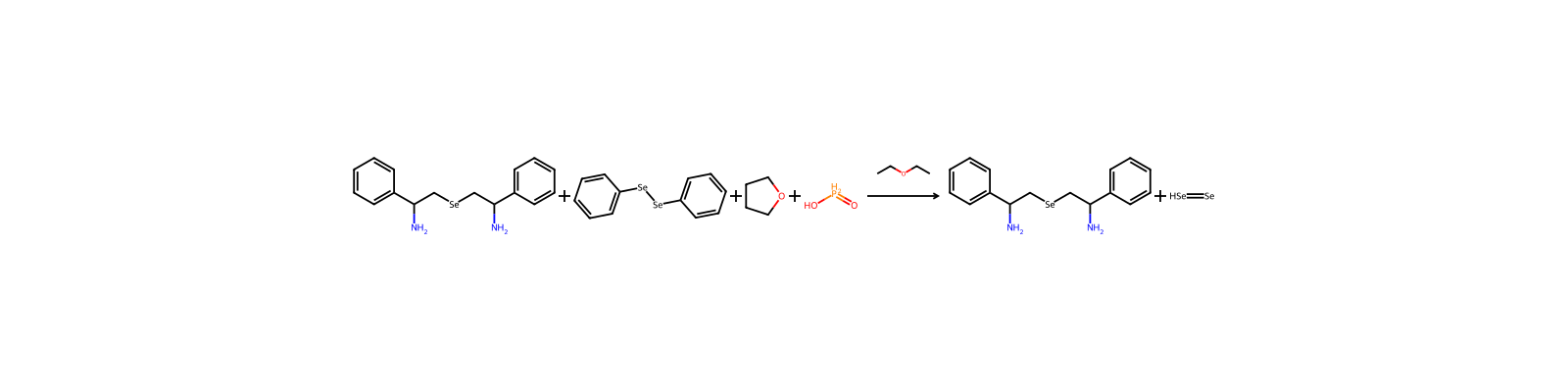
387



Verknüpfte Notizen
Wird geladen…