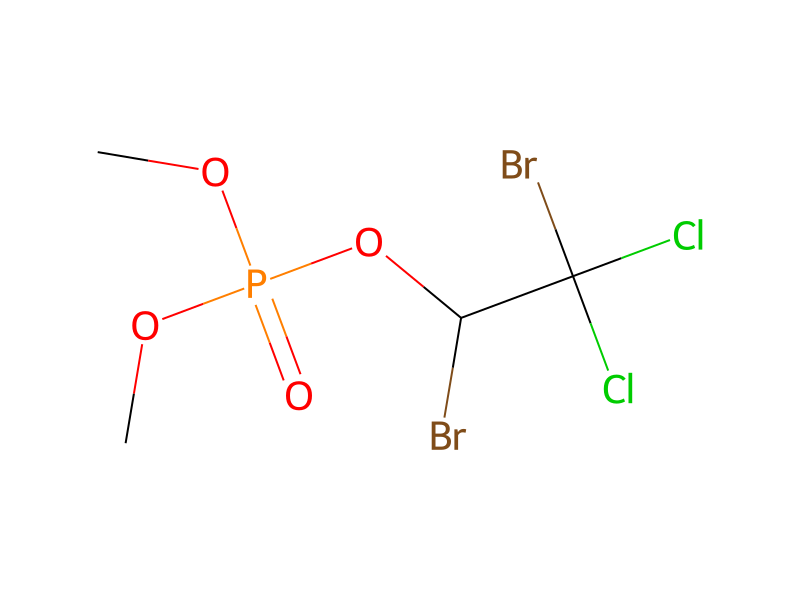
Grundinformationen
- Standard-SMILES
COP(=O)(OC)OC(Br)C(Cl)(Cl)Br- InChIKey
BUYMVQAILCEWRR-UHFFFAOYSA-N- Summenformel
- C4H7Br2Cl2O4P
- Durchschnittliche Molmasse
- 380,78 g/mol
- Monoisotopische Masse
- 377,78257489
Überblick
Naled is a white solid that may be dissolved in a liquid organic carrier with a pungent odor. It is a water emulsifiable liquid. It is insoluble in water and sinks in water. It can cause illness by inhalation, skin absorption and/or ingestion. The primary hazard is the threat to the environment. Immediate steps should be taken to limit its spread to the environment. If it is in liquid form, it can easily penetrate the soil and contaminate groundwater and nearby streams. It is used as a pesticide.
Namen und Bezeichner
- Bevorzugter Name
- Naled
- IUPAC
- (1,2-dibromo-2,2-dichloroethyl) dimethyl phosphate
- Lokaler Name
- Naled (ISO)
- Englischer Name
- Naled
- Summenformel
- C4H7Br2Cl2O4P
- Molmasse
- 380.78
Namen und Synonyme
Weitere Namen anzeigen
Datenbank-Bezeichner
- CAS
300-76-5- PubChem CID
- 4420
- DTXSID
DTXSID1024209- ChEMBL
CHEMBL1887067- ChEBI
CHEBI:38729- UNII
- PAM1AI9KU1
- EC Number
- 206-098-3
- Nikkaji
- J3.276J
Eigenschaften
Berechnete Struktureigenschaften
- XLogP
- 2,5
- Polarare Oberfläche (TPSA)
- 44,8 Ų
- H-Brücken-Donoren
- 0
- H-Brücken-Akzeptoren
- 4
- Frei drehbare Bindungen
- 5
- Schwere Atome
- 13
- Formalladung
- 0
- Komplexität
- 206
Experimentelle und physikochemische Eigenschaften
Pesticides
Pesticide -> EPA IRIS
Acaricides, Insecticides
Active substance -> EU Pesticides database: Not approved
Pesticides -> Organophosphate Insecticides
Pesticide (Naled) -> USDA PDB
Pesticide
LogP
log Kow = 1.38
1.38
2.19
Density
1.97 at 68 °F (USCG, 1999) - Denser than water; will sink
1.96 at 25 °C/4 °C
Relative density (water = 1): 1.96 (25 °C)
1.97 at 68 °F
(77 °F): 1.96
Color/Form
Pure compound is a solid; technical compound is moderately volatile
Usually obtained as a liquid; has been crystallized
White solid
Colorless to white solid or straw colored liquid (above 80 degrees F).
Solubility
Insoluble (NIOSH, 2024)
In water, 1.5 mg/L, temp not specified
Slightly soluble in aliphatic solvents; very soluble in aromatic solvents
Readily soluble in chlorinated solvents; slightly soluble in mineral oils
Soluble in methylene chloride; relatively soluble in acetonitrile, ethyl acetate, acetone, methanol
Freely soluble in chlorinated hydrocarbons, ketones, alcohols; sparingly soluble in petroleum solvents.
Corrosivity
Corrosive to metals
Liquid /naled/ will attack some forms of plastics, rubber, and coatings.
Boiling Point
392 °F at 760 mmHg approx. (USCG, 1999)
BP: 110 °C at 0.5 mm Hg
at 0.066kPa: 110 °C
392 °F
Decomposes
Decomposition
Hazardous decomposition products formed under fire conditions - Carbon oxides, oxides of phosphorus, hydrogen chloride gas, hydrogen bromide gas.
When heated to decomposition it emits very toxic fumes of /bromide, chloride, and phosphorus oxides/.
Hazardous decomposition products ... /may include/: hydrogen bromide, hydrogen chloride, phosphoric acid, and carbon monoxide.
Melting Point
80.6 °F (USCG, 1999)
27 °C
26 °C
26.5-27.5 °C
80 °F
80 °F
Vapor Pressure
0.0002 mmHg (NIOSH, 2024)
0.0002 [mmHg]
2.0X10⁻⁴ mm Hg at 20 °C
Vapor pressure, Pa at 20 °C: 0.26
0.0002 mmHg
0.0002 mmHg
Physikochemische Eigenschaften
- Schmelzpunkt
- 212 ℃ · 212℃ (decomposition)
- Siedepunkt
- 110 ℃ · 110℃ (0.5 Torr)
- Dichte
- 1.96 g/cm3 · 1.96 g/cm3
- Dampfdruck
- 2 · 2 (quoted, Verschueren, 1983)
- Brechungsindex
- 1.5108 · 1.5108 (28℃)
- storage temp.
- 0 · 0-6°C
- Löslichkeit
- Freely soluble in ketone, alcohols, aromatic and chlorinated hydrocarbons but sparingly soluble in petroleum solvents and mineral oils (Windholz et al., 1983)
- Aggregatzustand
- solid
- Wasserlöslichkeit
- 2000 mg · 2000mg l-1(20 °C)
- Wichte
- 1.96 · 1.96 (20℃)
- Merck
- 13 · 13,6384
- BRN
- 2049930 · 2049930
- Henry's Law Constant
- 1.5 · 1.5×10-1 mol/(m3Pa) at 25℃, HSDB (2015)
- Stabilität
- Light Sensitive, Moisture Sensitive
- Major Application
- agricultureenvironmental
- InChI
- 1S/C4H7Br2Cl2O4P/c1-10-13(9,11-2)12-3(5)4(6,7)8/h3H,1-2H3
- InChIKey
- BUYMVQAILCEWRR-UHFFFAOYSA-N
- SMILES
- COP(=O)(OC)OC(Br)C(Cl)(Cl)Br
- EPA chemische Informationen
- Naled (300-76-5)
Sicherheit und Regulatorisches
GHS-Klassifizierung
GHS Classification
Warning
H302: Harmful if swallowed [Warning Acute toxicity, oral]
P264, P264+P265, P270, P273, P280, P301+P317, P302+P352, P305+P351+P338, P317, P321, P330, P332+P317, P337+P317, P362+P364, P391, and P501 (click each P-code to see the statement)
Warning
H302 (98.2%): Harmful if swallowed [Warning Acute toxicity, oral]
P264, P264+P265, P270, P273, P280, P301+P317, P302+P352, P305+P351+P338, P317, P321, P330, P332+P317, P337+P317, P362+P364, P391, and P501 (click each P-code to see the statement)
Gefahrenhinweise
Regulatory Information
Hazard Traits - Developmental Toxicity; Environmental tox; Neurotoxicity
Regulation (EC) No 1107/2009 (amended)
Naled is listed in the dataset of EPA Human Health Benchmarks for Pesticides under the Safe Drinking Water Act (40 eCFR 141)
2005/788
Naled: Does not have an individual approval but may be used under an appropriate group standard
The New Jersey Worker and Community Right to Know Act requires public and private employers to provide information about hazardous substances at their workplaces. (N.J.S.A. 34:5A-1 et. seq.)
Fire Hazards
May be combustible. (NOAA, 2007)
Not combustible. Liquid formulations containing organic solvents may be flammable. Gives off irritating or toxic fumes (or gases) in a fire.
Fire Potential
Not combustible. Liquid formulations containing organic solvents may be flammable. Gives off irritating or toxic fumes (or gases) in a fire.
This chemical is noncombustible.
Health Hazards
INHALATION OR INGESTION: Symptoms secondary to cholinesterase inhibition are: headache, giddiness, nervousness, blurred vision, weakness, nausea, cramps, diarrhea, chest discomfort, sweating, miosis, tearing, salivation, and other excessive respiratory tract secretion, vomiting, cyanosis, muscle twitching, and convulsions. EYES: Irritating. SKIN: Irritating-can cause dermatitis. (USCG, 1999)
Hazards Summary
Classified as moderately toxic, naled has an LD50 of 91 to 430 mg/kg in rats; Skin sensitization has been reported; [EXTOXNET] Structurally similar to dichlorvos; A dermal sensitizer; [ACGIH] The average of two baseline respective cholinesterase activity determinations three days apart, with no exposures to enzyme inhibiting pesticides for at least 30 days, is recommended for each worker prior to exposure to cholinesterase inhibitors because of large inter-individual differences in published baseline values. To be established at least once a year. Removal from workplace exposures is recommended until the cholinesterase activity returns to within 20% of baseline. [TLVs and BEIs]
Special Reports
USEPA/Office of Pesticide Programs; Interim Reregistration Eligibility Decision (IRED) for Naled, EPA 738-R-02-008 (January 2002). EPA issues an IRED for a pesticide that is undergoing reregistration, requires a reregistration eligibility decision, and also needs a cumulative assessment under FQPA. The IRED, issued after EPA completes the individual pesticide's aggregate risk assessment, may include taking risk reduction measures -- for example, reducing risks to workers or eliminating uses that the registrant no longer wishes to maintain -- to gain the benefits of these changes before the final RED can be issued following the Agency's consideration of cumulative risks.[Available from, as of June 23, 2016: http://www.epa.gov/pesticides/reregistration/status.htm]
FIFRA Requirements
Tolerances are established for residues of the insecticide naled (1,2-dibromo-2,2-dichloro-ethyl dimethyl phosphate) and its conversion product 2,2-dichlorovinyl dimethyl phosphate, expressed as naled, resulting from the application of the pesticide to growing crops or from direct application to livestock and poultry, in or on the following raw agricultural commodities:[Table#2888]
A tolerance ... is established for the pesticide naled in or on all raw agricultural commodities, except those otherwise listed in this section, from use of the pesticide for area pest (mosquito and fly) control.
EPA has concluded, after completing its assessment of the cumulative risks associated with exposures to all of the OPs, that: (1) the pesticides covered by the IREDs that were pending the results of the OP cumulative assessment (listed in Attachment A) are indeed eligible for reregistration; and (2) the pesticide tolerances covered by the IREDs and TREDs that were pending the results of the OP cumulative assessment (listed in Attachment A) meet the safety standard under Section 408(b)(2) of the FFDCA. Thus, with regard to the OPs, EPA has fulfilled its obligations as to FFDCA tolerance reassessment and FIFRA reregistration, other than product-specific reregistration.
The Agency has determined that naled is eligible for reregistration provided that: (i) current data gaps and additional data needs are addressed; (ii) the risk mitigation measures outlined in this document are adopted and label amendments are made to reflect these measures; and (iii) cumulative risk considered for the OPs supports a final reregistration eligibility decision for naled.
As the federal pesticide law FIFRA directs, EPA is conducting a comprehensive review of older pesticides to consider their health and environmental effects and make decisions about their continued use. Under this pesticide reregistration program, EPA examines newer health and safety data for pesticide active ingredients initially registered before November 1, 1984, and determines whether the use of the pesticide does not pose unreasonable risk in accordance to newer safety standards, such as those described in the Food Quality Protection Act of 1996. Naled is found on List A, which contains most pesticides that are used on foods and, hence, have a high potential for human exposure. List A consists of the 194 chemical cases (or 350 individual active ingredients) for which EPA issued registration standards prior to FIFRA '88. Case No: 0092; Pesticide type: Insecticide (acaricide); Registration Standard Date: 06/01/83; Case Status: OPP is reviewing data from the pesticide's producers regarding its human health and/or environmental effects, or OPP is determining the pesticide's eligibility for reregistration and developing the Reregistration Eligibility Decision (RED) document.; Active ingredient (AI): Naled; Data Call-in (DCI) Date(s): 10/20/91, 03/03/95; AI Status: The producers of the pesticide has made commitments to conduct the studies and pay the fees required for reregistration, and are meeting those commitments in a timely manner.
Sicherheit und Schutzausrüstung
Fire Fighting
Excerpt from ERG Guide 152 [Substances - Toxic (Combustible)]:
In case of fire in the surroundings, use appropriate extinguishing media.
First Aid Measures
Fresh air, rest. Refer for medical attention.
Remove contaminated clothes. Rinse and then wash skin with water and soap. Refer for medical attention .
First rinse with plenty of water for several minutes (remove contact lenses if easily possible), then refer for medical attention.
Rinse mouth. Rest. Refer for medical attention .
First Aid
Excerpt from NIOSH Pocket Guide for Dimethyl-1,2-dibromo-2,2-dichlorethyl phosphate:
(General first aid procedures)
Exposure Control and Personal Protection
Biological Exposure Indices (BEI) [ACGIH] - Acetylcholinesterase activity in red blood cells = 70% of individual's baseline; Butylcholinesterase activity in serum or plasma = 60% of individual's baseline; Sample at end of shift; [TLVs and BEIs]
0.5 [mg/m3], inhalable fraction[German Research Foundation (DFG)]
Fire Fighting Procedures
Suitable extinguishing media: Use water spray, alcohol-resistant foam, dry chemical or carbon dioxide.
Advice for firefighters: Wear self-contained breathing apparatus for firefighting if necessary.
This chemical is noncombustible. Use agents suitable for surrounding fire. ... If material or contaminated runoff enters waterways, notify downstream users of potentially contaminated waters. Notify local health and fire officials and pollution control agencies. From a secure, explosion-proof location, use water spray to cool exposed containers. If cooling streams are ineffective (venting sound increases in volume and pitch, tank discolors, or shows any signs of deforming), withdraw immediately to a secure position. The only respirators recommended for firefighting are self-contained breathing apparatuses that have full face-pieces and are operated in a pressure-demand or other positive-pressure mode.
If material involved in fire: Extinguish fire using agent suitable for type of surrounding fire. (Material itself does not burn or burns with difficulty.)
/To fight fire use/ dry chemical, carbon dioxide, water, fog, or foam.
Storage Conditions
Keep container tightly closed in a dry and well-ventilated place. Recommended storage temperature 2 - 8 °C. Storage class (TRGS 510): Non-combustible, acute toxic Cat.3 / toxic hazardous materials or hazardous materials causing chronic effects.
Do not store or transport near food or feed. Store in cool, dry place, out of direct sunlight.
Sunlight degrades naled; therefore, the substance should be stores in lightproof containers.
Safe Storage of Pesticides: Never store pesticides in cabinets with or near food, animal feed, or medical supplies. Always store pesticides in their original containers, complete with labels that list ingredients, directions for use, and first aid steps in case of accidental poisoning. Never transfer pesticides to soft drink bottles or other containers. ... Do not store pesticides in places where flooding is possible or in places where they might spill or leak into wells, drains, ground water, or surface water.
Cleanup Methods
ACCIDENTAL RELEASE MEASURES: Personal precautions, protective equipment and emergency procedures: Wear respiratory protection. Avoid dust formation. Avoid breathing vapors, mist or gas. Ensure adequate ventilation. Evacuate personnel to safe areas. Avoid breathing dust. Environmental precautions: Prevent further leakage or spillage if safe to do so. Do not let product enter drains. Discharge into the environment must be avoided. Methods and materials for containment and cleaning up: Pick up and arrange disposal without creating dust. Sweep up and shovel. Keep in suitable, closed containers for disposal.
Dry: Evacuate persons not wearing protective equipment from area of spill or leak until cleanup is complete. Remove all ignition sources. Use HEPA vacuum or wet method to reduce dust during cleanup. Do not dry sweep. Collect powdered material in the most convenient and safe manner and deposit in sealed containers. Ventilate area after cleanup is complete. It may be necessary to contain and dispose of this chemical as a hazardous waste. If material or contaminated runoff enters waterways, notify downstream users of potentially contaminated waters.
Liquid: Evacuate and restrict persons not wearing protective equipment from area of spill or leak until cleanup is complete. Remove all ignition sources. Ventilate area of spill of leak. Absorb liquids in vermiculite, dry sand, earth, peat, carbon, or a similar material and deposit in sealed containers. Keep this chemical out of a confined space, such as a sewer, because of the possibility of an explosion, unless the sewer is designed to prevent the buildup of explosive concentrations. It may be necessary to contain and dispose of this chemical as a hazardous waste. If material or contaminated runoff enters waterways, notify downstream users of potentially contaminated waters.
1. Ventilate area of spill. 2. If in the solid form, collect spilled material in the most convenient and safe manner for reclamation or for disposal. Liquid dimethyl-1,2-dibromo-2,2-dichloroethyl phosphate or liquids containing /it/ should be absorbed in vermiculite, dry sand, earth, or a similar material.
For more Cleanup Methods (Complete) data for NALED (8 total), please visit the HSDB record page.
Disposal Methods
SRP: Recycle any unused portion of the material for its approved use or return it to the manufacturer or supplier. Ultimate disposal of the chemical must consider: the material's impact on air quality; potential migration in air, soil or water; effects on animal, aquatic and plant life; and conformance with environmental and public health regulations. If it is possible or reasonable use an alternative chemical product with less inherent propensity for occupational harm/injury/toxicity or environmental contamination.
SRP: Wastewater from contaminant suppression, cleaning of protective clothing/equipment, or contaminated sites should be contained and evaluated for subject chemical or decomposition product concentrations. Concentrations shall be lower than applicable environmental discharge or disposal criteria. Alternatively, pretreatment and/or discharge to a permitted wastewater treatment facility is acceptable only after review by the governing authority and assurance that "pass through" violations will not occur. Due consideration shall be given to remediation worker exposure (inhalation, dermal and ingestion) as well as fate during treatment, transfer and disposal. If it is not practicable to manage the chemical in this fashion, it must be evaluated in accordance with EPA 40 CFR Part 261, specifically Subpart B, in order to determine the appropriate local, state and federal requirements for disposal.
Product: Contact a licensed professional waste disposal service to dispose of this material. Dissolve or mix the material with a combustible solvent and burn in a chemical incinerator equipped with an afterburner and scrubber. Offer surplus and non-recyclable solutions to a licensed disposal company; Contaminated packaging: Dispose of as unused product.
This pesticide is more stable to hydrolysis than dichlorvos (50% hydrolysis at pH 9 at 37.5 °C in 301 min). It is unstable in alkaline conditions, in presence of iron, and is degraded by sunlight. About 10% hydrolysis per day is obtained in ambient water. Incineration is recommended for large amounts. In accordance with 40CFR165 follow recommendations for the disposal of pesticides and pesticide containers. Must be disposed properly by following package label directions or by contacting your local or federal environmental control agency or by contacting your regional EPA office.
For more Disposal Methods (Complete) data for NALED (10 total), please visit the HSDB record page.
Spillage Disposal
Personal protection: chemical protection suit including self-contained breathing apparatus. Do NOT let this chemical enter the environment. Sweep spilled substance into covered sealable containers. Carefully collect remainder. Then store and dispose of according to local regulations. If liquid: collect leaking liquid in sealable containers as far as possible. Absorb remaining liquid in sand or inert absorbent. Then store and dispose of according to local regulations.
Preventive Measures
ACCIDENTAL RELEASE MEASURES: Personal precautions, protective equipment and emergency procedures: Wear respiratory protection. Avoid dust formation. Avoid breathing vapors, mist or gas. Ensure adequate ventilation. Evacuate personnel to safe areas. Avoid breathing dust. Environmental precautions: Prevent further leakage or spillage if safe to do so. Do not let product enter drains. Discharge into the environment must be avoided.
Precautions for safe handling: Avoid contact with skin and eyes. Avoid formation of dust and aerosols. Further processing of solid materials may result in the formation of combustible dusts. The potential for combustible dust formation should be taken into consideration before additional processing occurs. Provide appropriate exhaust ventilation at places where dust is formed.
Appropriate engineering controls: Avoid contact with skin, eyes and clothing. Wash hands before breaks and immediately after handling the product.
Gloves must be inspected prior to use. Use proper glove removal technique (without touching glove's outer surface) to avoid skin contact with this product. Dispose of contaminated gloves after use in accordance with applicable laws and good laboratory practices. Wash and dry hands.
For more Preventive Measures (Complete) data for NALED (21 total), please visit the HSDB record page.
Toxikologische Informationen
Treatment
If the compound has been ingested, rapid gastric lavage should be performed using 5% sodium bicarbonate. For skin contact, the skin should be washed with soap and water. If the compound has entered the eyes, they should be washed with large quantities of isotonic saline or water. In serious cases, atropine and/or pralidoxime should be administered. Anti-cholinergic drugs work to counteract the effects of excess acetylcholine and reactivate AChE. Atropine can be used as an antidote in conjunction with pralidoxime or other pyridinium oximes (such as trimedoxime or obidoxime), though the use of '-oximes' has been found to be of no benefit, or possibly harmful, in at least two meta-analyses. Atropine is a muscarinic antagonist, and thus blocks the action of acetylcholine peripherally.
Interactions
Pesticides are applied seasonally in the Florida Keys to control nuisance populations of mosquitoes that pose a health threat to humans. There is, however, a need to investigate the effects of these pesticides on non-target marine organisms. We tested naled and permethrin, two mosquito adulticides used in the Keys, on a critical early life-history stage of queen conch (Strombus gigas). We conducted 12-hr exposure experiments on competent (i.e., capable of undergoing metamorphosis) queen conch larvae using environmentally relevant pesticide concentrations. We found that there was little to no mortality and that the pesticides did not induce or interfere with metamorphosis. However, after introduction of a natural metamorphic cue (extract of the red alga Laurencia potei), a significantly greater proportion of larvae underwent metamorphosis in the pesticide treatments than in those with the alga alone. In addition to the morphogenetic pathway that induces metamorphosis when stimulated, there thus appears to be a regulatory pathway that enhances the response to metamorphic triggers, as suggested by the increased sensitivity of the queen conch larvae to the algal cue after pesticide exposure (i.e., the pesticides stimulated the regulatory pathway). The regulatory pathway probably plays a role in the identification of high-quality habitat for metamorphosis, as the increased response to the algal cue suggests. Aerial drift and runoff can carry these pesticides into nearshore waters, where they may act as a false signal of favorable conditions and facilitate metamorphosis in suboptimal habitat, thus adversely affecting recruitment in nearshore queen conch populations.
Target Organs
Nervous
Eyes, skin, respiratory system, central nervous system, cardiovascular system, blood cholinesterase
Health Effects
Acute exposure to cholinesterase inhibitors can cause a cholinergic crisis characterized by severe nausea/vomiting, salivation, sweating, bradycardia, hypotension, collapse, and convulsions. Increasing muscle weakness is a possibility and may result in death if respiratory muscles are involved. Accumulation of ACh at motor nerves causes overstimulation of nicotinic expression at the neuromuscular junction. When this occurs symptoms such as muscle weakness, fatigue, muscle cramps, fasciculation, and paralysis can be seen. When there is an accumulation of ACh at autonomic ganglia this causes overstimulation of nicotinic expression in the sympathetic system. Symptoms associated with this are hypertension, and hypoglycemia. Overstimulation of nicotinic acetylcholine receptors in the central nervous system, due to accumulation of ACh, results in anxiety, headache, convulsions, ataxia, depression of respiration and circulation, tremor, general weakness, and potentially coma. When there is expression of muscarinic overstimulation due to excess acetylcholine at muscarinic acetylcholine receptors symptoms of visual disturbances, tightness in chest, wheezing due to bronchoconstriction, increased bronchial secretions, increased salivation, lacrimation, sweating, peristalsis, and urination can occur. Certain reproductive effects in fertility, growth, and development for males and females have been linked specifically to organophosphate pesticide exposure. Most of the research on reproductive effects has been conducted on farmers working with pesticides and insecticdes in rural areas. In females menstrual cycle disturbances, longer pregnancies, spontaneous abortions, stillbirths, and some developmental effects in offspring have been linked to organophosphate pesticide exposure. Prenatal exposure has been linked to impaired fetal growth and development. Neurotoxic effects have also been linked to poisoning with OP pesticides causing four neurotoxic effects in humans: cholinergic syndrome, intermediate syndrome, organophosphate-induced delayed polyneuropathy (OPIDP), and chronic organophosphate-induced neuropsychiatric disorder (COPIND). These syndromes result after acute and chronic exposure to OP pesticides.
Ecotoxicity Values
LD50; Species: Anas platyrhynchos (Mallard duck) male; oral 52.2 mg/kg (95% confidence limit: 37.8-72.3 mg/kg)
LD50; Species: Tympanuchus phasianellus (Sharp-tailed grouse) male; oral 64.9 mg/kg (95% confidence limit: 37.3-111 mg/kg)
LD50; Species: Branta canadensis (Canada goose) male and female; oral 36.9 mg/kg (95% confidence limit: 27.2-50.0 mg/kg)
LD50; Species: Odocoileus hemionus hemionus (Mule deer) oral approx 200 mg/kg
For more Ecotoxicity Values (Complete) data for NALED (83 total), please visit the HSDB record page.
Environmental Fate
TERRESTRIAL FATE: Based on a classification scheme(1), Koc values of 180(2) and 344(3) indicate that naled is expected to have moderate mobility in soil(SRC). Hydrolysis is expected to be an important environmental fate process. The hydrolysis rate constant was reported as 0.7 days-1(4) which corresponds to a half-life of about 1 day(SRC). Volatilization of naled from moist soil surfaces is expected to be an important fate process(SRC) given an estimated Henry's Law constant of 6.5X10⁻⁵ atm-cu m/mole(SRC), based upon its vapor pressure, 2.0X10⁻⁴ mm Hg(4), and water solubility, 1.5 mg/L(4). Naled is not expected to volatilize from dry soil surfaces(SRC) based upon its vapor pressure(4). Naled and its degradates, dichlorvos and dichloroacetic acid (DCAA), are transformed largely by chemical hydrolysis and biodegradation(5). Under terrestrial, aquatic and forestry field conditions naled dissipated rapidly with half-lives of less than two days for all three cases(5). Soil studies indicated that naled degraded 2-3 times faster in non-sterile soil versus sterile soil(6).
AQUATIC FATE: Based on a classification scheme(1), Koc values of 180(2) and 344(3) indicate that naled is not expected to adsorb to suspended solids and sediment(SRC). Hydrolysis is expected to be an important environmental fate process. The hydrolysis rate constant was reported as 0.7 days-1(4) which corresponds to a half-life of about 1 day(SRC). Volatilization from water surfaces is expected(5) based upon an estimated Henry's Law constant of 6.5X10⁻⁵ atm-cu m/mole(SRC), derived from its vapor pressure, 2.0X10⁻⁴ mm Hg(4), and water solubility, 1.5 mg/L(4). Using this Henry's Law constant and an estimation method(5), volatilization half-lives for a model river and model lake are 32 hours and 16 days, respectively(SRC). According to a classification scheme(6), an estimated BCF of 0.4(SRC), from its log Kow of 1.38(7) and a regression-derived equation(8), suggests the potential for bioconcentration in aquatic organisms is low(SRC). Naled has a reported hydrolysis rate constant of 0.7 days-1(4) which corresponds to a half-life of about 1 day(SRC). Naled and its degradates, dichlorvos and dichloroacetic acid (DCAA), are transformed largely by chemical hydrolysis and biodegradation(9). Under terrestrial, aquatic and forestry field conditions naled dissipated rapidly with half-lives of less than two days for all three cases(9). Soil studies indicated that naled degraded 2-3 times faster in non-sterile soil versus sterile soil(10).
ATMOSPHERIC FATE: According to a model of gas/particle partitioning of semivolatile organic compounds in the atmosphere(1), Naled, which has a vapor pressure of 2.0X10⁻⁴ mm Hg at 20 °C(2), is expected to exist solely as a vapor in the ambient atmosphere. Vapor-phase naled is degraded in the atmosphere by reaction with photochemically-produced hydroxyl radicals(SRC); the half-life for this reaction in air is estimated to be 2.5 days(SRC), calculated from its rate constant of 6.3X10⁻¹² cu cm/molecule-sec at 25 °C(SRC) that was derived using a structure estimation method(3). Naled has been reported to be degraded by sunlight(4).
Naled ... rapidly degrades in sewage water to dichlorvos and dichloroacetaldehyde.
Food Survey Values
Residues of naled have been found in regulatory monitoring of raw agricultural commodities during the years 1978-1982 above 0.01 ppm, although concentrations were not reported(1). Naled was detected in 4 out of 27,065 samples below the tolerance level in foods between 1988-1989 although detection limits were not reported(2). Naled has been detected in 1 out of 56 samples of grapes in California below the tolerance level although detection limits were not reported(3). Naled (0.2 ppm detection limit) has been detected in broccoli (4 out of 203 samples) and cabbage (2 out of 295 samples) below tolerance levels from a screening of domestic and foreign produce samples although concentrations were not reported(4). Field and laboratory distillation experiments with peppermint found naled at a maximum concentration of 36.4 ppm using a commercial still to extract the peppermint oil 13 days after treatment of the peppermint hay with naled(5). Naled was tested for but not detected (detection limit 0.1 mg/kg) in 179 fruit samples from Ontario, Canada, analyzed between 1980 and 1984(6). The compound was not detected in Canadian 5,784 domestic food commodities sampled between January 1, 1992 and March 31, 1994(7). It was detected in 5 of 16,198 imported food commodities; 1, 1, and 3 samples in the <0.05, 0.10, and 0.50 ppm ranges(7). Naled was monitored for, but not detected in fresh potato samples (228 samples) obtained from a farmers market in Alberta, Canada (8).
Exposure Routes
The substance can be absorbed into the body by inhalation of its aerosol, through the skin and by ingestion.
inhalation, skin absorption, ingestion, skin and/or eye contact
Oral (L1193) ; inhalation (L1193) ; dermal (L1193)
Toxicity Summary
IDENTIFICATION AND USE: Naled is a white solid. It is insecticide and acaricide, which is used in cooling tower, paper and pulp mill systems, hide and leather processing and disinfection. It is also used on swimming pool surfaces, household sickroom equipment, food processing plants and equipment, food contact surfaces, hospital rooms, and bathrooms. Naled is also veterinary medication. HUMAN EXPOSURE AND TOXICITY: Acute symptoms following poisoning by naled include abdominal cramps, emesis, nausea, hypersecretion, cough, and perspiration that disappeared after 2 days, while anxiety, depression, vertigo, and spontaneous horizontal nystagmus persisted for 4 months. Potential symptoms of overexposure are miosis, lacrimation; headache; chest tightness, wheezing and laryngeal spasm; salivation; cyanosis; anorexia, nausea, vomiting, abdominal cramps and diarrhea; weakness, twitching and paralysis; giddiness, ataxia and convulsions; low blood pressure; cardiac irregularities; irritation of skin and eyes. Dermal exposures to naled caused residual papular dermatitis on the arm, glazing on the skin of the cheek, mild irritation of the neck skin, and a maculopapular eruption of the abdomen that caused a contact sensitization type dermatitis. Dermatitis was also caused by picking flowers sprayed with naled. In another case, contact dermatitis was reported in an aerial applicator exposed to naled. ANIMAL STUDIES: Naled (5 mg/kg) was administered to rats via i.m. injection. Within 15 minutes, cholinergic signs appeared, and plasma and brain cholinesterases were inhibited by 79% and 80%, respectively. Naled caused severe eye and dermal irritation in rabbits and was weakly positive in a skin sensitization test in guinea pigs. In rats given a single oral dose of 25, 100, or 400 mg/kg naled, the 400-mg/kg dose produced mortality and transient decreases in body weight gain. Rats of both sexes given 100 or 400 mg/kg and females given 25 mg/kg showed marked cholinergic effects. No treatment-related neurological effects were observed 7 or 14 days after treatment at any dose level. In a lifetime study, male and female rats were administered doses of 0, 0.2, 2, or 10 mg/kg/day naled via gavage for 2 years. There was a dose-related reduction in plasma, brain, and to a lesser degree, red blood cell (RBC) cholinesterase activity among rats treated with 2 or 10 mg/kg/day. Slight tremors were noted on isolated occasions after dosing four females given 10 mg/kg/day. The incidence of neoplastic lesions in the treated animals was similar to that of controls. Pregnant rabbits were given doses of 0, 0.2, 2, or 8 mg/kg/day naled by gavage on gestational days 7 through 19. Does were sacrificed on day 29 of gestation. No maternal or developmental toxicity was related to treatment. Naled exhibited no potential to induce mutations in an in vivo mouse spot test that used mice given 3, 20, or 150 mg/kg/day naled by gavage on gestation days 8 to 12. Naled was positive for gene mutation in the S. typhimurium reverse mutation assay but did not induce DNA damage in a rec-type repair test with Proteus mirabilis strains PG713 (rec-, hcr-) and PG273 (wild-type). ECOTOXICITY STUDIES: Naled is highly toxic to bees.
(±)-Naled is a cholinesterase or acetylcholinesterase (AChE) inhibitor. A cholinesterase inhibitor (or 'anticholinesterase') suppresses the action of acetylcholinesterase. Because of its essential function, chemicals that interfere with the action of acetylcholinesterase are potent neurotoxins, causing excessive salivation and eye-watering in low doses, followed by muscle spasms and ultimately death. Nerve gases and many substances used in insecticides have been shown to act by binding a serine in the active site of acetylcholine esterase, inhibiting the enzyme completely. Acetylcholine esterase breaks down the neurotransmitter acetylcholine, which is released at nerve and muscle junctions, in order to allow the muscle or organ to relax. The result of acetylcholine esterase inhibition is that acetylcholine builds up and continues to act so that any nerve impulses are continually transmitted and muscle contractions do not stop. Among the most common acetylcholinesterase inhibitors are phosphorus-based compounds, which are designed to bind to the active site of the enzyme. The structural requirements are a phosphorus atom bearing two lipophilic groups, a leaving group (such as a halide or thiocyanate), and a terminal oxygen.
Ecotoxicity Excerpts
/AQUATIC SPECIES/ ...Naled and permethrin, two mosquito adulticides used in the Keys, /were tested/ on a critical early life-history stage of queen conch (Strombus gigas). ...12-hr exposure experiments /were conducted/ on competent (i.e., capable of undergoing metamorphosis) queen conch larvae using environmentally relevant pesticide concentrations. ...There was little to no mortality and the pesticides did not induce or interfere with metamorphosis. However, after introduction of a natural metamorphic cue (extract of the red alga Laurencia potei), a significantly greater proportion of larvae underwent metamorphosis in the pesticide treatments than in those with the alga alone. In addition to the morphogenetic pathway that induces metamorphosis when stimulated, there thus appears to be a regulatory pathway that enhances the response to metamorphic triggers, as suggested by the increased sensitivity of the queen conch larvae to the algal cue after pesticide exposure (i.e., the pesticides stimulated the regulatory pathway). The regulatory pathway probably plays a role in the identification of high-quality habitat for metamorphosis, as the increased response to the algal cue suggests. Aerial drift and runoff can carry these pesticides into nearshore waters, where they may act as a false signal of favorable conditions and facilitate metamorphosis in suboptimal habitat, thus adversely affecting recruitment in nearshore queen conch populations.
/AQUATIC SPECIES/ ... Toxicity was assessed at 4 and 21 days for larval and juvenile stages of the Eastern oyster, Crassostrea virginica, and the hard clam, Mercenaria mercenaria, using two pyrethroids (resmethrin and permethrin), an organophosphate (naled), and a juvenile growth hormone mimic (methoprene). Acute toxicity (4-day LC50) values ranged from 1.59 to >10 mg/L. Overall, clams were more susceptible to mosquito control insecticides than oysters. Naled was the most toxic compound in oyster larvae ... . Mortality for both species generally increased with chronic insecticide exposure (21-day LC50 values ranged from 0.60 to 9.49 mg/L). Insecticide exposure also caused sublethal effects, including decreased swimming activity after 4 days in larval oysters (4-day EC50 values of 0.60 to 2.33 mg/L) and decreased growth (shell area and weight) in juvenile clams and oysters after 21 days (detected at concentrations ranging from 0.625 to 10 mg/L). Hypoxia, hypercapnia, and a combination of hypoxia and hypercapnia caused mortality in larval clams ... .
/AQUATIC SPECIES/ ... No mortality to mosquito fish /or tadpoles/ when applied at 560 g/ha.
/OTHER TERRESTRIAL SPECIES/ ... Responses of terrestrial insects to aerial applications of an organophosphate insecticide, naled, used for mosquito and biting midge control were studied on Parris Island Marine Corps Recruit Depot, Parris Island, SC. Aerial applications were made with C-130 aircraft at dusk in 2003 and in 2005. In 2003, ...two locations on Parris Island /were sampled/ with Malaise traps before and after spraying, and used Before-After analyses to examine changes in terrestrial insect diversity and abundance. In 2005, ... insects /were sampled/ with yellow pan traps at three locations on Parris Island and at an untreated control site. A Before-After Control-Impact analysis at each location was conducted to compare changes. In 2003, numbers of four of 12 common taxa (Dolichopodidae, Sarcophagidae, Syrphidae, Tachinidae) were lower after sprays. However, there were no significant changes in numbers of common taxa or total numbers in 2005. Shannon diversities (H') were not different in either year indicating that sprays had minimal impact on overall community biodiversity. In contrast, populations of pestiferous biting midges (Culicoides spp.) collected in CDC-style traps were reduced by 94-99% after spraying in both years; mosquito numbers declined by 88.2% in 2003 and 92.5% in 2005, after sprays.
For more Ecotoxicity Excerpts (Complete) data for NALED (10 total), please visit the HSDB record page.
Regulatorische Informationen
FIFRA Requirements
Tolerances are established for residues of the insecticide naled (1,2-dibromo-2,2-dichloro-ethyl dimethyl phosphate) and its conversion product 2,2-dichlorovinyl dimethyl phosphate, expressed as naled, resulting from the application of the pesticide to growing crops or from direct application to livestock and poultry, in or on the following raw agricultural commodities:[Table#2888]
A tolerance ... is established for the pesticide naled in or on all raw agricultural commodities, except those otherwise listed in this section, from use of the pesticide for area pest (mosquito and fly) control.
EPA has concluded, after completing its assessment of the cumulative risks associated with exposures to all of the OPs, that: (1) the pesticides covered by the IREDs that were pending the results of the OP cumulative assessment (listed in Attachment A) are indeed eligible for reregistration; and (2) the pesticide tolerances covered by the IREDs and TREDs that were pending the results of the OP cumulative assessment (listed in Attachment A) meet the safety standard under Section 408(b)(2) of the FFDCA. Thus, with regard to the OPs, EPA has fulfilled its obligations as to FFDCA tolerance reassessment and FIFRA reregistration, other than product-specific reregistration.
The Agency has determined that naled is eligible for reregistration provided that: (i) current data gaps and additional data needs are addressed; (ii) the risk mitigation measures outlined in this document are adopted and label amendments are made to reflect these measures; and (iii) cumulative risk considered for the OPs supports a final reregistration eligibility decision for naled.
As the federal pesticide law FIFRA directs, EPA is conducting a comprehensive review of older pesticides to consider their health and environmental effects and make decisions about their continued use. Under this pesticide reregistration program, EPA examines newer health and safety data for pesticide active ingredients initially registered before November 1, 1984, and determines whether the use of the pesticide does not pose unreasonable risk in accordance to newer safety standards, such as those described in the Food Quality Protection Act of 1996. Naled is found on List A, which contains most pesticides that are used on foods and, hence, have a high potential for human exposure. List A consists of the 194 chemical cases (or 350 individual active ingredients) for which EPA issued registration standards prior to FIFRA '88. Case No: 0092; Pesticide type: Insecticide (acaricide); Registration Standard Date: 06/01/83; Case Status: OPP is reviewing data from the pesticide's producers regarding its human health and/or environmental effects, or OPP is determining the pesticide's eligibility for reregistration and developing the Reregistration Eligibility Decision (RED) document.; Active ingredient (AI): Naled; Data Call-in (DCI) Date(s): 10/20/91, 03/03/95; AI Status: The producers of the pesticide has made commitments to conduct the studies and pay the fees required for reregistration, and are meeting those commitments in a timely manner.
CERCLA Reportable Quantities
Persons in charge of vessels or facilities are required to notify the National Response Center (NRC) immediately, when there is a release of this designated hazardous substance, in an amount equal to or greater than its reportable quantity of 10 lb or 4.54 kg. The toll free number of the NRC is (800) 424-8802. The rule for determining when notification is required is stated in 40 CFR 302.4 (section IV.D.3.b).
Clean Water Act Requirements
Naled is designated as a hazardous substance under section 311(b)(2)(A) of the Federal Water Pollution Control Act and further regulated by the Clean Water Act Amendments of 1977 and 1978. These regulations apply to discharges of this substance. This designation includes any isomers and hydrates, as well as any solutions and mixtures containing this substance.
Sicherheitsdaten
- OEB
- B
- OEL
- TWA: 3 mg/m3 [skin]
- wgk
- 3
- IDLA
- 200 mg/m3
- ridadr
- 3018
- hs_code
- 29199000
- RTECS-Nr.
- TB9450000
- risk_code
- 21/22-36/38-50-25-21
- Toxizität
- LD50 in male rats (mg/kg): 250 orally; 800 dermally (Gaines)
- hazard_code
- Xn,N,T
- safety_code
- 36/37-61-26
- hazard_class
- 6.1(a)
- packing_group
- I
- Speicherklasse
- 6.1C - Combustible acute toxic Cat.3toxic compounds or compounds which causing chronic effects
- Giftige Stoffe Daten
- 300-76-5(Hazardous Substances Data)
- Hazard Classifications
- Acute Tox. 3 OralAcute Tox. 4 DermalAquatic Acute 1Eye Irrit. 2Skin Irrit. 2
Chemie und Industrie
Pharmakologische Informationen
Metabolism/Metabolites
O,O-Dimethyl-2,2-dichlorovinyl phosphate (dichlorvos) is a metabolite of naled as are other hydrolytic products such as methyl phosphates (mono- and di-), O-methyl 2,2-dichlorovinyl phosphate (desmethyl dichlorvos), and inorganic phosphate.
Three metabolites were identified in an in vitro study using the rat liver homogenates, dichlorvos, dichloroacetaldehyde, and bromodichloroacetaldehyde.
Metabolism of naled to dimethyl phosphate was demonstrated indirectly in individuals who were outdoors during aerial spraying with a naled and temephos mixture for mosquito control. Urinary dimethyl phosphate concentrations increased from a maximum of 0.06 ppm to a maximum of 0.50 ppm within 3 hours after spraying.
Trace residues of organophosphorus (OP) pesticides are associated with fruits and vegetables that have been sprayed with those OP pesticides to guard against insect pests. Human dietary exposure to these OP pesticides is commonly estimated by measuring the amount of OP metabolites in urine, assuming a stoichiometric relationship between a metabolite and its parent insecticide. Dialkylphosphates (DAPs) are the OP metabolites that are most often used as markers in such biomonitoring studies. However, abiotic hydrolysis, photolysis, and plant metabolism can convert OP chemicals (OP residues) to DAP residues on or in the fruits and vegetables. To evaluate the extent of these conversions, OPs and DAPs were measured in 153 produce samples. These samples from 2 lots were known to contain OP insecticide residues based on routine monitoring by California producers and shippers. A total of 12 OPs were quantified, including mevinphos, naled, acephate, methamidophos, oxidemeton-methyl, azinphos-methyl, dimethoate, malathion, methidathion, phosmet, chlorpyrifos, and diazinon. All OP insecticide residues were below their respective residue tolerances in 2002-2004. A total of 91 of 153 samples (60%) contained more DAP residues than parent OPs. The mean mole fractions [DAPs/(DAPs + OPs)] for the first and second lots of produce were 0.62 and 0.50, respectively, and the corresponding geometric means were 0.55 and 0.34. The corresponding mean mole ratios (DAPs/OP) were 7.1 and 3.4, with geometric means of 2.1 and 0.9. Any preformed DAPs ingested in the diet that are excreted in urine may inflate the estimated absorbed OP insecticide doses in occupational and environmental studies. In subsequent prospective studies, time-dependent production of dimethylphosphate (DMP) and dimethylthiophosphate (DMTP) in strawberries and leaves following malathion sprays occurred concomitant with the disappearance of the parent insecticide and its oxon. DAPs are more persistent in plants and produce at routinely measured levels than their parent OP insecticides.
Metabolism of organophosphates occurs principally by oxidation, by hydrolysis via esterases and by reaction with glutathione. Demethylation and glucuronidation may also occur. Oxidation of organophosphorus pesticides may result in moderately toxic products. In general, phosphorothioates are not directly toxic but require oxidative metabolism to the proximal toxin. The glutathione transferase reactions produce products that are, in most cases, of low toxicity. Paraoxonase (PON1) is a key enzyme in the metabolism of organophosphates. PON1 can inactivate some organophosphates through hydrolysis. PON1 hydrolyzes the active metabolites in several organophosphates insecticides as well as, nerve agents such as soman, sarin, and VX. The presence of PON1 polymorphisms causes there to be different enzyme levels and catalytic efficiency of this esterase, which in turn suggests that different individuals may be more susceptible to the toxic effect of organophosphate exposure.
MeSH Pharmacological Classification
Drugs that inhibit cholinesterases. The neurotransmitter ACETYLCHOLINE is rapidly hydrolyzed, and thereby inactivated, by cholinesterases. When cholinesterases are inhibited, the action of endogenously released acetylcholine at cholinergic synapses is potentiated. Cholinesterase inhibitors are widely used clinically for their potentiation of cholinergic inputs to the gastrointestinal tract and urinary bladder, the eye, and skeletal muscles; they are also used for their effects on the heart and the central nervous system.
Pesticides designed to control insects that are harmful to man. The insects may be directly harmful, as those acting as disease vectors, or indirectly harmful, as destroyers of crops, food products, or textile fabrics.
A pesticide or chemical agent that kills mites and ticks. This is a large class that includes carbamates, formamides, organochlorines, organophosphates, etc, that act as antibiotics or growth regulators.
Absorption, Distribution and Excretion
/MILK/ Residues were non-detectable ( < 0.01 ppm) in milk from Holstein cows subject to body and premise sprays for 14 days with the 7.2 lb/gal EC formulation.
A study of dimethylphosphate excretion in rats after either intraperitoneal or oral naled exposure indicated that the excretion rate was essentially independent of dose.
In October 2004, the Florida Department of Health (FLDOH) and the Centers for Disease Control and Prevention (CDC) assessed human exposure to ultra-low volume (ULV) aerial application of naled. Teams administered activity questionnaires regarding pesticide exposure and obtained baseline urine samples to quantify prespray naled metabolite levels. Following the spray event, participants were asked to collect postspray urine specimens within 12 hr of the spray event and at 8-hr intervals for up to 40 hr. Upon completion, a postspray activity questionnaire was administered to study participants. Two hundred five (87%) participants completed the study. The urine analysis showed that although 67% of prespray urine samples had detectable levels of a naled metabolite, the majority of postspray samples were below the limit of detection (< LOD). Only at the "postspray 6" time period, which corresponds to a time greater than 5 half-lives (> 40 hr) following exposure, the number of samples with detectable levels exceeded 50%. There was a significant decrease in naled metabolites from prespray to postspray (= .02), perhaps associated with a significant reduction (< or = 0.05) in some participants that may have resulted in pesticide exposure by means other than the mosquito control operations. These data suggest that aerial spraying of naled does not result in increased levels of naled in humans, provided the naled is used according to label instructions.
... Urinary levels of radioactivity were higher when animals inhaled the compound than when it was administered by the other routes. Levels deposited in the lung were very low.
Verwendung und Herstellung
Uses
Used to kill aphids, mites, mosquitoes, and flies; also used by veterinarians to treat worm infections in dogs; [EXTOXNET] Used as an insecticide and acaricide in field crops, greenhouses and mushroom cultivation; Also used to kill mosquitoes; [ACGIH]
Farming (Pesticides) [Category: Industry]
For naled (USEPA/OPP Pesticide Code: 034401) ACTIVE products with label matches. /SRP: Registered for use in the U.S. but approved pesticide uses may change periodically and so federal, state and local authorities must be consulted for currently approved uses./
Insecticide, acaracide
/Used/ for numerous crops. For flies in barns and in and around food processing plants. Liquids can be applied to hot plates in greenhouse to kill insects by vapor action. For municipal and other large area mosquito control by ultra low volume or conventional application methods.
Used in cooling tower, paper and pulp mill systems, hide and leather processing and disinfection.
Consumption Patterns
(1974) 1.04X10+9 GRAMS (CONSUMPTION)
70% mosquito control, 30% agriculture
Methods of Manufacturing
Naled is produced by the addition of chloral to trimethyl phosphite, followed by bromination of the product thus obtained in the presence of peroxide or light, or, alternatively, by bromination of O,O-dimethyl O-(2,2-dichlorovinyl phosphate).
Formulations/Preparations
Naled Technical (Amvac Chemical Corporation): Active ingredient: Naled 94.5%.
Dibrom 8 Emulsive (Amvac Chemical Corporation): Active ingredient: Naled 62.0%.
Dibrom Concentrate (Amvac Chemical Corporation): Active ingredient: Naled 87.4%.
Trumpet EC Insecticide (Amvac Chemical Corporation): Active ingredient: Naled 78.0%.
For more Formulations/Preparations (Complete) data for NALED (11 total), please visit the HSDB record page.
General Manufacturing Information
Naled is an insecticide that has been registered since 1959 for use in the United States. It is used primarily for controlling adult mosquitoes, but is also used on food and feed crops, and in greenhouses. For mosquito control, naled is applied as an ultra-low volume (ULV) spray. ULV sprayers dispense very fine aerosol droplets containing small quantities of active ingredient insecticide that drift through the air and kill mosquitoes on contact. The amount that reaches the ground is small. For mosquito control, the maximum rate for ground and aerial application is very small.
The WHO Recommended Classification of Pesticides by Hazard identifies naled (technical grade) as Class II: moderately hazardous; Main Use: insecticide.
Naled is ... a dibromated dichlorvos.
Anwendungen
BeschreibungSensitization to Naled seems to be rare.
VerwendenNaled is used to control mites, sucking pests and some other insects in a wide variety of crops. It is also used for the control of public and animal health pests including mosquitoes.
Vor- und nachgelagerte Produkte
Vorgelagerte Rohstoffe
Anbieter40 Anbieter
Ergänzende Hinweise
DefinitionChEBI: An dialkyl phosphate resulting from the formal condensation of the acidic hydroxy group of dimethyl hydrogen phosphate with the alcoholic hydroxy group of 1,2-dibromo-2,2-dichloroethanol. An organophosphate insecticide, it is no longer approved for use wit in the European Union.
Zugehörige Reaktionen
Keine Reaktionsaufzeichnungen unter den aktuellen Filterkriterien.
Verknüpfte Notizen
Wird geladen…