
Doxorubicin hydrochloride
Daten werden ergänzt – lade die Seite später neu, um den aktuellen Stand zu sehen

Grundinformationen
- CAS
25316-40-9- Standard-SMILES
COc1cccc2c1C(=O)c1c(O)c3c(c(O)c1C2=O)C[C@@](O)(C(=O)CO)C[C@@H]3O[C@H]1C[C@H](N)[C@H](O)[C@H](C)O1.Cl- InChIKey
MWWSFMDVAYGXBV-RUELKSSGSA-N- Summenformel
- C27H29NO11.ClH
- Durchschnittliche Molmasse
- 580 g/mol
- Monoisotopische Masse
- 579,15073846
Überblick
Doxorubicin Hydrochloride (Adriamycin) can cause cancer according to an independent committee of scientific and health experts. It can cause developmental toxicity and male reproductive toxicity according to state or federal government labeling requirements.
Namen und Bezeichner
- Bevorzugter Name
- Doxorubicin Hydrochloride
- IUPAC
- (7S,9S)-7-[(2R,4S,5S,6S)-4-amino-5-hydroxy-6-methyloxan-2-yl]oxy-6,9,11-trihydroxy-9-(2-hydroxyacetyl)-4-methoxy-8,10-dihydro-7H-tetracene-5,12-dione;hydrochloride
- Lokaler Name
- Doxorubicin hydrochloride
- Englischer Name
- Doxorubicin hydrochloride
- Summenformel
- C27H29NO11.ClH
- Molmasse
- 579.98
Namen und Synonyme
Doxorubicin Hydrochloride25316-40-9Doxorubicin HClADRIAMYCIN HYDROCHLORIDEAdriacinAdriamycin PFSAdriamycin RDFADRIAMYCIN, HYDROCHLORIDEAdriablastina csDTXSID3030636doxorubicin.HClDoxorubicini hydrochloridum
Weitere Namen anzeigen
DOXADRDoxorubicin HCIDOX HClCAELYXDOX HYDROCHLORIDEDoxorubicin hydrochlorid(8s-cis)-10-[(3-amino-2,3,6-trideoxy-alpha-l-lyxo-hexopyranosyl)oxy]-7,8,9,10-tetrahydro-6,8,11-trihydroxy-8-(hydroxyacetyl)-1-methoxynaphthacene-5,12-dione hydrochloride
hydroxydaunomycin hydrochloride82F2G7BL4EDoxorubicin citric acid saltDTXCID1010636Liposomal doxorubicin hydrochlorideDOXORUBICIN HYDROCHLORIDE LIPOSOME5,12-Naphthacenedione, 10-((3-amino-2,3,6-trideoxy-alpha-L-lyxo-hexopyranosyl)oxy)-7,8,9,10-tetrahydro-6,8,11-trihydroxy-8-(hydroxyacetyl)-1-methoxy-, hydrochloride, (8S,10S)-FI 106
Eigenschaften
Berechnete StruktureigenschaftenWird ergänzt
- Polarare Oberfläche (TPSA)
- 206 Ų
- H-Brücken-Donoren
- 7
- H-Brücken-Akzeptoren
- 12
- Frei drehbare Bindungen
- 5
- Schwere Atome
- 40
- Formalladung
- 0
- Komplexität
- 977
Experimentelle und physikochemische Eigenschaften
SolubilitySoluble (NTP, 1992)
Human Drugs
Breast Feeding; Lactation; Milk, Human; Antineoplastic Agents; Anthracyclines; Antibiotics, Antineoplastic; Topoisomerase II Inhibitors
FDA approved drugs -> Active ingredient
EMA approved medicines: Human medicine
EMA approved medicines: Human medicine
EMA approved medicines: Human medicine
FDA approved drugs -> Active ingredient
Melting Point399 to 401 °F (Decomposes) (NTP, 1992)
Physical DescriptionAdriamycin hydrochloride appears as orange-red thin needles. Aqueous solutions yellow-orange at acid pHs, orange-red at neutral pHs, and violet blue over pH 9. (NTP, 1992)
Physikochemische Eigenschaften
- Schmelzpunkt
- 216 °C · 216 °C (dec.)(lit.)
- storage temp.
- 2 · 2-8°C
- Löslichkeit
- 100 mg/ml; · Soluble in DMSO at 100 mg/ml; very poorly soluble in ethanol; soluble in water at 10 mg/ml with slight warming.
Sicherheit und Regulatorisches
Sicherheitsangaben dienen nur zur Orientierung und ersetzen weder das Sicherheitsdatenblatt (SDB) des Lieferanten noch geltende Vorschriften oder eine fachliche Bewertung.
GHS-Klassifizierung
GHS Classification
Danger
H302 (77.8%): Harmful if swallowed [Warning Acute toxicity, oral]
P203, P264, P264+P265, P270, P280, P301+P317, P302+P352, P305+P351+P338, P318, P321, P330, P332+P317, P337+P317, P362+P364, P405, and P501 (click each P-code to see the statement)
Aggregated GHS information provided per 158 reports by companies from 22 notifications to the ECHA C&L Inventory. Each notification may be associated with multiple companies.
Gefahrenhinweise
Regulatory Information
Hazard Traits - Carcinogenicity; Developmental Toxicity; Reproductive Toxicity
Adriamycin hydrochloride: Does not have an individual approval but may be used under an appropriate group standard
Fire HazardsThis compound is probably combustible. (NTP, 1992)
Reactive GroupAmines, Phosphines, and Pyridines
Reactivity Profile
Amines, like adriamycin hydrochloride, are weak chemical bases. They neutralize acids to form salts plus water. These acid-base reactions are exothermic. Amines may be incompatible with isocyanates, halogenated organics, peroxides, phenols (acidic), epoxides, anhydrides, and acid halides. Flammable gaseous hydrogen is generated by amines in combination with strong reducing agents, such as hydrides.
Air and Water ReactionsWater soluble.
Hazard Classes and CategoriesAcute Tox. 4 (77.8%)
Sicherheit und Schutzausrüstung
Chemie und Industrie
Pharmakologische Informationen
FDA Pharmacological Classification
DOXORUBICIN HYDROCHLORIDE
Anthracycline Topoisomerase Inhibitor [EPC]; Anthracyclines [CS]; Topoisomerase Inhibitors [MoA]
DOXORUBICIN HYDROCHLORIDE LIPOSOME
Topoisomerase Inhibitors [MoA]; Anthracyclines [CS]; Anthracycline Topoisomerase Inhibitor [EPC]
MeSH Pharmacological Classification
Chemical substances, produced by microorganisms, inhibiting or preventing the proliferation of neoplasms.
Compounds that inhibit the activity of DNA TOPOISOMERASE II. Included in this category are a variety of ANTINEOPLASTIC AGENTS which target the eukaryotic form of topoisomerase II and ANTIBACTERIAL AGENTS which target the prokaryotic form of topoisomerase II.
Anwendungen
VerwendenDoxorubicin hydrochloride (adriamycin hydrochloride) is an antitumour agent that has been formulated as a salt to achieve higher water solubility. While the salt shares the same pharmacological properties as doxorubicin free base, its greater water solubility may offer advantages in some in vitro applications. Physicochemical properties and chromatographic behaviour will depend on whether the pH is buffered. In non-pH controlled systems the free base and salt may behave differently.
Vor- und nachgelagerte Produkte
Vorgelagerte Rohstoffe
Nachgelagerte Produkte
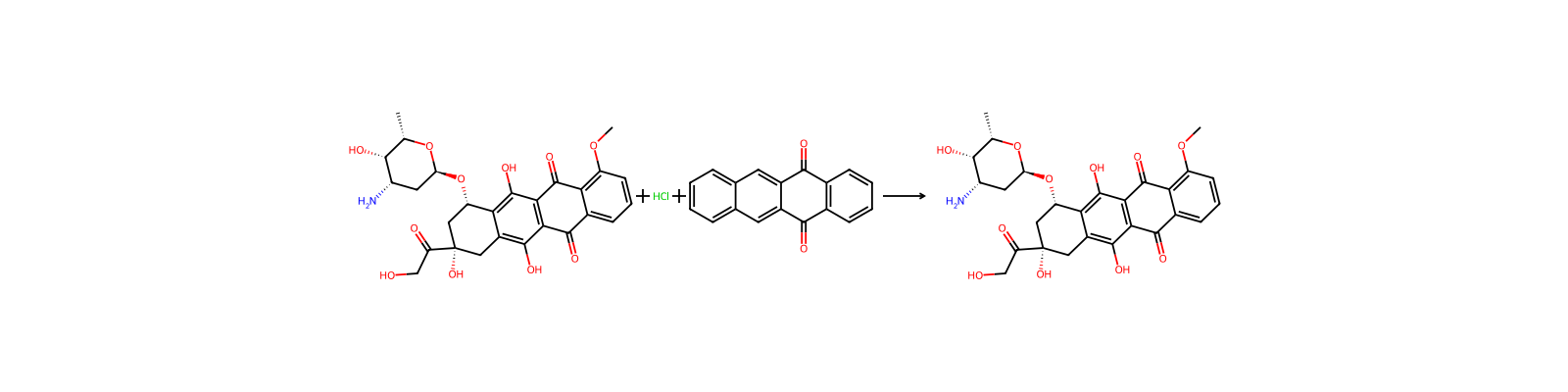
Zugehörige Reaktionen
54



Notizen zur Verbindung
Wird geladen…