
N-Methyl-N-2-propinylbenzol-methanamin
Pargyline

Grundinformationen
- CAS
555-57-7- Standard-SMILES
C#CCN(C)Cc1ccccc1- InChIKey
DPWPWRLQFGFJFI-UHFFFAOYSA-N- Summenformel
- C11H13N
- Durchschnittliche Molmasse
- 159,23 g/mol
- Monoisotopische Masse
- 159,10479942
Überblick
Pargyline is an aromatic amine.
Namen und Bezeichner
- Bevorzugter Name
- Pargyline
- IUPAC
- N-benzyl-N-methylprop-2-yn-1-amine
- Lokaler Name
- N-Methyl-N-2-propinylbenzol-methanamin
- Englischer Name
- Pargyline
- Summenformel
- C11H13N
- Molmasse
- 159.23
Namen und Synonyme
pargyline555-57-7N-Methyl-N-propargylbenzylaminePargylamineEudatinParagylineSupirdylN-Methyl-N-2-propynylbenzylaminePargilinaPargylinumBenzenemethanamine, N-methyl-N-2-propynyl-benzyl(methyl)(prop-2-yn-1-yl)amine
Weitere Namen anzeigen
MO 911A 19120EutonylPargylin
9MV14S8G3EDTXSID3023423Hydrochloride, PargylineRefChem:65904DTXCID903423C02KC01209-101-6N-benzyl-N-methylprop-2-yn-1-amine
Datenbank-Bezeichner
- CAS
555-57-7- PubChem CID
- 4688
- DTXSID
DTXSID3023423- ChEMBL
CHEMBL673- ChEBI
CHEBI:7930- UNII
- 9MV14S8G3E
- EC Number
- 209-101-6
- Nikkaji
- J6.471H
Eigenschaften
Berechnete Struktureigenschaften
- XLogP
- 2,1
- Polarare Oberfläche (TPSA)
- 3,2 Ų
- H-Brücken-Donoren
- 0
- H-Brücken-Akzeptoren
- 1
- Frei drehbare Bindungen
- 3
- Schwere Atome
- 12
- Formalladung
- 0
- Komplexität
- 159
Experimentelle und physikochemische Eigenschaften
DrugsPharmaceuticals -> Listed in ZINC15
Solubility9.98e-02 g/L
Physical DescriptionSolid
Collision Cross Section133.56 Ų [M+H]+ [CCS Type: TW; Method: calibrated with polyalanine and drug standards]
Physikochemische Eigenschaften
- Schmelzpunkt
- 15 · 15-20 °C
- Siedepunkt
- 86 · 86-88 °C4 mm Hg(lit.)
- Dichte
- 0.944 g/mL · 0.944 g/mL at 25 °C(lit.)
- Brechungsindex
- 20 · n20/D 1.522(lit.)
- Flammpunkt
- 183 °F · 183 °F
- storage temp.
- -20 °C · Store at -20°C
- Löslichkeit
- Soluble in DMSO
- Aggregatzustand
- Liquid
- pka
- 6.9 · pKa 6.9 (Uncertain)
Sicherheit und Regulatorisches
Sicherheitsangaben dienen nur zur Orientierung und ersetzen weder das Sicherheitsdatenblatt (SDB) des Lieferanten noch geltende Vorschriften oder eine fachliche Bewertung.
GHS-Klassifizierung
GHS Classification
Danger
H301 (100%): Toxic if swallowed [Danger Acute toxicity, oral]
P261, P262, P264, P264+P265, P270, P271, P280, P301+P316, P302+P352, P304+P340, P305+P351+P338, P316, P319, P321, P330, P332+P317, P337+P317, P361+P364, P362+P364, P403+P233, P405, and P501 (click each P-code to see the statement)
Aggregated GHS information provided per 41 reports by companies from 4 notifications to the ECHA C&L Inventory. Each notification may be associated with multiple companies.
Gefahrenhinweise
Hazard Classes and CategoriesAcute Tox. 3 (100%)
Toxikologische Informationen
Drug Induced Liver Injury
Drug-Induced Liver Injury Severity and Toxicity (DILIst)
pargyline
DILI Negative
DOI:10.1016/j.drudis.2019.09.022
Sicherheitsdaten
- wgk
- 3
- ridadr
- UN 2810 6.1/PG 3
- hs_code
- 29214900
- RTECS-Nr.
- DP6475000
- risk_code
- 23/24/25-36/37/38-22
- hazard_code
- T
- safety_code
- 26-36/37/39-45-23
- hazard_class
- 6.1(b)
- packing_group
- III
Chemie und Industrie
Pharmakologische Informationen
ATC Code
C - Cardiovascular system
QC - Cardiovascular system
Pharmacodynamics
Pargyline is a monoamine oxidase B (MAO-B) inhibitor with antihypertensive properties. Patients taking pargyline must avoid concurrent consumption of tyramine-containing foods such as bleu cheese and beer, as this can lead to a hypertensive crisis.
Mechanism of Action
MAOIs act by inhibiting the activity of monoamine oxidase, thus preventing the breakdown of monoamine neurotransmitters and thereby increasing their availability. There are two isoforms of monoamine oxidase, MAO-A and MAO-B. MAO-A preferentially deaminates serotonin, melatonin, epinephrine and norepinephrine. MAO-B preferentially deaminates phenylethylamine and trace amines. Pargyline functions by inhibiting the metabolism of catecholamines and tyramine within presynaptic nerve terminals. Catecholamines cause general physiological changes that prepare the body for physical activity (fight-or-flight response). Some typical effects are increases in heart rate, blood pressure, blood glucose levels, and a general reaction of the sympathetic nervous system.
MeSH Pharmacological Classification
Drugs used in the treatment of acute or chronic vascular HYPERTENSION regardless of pharmacological mechanism. Among the antihypertensive agents are DIURETICS; (especially DIURETICS, THIAZIDE); ADRENERGIC BETA-ANTAGONISTS; ADRENERGIC ALPHA-ANTAGONISTS; ANGIOTENSIN-CONVERTING ENZYME INHIBITORS; CALCIUM CHANNEL BLOCKERS; GANGLIONIC BLOCKERS; and VASODILATOR AGENTS.
A chemically heterogeneous group of drugs that have in common the ability to block oxidative deamination of naturally occurring monoamines. (From Gilman, et al., Goodman and Gilman's The Pharmacological Basis of Therapeutics, 8th ed, p414)
Cellular LocationsCytoplasm
Verwendung und Herstellung
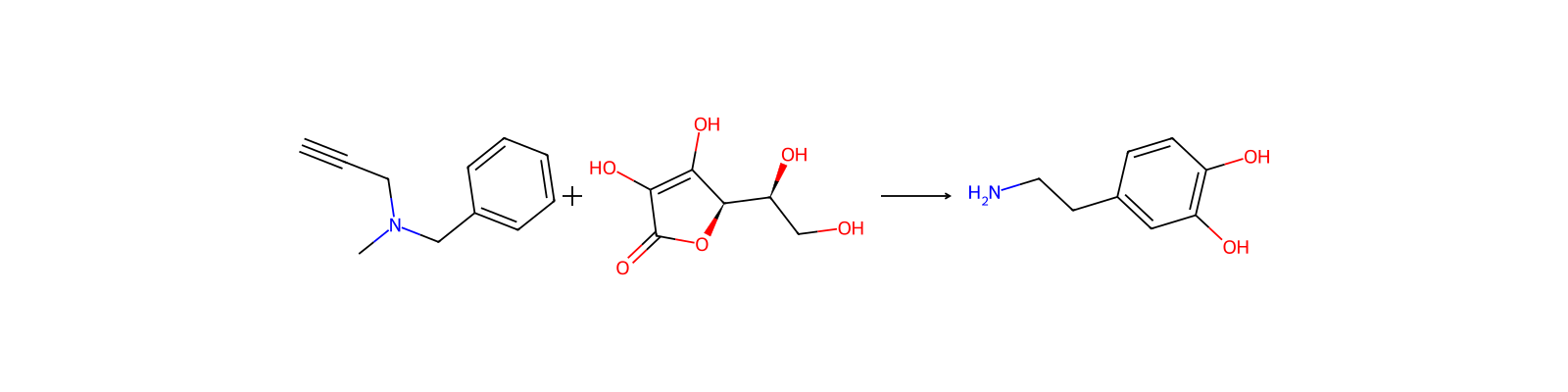
Zugehörige Reaktionen
22




Notizen zur Verbindung
Wird geladen…