

Grundinformationen
- Standard-SMILES
O=S(=O)(O)c1ccc(O)cc1- InChIKey
FEPBITJSIHRMRT-UHFFFAOYSA-N- Summenformel
- C6H6O4S
- Durchschnittliche Molmasse
- 174,18 g/mol
- Monoisotopische Masse
- 173,99867984
Namen und Bezeichner
- Bevorzugter Name
- 4-Hydroxybenzenesulfonic acid
- IUPAC
- 4-hydroxybenzenesulfonic acid
- Lokaler Name
- 4-Hydroxybenzolsulfonsure
- Englischer Name
- 4-Hydroxybenzenesulfonic acid
- Summenformel
- C6H6O4S
- Molmasse
- 174.17
Namen und Synonyme
4-Hydroxybenzenesulfonic acid98-67-9p-Phenolsulfonic acidphenolsulfonic acid4-Phenolsulfonic acidSulfocarbolic acidp-Sulfophenolp-Hydroxybenzenesulfonic acidBenzenesulfonic acid, 4-hydroxy-4-HYDROXYPHENYLSULFONIC ACIDPhenol-4-sulfonic acidBenzenesulfonic acid, p-hydroxy-
Weitere Namen anzeigen
p-PhenoLARADUR 5003-1 BDC12849
4-hydroxybenzene-1-sulfonic acid4-Hydroxybenzenesulphonic acidHydroxybenzene-4-sulfonic acidp-PhenolsulfonateNSC 227908DTXSID1046421para-phenolsulfonic acidNSC-227908
Datenbank-Bezeichner
- CAS
98-67-9- PubChem CID
- 4765
- DTXSID
DTXSID1046421- ChEMBL
CHEMBL1398657- ChEBI
CHEBI:32354- UNII
- L74LRO149A
- EC Number
- 202-691-6
- Nikkaji
- J4.956E
Eigenschaften
Berechnete Struktureigenschaften
- XLogP
- 0,2
- Polarare Oberfläche (TPSA)
- 83 Ų
- H-Brücken-Donoren
- 2
- H-Brücken-Akzeptoren
- 4
- Frei drehbare Bindungen
- 1
- Schwere Atome
- 11
- Formalladung
- 0
- Komplexität
- 207
Experimentelle und physikochemische Eigenschaften
Density
1.337
1.337 @25 °C
Color/FormNEEDLES
SolubilityMISCIBLE WITH WATER, ALCOHOL
Vapor Pressure0.00000033 [mmHg]
Refractive IndexIndex of Refraction = 1.4890 at 20 °C
Physical Description
Liquid
Deliquescent solid; [Merck Index] Viscous brown liquid (65% wt. solution in water); [MSDSonline]
Other Experimental PropertiesDELIQUESCENT
Physikochemische Eigenschaften
- Schmelzpunkt
- 52 °C · 52 °C
- Siedepunkt
- 275.14 °C · 275.14°C (rough estimate)
- Dichte
- 1.337 g/mL · 1.337 g/mL at 25 °C
- Dampfdruck
- 69.8 Pa · 69.8Pa at 20℃
- Brechungsindex
- 20 · n20/D 1.489
- Löslichkeit
- Water (Slightly)
- Aggregatzustand
- Liquid
- pka
- 9.11 · 9.11(at 25℃)
- Farbe
- White to Light yellow to Light red
- Wichte
- 1.337 · 1.337
- Wasserlöslichkeit
- Soluble in water.
- Merck
- 14 · 14,7246
- BRN
- 1869034 · 1869034
- Henry's Law Constant
- 3.8 · 3.8×107 mol/(m3Pa) at 25℃, HSDB (2015)
- Stabilität
- Stable. Combustible. Incompatible with strong oxidizing agents.
- InChI
- 1S/C6H6O4S/c7-5-1-3-6(4-2-5)11(8,9)10/h1-4,7H,(H,8,9,10)
- InChIKey
- FEPBITJSIHRMRT-UHFFFAOYSA-N
- SMILES
- Oc1ccc(cc1)S(O)(=O)=O
- LogP
- 0.41 at · 0.41 at 25℃
- CAS Datenbank
- 98 · 98-67-9(CAS DataBase Reference)
- NIST chemische Informationen
- 4 · Benzenesulfonic acid, 4-hydroxy-(98-67-9)
- EPA chemische Informationen
- p-Phenolsulfonic acid (98-67-9)
Sicherheit und Regulatorisches
GHS-Klassifizierung
GHS Classification
This chemical does not meet GHS hazard criteria for 0.3% (1 of 341) of reports.
Danger
H290 (68.9%): May be corrosive to metals [Warning Corrosive to Metals];H302 (48.7%): Harmful if swallowed [Warning Acute toxicity, oral];H314 (99.7%): Causes severe skin burns and eye damage [Danger Skin corrosion/irritation];H318 (87.7%): Causes serious eye damage [Danger Serious eye damage/eye irritation];H335 (30.8%): May cause respiratory irritation [Warning Specific target organ toxicity, single exposure; Respiratory tract irritation]
P234, P260, P261, P264, P264+P265, P270, P271, P280, P301+P317, P301+P330+P331, P302+P361+P354, P304+P340, P305+P354+P338, P316, P317, P319, P321, P330, P363, P390, P403+P233, P405, P406, and P501 (click each P-code to see the statement)
Aggregated GHS information provided per 341 reports by companies from 17 notifications to the ECHA C&L Inventory. Each notification may be associated with multiple companies.;Reported as not meeting GHS hazard criteria per 1 of 341 reports by companies.;There are 16 notifications provided by 340 of 341 reports by companies with hazard statement code(s).;Information may vary between notifications depending on impurities, additives, and other factors. The percentage value in parenthesis indicates the notified classification ratio from companies that provide hazard codes. Only hazard codes with percentage values above 10% are shown. For more detailed information, please visit ECHA C&L website.
Gefahrenhinweise
Regulatory Information
Chemical: Benzenesulfonic acid, 4-hydroxy-
Benzenesulfonic acid, 4-hydroxy- is listed on the EPA's Chemical Data Reporting (CDR) system. Manufacturers and importers of Benzenesulfonic acid, 4-hydroxy- are required to report information about their production and use of this chemical to the EPA under the Toxic Substances Control Act (TSCA). (40 eCFR Part 711)
Status: Active Update: 31-08-2022 https://echa.europa.eu/registration-dossier/-/registered-dossier/14998;Status: Active Update: 05-01-2017 https://echa.europa.eu/registration-dossier/-/registered-dossier/18559
Benzenesulfonic acid, 4-hydroxy-: Does not have an individual approval but may be used under an appropriate group standard
Fire Hazards
· Combustible material: may burn but does not ignite readily.;· When heated, vapors may form explosive mixtures with air: indoors, outdoors and sewers explosion hazards.;· Those substances designated with a (P) may polymerize explosively when heated or involved in a fire.;· Corrosives in contact with metals may evolve flammable hydrogen gas.;· Containers may explode when heated.;· Runoff may pollute waterways.;· Substance may be transported in a molten form.
Health Hazards
· TOXIC and/or CORROSIVE; inhalation, ingestion or skin contact with material may cause severe injury or death.;· Methyl bromoacetate (UN2643) is an eye irritant/lachrymator (causes flow of tears).;· Contact with molten substance may cause severe burns to skin and eyes.;· Avoid any skin contact.;· Fire may produce irritating, corrosive and/or toxic gases.;· Runoff from fire control or dilution water may be corrosive and/or toxic and cause environmental contamination.
Hazards Summary
A skin irritant; [Merck Index] A corrosive substance that can cause injury to the skin, eyes, and respiratory tract; Inhalation may cause chemical pneumonitis and pulmonary edema; [MSDSonline] Oral LD50 (mouse) = 6400 mg/kg; Mild irritant effect to human skin after contact with 0.5% solution; [RTECS]
DOT ID and Guide1803 153
Hazard Classes and CategoriesMet. Corr. 1 (68.9%);Acute Tox. 4 (48.7%);Skin Corr. 1B (99.7%);Eye Dam. 1 (87.7%);STOT SE 3 (30.8%)
Skin, Eye, and Respiratory Irritations...IRRITATING TO SKIN.
Sicherheit und Schutzausrüstung
Accidental Release Measures
· CALL 911. Then call emergency response telephone number on shipping paper. If shipping paper not available or no answer, refer to appropriate telephone number listed on the inside back cover.;· Keep unauthorized personnel away.;· Stay upwind, uphill and/or upstream.;· Ventilate closed spaces before entering, but only if properly trained and equipped.
· ELIMINATE all ignition sources (no smoking, flares, sparks or flames) from immediate area.;· Do not touch damaged containers or spilled material unless wearing appropriate protective clothing.;· Stop leak if you can do it without risk.;· Prevent entry into waterways, sewers, basements or confined areas.;· Absorb or cover with dry earth, sand or other non-combustible material and transfer to containers.;· DO NOT GET WATER INSIDE CONTAINERS.
First Aid
General First Aid:;· Call 911 or emergency medical service.;· Ensure that medical personnel are aware of the material(s) involved, take precautions to protect themselves and avoid contamination.;· Move victim to fresh air if it can be done safely.;· Administer oxygen if breathing is difficult.;· If victim is not breathing:;-- DO NOT perform mouth-to-mouth resuscitation; the victim may have ingested or inhaled the substance.;-- If equipped and pulse detected, wash face and mouth, then give artificial respiration using a proper respiratory medical device (bag-valve mask, pocket mask equipped with a one-way valve or other device).;-- If no pulse detected or no respiratory medical device available, provide continuous compressions. Conduct a pulse check every two minutes or monitor for any signs of spontaneous respirations.;· Remove and isolate contaminated clothing and shoes.;· For minor skin contact, avoid spreading material on unaffected skin.;· In case of contact with substance, remove immediately by flushing skin or eyes with running water for at least 20 minutes.;· For severe burns, immediate medical attention is required.;· Effects of exposure (inhalation, ingestion, or skin contact) to substance may be delayed.;· Keep victim calm and warm.;· Keep victim under observation.;· For further assistance, contact your local Poison Control Center.;· Note: Basic Life Support (BLS) and Advanced Life Support (ALS) should be done by trained professionals.;Specific First Aid:;· For corrosives, in case of contact, immediately flush skin or eyes with running water for at least 30 minutes. Additional flushing may be required.
Exposure Control and Personal Protection
· Wear positive pressure self-contained breathing apparatus (SCBA).;· Wear chemical protective clothing that is specifically recommended by the manufacturer when there is NO RISK OF FIRE.;· Structural firefighters' protective clothing provides thermal protection but only limited chemical protection.
Disposal Methods
SRP: At the time of review, criteria for land treatment or burial (sanitary landfill) disposal practices are subject to significant revision. Prior to implementing land disposal of waste residue (including waste sludge), consult with environmental regulatory agencies for guidance on acceptable disposal practices.
Preventive Measures
SRP: The scientific literature for the use of contact lenses in industry is conflicting. The benefit or detrimental effects of wearing contact lenses depend not only upon the substance, but also on factors including the form of the substance, characteristics and duration of the exposure, the uses of other eye protection equipment, and the hygiene of the lenses. However, there may be individual substances whose irritating or corrosive properties are such that the wearing of contact lenses would be harmful to the eye. In those specific cases, contact lenses should not be worn. In any event, the usual eye protection equipment should be worn even when contact lenses are in place.
Isolation and Evacuation
Immediate precautionary measure;· Isolate spill or leak area in all directions for at least 50 meters (150 feet) for liquids and at least 25 meters (75 feet) for solids.;Spill;· For highlighted materials: see Table 1 - Initial Isolation and Protective Action Distances.;· For non-highlighted materials: increase the immediate precautionary measure distance, in the downwind direction, as necessary.;Fire;· If tank, rail tank car or highway tank is involved in a fire, ISOLATE for 800 meters (1/2 mile) in all directions; also, consider initial evacuation for 800 meters (1/2 mile) in all directions.
Protective Action Criteria (PAC)
10 [mg/m3]
120 [mg/m3]
690 [mg/m3]
Emergency Response Planning Guidelines
Small Fire;· Dry chemical, CO2 or water spray.;Large Fire;· Dry chemical, CO2, alcohol-resistant foam or water spray.;· If it can be done safely, move undamaged containers away from the area around the fire.;· Dike runoff from fire control for later disposal.;Fire Involving Tanks, Rail Tank Cars or Highway Tanks;· Fight fire from maximum distance or use unmanned master stream devices or monitor nozzles.;· Do not get water inside containers.;· Cool containers with flooding quantities of water until well after fire is out.;· Withdraw immediately in case of rising sound from venting safety devices or discoloration of tank.;· ALWAYS stay away from tanks in direct contact with flames.
Toxikologische Informationen
Environmental Fate
TERRESTRIAL FATE: An estimated Koc of 3.0(1,SRC), based on an estimated log Kow(2,SRC) indicates that 4-hydroxyphenylsulfonic acid will have very high mobility in soil(3,SRC). As this compound is miscible in water(4), leaching may be an important fate process(SRC). In moist soils 4-hydroxyphenylsulfonic acid should quickly dissociate(5,SRC). Biodegradation of this compound may be an important fate process; 4-hydroxyphenylsulfonic acid at 75 ug/l showed complete degradation within 32 days using a soil inoculum(6). 4-Hydroxyphenylsulfonic acid at 100 mg/l was biodegraded by an activated sludge inoculum over 14 days(7). A long lag period of 76-95 hours was measured with complete biodegradation requiring a total of 190 to 195 hours; these results suggested that 4-hydroxyphenylsulfonic acid is biodegraded completely over a long time by acclimatized microorganisms(7). Other aerobic biodegradation experiments using higher concentrations of 4-hydroxyphenylsulfonic acid (500 mg/l) and shorter incubation times (70 hours) determined that 4-hydroxyphenylsulfonic acid was not biodegraded under these conditions(8,9). Under anaerobic conditions, using an aquifer slurry as an inoculum, 4-hydroxyphenylsulfonic acid at 35 mg/l was not biodegraded over a period of 13 months(10). 4-Hydroxyphenylsulfonic acid will not volatilize from moist soil surfaces(SRC) based on an estimated Henry's Law constant of 2.62X10⁻¹³ atm-cu/mole(11).
AQUATIC FATE: If released to water, 4-hydroxyphenylsulfonic acid is expected to dissociate(1). Aerobic biodegradation is expected to be a major fate process for 4- hydroxyphenylsulfonic acid. 4-Hydroxyphenylsulfonic acid at 100 mg/l was incubated over 14 days with a non-acclimatized activated sludge inoculum. Complete biodegradation required 190-195 hours including a 76-95 hour lag time; this indicates that an initial acclimatization period prior to biodegradation of this compound is necessary(2). When inoculated with an activated sludge culture which was acclimatized to benzene, 4-hydroxyphenylsulfonic acid, at a concentration of 500 mg/l, was not biodegraded within the time period of 70 hours(3). A pure culture of Pseudomonas H-8, a known benzene sulfonate oxidizer isolated from pond water, was unable to biodegrade 4-hydroxyphenylsulfonic acid over an unreported period of time(4). 4-Hydroxyphenylsulfonic acid at 35 mg/l was not biodegraded under anaerobic conditions for a 13 month period using an aquifer slurry as an inoculum(5). An estimated BCF value of 0 indicates that 4-hydroxyphenylsulfonic acid will not bioconcentrate in an aquatic system(6,7,SRC). 4-Hydroxyphenylsulfonic acid is not expected to volatilize from water surfaces(SRC) based on an estimated Henry's Law constant of 2.62X10⁻¹³ atm-cu/mole (8).
ATMOSPHERIC FATE: Based on an estimated vapor pressure of 3.33X10⁻⁷ mm Hg at 25 °C(1,SRC), 4-hydroxyphenylsulfonic acid will exist both in the vapor phase and in the particulate phase(2,SRC). In the vapor phase it will degrade fairly rapidly by reaction with photochemically produced hydroxyl radicals with an estimated half-life of about 2 days(3,SRC). Particulate phase 4-hydroxyphenylsulfonic acid may be removed physically from air by wet and dry deposition(SRC).
Adverse EffectsDermatotoxin - Skin burns.;Toxic Pneumonitis - Inflammation of the lungs induced by inhalation of metal fumes or toxic gases and vapors.
Soil Adsorption/Mobility
Based on an estimated log Kow of -1.65(1), the Koc of 4-hydroxyphenylsulfonic acid is estimated as approximately 3.0 using a regression-derived equation(2,SRC). According to a suggested classification scheme, this estimated Koc value suggests that 4-hydroxyphenylsulfonic acid has very high mobility in soil(3).
Human Toxicity Excerpts...IRRITATING TO SKIN.
Artificial Pollution Sources
4-Hydroxyphenylsulfonic acid's production and subsequent use mainly as an additive for electroplating baths(1), but also in the manufacture of synthetic tanning agents(1), as a chemical intermediate used to improve the dyeing properties of polyamide fibers(1) or used in the manufacture of polyesters with improved affinity for basic dyes(1), and during its use in the process of granulation of blast furnace slag(2) may result in its release to the environment through various waste streams(SRC).
Environmental Biodegradation
4-Hydroxyphenylsulfonic acid at a concentration of 75 ug/ml was incubated aerobically with a mixed culture of soil microorganisms for a time period ranging from 3 hours to 64 days. Total loss of this compound, followed by measuring the loss in absorbance of the benzene ring, was complete within 32 days(1). 4-Hydroxyphenylsulfonic acid at a concentration of 100 mg/l was incubated over 14 days with a non-acclimated activated sludge inoculum(2). The degradation ratio of 4-hydroxyphenylsulfonic acid (at 100 mg/l), defined as the BOD/Theoretical BOD, was determined to be 0.76 to 0.78; a lag time of 76-95 hours was measured, total biodegradation of this compound required 190-195 hours including the lag period(2). This indicates that this compound is biodegraded completely over a long time by acclimated microorganisms(2).
No biodegradation of 4-hydroxyphenylsulfonic acid at a concentration of 500 mg/l was seen over a period of one hour using a pure culture of Pseudomonas acclimatized to p-toluenesulfonate as its sole carbon and sulfur source(1). A pure culture of Pseudomonas strain H-8, a known benzene sulfonate oxidizer isolated from pond water, was unable to grow when given 4-hydroxyphenylsulfonic acid, at an unreported concentration, as the sole carbon source(2). 4-Hydroxyphenylsulfonic acid was not biodegraded using the agar plate method after a few days by a pure culture isolated for its ability to biodegrade benzenesulfonic acid(3).
4-Hydroxyphenylsulfonic acid, present at a concentration of 500 mg/l, was not used as a carbon source over a period of 70 hours using activated sludge acclimatized to benzene as an inoculum under aerobic conditions(2). In a compilation of chemicals, 4-hydroxyphenylsulfonic acid is listed as a chemical which should be degradable by biological sewage treatment provided suitable acclimatization of the microbial population is reached(2). The biodegradability of 4-hydroxyphenylsulfonic acid was measured under anaerobic conditions using two aquifer slurries, one from a sulfate reducing site, the other from a methanogenic site. 4-Hydroxyphenylsulfonic acid was added at a concentration of 200 uM to a slurry from each site and monitored from 0 to 13 months. Under sulfate reducing conditions, 4-hydroxyphenylsulfonic acid was present at 188 uM and at 198 uM after 0 to 13 months respectively. Under methanogenic conditions, 4-hydroxyphenylsulfonic acid was present at 194 uM and at 235 uM after 0 to 13 months respectively(3).
Environmental Bioconcentration
A BCF of 0.03 was calculated for 4-hydroxyphenylsulfonic acid, using an estimated log Kow of -1.65(1,SRC) and a recommended regression- derived equation(2,SRC). This BCF value suggests that 4-hydroxyphenylsulfonic acid will not bioconcentrate in aquatic organisms(2).
Volatilization from Water/SoilThe Henry's Law constant for 4-hydroxyphenylsulfonic acid is estimated as 2.62X10⁻¹³ atm-cu/mole(1,SRC). This indicates that 4-hydroxyphenylsulfonic acid will essentially not volatilize from water surfaces(2).
Environmental Abiotic Degradation
The rate constant for the vapor-phase reaction of 4-hydroxyphenylsulfonic acid with photochemically produced hydroxyl radicals has been estimated to be 7.40X10⁻¹² cu cm/molecule-sec at 25 °C(1,SRC). This corresponds to an atmospheric half-life for 4-hydroxyphenylsulfonic acid of about 2 days at an atmospheric concentration of 5X10+5 hydroxyl radicals/cu cm(1,SRC). Benzenesulfonic acids are strong acids which almost completely dissociate in aqueous solution(2).
Environmental Fate/Exposure Summary
4-Hydroxyphenylsulfonic acid's production and subsequent use mainly as an additive for electroplating baths could result in its release to the environment. If released to the atmosphere, 4-hydroxyphenylsulfonic acid will exist in both the vapor phase and in the particulate phase based on an estimated vapor pressure of 3.33X10⁻⁷ mm Hg. In the vapor phase, 4-hydroxyphenylsulfonic acid will react fairly rapidly with hydroxyl radicals with an estimated half-life of 2 days. Particulate phase 4-hydroxyphenylsulfonic acid may be removed physically from air by wet and dry deposition. Based on an estimated Koc of 3, 4-hydroxyphenylsulfonic acid should have very high mobility in soil and as this compound is miscible in water, leaching may occur. In moist soils, 4-hydroxyphenylsulfonic acid is expected to dissociate. 4-Hydroxyphenylsulfonic acid should biodegrade under aerobic conditions; using a soil inoculum, this compound required 32 days for complete biodegradation. In water, 4-hydroxyphenylsulfonic acid is expected to dissociate. Biodegradation will occur slowly. Using an unacclimated activated sludge inoculum, a period of 190-195 hours was required for complete biodegradation. This time period included a 76-95 hour lag time suggesting that an initial acclimatization period prior to biodegradation of this compound is necessary. Other studies using higher concentrations of 4-hydroxyphenylsulfonic acid, a shorter time period (1 hour to 70 hours), and microorganisms acclimated to either benzene or benzenesulfonic acid showed no biodegradation of 4-hydroxyphenylsulfonic acid. This compound is not expected to bioconcentrate in aquatic organisms or to volatilize from water surfaces. (SRC)
Regulatorische Informationen
Regulatory Information
Chemical: Benzenesulfonic acid, 4-hydroxy-
Benzenesulfonic acid, 4-hydroxy- is listed on the EPA's Chemical Data Reporting (CDR) system. Manufacturers and importers of Benzenesulfonic acid, 4-hydroxy- are required to report information about their production and use of this chemical to the EPA under the Toxic Substances Control Act (TSCA). (40 eCFR Part 711)
Status: Active Update: 31-08-2022 https://echa.europa.eu/registration-dossier/-/registered-dossier/14998;Status: Active Update: 05-01-2017 https://echa.europa.eu/registration-dossier/-/registered-dossier/18559
Benzenesulfonic acid, 4-hydroxy-: Does not have an individual approval but may be used under an appropriate group standard
Sicherheitsdaten
- wgk
- -
- tsca
- TSCA listed
- ridadr
- UN 1803 (PHENOLSULPHONIC ACID, LIQUID)
- hs_code
- 29089990
- RTECS-Nr.
- DB6970000
- risk_code
- 34-68
- hazard_code
- C
- safety_code
- 26-36/37/39-45
- hazard_class
- 8
- packing_group
- II
- Speicherklasse
- 8A - Combustible corrosive hazardous materials
- Giftige Stoffe Daten
- 98-67-9(Hazardous Substances Data)
- Hazard Classifications
- Met. Corr. 1Skin Corr. 1C
Chemie und Industrie
Verwendung und Herstellung
Uses
Used as a component of metal plating baths (tin and copper); as a chemical intermediate for pharmaceuticals and dyestuffs; in granulation of blast furnace slag; and as an analytical reagent; [HSDB]
Electroplating [Category: Plate];Cleaning Furnaces or Flues [Category: Clean]
INT IN MFG OF PHARMACEUTICALS, DYESTUFFS; IN FERROSTAN PROCESS OF TIN PLATING (US STEEL)
P-PHENOLSULFONIC ACID IS USED IN GRANULATION OF BLAST FURNACE SLAG.
CHEM INT FOR DYE INTS, EG, ITS 2-AMINO-6-NITRO DERIV
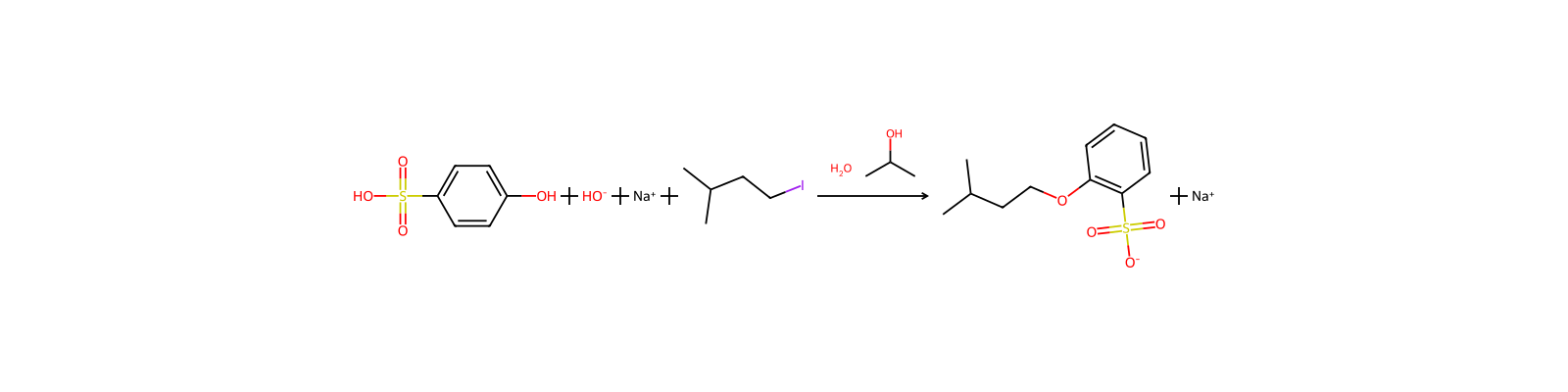
CHEM INT FOR 2-ALKYLPHENOLSULFONIC ACIDS
U.S. Production
2023: 500,000 - <1,000,000 lb;2022: 500,000 - <1,000,000 lb;2021: 1,000,000 - <8,500,000 lb;2020: 500,000 - <1,000,000 lb
(1979) PROBABLY GREATER THAN 4.54X10+6 GRAMS
(1981) PROBABLY GREATER THAN 4.54X10+6 GRAMS
Consumer UsesMonomers
Industry UsesMonomers
Methods of Manufacturing
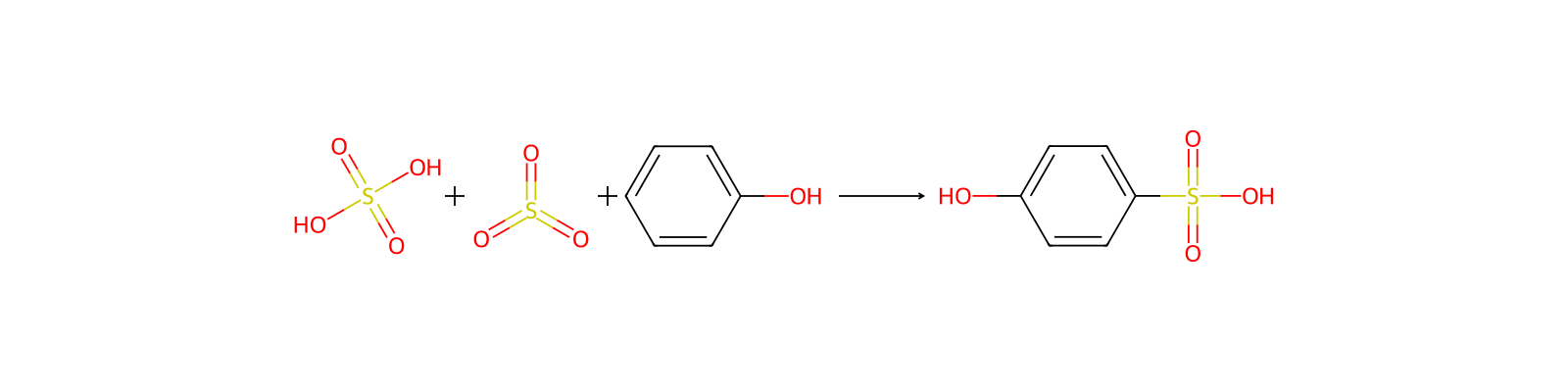
PREPN BY HYDROLYSIS OF P-CHLORO- OR P-BROMOBENZENESULFONIC ACID; BY SULFONATION OF PHENOL.
Phenol (25 kg) and 96% sulfuric acid (28 kg) are heated to 50 °C; then 1.25 kg additional sulfuric acid is added and the reaction mixture is heated at 110 °C for 5-6 hours. Reaction water, together with about 5% of the phenol, is distilled off during this period. Yield 95%.
Formulations/PreparationsCOMMERCIAL AVAILABLE AS A 65% SOLN.
General Manufacturing Information
All Other Basic Organic Chemical Manufacturing;Plastics Material and Resin Manufacturing
Benzenesulfonic acid, 4-hydroxy-: ACTIVE
4-Hydroxyphenylsulfonic acid and 2-halogenomalonic esters form the corresponding ethers, which are used in the manufacture of polyesters with improved affinity for basic dyes.
Anwendungen
Beschreibung4-hydroxybenzenesulfonic acid is an arenesulfonic acid that is phenol substituted by a sulfo group at C-4. It is functionally related to a phenol. Results obtained in a comparative study using the disulfide-bridge containing peptide deaminoarginine-vasopressin and several commonly used matrices indicate that the reduction-inhibiting efficiency of 4-hydroxy benzene sulfonic acid is comparable to that of 3-nitrobenzyl alcohol while reduction is found to be important in matrices such as thioglycerol and glycerol. Experiments conducted on peptides such as met-enkephalin and bradykinin, nucleosides and other polar compounds reveal that 4-hydroxybenzenesulfonic acid is a good solvent and has physical properties similar to glycerol. This new matrix material is a radical scavenger, is surface active, allows persistent secondary-ion beams, and produces a low background signal[1].
Verwenden4-Hydroxybenzenesulfonic Acid is used as a redox-mediator in the laccase-catalyzed degradation of indigo, a textile dye. Also used in oilfield chemicals, metal working, and as a polymerization catalyst.
Vor- und nachgelagerte Produkte
Nachgelagerte Produkte
Anbieter50 Anbieter
国药集团化学试剂有限公司86-21-63210123 · [email protected]
梯希爱(上海)化成工业发展有限公司021-67121386 · [email protected]
上海阿拉丁生化科技股份有限公司400-6206333 13167063860 · [email protected]
常州市君驰化工有限公司0519-85518211 15195021697 · [email protected]
河北创海生物科技有限公司+86-86-13131129325 · [email protected]
T&W GROUP021-61551611 13296011611 · [email protected]
Dayang Chem (Hangzhou) Co.,Ltd.+86-0571-88938639 17705817739 · [email protected]
Syntechem Co.,Ltd[email protected]
上海迈瑞尔生化科技有限公司4006356688 18621169109 · [email protected]
阿法埃莎(中国)化学有限公司400-6106006 · [email protected]
安耐吉化学&3A(安徽泽升科技股份有限公司)400-0056266 · [email protected]
上海瀚鸿科技股份有限公司021-54306202 13764082696 · [email protected]
孝感深远化工有限公司15527621225; 15527621225 · [email protected]
山东西亚化学有限公司13355009207 13355009207 · [email protected]
玛雅试剂+86 (573) 82222445 (0)18006601000 452520369 · [email protected]
四川库利南科技有限公司400-1166-196 18981987031 · [email protected]
艾科试剂4008-755-333 18080918076 · [email protected]
上海思域化工科技有限公司86-21-34053660 · [email protected]
赛默飞世尔科技(中国)有限公司800-810-5118 · [email protected]
TCI AMERICA800-4238616 · [email protected]
TOKYO CHEMICAL INDUSTRY CO., LTD.03-36680489 · [email protected]
TCI Europe320-37350700 · [email protected]
山东博洛达生物科技有限公司0531-68659041 · [email protected]
上海将来实业股份有限公司400-0066400 13621662912 · [email protected]
日照力德士化工有限公司010-51268198 · [email protected]
美岚实业(上海)有限公司021-58958189 · [email protected]
上海爱蝶实业有限公司021-58957966 18930537195 · [email protected]
成都零六生物科技有限公司400-1166-196 13458535857 · [email protected]
广拓化学(上海)有限公司021-60899189-8001 18918189673 · [email protected]
上海御略医药科技有限公司021-60345187 13671753212 · [email protected]
杭州杰恒化工有限公司0571-87396432 · [email protected]
上海永叶生物科技有限公司86-021-61559134 15921386130 · [email protected]
上海有朋化工有限公司021-69005955 13701776567 · [email protected]
北京海力扬化学科技有限公司13718199399 · [email protected]
北京欣赛维化学科技有限公司010-56218822 13717722232 · [email protected]
四川海诺威科技有限公司13708085536 13708085536 · [email protected]
上海凯赛化工有限公司021-33516722 13701817765 · [email protected]
上海彤源化工有限公司021-021-69182866 13701855675 · [email protected]
上海孚一生物科技有限公司+86 (21) 61124340
成都润泽本土化工有限公司13096311329 028-88469284 616445927 · [email protected]
北京华扬致成科技有限公司13716033033 · [email protected]
上海蓝润化学有限公司021-69515658 ; 69515628 13701998368 · [email protected]
上海容立化学科技有限公司021-69992220 13701886816 · [email protected]
上海康拓化工有限公司021-69185552 13701777608 · [email protected]
湖北巨胜科技有限公司027-59599241 18871490274 · [email protected]
Sigma-Aldrich西格玛奥德里奇(上海)贸易有限公司021-61415566 800-8193336 · [email protected]
九鼎化学(上海)科技有限公司4009209199 · [email protected]
尤尼威尔化学品(上海)有限公司021-61932772 13012862996 · [email protected]
成都京欣科技有限公司028-85005297 13980656781 · [email protected]
成都润泽本土化工有限公司028-88469284 18000562381 · [email protected]
Ergänzende Hinweise
DefinitionChEBI: An arenesulfonic acid that is phenol substituted by a sulfo group at C-4.
Zugehörige Reaktionen
52


Verknüpfte Notizen
Wird geladen…