HuagongsheHuagongshe Chemie-Druckbericht · Nur für Forschungszwecke
Phenylarsinoxid
Polyalphaolefins · PAO · ARZENE · Poly α-olefins · fenylarsinoxid · OXOPHENYLARSINE · Arsenosobenzene · arsenoso-benzen
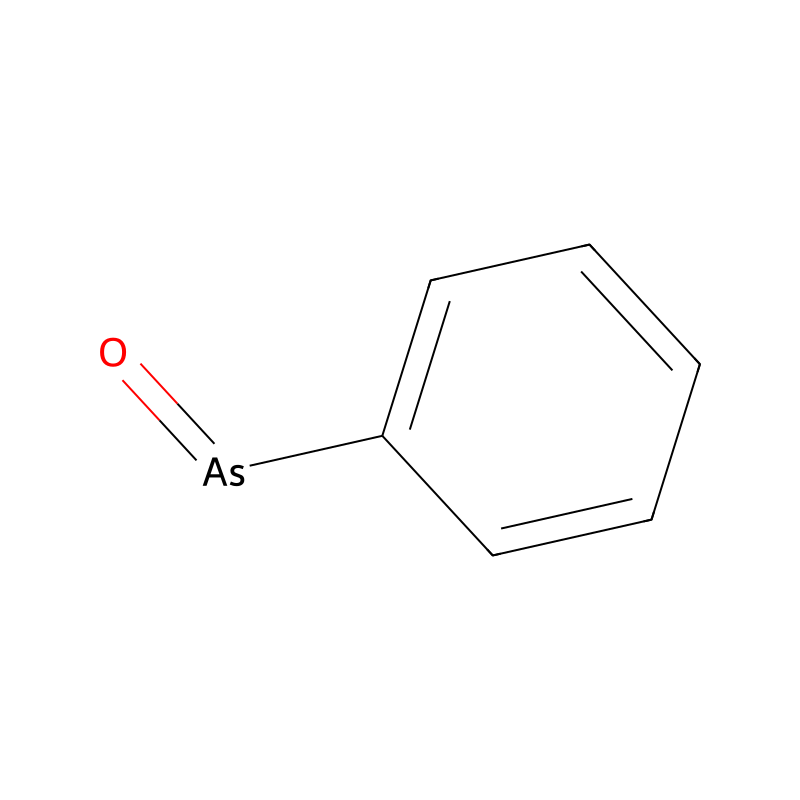
Identifikatoren & physikalische Daten
| CAS No. | 637-03-6 |
|---|---|
| Summenformel | C6H5AsO |
| Durchschnittliche Molmasse | 168,02 g/mol |
| Monoisotopische Masse | 167,95563628 g/mol |
| SMILES | O=[As]c1ccccc1 |
| InChIKey | BQVCCPGCDUSGOE-UHFFFAOYSA-N |
| PubChem CID | 4778 |
| ChEMBL | CHEMBL477683 |
| ChEBI | CHEBI:75253 |
| EC No. | 211-275-3 |
| DTXSID | DTXSID5042249 |
| Lokaler Name | Phenylarsinoxid |
Chemische & physikalische Eigenschaften
| Polarare Oberfläche (TPSA) | 17,1 |
|---|---|
| H-Brücken-Donoren | 0 |
| H-Brücken-Akzeptoren | 1 |
| Frei drehbare Bindungen | 0 |
| Schwere Atome | 8 |
| Formalladung | 0 |
| Komplexität | 76,6 |
| Stoffklassen | Metals -> Arsenic Compounds, Organic |
| Physical Description | Crystals with a melting point of 144-146 degrees C[Merck Index] |
| Schmelzpunkt | 145-148 °C |
| Lagerbedingungen | Poison room |
| Löslichkeit | DMSO: 50 mg/mLSoluble in dimethyl sulfoxide, chloroform, benzene, ether, ethanol, 50:50 dimethyl sulfoxide:1 M hydrochloric acid (3.0 mg/ml) and toluene. Insoluble in water. |
| Aggregatzustand | powder |
| Farbe | white to yellow |
| Biologische Quelle | synthetic (organic) |
| Merck | 14,6949 |
| BRN | 2935227 |
| Henry-Konstante | 9.0×10⁻¹ mol/(m3Pa) at 25℃, Bartelt-Hunt et al. (2008) |
| Stabilität | Stable. |
| InChI | InChI=1S/C6H5AsO/c8-7-6-4-2-1-3-5-6/h1-5H |
| InChIKey | BQVCCPGCDUSGOE-UHFFFAOYSA-N |
| SMILES | [As](=O)C1=CC=CC=C1 |
| CAS Datenbank | 637-03-6(CAS DataBase Reference) |
| EPA chemische Informationen | Oxophenylarsine (637-03-6) |
Sicherheit & Vorschriften
| GHS-Einstufung | DangerH301 (100%): Toxic if swallowed [Danger Acute toxicity, oral]P261, P264, P270, P271, P273, P301+P316, P304+P340, P316, P321, P330, P391, P403+P233, P405, and P501 (click each P-code to see the statement)Aggregated GHS information provided per 48 reports by companies from 7 notifications to the ECHA C&L Inventory. Each notification may be associated with multiple companies. |
|---|---|
| Regulatorische Informationen | Chemical: Arsine, oxophenyl-Restricted substance: Phenylarsine oxide |
| Gefahrenübersicht | Acute or chronic arsenic poisoning may result from ingestion or inhalation of a sufficient dose[MSDSonline] Not found in any pesticide products[NPIRS] Almost nothing is known regarding health effects of organic arsenic compounds in humans. Studies in animals show that some simple organic arsenic compounds are less toxic than inorganic forms. Ingestion of methyl and dimethyl compounds can cause diarrhea and damage to the kidneys. [ATSDR ToxProfiles] |
| Hazard Classes and Categories | Acute Tox. 3 (100%) |
| Expositionsschutz und Persönliche Schutzausrüstung | TIH (Toxic Inhalation Hazard) - Term used to describe gases and volatile liquids that are toxic when inhaled. Some are TIH materials themselves, e.g., chlorine, and some release TIH gases when spilled in water, e.g., chlorosilanes. [ERG 2016]. |
| Permissible Exposure Limit (PEL) | 0.5 [mg/m3], as As |
| Wassergefährdungsklasse (WGK) | 3 |
| TSCA-Inventar-Status | TSCA listed |
| UN-Transportnummer | UN 3465 6.1/PG 3 |
| Zollcode | 29310099 |
| RTECS-Nr. | CH8100000 |
| R-Sätze (R) | 23/25-50/53 |
| Toxizität | LD50 ipr-mus: 1930 mg/kg JPETAB 74,210,42 |
| Gefahrensymbole | T,N |
| Sicherheitshinweise (S) | 20/21-28-45-60-61 |
| Gefahrenklasse | 6.1Acute Tox. 3 InhalationAcute Tox. 3 OralAquatic Acute 1Aquatic Chronic 1 |
| Verpackungsgruppe | III |
| Lagerklasse | 6.1C - Combustible acute toxic Cat.3toxic compounds or compounds which causing chronic effects |
Anwendungen & Verwendung
Verwenden
Phenylarsine oxide is used as a poultry coccidiostat in veterinary medicine. It is also used in a membrane-permeable protein tyrosine phosphatase inhibitor.