
Probucol

Grundinformationen
- CAS
23288-49-5- Standard-SMILES
CC(C)(Sc1cc(C(C)(C)C)c(O)c(C(C)(C)C)c1)Sc1cc(C(C)(C)C)c(O)c(C(C)(C)C)c1- InChIKey
FYPMFJGVHOHGLL-UHFFFAOYSA-N- Summenformel
- C31H48O2S2
- Durchschnittliche Molmasse
- 516,8 g/mol
- Monoisotopische Masse
- 516,30957312
Überblick
Probucol is a dithioketal that is propane-2,2-dithiol in which the hydrogens attached to both sulfur atoms are replaced by 3,5-di-tert-butyl-4-hydroxyphenyl groups. An anticholesteremic drug with antioxidant and anti-inflammatory properties, it is used to treat high levels of cholesterol in blood. It has a role as an antioxidant, an anti-inflammatory drug, a cardiovascular drug, an antilipemic drug and an anticholesteremic drug. It is a polyphenol and a dithioketal.
Namen und Bezeichner
- Bevorzugter Name
- Probucol
- IUPAC
- 2,6-ditert-butyl-4-[2-(3,5-ditert-butyl-4-hydroxyphenyl)sulfanylpropan-2-ylsulfanyl]phenol
- Lokaler Name
- Probucol
- Englischer Name
- Probucol
- Summenformel
- C31H48O2S2
- Molmasse
- 516.84
Namen und Synonyme
probucol23288-49-5LorelcoBiphenabidBisphenabidLurselleBisbidDH-581SinlestalProbucolumDH 581Acetone bis(3,5-di-tert-butyl-4-hydroxyphenyl) mercaptole
Weitere Namen anzeigen
Probucol-d6LorelcLipoMalProbuco.PHENBUTOL
4,4'-(Isopropylidenedithio)bis(2,6-di-tert-butylphenol)DTXSID20454402,6-ditert-butyl-4-[2-(3,5-ditert-butyl-4-hydroxyphenyl)sulfanylpropan-2-ylsulfanyl]phenolDH581P3CTH044XJNSC-86225Phenol, 4,4'-[(1-methylethylidene)bis(thio)]bis[2,6-bis(1,1-dimethylethyl)-NSC-652160
Datenbank-Bezeichner
- CAS
23288-49-5- PubChem CID
- 4912
- DTXSID
DTXSID2045440- ChEMBL
CHEMBL608- ChEBI
CHEBI:8427- UNII
- P3CTH044XJ
- EC Number
- 245-560-9
- Nikkaji
- J20.410B
Eigenschaften
Berechnete Struktureigenschaften
- XLogP
- 11,3
- Polarare Oberfläche (TPSA)
- 91,1 Ų
- H-Brücken-Donoren
- 2
- H-Brücken-Akzeptoren
- 4
- Frei drehbare Bindungen
- 8
- Schwere Atome
- 35
- Formalladung
- 0
- Komplexität
- 583
Experimentelle und physikochemische Eigenschaften
Drugs
Pharmaceuticals -> Antilipidemics
Pharmaceuticals -> Listed in ZINC15
Solubility4.18e-05 g/L
Human Drugs
FDA approved drugs -> Active ingredient
FDA approved drugs -> Active ingredient
Endocrine DisruptorsPotential endocrine disrupting compound
Melting Point125 °C
Physical DescriptionSolid
Collision Cross Section213.55 Ų [M+H]+ [CCS Type: TW; Method: calibrated with polyalanine and drug standards]
Physikochemische Eigenschaften
- Schmelzpunkt
- 126 · 126-128°C
- Siedepunkt
- 571.58 °C · 571.58°C (rough estimate)
- Dichte
- 1.0008 · 1.0008 (rough estimate)
- Brechungsindex
- 1.5341 · 1.5341 (estimate)
- storage temp.
- Keep in dark place,Sealed in dry,Room Temperature
- Löslichkeit
- Chloroform (Slightly), Ethyl Acetate (Slightly)
- Aggregatzustand
- Solid
- pka
- 10.27 · 10.27±0.70(Predicted)
- Farbe
- White to Off-White
- Merck
- 14 · 14,7755
- Major Application
- forensics and toxicologypharmaceutical (small molecule)
- InChI
- InChI=1S/C31H48O2S2/c1-27(2,3)21-15-19(16-22(25(21)32)28(4,5)6)34-31(13,14)35-20-17-23(29(7,8)9)26(33)24(18-20)30(10,11)12/h15-18,32-33H,1-14H3
- InChIKey
- FYPMFJGVHOHGLL-UHFFFAOYSA-N
- SMILES
- C(SC1=CC(C(C)(C)C)=C(O)C(C(C)(C)C)=C1)(SC1=CC(C(C)(C)C)=C(O)C(C(C)(C)C)=C1)(C)C
- CAS Datenbank
- 23288 · 23288-49-5(CAS DataBase Reference)
Sicherheit und Regulatorisches
Sicherheitsangaben dienen nur zur Orientierung und ersetzen weder das Sicherheitsdatenblatt (SDB) des Lieferanten noch geltende Vorschriften oder eine fachliche Bewertung.
GHS-Klassifizierung
GHS Classification
Warning
H315 (100%): Causes skin irritation [Warning Skin corrosion/irritation]
P261, P264, P264+P265, P271, P280, P302+P352, P304+P340, P305+P351+P338, P319, P321, P332+P317, P337+P317, P362+P364, P403+P233, P405, and P501 (click each P-code to see the statement)
The GHS information provided by 1 company from 1 notification to the ECHA C&L Inventory.
Gefahrenhinweise
Other Safety InformationIMAP assessments - Phenol, 4,4'-[(1-methylethylidene)bis(thio)]bis[2,6-bis(1,1-dimethylethyl)-: Environment tier I assessment
Hazard Classes and CategoriesSkin Irrit. 2 (100%)
Toxikologische Informationen
Drug Induced Liver Injury
Drug-Induced Liver Injury Severity and Toxicity (DILIst)
probucol
DILI Negative
Oral
DOI:10.1016/j.drudis.2019.09.022
Sicherheitsdaten
- wgk
- 2
- hs_code
- 2930902000
- RTECS-Nr.
- AL3705000
- Speicherklasse
- 11 - Combustible Solids
Chemie und Industrie
Pharmakologische Informationen
ATC Code
C - Cardiovascular system
QC - Cardiovascular system
Pharmacodynamics
Probucol lowers cholesterol levels by increasing LDL (low-density lipoprotein) breakdown. Additionally, probucol may inhibit cholesterol synthesis and delay cholesterol absorption. Probucol is a powerful antioxidant drug normally used to prevent vascular disease caused by the free radicals in the body.
Mechanism of Action
Probucol lowers serum cholesterol by increasing the fractional rate of low-density lipoprotein (LDL) catabolism in the final metabolic pathway for cholesterol elimination from the body. This drug may also act to inhibit the initial stages of cholesterol synthesis and act to inhibit the absorption of cholesterol from the diet. Recent information suggests that probucol may inhibit the oxidation and tissue deposition of LDL cholesterol, thereby inhibiting atherogenesis. It appears to inhibits ABCA1-mediated cellular lipid efflux.
Biological Half-LifeRanges from 12 hours to more than 500 hours, the longest half-life probably being in adipose tissue.
MeSH Pharmacological Classification
Substances used to lower plasma CHOLESTEROL levels.
Naturally occurring or synthetic substances that inhibit or retard oxidation reactions. They counteract the damaging effects of oxidation in animal tissues.
Absorption, Distribution and ExcretionAbsorption from the gastrointestinal tract is limited and variable (about 7%).
Cellular LocationsCytoplasm
Anwendungen
VerwendenProbucol is an antilipemic.
Vor- und nachgelagerte Produkte
Vorgelagerte Rohstoffe
Ergänzende Hinweise
DefinitionChEBI: A dithioketal that is propane-2,2-dithiol in which the hydrogens attached to both sulfur atoms are replaced by 3,5-di-tert-butyl-4-hydroxyphenyl groups. An anticholesteremic drug with antioxidant and anti-inflammatory properties, it is used to treat high l vels of cholesterol in blood.
Zugehörige Reaktionen
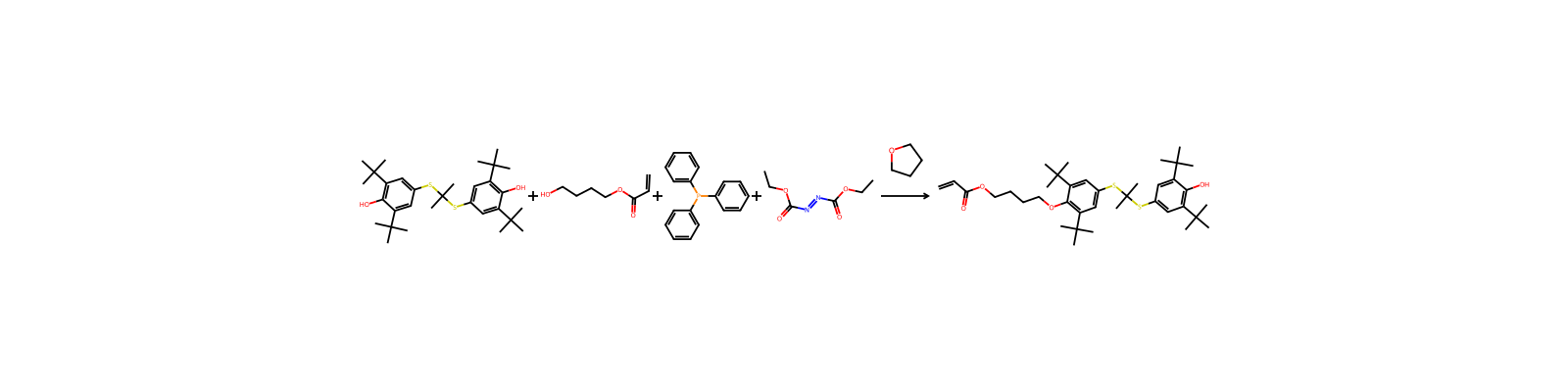
16



Notizen zur Verbindung
Wird geladen…