
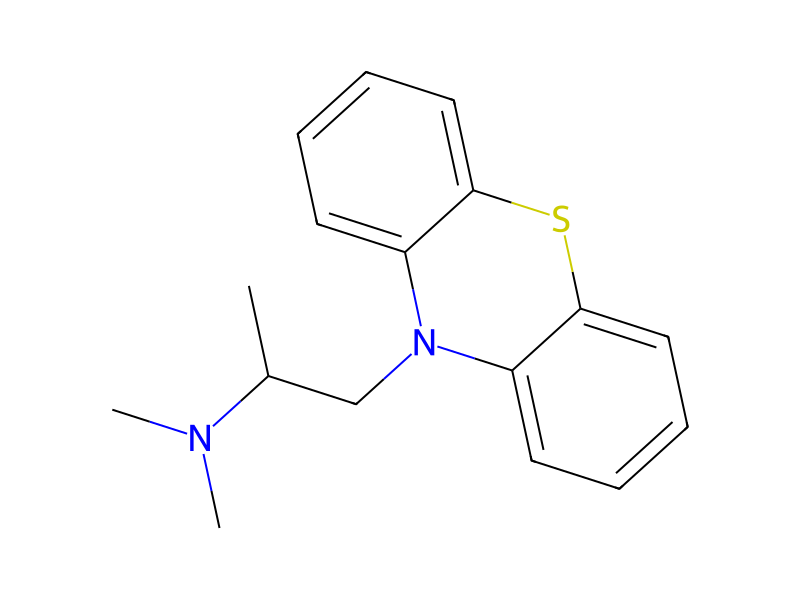
Grundinformationen
- Standard-SMILES
CC(CN1c2ccccc2Sc2ccccc21)N(C)C- InChIKey
PWWVAXIEGOYWEE-UHFFFAOYSA-N- Summenformel
- C17H20N2S
- Durchschnittliche Molmasse
- 284,4 g/mol
- Monoisotopische Masse
- 284,13471964
Überblick
Crystals. Melting point 60 °C. Used as an antihistamine.
Namen und Bezeichner
- Bevorzugter Name
- Promethazine
- IUPAC
- N,N-dimethyl-1-phenothiazin-10-ylpropan-2-amine
- Lokaler Name
- Promethazin
- Englischer Name
- PROMETHAZINE
- Summenformel
- C17H20N2S
- Molmasse
- 284.42
Namen und Synonyme
promethazine60-87-7ProazamineDipherganProtazineVallergineDimappPromethazinFarganProcitPromazinamidePromezathine
Weitere Namen anzeigen
IsopromethazineAprobitProrexWY 5093277 RPA-91033
PrometazinProthazinHibernaHistarganPhenarganPhensedylFenazilProvigan
Datenbank-Bezeichner
- CAS
38878-40-9、60-87-7- PubChem CID
- 4927
- DTXSID
DTXSID7023518- ChEMBL
CHEMBL643- ChEBI
CHEBI:8461- UNII
- FF28EJQ494
- EC Number
- 200-489-2
- Nikkaji
- J4.809G
Eigenschaften
Berechnete Struktureigenschaften
- XLogP
- 4,8
- Polarare Oberfläche (TPSA)
- 31,8 Ų
- H-Brücken-Donoren
- 0
- H-Brücken-Akzeptoren
- 3
- Frei drehbare Bindungen
- 3
- Schwere Atome
- 20
- Formalladung
- 0
- Komplexität
- 298
Experimentelle und physikochemische Eigenschaften
Chemical Classes
Other Uses -> Pharmaceuticals
Pharmaceutical
DrugsPharmaceuticals
LogP
log Kow = 4.81
4.4
4.3
Color/Form
Crystals
White to faint yellow crystalline powder
Solubility
Very soluble in dilute hydrogen chloride
In water, 1.56X10⁻² g/L (15.6 mg/L) at 24 °C
2.45e-02 g/L
Human Drugs
Breast Feeding; Lactation; Milk, Human; Antiemetics; Antipruritics; Phenothiazines
Pharmaceuticals
Boiling Point
374 to 379 °F at 3 mmHg (NTP, 1992)
190-192 °C at 3.00E+00 mm Hg
BP: 190-192 °C at 3 mm Hg
BP: 191 °C at 0.5 mm Hg
DecompositionWhen heated to decomposition it emits very toxic fumes of /nitrogen oxides and sulfur oxides/.
Melting Point
140 °F (NTP, 1992)
60 °C
Crystals from ethylene dichloride. Freely soluble in water. Soluble in alcohol, chlorform, practically insoluble in acetone, ether, ethyl acetate; MP: 230-232 °C with some decomp. Max absorption (water): 249, 297 nm (epsilon 28770, 3400). pH of 10% aqueous solution 5.3 /Promethazine hydrochloride/
60 °C
Physical Description
Crystals. Melting point 60 °C. Used as an antihistamine.
Solid
Stability/Shelf Life
In general, promethazine HCl exhibits increasing stability with decreasing pH. /Promethazine HCl/
This product is light sensitive and should be inspected before use and discarded if either color or particulate is observed.
Turns blue on prolonged exposure to air and moisture.
Dissociation Constants
9
9.1
9
8.7
9.1
pKa = 9.1
Physikochemische Eigenschaften
- Schmelzpunkt
- 60 ℃ · 60℃
- Siedepunkt
- 3 · bp3 190-192°
- Dichte
- 1.131 · 1.131
- Brechungsindex
- 1.6 · 1.6000 (estimate)
- storage temp.
- -20 °C · -20°C Freezer
- Löslichkeit
- Chloroform (Slightly), Methanol (Slightly, Sonicated)
- Aggregatzustand
- Solid
- pka
- 9.1 · pKa 9.1(H2O,t undefined) (Uncertain)
- Farbe
- Pale Beige to Pale Brown
- Wasserlöslichkeit
- 383.9 ug/L · 383.9ug/L(22.5 ºC)
- EPA chemische Informationen
- Promethazine (60-87-7)
Sicherheit und Regulatorisches
GHS-Klassifizierung
GHS Classification
Danger
H302 (100%): Harmful if swallowed [Warning Acute toxicity, oral]
P261, P264, P264+P265, P270, P272, P273, P280, P301+P317, P302+P352, P305+P351+P338, P305+P354+P338, P317, P321, P330, P333+P317, P337+P317, P362+P364, P391, and P501 (click each P-code to see the statement)
Aggregated GHS information provided per 54 reports by companies from 4 notifications to the ECHA C&L Inventory. Each notification may be associated with multiple companies.
Gefahrenhinweise
Regulatory InformationStatus: Active Update: 17-03-2023 https://echa.europa.eu/registration-dossier/-/registered-dossier/21415
Other Safety InformationIMAP assessments - 10H-Phenothiazine-10-ethanamine, N,N,.alpha.-trimethyl-: Human health tier I assessment
Fire HazardsFlash point data for this chemical are not available, however it is probably combustible. (NTP, 1992)
Health HazardsSYMPTOMS: Symptoms of this compound include leucopenia; agranulocytosis; confusion; convulsions; stupor; and it potentiates the action of central nervous system depressants. (NTP, 1992)
Hazards SummaryPhotoallergic contact dermatitis reported; [Marks]
FDA Requirements
The Approved Drug Products with Therapeutic Equivalence Evaluations List identifies currently marketed prescription drug products, including promethazine hydrochloride, approved on the basis of safety and effectiveness by FDA under sections 505 of the Federal Food, Drug, and Cosmetic Act. /Promethazine hydrochloride/
Reactive GroupAmines, Phosphines, and Pyridines
Special ReportsDHHS/NTP; Toxicology & Carcinogenesis Studies of Promethazine Hydrochloride in F344/N Rats and B6C3F1 Mice Technical Report Series No. 425 (1993) NIH Publication No. 94-3156
Reactivity Profile
PROMETHAZINE neutralizes acids in exothermic reactions to form salts plus water. May be incompatible with isocyanates, halogenated organics, peroxides, phenols (acidic), epoxides, anhydrides, and acid halides. Flammable or toxic gases may be generated in combination with strong reducing agents, such as hydrides.
Air and Water ReactionsTurns blue on prolonged exposure to air and moisture.
Hazard Classes and CategoriesAcute Tox. 4 (100%)
Skin, Eye, and Respiratory Irritations
May cause irritation /to the eyes, skin, and mucous membranes/. Avoid inhalation. Remove to fresh air. Avoid contact. Flush /eyes/ with copious quantities of water for at least 15 minutes. Avoid /skin/ contact. Flush with copious quantities of soap and water.
Sicherheit und Schutzausrüstung
Fire FightingFires involving this compound can be controlled using a dry chemical, carbon dioxide or Halon extiguisher. (NTP, 1992)
First Aid
EYES: First check the victim for contact lenses and remove if present. Flush victim's eyes with water or normal saline solution for 20 to 30 minutes while simultaneously calling a hospital or poison control center. Do not put any ointments, oils, or medication in the victim's eyes without specific instructions from a physician. If symptoms (such as redness or irritation) develop, immediately transport the victim to a hospital.
Fire Fighting Procedures
Water spray, dry chemical, carbon dioxide or foam as appropriate for surrounding fire and materials.
As with all fires, evacuate personnel to a safe area. Firefighters should use self-contained breathing equipment and protective clothing.
Storage Conditions
Promethazine hydrochloride preparations should be protected from light. Promethazine hydrochloride oral solution and tablets should be stored in tight, light-resistant containers at 15-30 and 20-25 °C, respectively, while the rectal suppositories should be stored in well-closed containers at 2-8 °C. Freezing of the oral solution should be avoided. Following the date of manufacture, commercially available promethazine preparations have expiration dates of 2-5 years depending on the dosage form and manufacturer.
Promethazine hydrochloride injection should be stored in tight, light-resistant containers at 20-25 °C, but may be exposed to temperatures ranging from 15-30 °C. The injection should be discarded if the solution is discolored or contains a precipitate.
Store in tight, light-resistant container as defined in the USP-NF. This material should be handled and stored per label instructions to ensure product integrity.
Cleanup Methods
Wear approved respiratory protection, chemically compatible gloves and protective clothing. Wipe up spillage or collect spillage using a high efficiency vacuum cleaner. Avoid breathing dust. Place spillage in appropriately labeled container for disposal. Wash spill site.
Nonfire Spill Response
SMALL SPILLS AND LEAKAGE: If you spill this chemical, you should dampen the solid spill material with water, then transfer the dampened material to a suitable container. Use absorbent paper dampened with water to pick up any remaining material. Seal your contaminated clothing and the absorbent paper in a vapor-tight plastic bag for eventual disposal. Wash all contaminated surfaces with a strong soap and water solution. Do not reenter the contaminated area until the Safety Officer (or other responsible person) has verified that the area has been properly cleaned.
Disposal Methods
SRP: Expired or waste pharmaceuticals shall carefully take into consideration applicable DEA, EPA, and FDA regulations. It is not appropriate to dispose by flushing the pharmaceutical down the toilet or discarding to trash. If possible return the pharmaceutical to the manufacturer for proper disposal being careful to properly label and securely package the material. Alternatively, the waste pharmaceutical shall be labeled, securely packaged and transported by a state licensed medical waste contractor to dispose by burial in a licensed hazardous or toxic waste landfill or incinerator.
SRP: At the time of review, regulatory criteria for small quantity disposal are subject to significant revision, however, household quantities of waste pharmaceuticals may be managed as follows: Mix with wet cat litter or coffee grounds, double bag in plastic, discard in trash.
Preventive Measures
SRP: The scientific literature for the use of contact lenses by industrial workers is inconsistent. The benefits or detrimental effects of wearing contact lenses depend not only upon the substance, but also on factors including the form of the substance, characteristics and duration of the exposure, the uses of other eye protection equipment, and the hygiene of the lenses. However, there may be individual substances whose irritating or corrosive properties are such that the wearing of contact lenses would be harmful to the eye. In those specific cases, contact lenses should not be worn. In any event, the usual eye protection equipment should be worn even when contact lenses are in place.
SRP: Local exhaust ventilation should be applied wherever there is an incidence of point source emissions or dispersion of regulated contaminants in the work area. Ventilation control of the contaminant as close to its point of generation is both the most economical and safest method to minimize personnel exposure to airborne contaminants. Ensure that the local ventilation moves the contaminant away from the worker.
This material is assumed to be combustible. As with all dry powders it is advisable to ground mechanical equipment in contact with dry material to dissipate the potential buildup of static electricity.
As a general rule, when handling USP Reference Standards avoid all contact and inhalation of dust, mists, and/or vapors associated with the material. Wash thoroughly after handling.
Use safety glasses or goggles and protect exposed skin.
Personal Protective Equipment (PPE)
RECOMMENDED RESPIRATOR: Where the neat test chemical is weighed and diluted, wear a NIOSH-approved half face respirator equipped with an organic vapor/acid gas cartridge (specific for organic vapors, HCl, acid gas and SO2) with a dust/mist filter. (NTP, 1992)
Engineering controls such as exhaust ventilation are recommended.
Use a NIOSH approved respirator, if it is determined to be necessary by an industrial hygiene survey involving air monitoring. In the event that a respirator is not required, an approved dust mask should be used.
Toxikologische Informationen
Interactions
Promethazine injection may increase, prolong, or intensify the sedative action of central-nervous-system depressants, such as alcohol, sedative/hypnotics (including barbiturates), general anesthetics, narcotics, narcotic analgesics, tricyclic antidepressants, and tranquilizers; therefore, such agents should be avoided or administered in reduced dosage to patients receiving promethazine hydrochloride.
When given concomitantly with promethazine injection, the dose of barbiturates should be reduced by at least one-half, and the dose of narcotics should be reduced by one-quarter to one-half. Dosage must be individualized. Excessive amounts of promethazine injection relative to a narcotic may lead to restlessness and motor hyperactivity in the patient with pain ...
Because of the potential for promethazine hydrochloride to reverse epinephrine's vasopressor effect, epinephrine should NOT be used to treat hypotension associated with promethazine injection overdose.
Drug interactions, including an increased incidence of extrapyramidal effects, have been reported when some MAO Inhibitors and phenothiazines are used concomitantly. This possibility should be considered with promethazine injection.
For more Interactions (Complete) data for Promethazine (32 total), please visit the HSDB record page.
Hepatotoxicity
Despite widespread use and similarity to phenothiazines, promethazine has not been clearly linked to liver test abnormalities or to clinically apparent liver injury. The reason for its safety may relate to low daily dose and limited duration of use.
Adverse Effects
Dermatotoxin - PACD (photoallergic contact dermatitis).
Promethazine has several potential adverse effects related to its mechanism of action. The most common side effects include sedation, confusion, and disorientation, which may impair physical and mental abilities. However, promethazine may paradoxically cause excitability, restlessness, or, rarely, seizures.
Exposure RoutesOn average, 88% of a promethazine dose is absorbed after oral administration; however, the absolute bioavailability is only 25% because of first-pass clearance.
Toxicity Summary
IDENTIFICATION: Promethazine hydrochloride is a systemic antihistamine. White or faintly yellow. On prolonged exposure to air it is slowly oxidized, becoming blue in color. It is soluble in water, alcohol and chloroform. It is practically insoluble in either and acetone. Indications: Promethazine is used for the treatment of allergic symptoms, often given at night because of its marked sedative effects. Drug hypersensitivity reactions have also been treated with promethazine. Promethazine is usually given orally for the treatment of allergic conditions but can be given by deep intramuscular injection or slow intravenous injection in emergencies. Promethazine is sometimes used for its sedative effects and in some countries is marketed for this purpose, including the sedation of young children. Promethazine is used as an anesthetic premedication to produce sedation, reduce anxiety and also to reduce post operative nausea and vomiting. The drug is often given in conjunction with an opiate analgesic such as meperidine, particularly in obstetrics. Taken before travelling, promethazine is effective in preventing motion sickness. Vomiting from other causes can be treated with higher or more frequent doses. Other less common uses: Promethazine has been used to control extrapyramidal disorders in children caused by metoclopramide and levodopa induced dyskinesias in patients with Parkinson's disease. In young children undergoing dental procedures it has been suggested that promethazine be used in conjunction with chloral hydrate to produce sedation as there was a lower incidence of nausea than when chloral hydrate was administered alone. HUMAN EXPOSURE: Main risks and target organs: Promethazine is a phenothiazine derivative with potent antihistaminic properties. In therapeutic doses, CNS depression manifested by sedation is a frequent occurrence. In adults, overdosage is usually characterized by CNS depression resulting in sedation and coma sometimes followed by excitement. In young children CNS stimulation is dominant, symptoms include excitation, hallucinations, dystonias and occasionally seizures. Anticholinergic manifestations such as dry mouth, mydriasis and blurred vision are usually present. Overdosage may also present with various cardiorespiratory symptoms such as respiratory depression, tachycardia, hypertension or hypotension and extrasystoles. Summary of clinical effects: Toxic Reactions from Promethazine Central nervous system: Depression and/or stimulation. Sedation, coma, confusion, disorientation. Hallucinations, hyperreflexia, toxic psychoses and seizures. CNS excitation predominates in young children. Respiratory: Respiratory depression can occur. Cardiovascular: Tachycardia, bradycardia, hypertension, hypotension and extrasystoles. Dermatological: Allergic contract dermatitis and photoallergy. Head, Eye, Ear, Nose and Throat: Fixed or dilated pupils, blurred vision, diplopia. Dry mouth, nasal stuffiness. Others: Urinary retention, constipation. Hyperpyrexia has been reported. Contraindications: Newborn and premature infants, lactation and as a treatment for asthma. Patients receiving large doses of other CNS depressants or patients who are comatose. Hypersensitivity to promethazine and other phenothiazines. Patients receiving therapy with monoamine oxidase inhibitors (MAOI). Patients with narrow angle glaucoma, stenosing peptic ulcer, pyloroduodenal obstruction, symptomatic prostatic hypertrophy, bladder neck obstruction. Because of a possible link between phenothiazine use and Sudden Infant Death Syndrome or infant sleep apnea, authorities in the U.S. have stated that promethazine is contraindicated in children under two years of age. Promethazine should be used with caution in patients with impaired liver function, a history of bronchial asthma, increased intraocular pressure, hyperthyroidism, cardiovascular disease, hypertension and diabetes. Epileptic patients may experience an increase in the severity of seizures when treated with promethazine and the drug may be contraindicated in these patients. The drug should not be used in dehydrated children or children with acute infections due to increased susceptibility to dystonias. Concurrent administration of promethazine with alcohol or other CNS depressants will cause increased drowsiness. Promethazine should be used in pregnancy only when the potential benefits justify the possible risks to the fetus. Routes of entry : Oral: Tablets, solution, syrup and elixir are noted as the oral exposure. Dermal: Topical cream. Parenteral: Preparations available for intramuscular and intravenous injection. Other: Rectal suppositories are available in some countries. Absorption by route of exposure: The drug is well absorbed from the gastrointestinal tract. Peak plasma concentrations occur after 2 to 3 hours when promethazine is administered orally or intramuscularly. Following rectal administration of promethazine in a suppository formulation, peak plasma concentrations were observed after about 8 hours. Oral bioavailability is approximately 25%. Rectal bioavailability has been reported at 23%. Distribution by route of exposure: Promethazine is widely distributed in body tissues and has a large apparent volume of distribution following oral and intramuscular administration. Promethazine has been reported to be 93% protein bound when determined by gas chromatography and as 76 to 80% protein bound when determined by HPLC. Promethazine rapidly crosses the placenta, appearing in the cord blood within 1.5 minutes when given intravenously at term. Promethazine crosses the blood brain barrier. Biological half-life by route of exposure: The elimination half life of promethazine following oral administration has been estimated to be within the range of 12 to 15 hours. After intravenous administration of 12.5 mg, blood concentrations of promethazine declined biexponentially with a terminal elimination half life of 12 hours. Metabolism: Promethazine is metabolized principally to promethazine sulphoxide and to a lesser degree desmethylpromethazine. In a study of 7 subjects, peak plasma concentrations of the sulfoxide metabolite occurred earlier after oral administration than after intravenous administration. It was concluded that the major site of metabolism is the liver and that the drug is subjected to extensive first-pass hepatic biotransformation, explaining the oral bioavailability of 25%. Metabolism also occurs in the gut wall but to a lesser degree than earlier postulated. The sulphoxide metabolite has not been detected after intramuscular dosing as circulating levels are probably below analytical detection limits, due to a combination of slow absorption, lower dose (50% of oral) and bypass of first pass metabolism in the liver. Elimination by route of exposure: Elimination of promethazine is primarily due to hepatic metabolism. In eight subjects given oral doses of 0.6% of an administered dose was excreted unchanged in the urine within 24 hours, while 10.3% was excreted as promethazine sulfoxide (the major metabolite). Most oxidized metabolites of other phenothiazines are biologically inactive. No evidence was found to suggest that metabolites of promethazine are pharmacologically or toxicologically active. Promethazine has not been reliably detected in breast milk. Mode of action: Toxicodynamics: The pharmacology of promethazine is complex and for this reason toxicological mechanisms are not completely understood. Most reference texts suggest that the toxicity of promethazine is mainly due to its anticholinergic actions at muscarinic receptors. Many of the signs and symptoms of poisoning are similar to those observed with atropine. In the presence of anticholinergic effects, serious manifestations such as seizures, hallucinations, hypertension and arrhythmias have been noted. As well as anticholinergic effects, promethazine can also exhibit toxic effects typical of antipsychotic phenothiazines. Hypotension and extrapyramidal signs may be attributable to antidopaminergic actions of promethazine. Pharmacodynamics: Promethazine is a phenothiazine antihistamine, antagonizing the central and peripheral effects of histamine medicated by histamine H1 receptors. The drug does not antagonize histamine at H2 receptors. Antihistamines competitively antagonize most of the smooth muscle stimulating actions of histamine on the H1 receptors of the gastrointestinal tract, uterus, large blood vessels and bronchial muscle. Increased capillary permeability and edema formation, flare and pruritus, resulting from actions of histamine on H1 receptors, are also effectively antagonized. Promethazine appears to act by blocking H1 receptor sites, preventing the action of histamine on the cell. Promethazine rapidly crosses the blood brain barrier and it is thought that the sedative effects of antihistamines are due to blockade of H1 receptors in the brain. Promethazine has strong anticholinergic properties, blocking the responses to acetylcholine that are mediated by muscarinic receptors. These atropine like actions are responsible for most of the side effects observed in clinical use of the drug. Promethazine also has anti motion sickness properties which may be due to central antimuscarinic action. In concentrations several times higher than those required to antagonize histamine, promethazine exhibits local anesthetic effects. Promethazine has also been shown to inhibit calmodulin. Calmodulin inhibition by promethazine could be a mechanism involved in the blockade of histamine secretion at cellular level. Toxicity: Human data: Adults: Minimum lethal exposure and maximum tolerated exposure have not been clearly defined in human subjects, due mainly to the lack of data on the exact amount ingested in cases of overdosage. Children: Promethazine is readily available in syrup form which is often administered to sedate young children. It is likely that in many cases the dose is excessive, leading to symptoms of toxicity. CNS toxicity with survival has been reported in children aged 5 to 12 years after accidental ingestion of promethazine. Death was reported in a two year old child with a history of ingestion of promethazine as tablets. Teratogenicity: A number of investigations have been performed to assess the teratogenic potential of promethazine. These studies failed to show and association between promethazine exposure in the first trimester of pregnancy and malformations. Current opinion is that these studies were not adequate or sufficiently controlled to establish whether promethazine is safe to use in pregnancy with respect to possible adverse effects on the fetus. Use late in pregnancy may result in EEG changes in the neonate. Promethazine should be used in pregnancy only when the potential benefits justify the possible risks to the fetus. Mutagenicity: There was no evidence of promethazine induced mutagenesis in the Ames microbial mutagen test. No relevant human or animal data available to date. Interactions: Concomitant administration of promethazine and other CNS depressants (ethanol, narcotics, other phenothiazines and antihistamines, barbiturates and benzodiazepines) may lead to excessive CNS depression and possible respiratory depression. The combination of promethazine and tricyclic antidepressant drugs (e.g. amitriptyline, doxepin) or other drugs with anticholinergic actions, may result in additive anticholinergic effects. Many preparations containing promethazine also contain other drugs, such as codeine, dextromethorphan, phenylephrine and ephedrine. The toxic effects of these drugs must be considered if compound preparations have been ingested. Main adverse effects: Sedation, ranging from mild drowsiness to deep sleep, is probably the most common adverse effect. Anticholinergic effects such as dryness of the mouth, nose and throat, blurred vision, mydriasis, poor accommodation, sweating and thickening of bronchial secretions are frequent. Dizziness, lassitude, disturbed co-ordination and muscular weakness have all be reported. Gastrointestinal effects including epigastric distress, nausea, diarrhea or constipation can occur. Promethazine can also cause immunoallergic reactions. Leucopenia and agranulocytosis have occurred rarely, and usually in patients receiving promethazine in combination with other drugs known to cause these effects. Jaundice and thrombocytopenic purpura have been reported rarely. Extrapyramidal effects can occur, especially at high doses. Cardiovascular side effects are occasionally seen after injection; tachycardia, bradycardia, mild transient hypertension and hypotension have all been noted. Venous thrombosis has been reported at the site of intravenous injections. Arteriospasm and gangrene may follow inadvertent intra-arterial injection. Respiratory depression, sleep apnea and sudden infant death syndrome (SIDS) have occurred in a number of infants or young children who were receiving usual doses of promethazine. These reports suggest that promethazine and other CNS depressants may cause sudden death, especially in apnea prone infants, and that these drugs should be avoided in infants even though a causal relationship has been established. Clinical effects: Acute poisoning: Ingestion: Overdosage may result in CNS depression followed by stimulation (excitation, agitation, hyperreflexia). In young children or teenagers, CNS stimulation is usually dominant. Symptoms resemble anticholinergic overdose and may include fixed and dilated pupils, flushed face, fever, dry mouth, excitation, hyperreflexia, dystonias, hallucinations and tonic clonic seizures. Periods of excitation may alternate with somnolence and catatonia. Hypertension or hypotension may be noted in agitated or comatose patients respectively. Tachycardia and extrasystoles have been reported. While coma appears to occur more frequently in adults, it may do so because of co-ingestion of ethanol. Skin exposure: Topical application of promethazine has resulted in systemic toxic effects, especially in young children. Symptoms reported include visual hallucinations, peripheral anticholinergic signs, drowsiness, agitation, irritability, tachycardia and myoclonus. Topical application of promethazine may cause contact dermatitis. Parenteral exposure: Rapid intravenous administration of promethazine may cause hypotension. Tachycardia, bradycardia and faintness have all been reported with parenteral promethazine. Chemical irritation and necrotic lesions have resulted on rare occasions following subcutaneous injection of promethazine and the drug should not be administered by this route. Extravasation should also be avoided. Accidental intra-arterial injection can cause chemical irritation and arteriospasm leading to impaired circulation and gangrene. There are case reports of amputation as a result of intra-arterial injection of promethazine. Chronic poisoning: Ingestion: Promethazine has rarely been associated with obstructive jaundice which is usually reversible if the drug is discontinued. Leukopenia and agranulocytosis have been reported rarely, usually in conjunction with other agents known to have caused these effects. Thrombocytopenic purpura has also been reported. As with other phenothiazines, promethazine can cause photosensitivity reactions. Long term use of the antipsychotic phenothiazines has been associated with many adverse reactions including, blood dyscrasias, hepatotoxicity, ocular changes, dermatological disorders and allergic reactions. The possibility that these could occur with prolonged administration of promethazine should not be ruled out. Skin exposure: Topical administration of promethazine can cause allergic reactions (contact dermatitis, pruritic), inflammation and also photosensitivity. Parenteral exposure: Venous thrombosis has been reported at the site of intravenous injections. Course, prognosis, cause of death: Mild cases of overdosage may manifest simply as excessive drowsiness or mild CNS excitation in children or teenagers. With increasing dose coma may develop, or more frank symptoms of CNS excitation, for example, hallucinations, delirium, hyperreflexia. There is little indication in the literature that the severity of the poisoning can be related to the appearance of signs and symptoms such as extrapyramidal effects, hypertension or hypotension. Treatment is symptomatic and the appearance of specific effects cannot be relied upon when assessing the severity of poisoning. It is generally agreed that as the severity of the poisoning increases serious anticholinergic effects usually appear along with seizures, hypertension and arrhythmias, delirium or coma. Death due to respiratory arrest has been reported in association with promethazine poisoning. Systematic description of clinical effects: Since formulations containing promethazine in combination with other drugs are available, it may alter the clinical picture from the following description. Cardiovascular: Acute tachycardia and extrasystoles have been reported. Hypotension, or even cardiac shock may develop after antihistamine overdose. Hypertension has also occurred. Respiratory: Acute: Stridor, wheezing and bronchospasm have been reported after a single dose. Respiratory arrest has been reported following overdose. Acute dystonic reactions including opisthotonos, oculogyric crisis and facial dyskinesias have occurred following promethazine overdose. In one report, onset of dystonias was delayed for 24 hours after a large promethazine overdose. Other neurological effects associated with promethazine poisoning: Extensor plantar reflexes. Encephalopathy have been reported in a five year old child. Gastrointestinal: The anticholinergic properties of the drug may cause dry mouth and slow the rate of gastric emptying. Hepatic: Chronic promethazine has rarely been associated with obstructive jaundice which is usually reversible following discontinuance of the drug. Urinary: Renal: Acute urinary retention due to anticholinergic actions have been reported with promethazine toxicity. Other: Promethazine overdose has reported to produce a characteristic rose coloration of urine, however this was due to hematuria in one case. Endocrine and reproductive systems: Promethazine was considered to be unsafe in patients with acute porphyria although there is conflicting experimental evidence on porphyrinogenicity. Dermatological: Acute or chronic: Urticaria has been reported following oral ingestion. Photosensitivity (principally photoallergic dermatitis) can occur following topical or systemic administration of antihistamines, including promethazine. The reaction may manifest as eczema, pruritic, papular rash or erythema. Promethazine may also cause sensitization following topical use, giving rise to an allergic contact dermatitis. Eye, ear, nose throat: local effects: Acute: Anticholinergic effects on the eye include, mydriasis, fixed pupils, blurred vision, diplopia and general visual disturbances. Oculogyric crisis has been reported following overdose. Dryness of the nose and nasal stuffiness have been noted. Anticholinergic effects include dryness of the mouth and throat. Facial erythema has been noted. Hematological: Chronic leucopenia and agranulocytosis have been reported rarely in patients receiving promethazine in combination with other drugs known to cause these effects. Thrombocytopenic purpura has been reported with promethazine. A case of allergic agranulocytosis has been reported, however this patient was taking larger than normal doses for approximately four weeks. Discontinuing the promethazine resulted in the eventual complete recovery of the patient. Serious blood dyscrasias have occurred with the antipsychotic phenothiazines and the possibility that these could occur with promethazine should not be discounted. Immunological: Chronic promethazine is a potent sensitizer particularly following topical application. Promethazine can exert immunosuppressive effects resulting in potentially adverse reactions, infections. Metabolic: Fluid and electrolyte disturbances: Hypokal emia has been reported. Other: Hyperthermia following promethazine ingestion has been reported. Allergic reactions: Photoallergic dermatitis can occur following topical or systemic administration of promethazine. Topically applied promethazine can cause allergic contact dermatitis. Special risks: Pregnancy: Promethazine is commonly used in obstetrics as an adjunct to opiate analgesia and as a sedative. The drug rapidly crosses the placenta, appearing in cord blood within one and a half minutes of an intravenous dose. The use of promethazine during labour has been associated rarely with neonatal respiratory depression. Transient behavioral and EEG changes have also been described in neonates. Promethazine has been shown to markedly impair platelet aggregation in the newborn but less so in the mother. Immunological disturbances have been described in a few infants whose mothers had been treated with promethazine during pregnancy. The clinical significance of these effects are unknown. ANIMAL/PLANT STUDIES: Promethazine has not been shown to be teratogenic in rats receiving oral doses of 2-4 times the maximum recommended human dosage.
The main feature of promethazine toxicity is CNS depression, tachycardia, respiratory depression, and delirium. Supportive care and monitoring are the treatment for most overdoses, as no known antidote exists. Significant overdoses with profoundly depressed mental status or coma may require airway support, hemodynamic monitoring, and a higher level of care. Some studies have shown that early administration of charcoal within two hours may be beneficial. However, the evidence is still lacking, and further studies are necessary. Because promethazine can reverse epinephrine’s vasopressor effect, epinephrine should not be used for hypotension associated with promethazine overdose.
Like other H1-antagonists, promethazine competes with free histamine for binding at H1-receptor sites in the GI tract, uterus, large blood vessels, and bronchial muscle. The relief of nausea appears to be related to central anticholinergic actions and may implicate activity on the medullary chemoreceptor trigger zone.
Signs and Symptoms
Symptoms of overdose include mild depression of the central nervous system and cardiovascular system to profound hypotension, respiratory depression, unconsciousness, and sudden death. Other reported reactions include hyperreflexia, hypertonia, ataxia, athetosis, and extensor-plantar reflexes (Babinski reflex).
Ongoing Test Status
The following link will take the user to the National Toxicology Program (NTP) Test Agent Search Results page, which tabulates all of the "Standard Toxicology & Carcinogenesis Studies", "Developmental Studies", and "Genetic Toxicity Studies" performed with this chemical. Clicking on the "Testing Status" link will take the user to the status (i.e., in review, in progress, in preparation, on test, completed, etc.) and results of all the studies that the NTP has done on this chemical. /Promethazine hydrochloride/[Available from: http://ntp-apps.niehs.nih.gov/ntp_tox/index.cfm?fuseaction=ntpsearch.searchresults&searchterm=58-33-3]
Soil Adsorption/MobilityThe distribution coefficient, Kd, was found to be from 206 to 1,575 L/kg for promethazine in 12 soils and sediments collected in Australia; organic content in soils and sediments ranged from 0.08% to 8.6%(1).
Human Toxicity Excerpts
/HUMAN EXPOSURE STUDIES/ ... To compare the pharmacodynamics of fexofenadine and promethazine versus placebo in Japanese volunteers. In this randomized, crossover, double-blind study, 24 subjects received single doses of fexofenadine 60 mg and 120 mg, promethazine 25 mg, and placebo, with a 6-day washout period between treatments. Objective measures included critical flicker fusion, choice reaction time, and a compensatory tracking task. A line analog rating scale evaluated self-rated sedation. A rapid visual information-processing task evaluated vigilance at baseline and at 2 hours. Fexofenadine was not significantly different from placebo on any test at any timepoint. In contrast, promethazine impaired critical flicker fusion thresholds (F[3,63] = 5.37, P = 0.0023); increased recognition reaction time (F[3,63] = 13.63, P < 0.0001) and total reaction time (F[3,63] = 12.23, P < 0.0001) components of the choice reaction time test; reduced tracking accuracy (F[3,63] = 14.25, P < 0.0001) and increased reaction times to peripheral stimuli (F[3,63] = 9.29, P < 0.0001) in the compensatory tracking task; reduced the number of valid responses (F[3,63] = 14.86, P < 0.0001) and impaired reaction times (F[3,63] = 12.02, P < 0.0001) in the rapid visual information-processing task test; and impaired subjective ratings of sedation (F[3,63] = 7.55, P = 0.0002), compared with placebo. ...
/HUMAN EXPOSURE STUDIES/ The effects of a phenothiazine, on sleep in ten healthy volunteers were investigated in two double blind polygraphic studies. The first part consisted of a single dose study with promethazine 50, 100, and 200 mg, using pentobarbital 100 mg as a reference substance. In the second part, four subjects spent 20 consecutive nights with nine drug nights (promethazine 100 mg), followed by a placebo withdrawal period of six nights, in the sleep laboratory. Promethazine showed a dose related REM-depressing effect with a greater decrease, the higher the dose. The placebo value was 20.7% REM of total sleep time and gave 16.3, 13.5 and 11.4 respectively, for promethazine 50, 100 and 200 mg. Pentobarbital gave 16.2% REM. There was also an increase of stage II and with the highest dose an increase of stage III + IV. An increase of REM-latency together with a decrease of REM-periods was also seen, and while pentobarbital gave a decrease in REM-density, promethazine did not cause any changes in the phasic REM-component. A REM-rebound was seen in the first night of withdrawal with an increase of per cent REM from 19.9%-25.1%. The mean for the whole withdrawal period was 23.1%. Promethazine in the highest dose, 200 mg, gave drowsiness and hangover effects in 14 nights out of 20. The REM-depressing effect of promethazine together with its relatively weak REM-rebound effect may explain its value in the treatment of withdrawal symptoms following abuse of alcohol and barbiturates.
/SIGNS AND SYMPTOMS/ Signs and symptoms of overdosage range from mild depression of the central nervous system and cardiovascular system to profound hypotension, respiratory depression, unconsciousness and sudden death. Other reported reactions include hyperreflexia, hypertonia, ataxia, athetosis, and extensor-plantar reflexes (Babinski reflex).
/SIGNS AND SYMPTOMS/ /During overdose/ stimulation may be evident, especially in pediatric patients and geriatric patients. Convulsions may rarely occur. A paradoxical-type reaction has been reported in pediatric patients receiving single doses of 75 mg to 125 mg orally, characterized by hyperexcitability and nightmares.
For more Human Toxicity Excerpts (Complete) data for Promethazine (28 total), please visit the HSDB record page.
Carcinogen ClassificationNo indication of carcinogenicity to humans (not listed by IARC).
Drug Induced Liver Injury
Drug-Induced Liver Injury Severity and Toxicity (DILIst)
promethazine
DILI Positive
Oral
DOI:10.1016/j.drudis.2019.09.022
Non-Human Toxicity Excerpts
/LABORATORY ANIMALS: Chronic Exposure or Carcinogenicity/ ... Under the conditions of these 2 yr gavage studies, there was no evidence of carcinogenic activity of promethazine hydrochloride in male or female F344/N rats receiving 8.3, 16.6, or 33.3 mg/kg. There was no evidence of carcinogenic activity of promethazine hydrochloride in male B6C3Fl mice receiving 11.25, 22.5, or 45 mg/kg. There was no evidence of carcinogenic activity of promethazine hydrochloride in female B6C3F1 mice receiving 3.75, 7.5, or 15 mg/kg. /Promethazine hydrochloride/
/LABORATORY ANIMALS: Developmental or Reproductive Toxicity/ Teratogenic effects have not been demonstrated in rat-feeding studies at doses of 6.25 and 12.5 mg/kg (approximately 2.1 and 4.2 times the maximum recommended human daily dose) of promethazine injection. Daily doses of 25 mg/kg intraperitoneally have been found to produce fetal mortality in rats.
/IMMUNOTOXICITY/ Promethazine has been shown to possess definite immunosuppressive activity in clinical and experimental organ transplantation. However, there are few data concerning the mechanism of its influence on immune reactions. In the present studies promethazine was shown to inhibit natural killer cell-mediated cytotoxicity in vitro. Combined analysis of 51Cr-release and single-cell assays revealed that this agent affects some processes involved in delivering the 'lethal hit' but not the binding of target cells nor the recycling capacity of effector cells. The possible mechanism of promethazine action at the cellular level is discussed.
/VETERINARY CASE REPORTS/ A 7-mo-old female Doberman Pinscher undergoing antibiotic treatment for tonsillitis was presented in near collapse with markedly low blood pressure, tachycardia, dilatation of pupils (non-responsive to light), and gastrointestinal distress. Since the owner could provide no history of significant toxin exposure, general supportive and non-specific toxicologic treatment protocols were initiated. Within 4 hr marked improvement was observed. The owner's wife revealed that promethazine suppositories had been administered at a toxic level to control the vomition accompanying the tonsillitis.
Regulatorische Informationen
FDA Requirements
The Approved Drug Products with Therapeutic Equivalence Evaluations List identifies currently marketed prescription drug products, including promethazine hydrochloride, approved on the basis of safety and effectiveness by FDA under sections 505 of the Federal Food, Drug, and Cosmetic Act. /Promethazine hydrochloride/
Sicherheitsdaten
- Toxizität
- LD50 oral in rabbit: 580mg/kg
- Giftige Stoffe Daten
- 60-87-7(Hazardous Substances Data)
Chemie und Industrie
Pharmakologische Informationen
ATC Code
D - Dermatologicals
R - Respiratory system
QD - Dermatologicals
QR - Respiratory system
Protein BindingPromethazine is 93% protein bound in serum, mostly to albumin.
Pharmacodynamics
Promethazine is is a histamine H1 antagonist that can be used for it's ability to induce sedation, reduce pain, and treat allergic reactions. Promethazine's effects generally last 4-6h but can last up to 12h. Patients should be counselled regarding CNS and respiratory depression, reduce seizure threshold, and bone marrow depression.
Mechanism of Action
Promethazine is a an antagonist of histamine H1, post-synaptic mesolimbic dopamine, alpha adrenergic, muscarinic, and NMDA receptors. The antihistamine action is used to treat allergic reactions. Antagonism of muscarinic and NMDA receptors contribute to its use as a sleep aid, as well as for anxiety and tension. Antagonism of histamine H1, muscarinic, and dopamine receptors in the medullary vomiting center make promethazine useful in the treatment of nausea and vomiting.
Promethazine is a phenothiazine derivative with potent sedative properties. Although the drug can produce either CNS stimulation or CNS depression, CNS depression manifested by sedation is more common with therapeutic doses of promethazine. The precise mechanism of the CNS effects of the drug is not known.
Although it has been reported that the drug has slight antitussive activity, this may result from its anticholinergic and CNS depressant effects. In therapeutic doses, promethazine appears to have no substantial effect on the cardiovascular system. Although rapid IV administration of promethazine may produce a transient fall in blood pressure, blood pressure usually is maintained or slightly elevated when the drug is given slowly.
Promethazine hydrochloride is a phenothiazine derivative which possesses antihistaminic, sedative, antimotion-sickness, antiemetic, and anticholinergic effects. Promethazine is a competitive H1 receptor antagonist, but does not block the release of histamine. Structural differences from the neuroleptic phenothiazines result in its relative lack (1/10 that of chlorpromazine) of dopamine antagonist properties.
The development of phenothiazine derivatives as psychopharmacologic agents resulted from the observation that certain phenothiazine antihistaminic compounds produced sedation. In an attempt to enhance the sedative effects of these drugs, promethazine and chlorpromazine were synthesized. Chlorpromazine is the pharmacologic prototype of the phenothiazines. The pharmacology of phenothiazines is complex, and because of their actions on the central and autonomic nervous systems, the drugs affect many different sites in the body. Although the actions of the various phenothiazines are generally similar, these drugs differ both quantitatively and qualitatively in the extent to which they produce specific pharmacologic effects. /Phenothiazine General Statement/
For more Mechanism of Action (Complete) data for Promethazine (18 total), please visit the HSDB record page.
Biological Half-Life
The elimination half life of promethazine is approximately 12-15h.
Following intravenous administration in healthy volunteers, the plasma half-life for promethazine has been reported to range from 9 to 16 hours. The mean plasma half-life for promethazine after intramuscular administration in healthy volunteers has been reported to be 9.8 +/- 3.4 hours.
Half-life: 12 hours
Metabolism/Metabolites
Promethazine is predominantly metabolized to promethazine sulfoxide, and minorly to desmethylpromethazine and a hydroxy metabolite. Hydroxylation of promethazine is predominantly mediated by CYP2D6.
Promethazine hydrochloride is metabolized in the liver, with the sulfoxides of promethazine and N-desmethylpromethazine being the predominant metabolites appearing in the urine.
Most metabolites of phenothiazines are pharmacologically inactive; however, certain metabolites (eg, 7-hydroxychlorpromazine, mesoridazine) show moderate pharmacologic activity and may contribute to the action of the drugs. There is limited evidence to indicate that some phenothiazines (eg, chlorpromazine) may induce their own metabolism. /Phenothiazine General Statement/
First order kinetics observed for oxidation of promethazine HCl in aqueous solution. Reaction rate was pH dependent up to pH 5. Cu ions increased rates as did Fe. Under anaerobic conditions, Cu and Fe were required for the reaction. Isolation of products carried out by tlc.
Incubation of promethazine (Ia) and desmethylpromethazine (Ib) with 9000g supernatant fractions of rabbit liver homogenate resulted in formation of N-dealkylated, N-oxygenated and ring-hydroxylated products. The N-oxidation products identified by t.l.c. and mass spectra using synthetic reference products are promethazine-N-oxide (IX) and the nitrone (VIII), which is believed to be formed chemically and metabolically from the metabolite N-hydroxydesmethylpromethazine (VII).
To determine which cytochrome P450 form is involved in the promethazine [10-(2-dimethylaminopropyl) phenothiazine] metabolism, in vitro analysis using human liver microsomes were performed. Promethazine was mainly biotransformed to ring-hydroxylated, S-oxidized and N-demethylated metabolites. The promethazine hydroxylase in human liver microsomes was inhibited by SKF-525A, propranolol, sparteine, quinidine and anti-CYP2D6 serum suggesting involvement of a P450 related to CYP2D6. Lineweaver-Burk plots for the hydroxylation, S-oxidation and N-demethylation indicated that the hydroxylation occurred with a low K(m) value in human liver microsomes. Microsomes from genetically-engineered human B-lymphoblastoid cells expressing CYP2D6 hydroxylated promethazine most efficiently as compared to other P450 forms, indicating that it was the principal P450 responsible for the metabolism of promethazine in human liver microsomes. The inhibition of CYP2D6-catalysed bufuralol 1'-hydroxylase by various histamine H3 antagonists including promethazine suggested that promethazine and some other histamine H1 antagonists could be inhibitors of this P450 in human liver microsomes.
FDA Pharmacological Classification
FF28EJQ494
PROMETHAZINE
Established Pharmacologic Class [EPC] - Phenothiazine
Chemical Structure [CS] - Phenothiazines
Promethazine is a Phenothiazine.
PROMETHAZINE
MeSH Pharmacological Classification
Agents, usually topical, that relieve itching (pruritus).
Drugs that selectively bind to but do not activate histamine H1 receptors, thereby blocking the actions of endogenous histamine. Included here are the classical antihistaminics that antagonize or prevent the action of histamine mainly in immediate hypersensitivity. They act in the bronchi, capillaries, and some other smooth muscles, and are used to prevent or allay motion sickness, seasonal rhinitis, and allergic dermatitis and to induce somnolence. The effects of blocking central nervous system H1 receptors are not as well understood.
Agents that are used to treat allergic reactions. Most of these drugs act by preventing the release of inflammatory mediators or inhibiting the actions of released mediators on their target cells. (From AMA Drug Evaluations Annual, 1994, p475)
Absorption, Distribution and Excretion
A 25mg dose of intramuscular promethazine reaches a Cmax of 22ng/mL. Intravenous promethazine reaches a Cmax of 10.0ng/mL, with a Tmax of 4-10h, and an AUC of 14,466ng\*h/mL. Oral promethazine is only 25% bioavailable due to first pass metabolism. Oral promethazine reaches a Cmax of 2.4-18.0ng/mL, with a Tmax of 1.5-3h, and an AUC of 11,511ng\*h/mL.
An intravenous dose of promethazine is 0.64% eliminated in the urine as the unchanged parent drug, 0.02-2.02% in the urine as desmethylpromethazine, 10% in the urine as promethazine sulfoxide.
The volume of distribution of promethazine is approximately 970L or 30L/kg.
The intravenous clearance of promethazine is approximately 1.14L/min. The renal clearance of promethazine is 5.9mL/min and the renal clearance of promethazine sulfoxide is 90.4mL/min.
Promethazine is well absorbed from the GI tract and from parenteral sites. Plasma concentrations of promethazine required for sedative effects are unknown. The onset of sedative effects occurs within 20 minutes following oral, rectal, or IM administration, and within 3-5 minutes following IV administration. The duration of sedative effects varies but may range from 2-8 hours depending on the dose and route of administration.
Promethazine is widely distributed in body tissues. Compared with other organs, lower concentrations of the drug are found in the brain, but this concentration is higher than the plasma concentration.
Cellular LocationsMembrane
Metabolite PathwaysPromethazine H1-Antihistamine Action
Verwendung und Herstellung
Uses
An antiallergic, in pruritus, for motion sickness and sedation , and also in animals
Widely used as a hypnotic agent
THERAPEUTIC CATEGORY: Antihistaminic
THERAPEUTIC CATEGORY (VETERINARY): Antihistaminic, antiemetic, CNS depressant
For more Uses (Complete) data for Promethazine (6 total), please visit the HSDB record page.
Use (kg; approx.) in Germany (2009): >2500
Methods of ManufacturingPromethazine is synthesized from 10-phenothiazine-2-propyl chloride and dimethylamine in the presence of Cu.
Formulations/Preparations
Promethazine preparations: (AHFS, 2010)
Atosil; Fargan; Fenazil; Diprazin; Provigan; Prorex; Diphergan; Ganphen; Fellozine; Remsed; Dorme; Fenergan; Lergigan; Phenergan; Promantine; Protazine; Prothazin; Thiergan. /Promethazine hydrochloride/
Use ClassificationPharmaceuticals
General Manufacturing Information
Patent: US patent 2,530,451 (1950 to Rhone-Poulenc)
The phenothiazines ... used in psychiatry have three carbon atoms interposed between position 10 of the central ring and the first amino nitrogen atom of the side chain at this position ... Antihistaminic phenothiazines ... have only two carbon atoms separating the amino group from position 10 of the central ring.
Introduced in 1946 for use in allergic conditions and has been used as a preanesthetic medication for its sedative and antiemetic effects.
Marketing for children has been discontinued /Phenergan/
Anwendungen
BeschreibungAs a derivative of phenothiazine, promethazine is structurally and pharmacologically similar to chlorpromazine. It exhibits strong antihistamine activity as well as expressed action on the CNS. It potentiates action of sedative and analgesic drugs.
VerwendenPromethazine is used for treating allergic illnesses such as hives, serum disease, hay fever, dermatosis, and also for rheumatism with expressed allergic components, for allergic complications caused by antibiotics and other medicinal drugs, and for enhancing action of analgesics and local anesthetics. Synonyms of this drug are allergen, phenergan, pipolphen, prothazine, and others.
Vor- und nachgelagerte Produkte
Vorgelagerte Rohstoffe
Anbieter50 Anbieter
陕西缔都新材料有限公司81124267 17392282731 · [email protected]
Hebei baicao biology science and technology co., ltd+86-19131911055 17824879454 · [email protected]
咸宁深蓝生物医药研发有限公司18171815831 · [email protected]
普善实业(陕西)有限公司029-81310890 18165209495 · [email protected]
南京望知星医药科技有限公司18569809817 · [email protected]
湖北科乐精细化工有限公司027-59101668 19945030958 · [email protected]
Dayang Chem (Hangzhou) Co.,Ltd.+86-0571-88938639 17705817739 · [email protected]
Sinoway Industrial co., ltd.+86-0592-5800732 +86-13806035118 · [email protected]
浙江珲达生物科技有限公司0571-89903022 18679456698 · [email protected]
Syntechem Co.,Ltd[email protected]
深圳市简一生物科技有限公司0755-84826604 · [email protected]
淄博容纳生物科技有限公司+86-86-13583358881 +8618560316533 · [email protected]
上海钰康生物科技有限公司+86-18930848214 +86-021-56762820 · [email protected]
北京博奥森生物技术有限公司400-901-9800 18611424007 · [email protected]
武汉丰泰威远科技有限公司+86-27-8746-5837 +86-18627785180 · [email protected]
Zhejiang J&C Biological Technology Co.,Limited+1-2135480471 · [email protected]
武汉丰泰威远科技有限公司027-87465837 19945049750 · [email protected]
泰安鑫润生物科技有限公司15318133072 15318133072 · [email protected]
河北茹麒科技有限公司176-03256889 17603256889 · [email protected]
广州爱纯医药科技有限公司020-39119399 18927568969 · [email protected]
上海伯韵医药科技有限公司13817873692 · [email protected]
上海喀露蓝科技有限公司18149758185 18149758185 · [email protected]
上海麦克林生化科技股份有限公司15221275939 15221275939 · [email protected]
江苏艾康生物医药研发有限公司025-66028182 17714375163 · [email protected]
陕西缔都医药化工有限公司029-81024372 17792795018 · [email protected]
池州凯隆进出口贸易有限公司[email protected]
上海陶术生物科技股份有限公司+1-781-999-5354; +1-00000000000 · [email protected]
广东翁江化学试剂有限公司0751-2815987 13927875076 · [email protected]
HANGZHOU LEAP CHEM CO., LTD.+86-571-87711850 +86-15355479329 · [email protected]
广州和为医药科技有限公司17612033329 17612033329
艾吉析科技(上海)有限公司17721401538;17717235263 17721401538 · [email protected]
上海阿拉丁生化科技股份有限公司6206333 13167063860 · [email protected]
启源(广东)医药化工有限公司18026564465 · [email protected]
上海珞珐生化科技有限公司021-51111890 15317326293 · [email protected]
BOC Sciences16314854226 · [email protected]
陕西缔都医药化工有限公司+86-29-81139210 +86-17392587031 · [email protected]
北京华威锐科化工科技有限公司89508211 18501085097 · [email protected]
上海源叶生物科技有限公司13636370518 · [email protected]
上海陶术生物科技股份有限公司13564774135 · [email protected]
武汉沃格达生物科技有限公司15071299552 · [email protected]
Henan Bao Enluo International TradeCo.,LTD+86-17331933971 · [email protected]
滁州市科迈尔化工科技有限公司0550-5196001 15000891977 · [email protected]
爱必信(上海)生物科技有限公司13761418683 · [email protected]
杭州洁汉化工有限公司+86-571-86217390; +8618058761490 · [email protected]
上海易恩化学技术有限公司400-400-1332688 18019345275 · [email protected]
career henan chemical co+86-0371-86658258 · [email protected]
艾览(上海)化工科技有限公司400-668-9898 · [email protected]
成都圣美凯生物科技有限公司028-85157043 15882256948 · [email protected]
合肥博美生物科技有限责任公司13739298932 13856598764 · [email protected]
爱诗伦生物科技(上海)有限公司021-50676523 18019098996 · [email protected]
Ergänzende Hinweise
DefinitionChEBI: A tertiary amine that is a substituted phenothiazine in which the ring nitrogen at position 10 is attached to C-3 of an N,N-dimethylpropan-2-amine moiety.
Zugehörige Reaktionen
2

Verknüpfte Notizen
Wird geladen…