StartseiteMCPWorkbenchSkills
StartseiteWorkbenchBenachrichtigungenMein Bereich
llms.txt · MCP-AnleitungDatenschutz · Nutzungsbedingungen · Supportv1.8.3
  1. Startseite
  2. /Verbindung

Natriumcyantrihydroborat

Sodium cyanoborohydride

HCID 5003444
Neue Reaktion
Drucken
GrundinformationenÜberblickNamen und BezeichnerEigenschaftenSicherheit und RegulatorischesChemie und IndustrieZugehörige ReaktionenNotizen zur Verbindung
TeilstruktursucheÄhnliche Strukturen suchen

Grundinformationen

CAS
25895-60-7
Standard-SMILES
[BH3-]C#N.[Na+]
InChIKey
CVDUGUOQTVTBJH-UHFFFAOYSA-N
Summenformel
CH3BN.Na
Durchschnittliche Molmasse
62,84 g/mol
Monoisotopische Masse
63,0256235

Überblick

reagent for preparing biologically active nitroxides

Namen und Bezeichner

Bevorzugter Name
Sodium cyanoborohydride
IUPAC
sodium cyanoboranuide
Lokaler Name
Natriumcyantrihydroborat
Englischer Name
Sodium cyanoborohydride
Summenformel
CH3BNNa
Molmasse
62.84

Namen und Synonyme

sodium cyanohydridoborateNaBH(3)CNsodium borocyanohydrideDTXSID40894864sodium cyanoborohydride, borate (1-) ionC4I8C58P9TBorate(1-), (cyano-kappaC)trihydro-, sodium, (T-4)-Borate(1-), (cyano-kappaC)trihydro-, sodium (1:1), (T-4)-Borate(1-), (cyano-C)trihydro-, sodium, (T-4)-RefChem:887464DTXCID001838713247-317-2
Weitere Namen anzeigen
NaBH3CNNaCNBH3SODIUM CYANOTRIHYDRIDOBORATESodium cyanoboronhydrideSodium cyanborohydrideCyanoborohydride SodiumCyano sodiuM borohydridesodium (cyano-kappaC)(trihydrido)borate(1-)Sodium cyanoborohydride, 1M solution in THF, AcroSeal
25895-60-7Sodium cyanoborohydrideSodium cyanotrihydroboratecyanoborohydrideCH3BNNasodiumcyanoborohydrideSodium (cyanido-kappaC)trihydridoborate(1-)CVDUGUOQTVTBJH-UHFFFAOYSA-N

Datenbank-Bezeichner

Eigenschaften

Berechnete Struktureigenschaften

Polarare Oberfläche (TPSA)
23,8 Ų
H-Brücken-Donoren
0
H-Brücken-Akzeptoren
2
Frei drehbare Bindungen
0
Schwere Atome
4
Formalladung
0
Komplexität
34,5

Experimentelle und physikochemische Eigenschaften

Chemical ClassesMetals -> Metalloid Compounds (Boron)
Physical DescriptionWhite hygroscopic solid; [Merck Index] White powder; [Alfa Aesar MSDS]

Physikochemische Eigenschaften

Schmelzpunkt
242 °C · >242 °C (dec.) (lit.)
Siedepunkt
307 °C · 307°C
Dichte
1.083 g/mL · 1.083 g/mL at 25 °C
Flammpunkt
1 °F · −1 °F
storage temp.
30 °C · Store below +30°C.
Löslichkeit
Soluble in water (100 mg/ml, with heating), methanol, ethanol, and THF. It is insoluble in nonpolar solvents such as benzene or hexane
Aggregatzustand
Powder
Farbe
White
Wichte
1.2 · 1.2
Biologische Quelle
synthetic
Wasserlöslichkeit
2120 g/L · 2120 g/L at 29 ºC (dec.)

Sicherheit und Regulatorisches

Sicherheitsangaben dienen nur zur Orientierung und ersetzen weder das Sicherheitsdatenblatt (SDB) des Lieferanten noch geltende Vorschriften oder eine fachliche Bewertung.

GHS-Klassifizierung

GHS Classification · 4 Einträge

Danger

H228 (97.1%): Flammable solid [Danger Flammable solids]

P210, P240, P241, P260, P262, P264, P264+P265, P270, P271, P273, P280, P284, P301+P316, P301+P330+P331, P302+P352, P302+P361+P354, P304+P340, P305+P354+P338, P316, P317, P320, P321, P330, P361+P364, P363, P370+P378, P391, P403+P233, P405, and P501 (click each P-code to see the statement)

Aggregated GHS information provided per 244 reports by companies from 16 notifications to the ECHA C&L Inventory. Each notification may be associated with multiple companies.

Gefahrenhinweise

Regulatory Information · 2 Einträge

Chemical: Borate(1-), (cyano-C)trihydro-, sodium, (T-4)-

Sodium cyanoborohydride: HSNO Approval: HSR004685 Approved with controls

Other Safety InformationIMAP assessments - Borate(1-), (cyano-C)trihydro-, sodium, (T-4)-: Human health tier I assessment
Hazards SummaryReacts with water evolving extremely flammable gases; Causes burns; Highly toxic by ingestion, inhalation, and skin absorption; [Alfa Aesar MSDS]
Hazard Classes and CategoriesFlam. Sol. 1 (97.1%)

Toxikologische Informationen

Adverse EffectsDermatotoxin - Skin burns.

Sicherheitsdaten

F

Chemie und Industrie

Pharmakologische Informationen

MeSH Pharmacological Classification · 1 Eintrag

Substances used for the detection, identification, analysis, etc. of chemical, biological, or pathologic processes or conditions. Indicators are substances that change in physical appearance, e.g., color, at or approaching the endpoint of a chemical titration, e.g., on the passage between acidity and alkalinity. Reagents are substances used for the detection or determination of another substance by chemical or microscopical means, especially analysis. Types of reagents are precipitants, solvents, oxidizers, reducers, fluxes, and colorimetric reagents. (From Grant & Hackh's Chemical Dictionary, 5th ed, p301, p499)

Verwendung und Herstellung

UsesUsed as a reducing agent (aldehydes, ketones, oximes, and enamines); Also used for reductive amination, reductive alkylation, reductive displacement, and deoxygenation; [Merck Index]
Anwendungen · 2 Einträge

BeschreibungSodium cyanoborohydride (NaBH3CN) is a selective reducing agent used for a variety of chemical reductions, including aldehyde, ketones, acetals, epoxides, oximes, enamines, reductive aminations of aldehydes and ketones, and reductive alkylations of amines and hydrazines. The utility of sodium cyanoborohydride as a reducing agent is greatly enhanced by its stability under acid conditions, and its solubility in aprotic solvents. Sodium cyanoborohydride is a milder and more selective reducing agent than sodium borohydride. Sodium cyanoborohydride is a weaker and more-selective reducing agent than sodium borohydride because of the electron-withdrawing effect of the cyano group. It has the further advantage that it is stable in acid to pH = 3 and can be employed to effect reductions in the presence of functional groups that are sensitive to the more-basic conditions of reduction with sodium borohydride. Aldehydes and ketones are unaffected by sodium cyanoborohydride in neutral solution, but they are readily reduced to the corresponding alcohol at pH=3-4 by way of the protonated carbonyl group. By previous exchange of the hydrogens of the borohydride for deuterium or tritium, by reaction with D2O or tritiated water, an efficient and economical route is available for deuteride or tritiide reduction of aldehydes and ketones.

Zugehörige Reaktionen

9.344
Reaktionsaufzeichnung erstellen
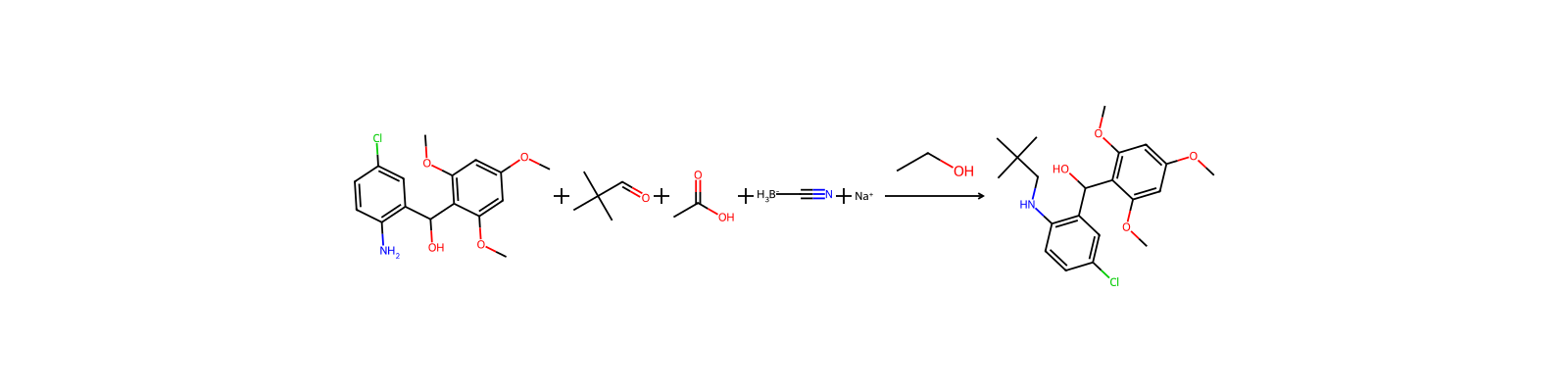
Reaktionsgleichung von HRID 923
HRID 923als Edukt
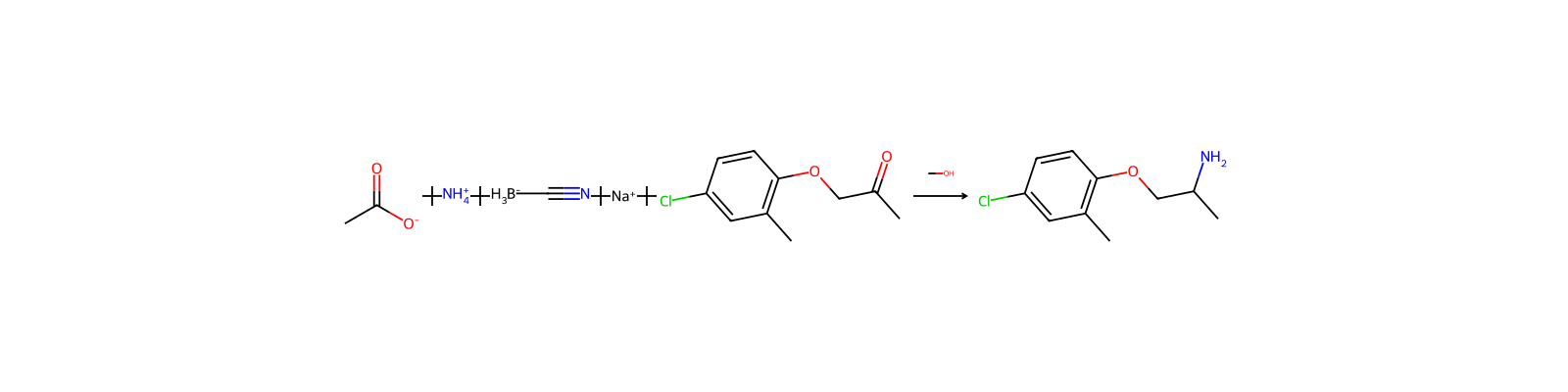
Reaktionsgleichung von HRID 924
HRID 924als Edukt
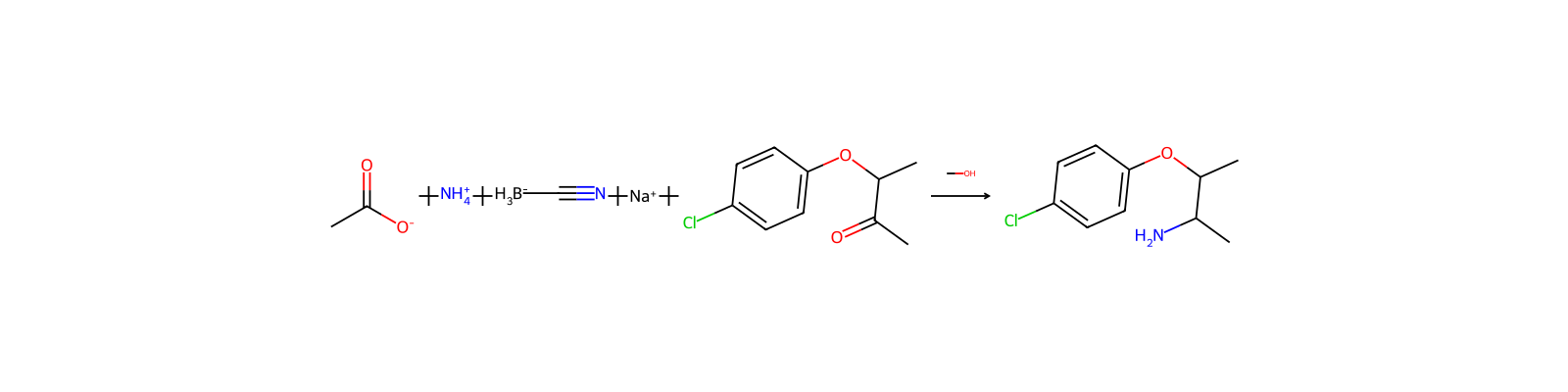
Reaktionsgleichung von HRID 925
HRID 925als Edukt
Reaktionsgleichung von HRID 1175
HRID 1175als Edukt
Reaktionsgleichung von HRID 1440
HRID 1440als Edukt
Reaktionsgleichung von HRID 1624
HRID 1624als Edukt
Reaktionsgleichung von HRID 1791
HRID 1791als Edukt
Reaktionsgleichung von HRID 1809
HRID 1809als Edukt
ZurückSeite 1 von 1168

Notizen zur Verbindung

Auf dieser SeiteGrundinformationenÜberblickNamen und BezeichnerEigenschaftenSicherheit und RegulatorischesChemie und IndustrieZugehörige ReaktionenNotizen zur Verbindung
CAS
25895-60-7
PubChem CID
5003444
DTXSID
DTXSID40894864
UNII
C4I8C58P9T
EC Number
247-317-2
Merck
14 · 14,8606
BRN
4152656 · 4152656
Stabilität
Stable. Hygroscopic. Reacts violently with water, giving off and igniting hydrogen. Do not use water on fires involving this chemical - instead use dry soda ash. Incompatible with strong acids, water, strong oxidizing agents.
InChI
1S/CH3BN.Na/c2-1-3;/h2H3;/q-1;+1
InChIKey
CVDUGUOQTVTBJH-UHFFFAOYSA-N
SMILES
[Na+].[BH3-]C#N
CAS Datenbank
25895 · 25895-60-7(CAS DataBase Reference)
EPA chemische Informationen
Borate(1-), (cyano-.kappa.C)trihydro-, sodium, (T-4)- (25895-60-7)
10-21
wgk
1
tsca
TSCA listed
ridadr
UN 3179 4.1/PG 2
hs_code
28500020
risk_code
26/27/28-32-34-50/53-16-15-11-51/53-36-23/24/25-19-14-40-36/37/38
hazard_code
T+,N,T,F
hazard_note
Toxic/Highly Flammable
safety_code
26-28-36/37/39-45-60-61-8-50A-43-28A-1-16-36/37
hazard_class
6.1
packing_group
I
Speicherklasse
4.3 - Hazardous materials which set free flammable gases upon contact with water
Hazard Classifications
Acute Tox. 2 DermalAcute Tox. 2 InhalationAcute Tox. 2 OralAquatic Acute 1Aquatic Chronic 1Eye Dam. 1Flam. Sol. 1Skin Corr. 1BWater-react 1

VerwendenSodium Cyanoborohydride is a commonly used as a reagent in the reductive amination of aldehydes and ketones and in the reductive alkylation of amines. It is also used in the synthesis of a novel phenolate-bridged dilanthanum(III) complex of interest as a model for metalloproteins as well as for its importance in basic and applied chemistry.

Darstellung · 1 Eintrag

synthetischeSynthesis of Sodium cyanoborohydride(NaBH3CN): NaBH3CN was made by stirring equimolar BH3·THF (~1 M) with NaCN in THF in excellent yield.To a rapidly stirred slurry of sodium borohydride (80.2g, 2.09 mol) in THF (1000mL) in a 2-L flask is added a solution of hydrogen cyanide in THF (294g containing 58.8g of hydrogen cyanide) at 25°C. Evolution of hydrogen occurs slowly during the addition. Following the addition, the reaction mixture is stirred for 1 h at 25°C and then heated at reflux until hydrogen evolution has ceased. Filtration followed by vacuum removal of THF gives white solid sodium cyanoborohydride; yield 120g (91%).
Vor- und nachgelagerte Produkte

Vorgelagerte Rohstoffe

Cyclopropanecarboxamide, 1-(3,4-dichlorophenyl)-N-[(4-fluorophenyl)methyl]-2-formyl-N-methyl-, (1S,2R)-(1,3-Dioxolan-2-ylmethyl)triphenylphosphoniumbromidTetrahydrofuran

Nachgelagerte Produkte

N,N-Dimethylpiperidin-4-aminN-isopropyl-2-(piperazin-1-yl)pyridin-3-amine1-Cyclopropylpiperazine3-Dimethylaminophenylboronic acidEnalaprilNetilmicin7-Bromo-1,2,3,4-tetrahydro-quinoline hydrochloride6-bromo-3,4-dihydro-3-nitro-2H-chromeneLisinopril Dihydrate4-N-Boc-4-N-Methyl-aminopiperidine1-(Cyclopropylmethyl)piperazine2-Aminocyclohexanecarbonitrile1-PiperonylpiperazinN-Methyl-4-anisidinethyl indoline-6-carboxylatetert-Butyl 4-hydrazinylpiperidine-1-carboxylate4-(1-Pyrrolidinyl)piperidinIndoline-6-carboxylic acidN-Boc-4-(Cyclopropylmethyl)piperazine1-Boc-4-Methylaminopiperidine4-Aminopyrimidine1-(3-Pyrrolidinopropyl)piperazine