StartseiteMCPWorkbenchSkills
StartseiteWorkbenchBenachrichtigungenMein Bereich
llms.txt · MCP-AnleitungDatenschutz · Nutzungsbedingungen · Supportv1.8.0
  1. Startseite
  2. /Verbindung

4-Nitro-1,2-phenylendiamin

4-Nitro-1,2-phenylenediamine

HCID 5111791
Neue NotizNeue ReaktionAnfrage stellen
Druckvorschau

Daten werden ergänzt – lade die Seite später neu, um den aktuellen Stand zu sehen

GrundinformationenÜberblickNamen und BezeichnerEigenschaftenSicherheit und RegulatorischesChemie und IndustrieZugehörige ReaktionenNotizen zur Verbindung
TeilstruktursucheÄhnliche Strukturen suchen

Grundinformationen

CAS
99-56-9
Standard-SMILES
Nc1ccc([N+](=O)[O-])cc1N
InChIKey
RAUWPNXIALNKQM-UHFFFAOYSA-N
Summenformel
C6H7N3O2
Durchschnittliche Molmasse
153,14 g/mol
Monoisotopische Masse
153,05382646

Überblick

4-nitro-o-phenylenediamine appears as dark red needles or red solid. (NTP, 1992)

Namen und Bezeichner

Bevorzugter Name
4-Nitro-1,2-phenylenediamine
IUPAC
4-nitrobenzene-1,2-diamine
Lokaler Name
4-Nitro-1,2-phenylendiamin
Englischer Name
4-Nitro-o-phenylenediamine
Summenformel
C6H7N3O2
Molmasse
153.14

Namen und Synonyme

4-Nitro-o-phenylenediamine99-56-94-Nitro-1,2-phenylenediamine1,2-Diamino-4-nitrobenzene2-Amino-4-nitroanilinep-Nitro-o-phenylenediamine1,2-Benzenediamine, 4-nitro-4-Nitro-1,2-diaminobenzene3,4-Diaminonitrobenzene4-Nitro-1,2-benzenediamine4-Nopd4-Nop
Weitere Namen anzeigen
4-nitrobenzene-1,2-diamine4-no4NOPPDA202-766-3
4-N-o-Pda4NDBNCI-C03941O-PHENYLENEDIAMINE, 4-NITRO-DTXSID90209585A9AX7Y0TTC.I. 76020CI 76020

Datenbank-Bezeichner

CAS
99-56-9
PubChem CID
5111791
DTXSID
DTXSID9020958
ChEMBL
CHEMBL433721
ChEBI
CHEBI:67116
UNII
5A9AX7Y0TT
EC Number
202-766-3
Nikkaji
J3.993D

Eigenschaften

Berechnete StruktureigenschaftenWird ergänzt

XLogP
0,9
Polarare Oberfläche (TPSA)
97,9 Ų
H-Brücken-Donoren
2
H-Brücken-Akzeptoren
4
Frei drehbare Bindungen
0
Schwere Atome
11
Formalladung
0
Komplexität
156

Experimentelle und physikochemische Eigenschaften

Chemical ClassesNitrogen Compounds -> Nitroanilines
Cosmetics · 2 Einträge

Cosmetic ingredients (4-Nitro-o-Phenylenediamine) -> CIR (Cosmetic Ingredient Review)

Hair dyeing

LogP · 3 Einträge

log Kow = 0.88

0.88

0.88

Color/FormDark red needles from dilute alcohol
Solubility · 4 Einträge

less than 1 mg/mL at 68.9 °F (NTP, 1992)

Soluble in acid

Sparingly sol in water; sol in aq soln of hydrochloric acid

Solubility in water: poor

Melting Point · 3 Einträge

390 to 394 °F (NTP, 1992)

199.5 °C

201 °C

Vapor Pressure0.000109 [mmHg]
Physical Description · 3 Einträge

4-nitro-o-phenylenediamine appears as dark red needles or red solid. (NTP, 1992)

Sicherheit und Regulatorisches

Sicherheitsangaben dienen nur zur Orientierung und ersetzen weder das Sicherheitsdatenblatt (SDB) des Lieferanten noch geltende Vorschriften oder eine fachliche Bewertung.

GHS-Klassifizierung

GHS Classification · 6 Einträge

Warning

H302 (100%): Harmful if swallowed [Warning Acute toxicity, oral]

P261, P264, P270, P272, P280, P301+P317, P302+P352, P321, P330, P333+P317, P362+P364, and P501 (click each P-code to see the statement)

Aggregated GHS information provided per 86 reports by companies from 10 notifications to the ECHA C&L Inventory. Each notification may be associated with multiple companies.

Warning

H302: Harmful if swallowed [Warning Acute toxicity, oral]

Gefahrenhinweise

Regulatory Information · 2 Einträge

Chemical: 1,2-Benzenediamine, 4-nitro-

4-Nitro-1,2-phenylenediamine: Does not have an individual approval but may be used under an appropriate group standard

Other Safety InformationIMAP assessments - 1,2-Benzenediamine, 4-nitro- and its dihydrochloride salt: Human health tier II assessment
DOT LabelPoison
Fire Hazards · 2 Einträge

Flash point data for this chemical are not available; however, it is probably combustible. (NTP, 1992)

Combustible. Gives off irritating or toxic fumes (or gases) in a fire.

Health HazardsSYMPTOMS: Symptoms of exposure to this compound include irritation of the skin, eyes, mucous membranes and upper respiratory tract, and allergic skin reaction.
Hazards Summary · 1 Eintrag

May cause skin sensitization; [ICSC] A skin, eye, mucous membrane, and respiratory tract irritant; Highly toxic by ingestion and inhalation; [CAMEO] An irritant; May cause skin sensitization; [MSDSonline] Search PubMed for name and CAS#: no results;

Chemie und Industrie

Pharmakologische Informationen

Mechanism of Action · 1 Eintrag

4-Nitro-o-phenylenediamine (NOP) is a powerful direct-acting mutagen which demonstrates significant enhancement in mutagenicity when exposed to plant enzymatic systems. Evidence implicating the involvement of peroxidactic oxidation in NOP activation has been obtained from plant-cell suspension and isolated enzyme experiments. Using selected cytochrome P450 and peroxidase enzyme inhibitors in conjunction with Salmonella typhimurium strain TA98 and intact plant-cell activating systems as well as isolated horseradish peroxidase enzyme /the authors/ have further investigated NOP activation by plant systems. The activation of NOP by both plant cells and by horseradish peroxidase was suppressed by the P450 inhibitors methimazole and (+)-catechin and by the peroxidase inhibitors diethyldithiocarbamate and potassium cyanide, but was not suppressed by the P450 inhibitors metyrapone and 7,8-benzoflavone. In addition, peroxidase enzymatic activity was measured and found to be inhibited by methimazole, diethyldithiocarbamate and potassium cyanide but not by (+)-catechin. The data strongly support the involvement of exogenous peroxidase in the plant activation of NOP, but point to a complex metabolic system that requires multistep processing before full mutagenic potential of the plant-activated component of NOP is expressed.

MeSH Pharmacological Classification · 2 Einträge

Substances that increase the risk of NEOPLASMS in humans or animals. Both genotoxic chemicals, which affect DNA directly, and nongenotoxic chemicals, which induce neoplasms by other mechanism, are included.

Substances used for the detection, identification, analysis, etc. of chemical, biological, or pathologic processes or conditions. Indicators are substances that change in physical appearance, e.g., color, at or approaching the endpoint of a chemical titration, e.g., on the passage between acidity and alkalinity. Reagents are substances used for the detection or determination of another substance by chemical or microscopical means, especially analysis. Types of reagents are precipitants, solvents, oxidizers, reducers, fluxes, and colorimetric reagents. (From Grant & Hackh's Chemical Dictionary, 5th ed, p301, p499)

Verwendung und Herstellung

Zugehörige Reaktionen

101
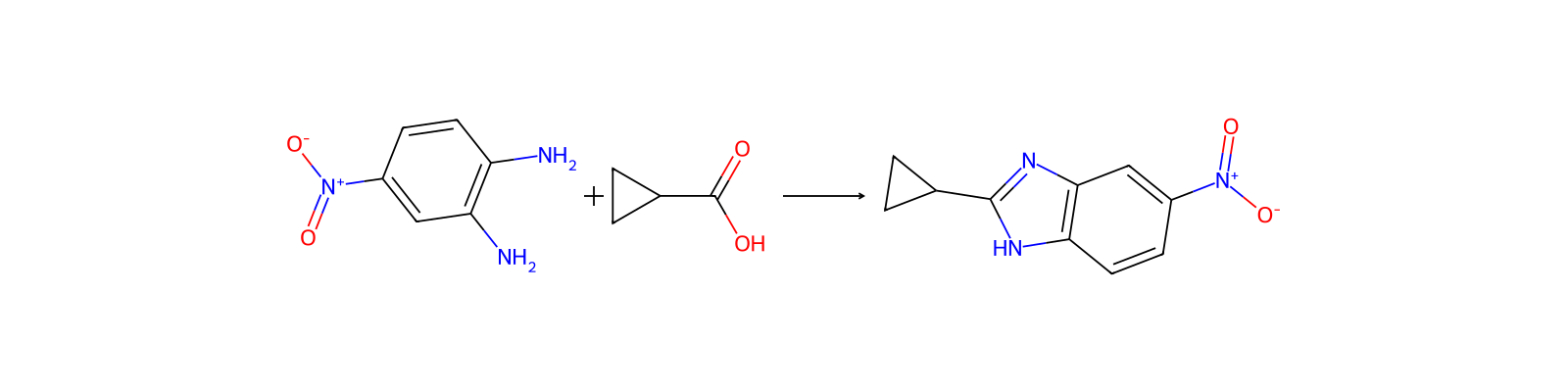
Reaktionsaufzeichnung erstellen
Reaktionsgleichung von HRID 13487
HRID 13487als Eduktuspto-grants-2010_06
Reaktionsgleichung von HRID 19744
HRID 19744als Eduktuspto-grants-2010_06
Reaktionsgleichung von HRID 26704
HRID 26704als Eduktuspto-grants-1979_04
Reaktionsgleichung von HRID 56616
HRID 56616als Eduktuspto-grants-2016_09
Reaktionsgleichung von HRID 118874
HRID 118874als EduktTraining data from https://doi.org/10.1039/C8SC04228D (2/10)
Reaktionsgleichung von HRID 171634
HRID 171634als EduktTraining data from https://doi.org/10.1039/C8SC04228D (9/10)
Reaktionsgleichung von HRID 230226
HRID 230226als Eduktuspto-grants-2009_07
Reaktionsgleichung von HRID 230228
HRID 230228als Eduktuspto-grants-2009_07
Seite 1 von 13

Notizen zur Verbindung

Wird geladen…

Auf dieser SeiteGrundinformationenÜberblickNamen und BezeichnerEigenschaftenSicherheit und RegulatorischesChemie und IndustrieZugehörige ReaktionenNotizen zur Verbindung
Weitere Aktionen
Neue NotizNeue ReaktionAnfrage stellen

Dark red solid; [Merck Index] Brown or dark red crystalline powder; [MSDSonline]

RED POWDER.

Dissociation ConstantspKa = 2.61 (conjugate acid)
Collision Cross Section126.2 Ų [M-H]- [CCS Type: DT; Buffer gas: N2; Ionization: ESI-; Dataset: TOXCAST; Source Identifier: DTXSID9020958]

Physikochemische Eigenschaften

Schmelzpunkt
199 · 199-201 °C (lit.)
Siedepunkt
276.04 °C · 276.04°C (rough estimate)
Dichte
1.3682 · 1.3682 (rough estimate)
Brechungsindex
1.691 · 1.6910 (estimate)
storage temp.
Keep in dark place,Inert atmosphere,Room temperature
Löslichkeit
1 N · 1 N HCl: ethanol, 1:1: soluble50mg/mL
Aggregatzustand
Powder
pka
2.06 · 2.06±0.10(Predicted)
Farbe
Brown-red
Wasserlöslichkeit
1.2 g/L · 1.2 g/L (20 ºC)
Merck
14 · 14,6622
BRN
608106 · 608106
Henry's Law Constant
1.3 · 1.3×106 mol/(m3Pa) at 25℃, HSDB (2015)
Stabilität
Stable. Incompatible with strong acids, strong reducing agents, strong oxidizing agents, acid chlorides, acid anhydrides.
Kosmetik-Inhaltsstoffe Funktionen
HAIR DYEING
InChI
1S/C6H7N3O2/c7-5-2-1-4(9(10)11)3-6(5)8/h1-3H,7-8H2
InChIKey
RAUWPNXIALNKQM-UHFFFAOYSA-N
SMILES
Nc1ccc(cc1N)[N+]([O-])=O
CAS Datenbank
99 · 99-56-9(CAS DataBase Reference)
EPA chemische Informationen
Nitro-o-phenylenediamine (99-56-9)
Reactive GroupNitro, Nitroso, Nitrate, and Nitrite Compounds, Organic
Special Reports · 2 Einträge

Cosmetic Ingredient Review; 2-Nitro-p-Phenylenediamine and 4-Nitro-o-Phenylenediamine. JACT 4(3): 161-202, 1985; Re-Review: International Journal of Toxicology. 25(S2), 2006. The 1985 safety assessment of 2-nitro-p-phenylenediamine and 4-nitro-o-phenylenediamine was published with the conclusion "for those persons not sensitized, the Expert Panel Concludes that 2-nitro-p-phenylenediamine and 4-nitro-o-phenylenediamine are safe as hair dye ingredients at the current concentration of use" ... Studies available since that safety assessment was completed, along with updated information regarding uses and use concentrations, were considered by the 2006 CIR Expert Panel. The Panel determined to not reopen this safety assessment.

DHEW/NCI; Bioassay of 4-Nitro-o-phenylenediamine for Possible Carcinogenicity (1979) Technical Rpt Series No. 180 DHEW Pub No. (NIH) 79-1736 concludes that under the conditions of this bioassay, dietary administration of 4-nitro-o-phenylenediamine was not carcinogenic in Fischer 344 rats or B6C3F1 mice.

TSCA Requirements · 1 Eintrag

Pursuant to section 8(d) of TSCA, EPA promulgated a model Health and Safety Data Reporting Rule. The section 8(d) model rule requires manufacturers, importers, and processors of listed chemical substances and mixtures to submit to EPA copies and lists of unpublished health and safety studies. 1-2-Benzenediamine, 4-nitro- is included on this list.

Reactivity Profile4-NITRO-O-PHENYLENEDIAMINE is incompatible with strong oxidizing agents, strong acids, strong reducing agents, acid chlorides and acid anhydrides. (NTP, 1992)
Chemical DangersDecomposes on burning. This produces toxic fumes including nitrogen oxides. Reacts with strong acids, strong oxidants and strong reducing agents.
Air and Water ReactionsInsoluble in water.

Sicherheit und Schutzausrüstung

Fire Fighting · 2 Einträge

Fires involving this material can be controlled with a dry chemical, carbon dioxide or Halon extinguisher. (NTP, 1992)

Use water spray, powder.

First Aid Measures · 4 Einträge

Fresh air, rest.

Remove contaminated clothes. Rinse skin with plenty of water or shower.

First rinse with plenty of water for several minutes (remove contact lenses if easily possible), then refer for medical attention.

Rinse mouth.

First Aid · 1 Eintrag

EYES: First check the victim for contact lenses and remove if present. Flush victim's eyes with water or normal saline solution for 20 to 30 minutes while simultaneously calling a hospital or poison control center. Do not put any ointments, oils, or medication in the victim's eyes without specific instructions from a physician. IMMEDIATELY transport the victim after flushing eyes to a hospital even if no symptoms (such as redness or irritation) develop.

Safe StorageSeparated from incompatible materials. See Chemical Dangers.
Fire Fighting ProceduresWater spray, powder.
Cleanup MethodsSweep spilled substance into containers; if appropriate, moisten first to prevent dusting.
Nonfire Spill Response · 1 Eintrag

SMALL SPILLS AND LEAKAGE: If a spill of this chemical occurs, FIRST REMOVE ALL SOURCES OF IGNITION, then you should dampen the solid spill material with acetone and transfer the dampened material to a suitable container. Use absorbent paper dampened with acetone to pick up any remaining material. Seal your contaminated clothing and the absorbent paper in a vapor-tight plastic bag for eventual disposal. Solvent wash all contaminated surfaces with acetone followed by washing with a soap and water solution. Do not reenter the contaminated area until the Safety Officer (or other responsible person) has verified that the area has been properly cleaned.

Disposal Methods · 1 Eintrag

SRP: The most favorable course of action is to use an alternative chemical product with less inherent propensity for occupational exposure or environmental contamination. Recycle any unused portion of the material for its approved use or return it to the manufacturer or supplier. Ultimate disposal of the chemical must consider: the material's impact on air quality; potential migration in soil or water; effects on animal, aquatic, and plant life; and conformance with environmental and public health regulations.

Spillage DisposalPersonal protection: particulate filter respirator adapted to the airborne concentration of the substance. Sweep spilled substance into covered containers. If appropriate, moisten first to prevent dusting.
Preventive MeasuresPREVENT DISPERSION OF DUST! STRICT HYGIENE! Do not eat, drink, or smoke during work.
Isolation and EvacuationExcerpt from ERG Guide 153 [Substances - Toxic and/or Corrosive (Combustible)]:
Eye PreventionWear safety goggles.

Toxikologische Informationen

Interactions · 5 Einträge

The antimutagenic activity of celecoxib was determined using histidine mutant Salmonella typhimurium strains TA98, TA100, TA102 and TA1535 against directly acting mutagens /including / 4-nitro-o-phenylenediamine (NPDA) ...and mutagens needing activation ... . Celecoxib inhibited ... NPDA-induced mutations of TA100. ... At concentrations of 0.2 mg/plate, celecoxib significantly inhibited NPDA-...induced mutations of TA98 by 52.5 ...%, ... (P < 0.001 ... ). ...

... Antimutagenicity of the 3-hydroxy-3-methylgutaryl-CoA (HMG-CoA) reductase inhibitors atorvastatin and lovastatin was studied using the Ames Salmonella typhimurium assay. Directly acting mutagens, sodium azide (NaN(3)) and 4-nitro-o-phenylenediamine (NPDA), were used to induce mutation in Salmonella strains TA98 and TA100. The antimutagenicity of lovastatin and atorvastatin was found to be significant (p < 0.01) and dose-dependent. The percentage inhibition of a 3 mg lovastatin-treated plate was found to be 79.9% and 61.8% against NPDA- and NaN(3)-induced mutation to TA98 and TA100, respectively. Atorvastatin (0.5 mg/plate) inhibited NPDA-and NaN(3)-induced mutation to TA98 and TA100 by 78.6% and 45.5%, respectively. Atorvastatin showed antimutagenic activity at lower concentrations than lovatstatin. ...

... honeybee (Apis mellifera) venom, ... collected in the State of São Paulo, Brazil, ... acted against the mutagenicity of 4-nitro-o-phenylenediamine /in Salmonella typhimurium TA98/ ...

Water, acetone and chloroform extracts of Emblica officinalis Gaertn. (Indian gooseberry)fruit reduced sodium azide and 4-nitro-o-phenylenediamine induced his+ revertants significantly in TA100 and TA97 a strains respectively of S. typhimurium. The chloroform extract was less active as compared to water and acetone extracts. Autoclaving of water extract for 15 min did not reduce its activity. ...

For more Interactions (Complete) data for 4-NITRO-1,2-DIAMINOBENZENE (9 total), please visit the HSDB record page.

Ecotoxicity ValuesLC50; Species: Tetrahymena pyriformis (Ciliate); Conditions: freshwater, static, 28 °C; Concentration: 46000 ug/L for 60 hr (95% confidence interval: 20650-67820 ug/L); Effect: population change
Environmental Fate · 3 Einträge

TERRESTRIAL FATE: Based on a classification scheme(1), an estimated Koc value of 72(SRC), determined from a log Kow of 0.88(2) and a regression-derived equation(3), indicates that 4-nitro-1,2-diaminobenzene is expected to have high mobility in soil(SRC). However, aromatic amines are expected to bind strongly to humus or organic matter in soils due to the high reactivity of the aromatic amino group(4), suggesting that mobility may be much lower in some soils(SRC). Volatilization of 4-nitro-1,2-diaminobenzene from moist soil surfaces is not expected to be an important fate process(SRC) given an estimated Henry's Law constant of 7.4X10⁻¹² atm-cu m/mole(SRC), using a fragment constant estimation method(5). 4-Nitro-1,2-diaminobenzene is not expected to volatilize from dry soil surfaces(SRC) based upon an estimated vapor pressure of 1.1X10⁻⁴ mm Hg(SRC), determined from a fragment constant method(6). Information is not available regarding the biodegradation potential of 4-nitro-1,2-diaminobenzene; however, 33% percent of structurally-related o-phenylenediamine was removed over 120 hours based on chemical oxygen demand measurements and using an activated sludge inoculum(7).

AQUATIC FATE: Based on a classification scheme(1), an estimated Koc value of 72(SRC), determined from a log Kow of 0.88(2) and a regression-derived equation(3), indicates that 4-nitro-1,2-diaminobenzene is expected to adsorb to suspended solids and sediment(SRC). Volatilization from water surfaces is not expected(3) based upon an estimated Henry's Law constant of 7.4X10⁻¹² atm-cu m/mole(SRC), developed using a fragment constant estimation method(4). According to a classification scheme(5), an estimated BCF of 3(SRC), from its log Kow(2) and a regression-derived equation(6), suggests the potential for bioconcentration in aquatic organisms is low(SRC). Information is not available regarding the biodegradation potential of 4-nitro-1,2-diaminobenzene; however, 33% percent of structurally-related o-phenylenediamine was removed over 120 hours based on chemical oxygen demand measurements and using an activated sludge inoculum(7).

ATMOSPHERIC FATE: According to a model of gas/particle partitioning of semivolatile organic compounds in the atmosphere(1), 4-nitro-1,2-diaminobenzene, which has an estimated vapor pressure of 1.1X10⁻⁴ mm Hg at 25 °C(SRC), determined from a fragment constant method(2), will exist in both the vapor and particulate phases in the ambient atmosphere. Vapor-phase 4-nitro-1,2-diaminobenzene is degraded in the atmosphere by reaction with photochemically-produced hydroxyl radicals(SRC); the half-life for this reaction in air is estimated to be 17 hours(SRC), calculated from its rate constant of 2.2X10⁻¹¹ cu cm/molecule-sec at 25 °C(SRC) that was derived using a structure estimation method(3). Particulate-phase 4-nitro-1,2-diaminobenzene may be removed from the air by wet or dry deposition(SRC). 4-Nitro-1,2-diaminobenzene absorbs light at wavelengths above 290 nm(4) and therefore may be susceptible to direct photolysis by sunlight(SRC).

Adverse EffectsSkin Sensitizer - An agent that can induce an allergic reaction in the skin.
Toxicity SummarySafe in the present practices of use and concentration. Ingredient, concentration, and use information are available in documents discoverable at https://cir-reports.cir-safety.org
Ecotoxicity Excerpts · 1 Eintrag

/OTHER TERRESTRIAL SPECIES/ ... The toxicity of 10 benzamines was tested by the well diffusion assay technique against 18 common bacterial species including the nitrogen-fixing bacterium Azotobacter vinelandii. p-Phenylenediamine was found to be inhibitory to the growth of Aeromonas hydrophila and Pseudomonas fluorescens. o-Phenylenediamine was inhibitory to Escherichia coli, Klebsiella pnemoniae, Salmonella enteritidis, and Shigella sonnei. 2,5-Diaminotoluene was inhibitory to the growth of P. fluorescens and Streptococcus mitis. The growth of A. vinelandii was inhibited by p-phenylenediamine and 2,5-diaminotoluene in the well diffusion assay. p-Nitroaniline was also found to be inhibitory to the growth of A. vinelandii in Burk's nitrogen-free medium. The nitrogenase activity of A. vinelandii was inhibited by p-phenylenediamine, 2,5-diaminotoluene, p-nitroaniline, 2-nitro-p-phenylenediamine, 3-nitro-o-phenylenediamine, and 4-nitro-o-phenylenediamine. ...

Ongoing Test Status · 1 Eintrag

The following link will take the user to the National Toxicology Program (NTP) Test Agent Search Results page, which tabulates all of the "Standard Toxicology & Carcinogenesis Studies", "Developmental Studies", and "Genetic Toxicity Studies" performed with this chemical. Clicking on the "Testing Status" link will take the user to the status (i.e., in review, in progress, in preparation, on test, completed, etc.) and results of all the studies that the NTP has done on this chemical. [http://ntp-apps.niehs.nih.gov/ntp_tox/index.cfm?fuseaction=ntpsearch.searchresults&searchterm=99-56-9]

ICSC Environmental DataEnvironmental effects from the substance have not been investigated adequately.
Medical SurveillanceRoutine checking of lips, tongue and nail beds of exposed personnel for signs of cyanosis. /Protect/ from exposure those individuals with anemia, cardiovascular or pulmonary diseases.
Soil Adsorption/Mobility · 1 Eintrag

The Koc of 4-nitro-1,2-diaminobenzene is estimated as 72(SRC), using a log Kow of 0.88(1) and a regression-derived equation(2). According to a classification scheme(3), this estimated Koc value suggests that 4-nitro-1,2-diaminobenzene is expected to have high mobility in soil. However, aromatic amines are expected to bind strongly to humus or organic matter in soils due to the high reactivity of the aromatic amino group(4), suggesting that mobility may be much lower in some soils(SRC).

TSCA Test Submissions · 1 Eintrag

The teratogenicity of 2-amino-4-nitroaniline (ANA) was evaluated in pregnant outbred albino CD-1 mice (118/group, 11-47/treated group) exposed to ANA by subcutaneous injection at dose levels of 0, 16, 32, 64, 128, 256, 512, 768 or 1024 mg/kg/day on gestation days (GD) 6-15. The mice were sacrificed on GD 18. Significant dose-related differences between treated and control animals were observed in the following: decreased weight gain of dams during pregnancy and average fetal weight (256 mg/kg/day and above dose levels), decreased average number of live fetuses/dam (768 mg/kg/day level), increased mortality (6 of 36 and 7 of 37 at dose levels of 768 and 1024 mg/kg/day, respectively, versus no treatment related mortalities in lower dose levels or in controls), increased average percentage malformed fetuses (256 mg/kg/day and above), increased cleft palate (the major malformation overall, significant by Fisher's Exact Test (FE Test) for doses of 256 mg/kg/day and above), malformed and missing major blood vessels, including missing subclavian artery and aortic arch (512 and 1024 mg/kg/day levels), and increased incidence of white lesions in the left ventricle of the fetal heart which tested positive for calcium (512 mg/kg/day and above).

Natural Pollution Sources4-Nitro-1,2-diaminobenzene is not known to occur as a natural product.

Regulatorische Informationen

TSCA Requirements · 1 Eintrag

Pursuant to section 8(d) of TSCA, EPA promulgated a model Health and Safety Data Reporting Rule. The section 8(d) model rule requires manufacturers, importers, and processors of listed chemical substances and mixtures to submit to EPA copies and lists of unpublished health and safety studies. 1-2-Benzenediamine, 4-nitro- is included on this list.

Sicherheitsdaten

wgk
3
tsca
TSCA listed
ridadr
2811
hs_code
29215119
RTECS-Nr.
ST2975000
risk_code
22-43-68-40-36/37/38-20/21/22
Toxizität
LD50 oral in rat: 681mg/kg
hazard_code
Xn
safety_code
36/37-45-36-26-22
hazard_class
6.1
packing_group
II
Speicherklasse
11 - Combustible Solids
Giftige Stoffe Daten
99-56-9(Hazardous Substances Data)
Hazard Classifications
Acute Tox. 4 OralSkin Sens. 1
Uses · 6 Einträge

CIR ingredient: 4-Nitro-o-Phenylenediamine

Used as a dye in semi-permanent and permanent hair coloring products; as a colorimetric reagent for determination of ascorbic and dehydroascorbic acids in foods; as a chelating agent for the gas chromatographic determination of selenium in biological materials; [HSDB] Reagent for alpha-keto acids; [Merck Index]

Dressing Hair [Category: Other]

1,2-DIAMINO-4-NITROBENZENE IS USED IN SEMI-PERMANENT... & PERMANENT HAIR COLORING PRODUCTS. IT PRODUCES BROWN, RED & BLOND SHADES ON HAIR. IT HAS TYPICALLY BEEN USED IN MEDIUM-BROWN...& MEDIUM-RED...DYE FORMULATIONS. IT HAS ALSO BEEN USED IN BLEACH-TONER FORMULATIONS FOR REDDISH-BLOND SHADES...

/4-Nitro-o-phenylenediamine/ (4NOPD) is ... used as a chelating agent for the gas chromatographic determination of selenium in biological materials.

1,2-DIAMINO-4-NITROBENZENE IS...REPORTEDLY USED AS... COLORIMETRIC REAGENT FOR DETERMINATION OF ASCORBIC & DEHYDROASCORBIC ACIDS IN FOODS...

U.S. Imports · 2 Einträge

(1972) 2.50X10+5 GRAMS (PRINCPL CUSTMS DISTS)

(1975) 1.07X10+6 GRAMS (PRINCPL CUSTMS DISTS)

U.S. Production · 2 Einträge

(1972) PROBABLY GREATER THAN 9.08X10+5 GRAMS

(1975) PROBABLY GREATER THAN 4.54X10+5 GRAMS

Methods of ManufacturingPrepared by reduction of 2,4-dinitroaniline using H2S in ammonia water.
Formulations/Preparationso-Phenylenediamine, 4-nitro-, is available in the US as a commercial grade with the following typical specifications: assay, 98% min; melting range, 200-204 °C; residue on ignition, 0.3% max; iron, 150 mg/kg max; loss on drying, 0.5% max.
Use ClassificationCosmetics -> Hair dyeing
General Manufacturing Information1,2-Benzenediamine, 4-nitro-: ACTIVE

Vor- und nachgelagerte Produkte

Vorgelagerte Rohstoffe

2,4-DinitroanilinActivated carbon,decolorBenzenamine, N-hydroxy-2,4-dinitro-Benzol-1,2,4-triyltriaminEthanol2,5-Dinitroaniline2-Chlor-5-nitroanilin2',4'-Dinitroacetanilid2,4-Dinitroanisol4'-Nitroacetanilid

Nachgelagerte Produkte

6-Aminoquinoxaline5-BROMO-6-ISOTHIOCYANATE QUINOXALINE5-Aminobenzimidazol-2-thiol5-Bromoquinoxalin-6-amine2-MERCAPTO-5-NITROBENZIMIDAZOLE6-NITRO-1H-BENZOIMIDAZOLE-2-THIOLPlatinum,dichlorobis(dimethylphenylphosphine)-, (SP-4-2)-2-Nitro-p-phenylendiamin1H-Benzimidazole,1-methyl-5-nitro-(9CI)5-Nitrobenzimidazol4-(5-Nitro-H-benzimidazol-2-yl)anilin
Ergänzende Hinweise · 1 Eintrag

DefinitionChEBI: 4-nitro-1,2-phenylenediamine is the primary amino compound that is 1,2-phenylenediamine (o-phenylenediamine) substituted at the 4- (para-) position by a nitro group. It is a primary amino compound and a C-nitro compound. It is functionally related to a 1,2-phenylenediamine.