StartseiteMCPWorkbenchSkills
StartseiteWorkbenchBenachrichtigungenMein Bereich
llms.txt · MCP-AnleitungDatenschutz · Nutzungsbedingungen · Supportv1.8.0
  1. Startseite
  2. /Verbindung

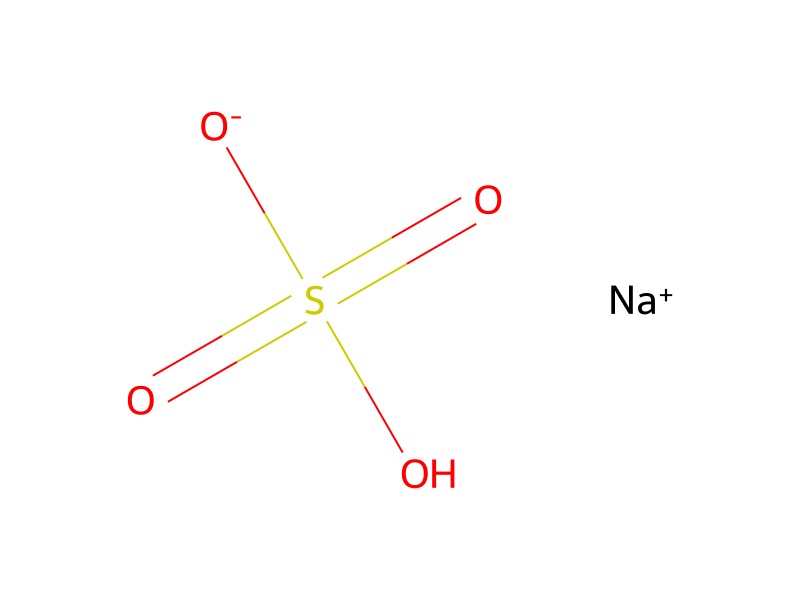
Natriumhydrogensulfat

Sodium Bisulfate

HCID 516919
Neue NotizNeue ReaktionAnfrage stellen
Druckvorschau

Daten werden ergänzt – lade die Seite später neu, um den aktuellen Stand zu sehen
GrundinformationenÜberblickNamen und BezeichnerEigenschaftenSicherheit und RegulatorischesChemie und IndustrieZugehörige ReaktionenNotizen zur Verbindung
TeilstruktursucheÄhnliche Strukturen suchen

Grundinformationen

CAS
7681-38-1
Standard-SMILES
O=S(=O)([O-])O.[Na+]
InChIKey
WBHQBSYUUJJSRZ-UHFFFAOYSA-M
Summenformel
HNaSO4
Durchschnittliche Molmasse
120,06 g/mol
Monoisotopische Masse
119,94932379

Überblick

Bisulfate, aqueous solution is a white crystalline solid dissolved in water. It is corrosive to metals and tissue.

Namen und Bezeichner

Bevorzugter Name
Sodium Bisulfate
IUPAC
sodium hydrogen sulfate
Lokaler Name
Natriumhydrogensulfat
Englischer Name
Sodium bisulfate
Summenformel
NaHSO4
Molmasse
121.07

Namen und Synonyme

Sodium hydrogen sulfate7681-38-1SODIUM BISULFATESodium acid sulfateNitre cakeBisulfate of sodaSodium hydrogensulphateSodium hydrosulfateNiter cakesodium bisulphateWC-PerfectMonosodium sulfate
Weitere Namen anzeigen
SODIUM HYDROGEN SULPHATESodium bisulfate anhydrousgbsSodium bisufateSodium pyrosulfurateFanal
WC-SuperWC-KlosettreinigerSodium bisulfate, fusedSodium sulfate, NaHSO4Sulfuric acid, monosodium saltMonosodium hydrogen sulfateSodium bisulfate, solid(DOT)BU8V88OWIQ

Datenbank-Bezeichner

CAS
7681-38-1
PubChem CID
516919
DTXSID
DTXSID3033983
ChEMBL
CHEMBL1200488
UNII
BU8V88OWIQ
EC Number
231-665-7
Nikkaji
J44.044B

Eigenschaften

Berechnete StruktureigenschaftenWird ergänzt

Polarare Oberfläche (TPSA)
85,8 Ų
H-Brücken-Donoren
1
H-Brücken-Akzeptoren
4
Frei drehbare Bindungen
0
Schwere Atome
6
Formalladung
0
Komplexität
93,2

Experimentelle und physikochemische Eigenschaften

Chemical ClassesOther Classes -> Sulfur Compounds
CosmeticsBuffering
pHSolutions are strongly acidic
Density2.43513 @25 °C
Melting PointMelting point equals 315 °C
Food Contact SubstancesFCS -> FDA Inventory of Food Contact Substances Listed in 21 CFR
Physical Description · 4 Einträge

Bisulfate, aqueous solution is a white crystalline solid dissolved in water. It is corrosive to metals and tissue.

Other Solid; Dry Powder; Liquid; Other Solid; Liquid

White, odourless crystals or granules

White crystals dissolved in water; [CAMEO] Hygroscopic crystals; [CHEMINFO]

Physikochemische Eigenschaften

Schmelzpunkt
315 °C · 315 °C

Sicherheit und Regulatorisches

Sicherheitsangaben dienen nur zur Orientierung und ersetzen weder das Sicherheitsdatenblatt (SDB) des Lieferanten noch geltende Vorschriften oder eine fachliche Bewertung.

GHS-Klassifizierung

GHS Classification · 6 Einträge

Danger

H318: Causes serious eye damage [Danger Serious eye damage/eye irritation]

P264+P265, P280, P305+P354+P338, and P317 (click each P-code to see the statement)

This chemical does not meet GHS hazard criteria for 0.3% (2 of 794) of reports.

Danger

H318 (99.6%): Causes serious eye damage [Danger Serious eye damage/eye irritation]

Gefahrenhinweise

Regulatory Information · 5 Einträge

Chemical: Sulfuric acid, monosodium salt

Regulation (EC) No 1333/2008 (amended)

Sulfuric acid, sodium salt (1:1) is listed on the EPA's Chemical Data Reporting (CDR) system. Manufacturers and importers of Sulfuric acid, sodium salt (1:1) are required to report information about their production and use of this chemical to the EPA under the Toxic Substances Control Act (TSCA). (40 eCFR Part 711)

Status: Active Update: 24-02-2020 https://echa.europa.eu/registration-dossier/-/registered-dossier/14458

Sodium hydrogen sulphate: Does not have an individual approval but may be used under an appropriate group standard

DOT LabelCorrosive
Fire Hazards · 2 Einträge

Excerpt from ERG Guide 154 [Substances - Toxic and/or Corrosive (Non-Combustible)]:

· Non-combustible, substance itself does not burn but may decompose upon heating to produce corrosive and/or toxic fumes.

Health Hazards · 2 Einträge

Excerpt from ERG Guide 154 [Substances - Toxic and/or Corrosive (Non-Combustible)]:

· TOXIC and/or CORROSIVE; inhalation, ingestion or skin contact with material may cause severe injury or death.

Hazards Summary

Chemie und Industrie

Pharmakologische Informationen

MeSH Pharmacological ClassificationAgents that are used to stimulate evacuation of the bowels.

Verwendung und Herstellung

Uses · 2 Einträge

Used as a bactericide and disinfectant; [ChemIDplus] Used to pickle metals, carbonize wool, bleach leather, and manufacture magnesia cements; [Merck Index]

Acid and Alkali Cleaning of Metals [Category: Clean]

U.S. Production2023: 250,000,000 - <400,000,000 lb
Consumer UsesProcessing aids not otherwise specified
Industry UsesBleaching agent
Household ProductsInformation on 18 consumer products that contain Sodium acid sulfate in the following categories is provided:
Use Classification · 5 Einträge

EPA Safer Chemical Functional Use Classes -> Antimicrobial Actives;Processing Aids and Additives

Safer Chemical Classes -> Green circle - The chemical has been verified to be of low concern

Food additives

Food Additives -> ACID -> JECFA Functional Classes

Cosmetics -> Buffering

General Manufacturing Information · 2 Einträge

Miscellaneous Manufacturing

Sulfuric acid, sodium salt (1:1): ACTIVE

Anwendungen

Verwendensodium bisulfate is an inorganic salt used as an anti-septic and a pH adjuster in cosmetic creams. Concentrated solutions can produce strong irritation.

Zugehörige Reaktionen

522
Reaktionsaufzeichnung erstellen
Reaktionsgleichung von HRID 6229
HRID 6229als Eduktuspto-grants-1993_09
Reaktionsgleichung von HRID 11817
HRID 11817als Eduktuspto-grants-2006_08
Reaktionsgleichung von HRID 22655
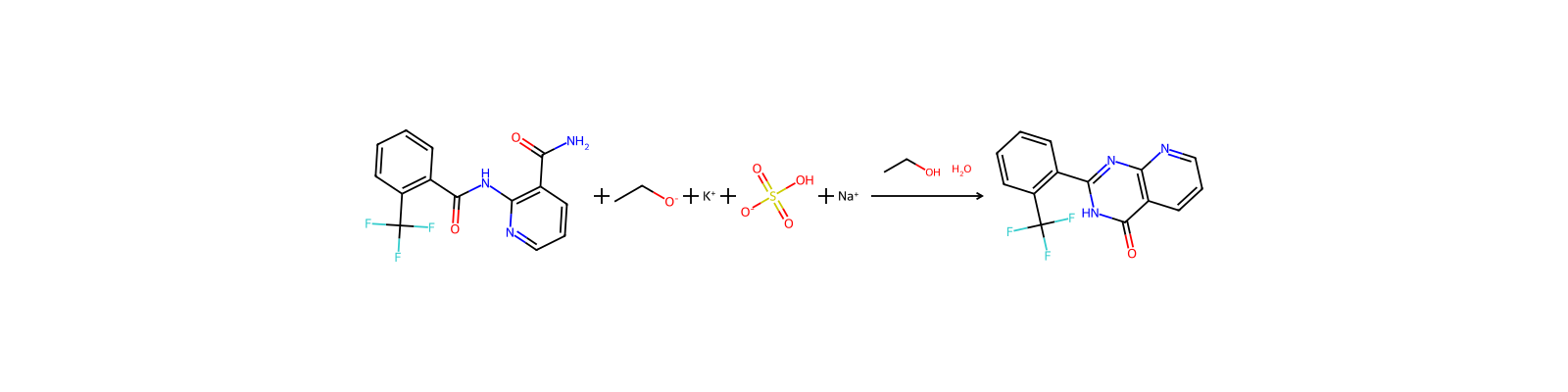
HRID 22655als Eduktuspto-grants-2005_02
Reaktionsgleichung von HRID 29154
HRID 29154als Lösungsmitteluspto-grants-2008_09
Reaktionsgleichung von HRID 38173
HRID 38173als Eduktuspto-grants-2013_09
Reaktionsgleichung von HRID 46310
HRID 46310als Eduktuspto-grants-2013_09
Reaktionsgleichung von HRID 71655
HRID 71655als Eduktuspto-grants-2014_09
Reaktionsgleichung von HRID 75208
HRID 75208als Eduktuspto-grants-2014_09
Seite 1 von 66

Notizen zur Verbindung

Wird geladen…

Auf dieser SeiteGrundinformationenÜberblickNamen und BezeichnerEigenschaftenSicherheit und RegulatorischesChemie und IndustrieZugehörige ReaktionenNotizen zur Verbindung
Weitere Aktionen
Neue NotizNeue ReaktionAnfrage stellen
Dichte
2.1 · 2.1
Aggregatzustand
Granules
pka
1.99 · 1.99
Farbe
White to light yellow
Wasserlöslichkeit
2 parts · soluble in 2 parts H2O, 1 part boiling H2O; decomposes in alcohol to sodium sulfate and H2SO4 [MER06]
Merck
13 · 13,8658
Stabilität
Stable. Incompatible with strong bases, strong oxidizing agents, sodium carbonate, sodium hypochlorite. May decompose upon exposure to moist air or water.
Kosmetik-Inhaltsstoffe Funktionen
BUFFERING
InChI
InChI=1S/Na.H2O4S.H/c;1-5(2,3)4;/h;(H2,1,2,3,4);
InChIKey
TTXJTWGBBUPRBF-UHFFFAOYSA-N
SMILES
S(O)(O)(=O)=O.[NaH]
CAS Datenbank
7681 · 7681-38-1(CAS DataBase Reference)
EPA chemische Informationen
Sodium bisulfate (7681-38-1)
· 1 Eintrag

Corrosive to metals and tissues; Toxic by ingestion, inhalation, or skin contact; [CAMEO] Aqueous solutions are strong acids; [Merck Index] Harmful if swallowed; Do not inhale dust or aerosol; may cause acute lung edema if inhaled; [MSDSonline] Based on animal studies, not a skin irritant; [CHEMINFO]

DOT ID and Guide2837 154
Reactive GroupSalts, Acidic
EPA Safer ChemicalChemical: Sodium bisulfate
Reactivity Profile · 1 Eintrag

Acidic salts, such as SODIUM BISULFATE, SOLUTION, are generally soluble in water. The resulting solutions contain moderate concentrations of hydrogen ions and have pHs of less than 7.0. They react as acids to neutralize bases. These neutralizations generate heat, but less or far less than is generated by neutralization of inorganic acids, inorganic oxoacids, and carboxylic acid. They usually do not react as either oxidizing agents or reducing agents but such behavior is not impossible. Many of these compounds catalyze organic reactions. The combination of calcium hypochlorite, sodium hydrogen sulfate, starch, and sodium carbonate, when compressed, caused the materials to incandescence, followed by explosion, [Ind. Eng. Chem., 1937, 15, 282].

Air and Water ReactionsDissolves in water to give strongly acidic solutions.
Hazard Classes and Categories · 4 Einträge

Eye Dam. 1 (99.6%)

Eye damage - category 1

Serious eye damage/eye irritation - Category 2

Eye Dam. 1

Sicherheit und Schutzausrüstung

Fire FightingExcerpt from ERG Guide 154 [Substances - Toxic and/or Corrosive (Non-Combustible)]:
Accidental Release Measures · 2 Einträge

· CALL 911. Then call emergency response telephone number on shipping paper. If shipping paper not available or no answer, refer to appropriate telephone number listed on the inside back cover.

· ELIMINATE all ignition sources (no smoking, flares, sparks or flames) from immediate area.

First Aid · 2 Einträge

Excerpt from ERG Guide 154 [Substances - Toxic and/or Corrosive (Non-Combustible)]:

General First Aid:

Exposure Control and Personal Protection· Wear positive pressure self-contained breathing apparatus (SCBA).
Nonfire Spill ResponseExcerpt from ERG Guide 154 [Substances - Toxic and/or Corrosive (Non-Combustible)]:
Isolation and Evacuation · 2 Einträge

Excerpt from ERG Guide 154 [Substances - Toxic and/or Corrosive (Non-Combustible)]:

Immediate precautionary measure

Protective Action Criteria (PAC) · 3 Einträge

8.4 [mg/m3]

92 [mg/m3]

550 [mg/m3]

Personal Protective Equipment (PPE)Excerpt from ERG Guide 154 [Substances - Toxic and/or Corrosive (Non-Combustible)]:
Emergency Response Planning GuidelinesSmall Fire

Toxikologische Informationen

Adverse EffectsDermatotoxin - Skin burns.

Sicherheitsdaten

F
3
wgk
1
tsca
TSCA listed
ridadr
3260
hs_code
28331900
RTECS-Nr.
VZ1860000
risk_code
41
hazard_code
Xi
safety_code
24-26
hazard_class
8
packing_group
II
Speicherklasse
11 - Combustible Solids
Hazard Classifications
Eye Dam. 1

Vor- und nachgelagerte Produkte

Nachgelagerte Produkte

Naphthalin-2,3-dicarbonsure3-BROMO-2,4-DICHLORO-5-FLUORONITROBENZENE1-(2,4-DICHLORO-5-FLUORO-3-METHOXYPHENYL)ETHANONE7-Chloro-1-cyclopropyl-6-fluoro-1,4-dihydro-8-methoxy-4-oxoquinoline-3-carboxylic acid2,4-DICHLORO-5-FLUORO-3-METHOXYNITRO-BENZENE6-IODO-PYRIDINE-2-CARBOXYLIC ACID METHYL ESTER2,4-DICHLORO-5-FLUORO-3-METHOXYBENZOIC ACID2,4-Dichloro-5-fluoro-3-methoxybenzoyl chloride1-AMINO-2,4-DICHLORO-5-FLUORO-3-METHOXYBENZENE4-CHLORO-2-METHYLPYRIMIDINE1-Boc-4-(aminomethyl)piperidine3-Aminomethyl-1-N-Boc-piperidine3-BROMO-2,6-DICHLORO-5-FLUORO-1-METHOXYBENZENE