
Bromodifluoroacetyl chloride

Grundinformationen
- CAS
3832-48-2- Standard-SMILES
O=C(Cl)C(F)(F)Br- InChIKey
LYJKGSALBRSKNL-UHFFFAOYSA-N- Summenformel
- C2BrClF2O
- Durchschnittliche Molmasse
- 193,37 g/mol
- Monoisotopische Masse
- 191,87891
Namen und Bezeichner
- Bevorzugter Name
- Bromodifluoroacetyl chloride
- IUPAC
- 2-bromo-2,2-difluoroacetyl chloride
- Englischer Name
- Bromodifluoroacetyl chloride
- Summenformel
- C2BrClF2O
- Molmasse
- 193.37
Namen und Synonyme
Bromodifluoroacetyl chloride3832-48-22-bromo-2,2-difluoroacetyl chlorideDTXSID90334487RefChem:570341DTXCID002855772-Bromo-2,2-difluoro-ethanoyl chloride671-811-0bromo(difluoro)acetyl chlorideMFCD00069081Bromodifluoroacetylchloride2-bromanyl-2,2-bis(fluoranyl)ethanoyl chloride
Weitere Namen anzeigen
Bromodifluoroacetylchloride97%acetyl chloride, bromodifluoro-Bromodifluoroacetyl chloride 97%2-Bromo-2,2-difluoroethanoyl chlorideAcetyl chloride, 2-bromo-2,2-difluoro-Bromodifluoroacetyl Chloride extrapure, 97%
A824108bromodifluoroacetic chlorideBromodi(fluoro)acetyl chlorideSCHEMBL11613142-bromo-2,2-difluoro-acetyl chlorideAKOS005173358FS-4964DB-022977
Datenbank-Bezeichner
- CAS
3832-48-2- PubChem CID
- 520892
- DTXSID
DTXSID90334487- EC Number
- 671-811-0
- Nikkaji
- J2.470.696F
Eigenschaften
Berechnete Struktureigenschaften
- XLogP
- 2,3
- Polarare Oberfläche (TPSA)
- 17,1 Ų
- H-Brücken-Donoren
- 0
- H-Brücken-Akzeptoren
- 3
- Frei drehbare Bindungen
- 1
- Schwere Atome
- 7
- Formalladung
- 0
- Komplexität
- 93
Physikochemische Eigenschaften
- Siedepunkt
- 50 °C · 50 °C
- Dichte
- 2.053 · 2.053±0.06 g/cm3(Predicted)
- Brechungsindex
- 1.3853 · 1.3853
- Aggregatzustand
- liquid
- Farbe
- Clear, colourless
- InChI
- InChI=1S/C2BrClF2O/c3-2(5,6)1(4)7
- InChIKey
- LYJKGSALBRSKNL-UHFFFAOYSA-N
- SMILES
- C(Cl)(C(Br)(F)F)=O
- CAS Datenbank
- 3832 · 3832-48-2(CAS DataBase Reference)
Sicherheit und Regulatorisches
GHS-Klassifizierung
GHS Classification
Danger
H226 (90.9%): Flammable liquid and vapor [Warning Flammable liquids];H314 (100%): Causes severe skin burns and eye damage [Danger Skin corrosion/irritation]
P210, P233, P240, P241, P242, P243, P260, P264, P280, P301+P330+P331, P302+P361+P354, P303+P361+P353, P304+P340, P305+P354+P338, P316, P321, P363, P370+P378, P403+P235, P405, and P501 (click each P-code to see the statement)
Aggregated GHS information provided per 44 reports by companies from 3 notifications to the ECHA C&L Inventory. Each notification may be associated with multiple companies.;Information may vary between notifications depending on impurities, additives, and other factors. The percentage value in parenthesis indicates the notified classification ratio from companies that provide hazard codes. Only hazard codes with percentage values above 10% are shown. For more detailed information, please visit ECHA C&L website.
Gefahrenhinweise
Hazard Classes and CategoriesFlam. Liq. 3 (90.9%);Skin Corr. 1B (100%)
Toxikologische Informationen
Treatment
EYES: irrigate opened eyes for several minutes under running water. INGESTION: do not induce vomiting. Rinse mouth with water (never give anything by mouth to an unconscious person). Seek immediate medical advice. SKIN: should be treated immediately by rinsing the affected parts in cold running water for at least 15 minutes, followed by thorough washing with soap and water. If necessary, the person should shower and change contaminated clothing and shoes, and then must seek medical attention. INHALATION: supply fresh air. If required provide artificial respiration.
Health Effects
Bromine vapour causes irritation and direct damage to the mucous membranes. Elemental bromine also burns the skin. The bromide ion is a central nervous system depressant and chronic exposure produces neuronal effects. This is called bromism and can result in central reactions reaching from somnolence to coma, cachexia, exicosis, loss of reflexes or pathologic reflexes, clonic seizures, tremor, ataxia, loss of neural sensitivity, paresis, papillar edema of the eyes, abnormal speech, cerebral edema, delirium, aggressiveness, and psychoses. (L625, L626, L627)
Exposure RoutesOral (L626) ; inhalation (L626) ; dermal (L626)
Toxicity Summary
Bromine is a powerful oxidizing agent and is able to release oxygen free radicals from the water in mucous membranes. These free radicals are also potent oxidizers and produce tissue damage. In additon, the formation of hydrobromic and bromic acids will result in secondary irritation. The bromide ion is also known to affect the central nervous system, causing bromism. This is believed to be a result of bromide ions substituting for chloride ions in the in actions of neurotransmitters and transport systems, thus affecting numerous synaptic processes. (L626, L627, A543)
Signs and Symptoms
Bromine vapour causes irritation and direct damage to the mucous membranes. Symptoms include lacrimation, rhinorrhoea, eye irritation with mucous secretions from the oropharyngeal and upper airways, coughing, dyspnoea, choking, wheezing, epistaxis, and headache. The bromide ion is a central nervous system depressant producing ataxia, slurred speech, tremor, nausea, vomiting, lethargy, dizziness, visual disturbances, unsteadiness, headaches, impaired memory and concentration, disorientation and hallucinations. This is called bromism. (L626, L627)
Carcinogen ClassificationNo indication of carcinogenicity to humans (not listed by IARC).
Sicherheitsdaten
- ridadr
- 3265
- hs_code
- 29161900
- risk_code
- 34
- hazard_code
- C
- safety_code
- 26-36/37/39
- hazard_class
- CORROSIVE
Chemie und Industrie
Pharmakologische Informationen
Metabolism/Metabolites
Bromine is mainly absorbed via inhalation, but may also enter the body through dermal contact. Bromine salts can be ingested. Due to its reactivity, bromine quickly forms bromide and may be deposited in the tissues, displacing other halogens. (L626)
Verwendung und Herstellung
Uses
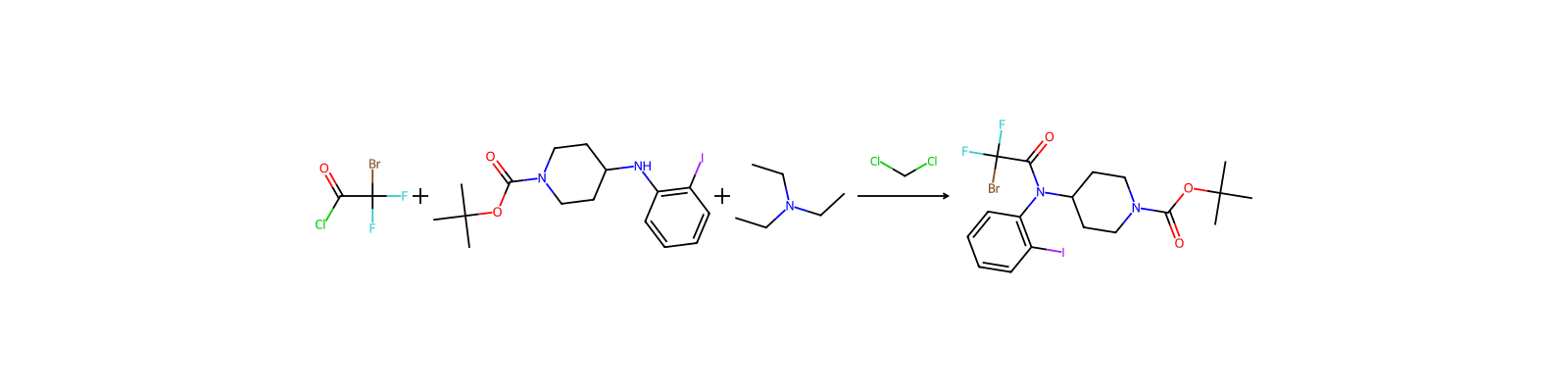
It is used as a starting material for the synthesis of (biologically active) _,_-difluoro-_-lactams and the synthesis of trifluoromethylated C-nucleosides. Diatomic bromine does not occur naturally, but bromine salts can be found in crustal rock.
Vor- und nachgelagerte Produkte
Nachgelagerte Produkte
Anbieter26 Anbieter
Career Henan Chemica Co+86-0371-86658258 +86-13203830695 · [email protected]
常州新氟化学有限公司13275212658 · [email protected]
Syntechem Co.,Ltd[email protected]
武汉凯威斯科技有限公司86-027-67849912 · [email protected]
梯希爱(上海)化工贸易有限公司021-61109150 · [email protected]
广东云星生物技术有限公司0751-18902340975/189023400307 18902340307 · [email protected]
上氟科技021-65170832 15601903708
Clearsynth Labs Limited+91-22-26355700 · [email protected]
HANGZHOU LEAP CHEM CO., LTD.+86-571-87711850 +86-15355479329 · [email protected]
上海阿拉丁生化科技股份有限公司6206333 13167063860 · [email protected]
南京世洲生物科技有限公司025-85563444 18351873721 · [email protected]
上海源叶生物科技有限公司13636370518 · [email protected]
Shaanxi Didu New Materials Co. Ltd+86-86-17392712779 +86-13289823923 · [email protected]
厦门盈融达化工有限公司+86-0592-6210733 · [email protected]
北京迈瑞达科技有限公司010-82387566 · [email protected]
广东翁江化学试剂有限公司0751-2815688 13927872512 · [email protected]
湖南嘉航医药科技有限公司85567275 15200744171 · [email protected]
江苏艾康生物医药研发有限公司025-58859352 17714375163 · [email protected]
九江市华耀生物科技有限公司13970278471 15779253386 · [email protected]
Aladdin Scientific[email protected]
北京百灵威科技有限公司18210857532 18210857532 · [email protected]
烟台盛凯伦化学科技有限公司开发区第一分公司13356901049 · [email protected]
DAYANG CHEM (HANGZHOU) CO.,LTD+86-88938639 +86-17705817739 · [email protected]
陕西缔都化学有限公司17691182729 17392216275 · [email protected]
上海信旗医药科技有限公司+86-21-54098501 · [email protected]
扬州摩笛尔电子材料有限公司13918702962 13761402923 · [email protected]
Zugehörige Reaktionen
4


Notizen zur Verbindung
Wird geladen…