

Grundinformationen
- CAS
141-05-9- Standard-SMILES
CCOC(=O)/C=C\C(=O)OCC- InChIKey
IEPRKVQEAMIZSS-WAYWQWQTSA-N- Summenformel
- C8H12O4
- Durchschnittliche Molmasse
- 172,18 g/mol
- Monoisotopische Masse
- 172,07355886
Überblick
Diethyl maleate is a maleate ester resulting from the formal condensation of both carboxy groups of maleic acid with ethanol. A colourless liquid at room temperature (m.p. -10C) with boiling point 220C at 1 atm., it is commonly used as a dienophile for Diels-Alder-type cycloaddition reactions in organic synthesis. It has a role as a glutathione depleting agent. It is an ethyl ester and a maleate ester. It is functionally related to an ethanol.
Namen und Bezeichner
- Bevorzugter Name
- Diethyl Maleate
- IUPAC
- diethyl (Z)-but-2-enedioate
- Lokaler Name
- 2-Butendisäure-diethylester, (Z)-
- Englischer Name
- Diethyl maleate
- Summenformel
- C8H12O4
- Molmasse
- 172.18
Namen und Synonyme
DIETHYL MALEATE141-05-9DiethylmaleateMaleic acid, diethyl ester2-Butenedioic acid (2Z)-, diethyl esterDiethylester kyseliny maleinoveDTXSID8020464G81WQB56OLSTAFLEX DEMNSC-8394DTXCID80464CHEBI:68508
Weitere Namen anzeigen
DEMETHYL MALEATEiethylmaleateDiethyl malcateDiethylMaleate>DiethylbutenedioateMaleic acid diethyl
RefChem:133422diethyl maleic acid diester205-451-9Maleic acid diethyl esterdiethyl (Z)-but-2-enedioate2-Butenedioic acid (Z)-, diethyl esterDiethyl (Z)-2-butenedioatediethyl (2Z)-but-2-enedioate
Datenbank-Bezeichner
- CAS
141-05-9、623-91-6- PubChem CID
- 5271566
- DTXSID
DTXSID8020464- ChEMBL
CHEMBL2037000- ChEBI
CHEBI:68508- UNII
- G81WQB56OL
- EC Number
- 205-451-9
- Nikkaji
- J5.802E
Eigenschaften
Berechnete Struktureigenschaften
- XLogP
- 0,9
- Polarare Oberfläche (TPSA)
- 52,6 Ų
- H-Brücken-Donoren
- 0
- H-Brücken-Akzeptoren
- 4
- Frei drehbare Bindungen
- 6
- Schwere Atome
- 12
- Formalladung
- 0
- Komplexität
- 163
Experimentelle und physikochemische Eigenschaften
Chemical ClassesOther Classes -> Esters, Other
SpringerMaterials PropertiesBoiling point
FragrancesFragrance substance (Diethyl maleate) -> IFRA amendment 40
Flavoring AgentsEU Flavoring substances
Solubility1.40E+04 mg/L @ 30 °C (exp)
Boiling Point218.00 °C. @ 760.00 mm Hg
Melting Point1 - 2 °C
Physical Description
Liquid
Water-white liquid; [Hawley] Colorless clear liquid; [MSDSonline]
Liquid
Physikochemische Eigenschaften
- Schmelzpunkt
- -10 °C · -10 °C (lit.)
- Siedepunkt
- 225 °C · 225 °C (lit.)
- Dichte
- 1.064 g/mL · 1.064 g/mL at 25 °C (lit.)
- Dampfdichte
- 5.93 · 5.93 (vs air)
- Dampfdruck
- 1 mm · 1 mm Hg ( 14 °C)
- Brechungsindex
- 20 · n20/D 1.441(lit.)
- Flammpunkt
- 200 °F · 200 °F
- storage temp.
- Sealed in dry,Room Temperature
- Löslichkeit
- 14 mg/l · 14mg/l
- Aggregatzustand
- Liquid
- Farbe
- Clear
- Geruch (Odor)
- 100 % · at 100.00 %. fruity banana citrus
- Geruchsart
- fruity
- Biologische Quelle
- synthetic
- Wasserlöslichkeit
- insoluble
- Merck
- 14 · 14,3123
- BRN
- 1100825 · 1100825
- Dielectric constant
- 8.6 · 8.6(23℃)
- Stabilität
- Stable. Combustible. Incompatible with oxidizing agents, bases, acids, reducing agents.
- Major Application
- cleaning productscosmeticsfood and beveragespersonal care
- InChI
- 1S/C8H12O4/c1-3-11-7(9)5-6-8(10)12-4-2/h5-6H,3-4H2,1-2H3/b6-5-
- InChIKey
- IEPRKVQEAMIZSS-AATRIKPKSA-N
- SMILES
- CCOC(=O)\C=C/C(=O)OCC
- LogP
- 2.2 · 2.2
- CAS Datenbank
- 141 · 141-05-9(CAS DataBase Reference)
- NIST chemische Informationen
- 2 · 2-Butenedioic acid (Z)-, diethyl ester(141-05-9)
- EPA chemische Informationen
- 2 · 2-Butenedioic acid (2Z)-, 1,4-diethyl ester (141-05-9)
Sicherheit und Regulatorisches
GHS-Klassifizierung
GHS Classification
This chemical does not meet GHS hazard criteria for 1.8% (5 of 281) of reports.
Warning
H317 (97.5%): May cause an allergic skin reaction [Warning Sensitization, Skin]
P261, P264+P265, P272, P273, P280, P302+P352, P305+P351+P338, P321, P333+P317, P337+P317, P362+P364, and P501 (click each P-code to see the statement)
Aggregated GHS information provided per 281 reports by companies from 10 notifications to the ECHA C&L Inventory. Each notification may be associated with multiple companies.
Warning
Gefahrenhinweise
Regulatory Information
Chemical: 2-Butenedioic acid, (Z)-, diethyl ester
Commission Regulation (EC) No 1565/2000 (Repealed by Com. Implementing Reg. (EU) No 872/2012)
2-Butenedioic acid (2Z)-, 1,4-diethyl ester is listed on the EPA's Chemical Data Reporting (CDR) system. Manufacturers and importers of 2-Butenedioic acid (2Z)-, 1,4-diethyl ester are required to report information about their production and use of this chemical to the EPA under the Toxic Substances Control Act (TSCA). (40 eCFR Part 711)
Status: Active Update: 27-01-2022 https://echa.europa.eu/registration-dossier/-/registered-dossier/10052
Diethyl maleate: Does not have an individual approval but may be used under an appropriate group standard
Other Safety InformationEvaluation - Maleic acid esters (short chain)
Hazards SummaryA skin and eye irritant; [Hawley] A mild skin irritant based an animal studies; [MSDSonline]
Hazard Classes and Categories
Skin Sens. 1 (97.5%)
Flammable liquids - Category 4
Sicherheitsdaten
- wgk
- 2
- tsca
- TSCA listed
- ridadr
- 3334
- hs_code
- 29171990
- RTECS-Nr.
- ON1225000
- risk_code
- 36-43-52/53
- Toxizität
- LD50 orally in rats: 0.30 g/kg (Smyth)
- hazard_code
- Xi
- safety_code
- 26-36/37-37-24-24/25
- Speicherklasse
- 10 - Combustible liquids
- Hazard Classifications
- Aquatic Chronic 3Eye Irrit. 2Skin Sens. 1
- Selbstentzündungstemperatur
- 662 °F
Chemie und Industrie
Pharmakologische Informationen
Cellular LocationsCytoplasm
Verwendung und Herstellung
UsesUsed in organic synthesis and as a flavoring agent; [Hawley]
U.S. Production2023: 250,000 - <400,000 lb
Consumer UsesNot Known or Reasonably Ascertainable
Industry UsesNot Known or Reasonably Ascertainable
IFRA Fragrance Standards
Diethyl maleate
2-Butenedioic acid (2Z)-, diethyl ester; Ethyl maleate; Maleic acid, diethyl ester
IFRA_STD_130.pdf
40
IFRA 51st Amendment - Guidance for the use of IFRA Standards
Prohibition: This material should not be used as a fragrance ingredient
General Manufacturing Information
Not Known or Reasonably Ascertainable
2-Butenedioic acid (2Z)-, 1,4-diethyl ester: ACTIVE
Anwendungen
OccurrenceHas apparently not been reported to occur in nature.
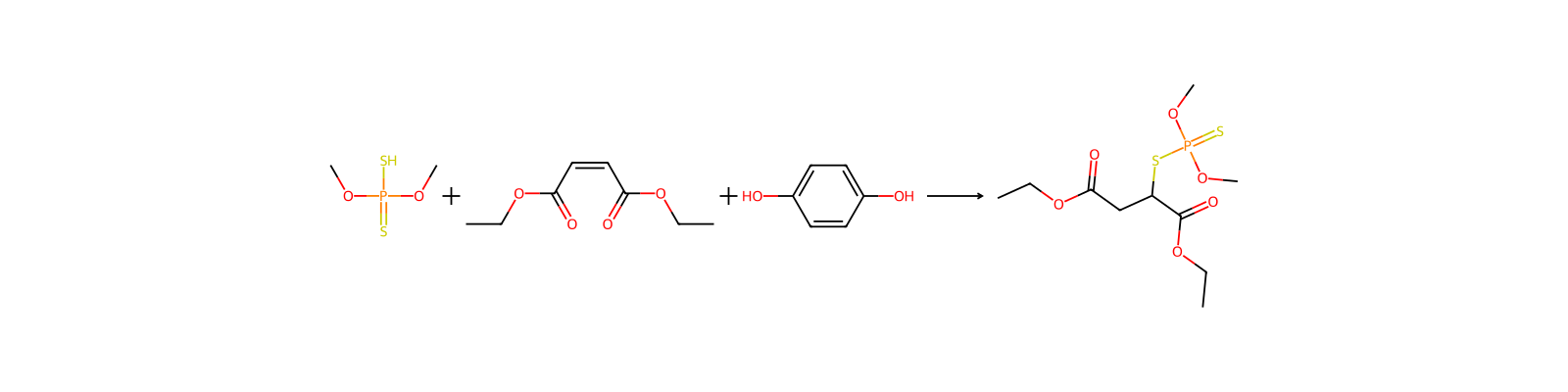
VerwendenDiethyl maleate can be used for the preparation of organophosphorus insecticide malathion. It is unsaturated polyester resins that are used in applications, such as reinforced glass fiber for boats, piping, bathtubs, roof panels, etc., and as protective coatings, finishes, and lacquers.
Darstellung
synthetischeDiethyl maleate is synthesized by the direct esterification of maleic anhydride and ethanol in the presence of sulfuric acid. Esterification is a commonly used reaction in organic synthesis.
Vor- und nachgelagerte Produkte
Vorgelagerte Rohstoffe
Nachgelagerte Produkte
Anbieter100 Anbieter
国药集团化学试剂有限公司86-21-63210123 · [email protected]
梯希爱(上海)化成工业发展有限公司021-67121386 · [email protected]
上海阿拉丁生化科技股份有限公司400-6206333 13167063860 · [email protected]
广州纳珑化工有限公司13192879270; 13192879270 · [email protected]
济南宏嘉化工有限公司15253128188; 15253128188
韶远科技(上海)有限公司021-50795510 4000665055 · [email protected]
科瑞迪化学400-821-5857 021-64326257 · [email protected]
深圳市悦荣科技有限公司0755-36694831 13316862761
Syntechem Co.,Ltd[email protected]
上海迈瑞尔生化科技有限公司4006356688 18621169109 · [email protected]
阿法埃莎(中国)化学有限公司400-6106006 · [email protected]
上海德默医药科技有限公司400-021-7337 2355568890 · [email protected]
安耐吉化学&3A(安徽泽升科技股份有限公司)400-0056266 · [email protected]
南京诚亿化工有限公司025-57286088 13327733630
上海瀚鸿科技股份有限公司021-54306202 13764082696 · [email protected]
上海诗丹德标准技术服务有限公司021-021-57127007-6622-6622 17621252073 · [email protected]
Pure Chemistry Scientific Inc.001-857-928-2050 or 1-888-588-9418 · [email protected]
孝感深远化工有限公司15527621225; 15527621225 · [email protected]
山东西亚化学有限公司13355009207 13355009207 · [email protected]
四川库利南科技有限公司400-1166-196 18981987031 · [email protected]
天津希恩思生化科技有限公司400 638 7771 · [email protected]
斯百全化学(上海)有限公司021-021-021-67601398-809-809-809 15221380277 · [email protected]
艾科试剂4008-755-333 18080918076 · [email protected]
上海思域化工科技有限公司86-21-34053660 · [email protected]
赛默飞世尔科技(中国)有限公司800-810-5118 · [email protected]
北京伊诺凯科技有限公司400-810-7969 010-59572699 · [email protected]
江苏艾康生物医药研发有限公司025-66113011 13913916777 · [email protected]
TCI AMERICA800-4238616 · [email protected]
TOKYO CHEMICAL INDUSTRY CO., LTD.03-36680489 · [email protected]
TCI Europe320-37350700 · [email protected]
上海贤鼎生物科技有限公司4009209199 · [email protected]
越林试剂021-62960152 · [email protected]
上海睿升化工科技有限公司+86-021-50935922
上海洪创医药科技有限公司18151128828 · [email protected]
上海将来实业股份有限公司400-0066400 13621662912 · [email protected]
上海将来实业股份有限公司021-61552785 · [email protected]
HBCChem, Inc.+1-510-219-6317 · [email protected]
日照力德士化工有限公司010-51268198 · [email protected]
美岚实业(上海)有限公司021-58958189 · [email protected]
上海爱蝶实业有限公司021-58957966 18930537195 · [email protected]
湖北瑞今化学有限公司027 83642615 13995607107 · [email protected]
广拓化学(上海)有限公司021-60899189-8001 18918189673 · [email protected]
上海御略医药科技有限公司021-60345187 13671753212 · [email protected]
上海麦克林生化科技股份有限公司15221275939 15221275939 · [email protected]
上海乾劲化工科技有限公司021-20900665 17321230821 · [email protected]
上海有朋化工有限公司021-69005955 13701776567 · [email protected]
北京海力扬化学科技有限公司13718199399 · [email protected]
北京欣赛维化学科技有限公司010-56218822 13717722232 · [email protected]
四川海诺威科技有限公司13708085536 13708085536 · [email protected]
上海凯赛化工有限公司021-33516722 13701817765 · [email protected]
Ergänzende Hinweise
DefinitionChEBI: Diethyl maleate is a maleate ester resulting from the formal condensation of both carboxy groups of maleic acid with ethanol. A colourless liquid at room temperature (m.p. -10℃) with boiling point 220℃ at 1 atm., it is commonly used as a dienophile for Diels-Alder-type cycloaddition reactions in organic synthesis. It has a role as a glutathione depleting agent. It is a maleate ester and an ethyl ester. It derives from an ethanol.
Zugehörige Reaktionen
76



Notizen zur Verbindung
Wird geladen…