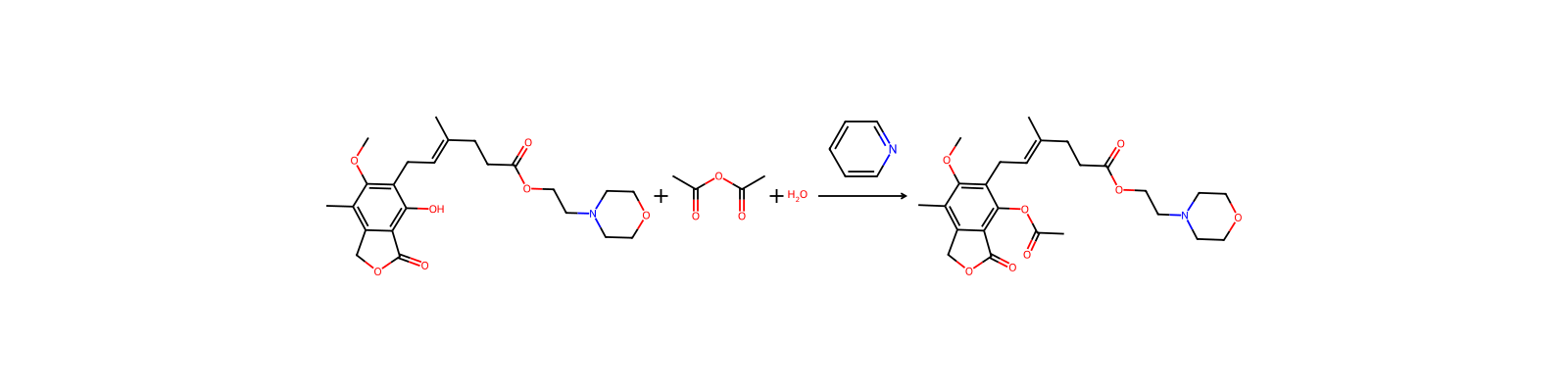
HRID 4502als Edukt
Daten werden ergänzt – lade die Seite später neu, um den aktuellen Stand zu sehen

115007-34-6COc1c(C)c2c(c(O)c1C/C=C(\C)CCC(=O)OCCN1CCOCC1)C(=O)OC2RTGDFNSFWBGLEC-SYZQJQIISA-NMycophenolate mofetil is a carboxylic ester resulting from the formal condensation between the carboxylic acid group of mycophenolic acid and the hydroxy group of 2-(morpholin-4-yl)ethanol. In the liver, it is metabolised to mycophenolic acid, an immunosuppressant for which it is a prodrug. It is widely used to prevent tissue rejection following organ transplants as well as for the treatment of certain autoimmune diseases. It has a role as an anticoronaviral agent, an immunosuppressive agent, a prodrug and an EC 1.1.1.205 (IMP dehydrogenase) inhibitor. It is an ether, a carboxylic ester, a member of phenols, a gamma-lactone and a tertiary amino compound. It is functionally related to a mycophenolic acid and a 2-(morpholin-4-yl)ethanol.
115007-34-6、128794-94-5DTXSID3023340CHEMBL1456CHEBI:8764Pharmaceuticals -> Antibiotics
Pharmaceuticals
Pharmaceuticals -> Used in Switzerland
Pharmaceuticals -> Listed in ZINC15
log Kow = 2.38 at pH 7.4
2.5
2.26
Freely soluble in acetone, soluble in methanol, and sparingly soluble in ethanol
In water, 43 mg/L at pH 7.4, temp not specified
9.50e-02 g/L
FDA approved drugs -> Active ingredient
EMA approved medicines: Human medicine
EMA approved medicines: Human medicine
EMA approved medicines: Human medicine
EMA approved medicines: Human medicine
FDA approved drugs -> Active ingredient
93-94
93-94 °C
5.6 for the morpholino group and 8.5 for the phenolic group
pKa1 = 5.6 (tertiary amine); pKa2 = 8.5 (phenol)
Sicherheitsangaben dienen nur zur Orientierung und ersetzen weder das Sicherheitsdatenblatt (SDB) des Lieferanten noch geltende Vorschriften oder eine fachliche Bewertung.
Danger
H302 (98.1%): Harmful if swallowed [Warning Acute toxicity, oral]
P203, P260, P264, P270, P273, P280, P301+P317, P318, P319, P330, P391, P405, and P501 (click each P-code to see the statement)
Aggregated GHS information provided per 54 reports by companies from 11 notifications to the ECHA C&L Inventory. Each notification may be associated with multiple companies.
Danger
H302 (100%): Harmful if swallowed [Warning Acute toxicity, oral]
The Approved Drug Products with Therapeutic Equivalence Evaluations List identifies currently marketed prescription drug products, incl mycophenolate mofetil, approved on the basis of safety and effectiveness by FDA under sections 505 of the Federal Food, Drug, and Cosmetic Act.
The Approved Drug Products with Therapeutic Equivalence Evaluations List identifies currently marketed prescription drug products, incl mycophenolate mofetil hydrochloride, approved on the basis of safety and effectiveness by FDA under sections 505 of the Federal Food, Drug, and Cosmetic Act. /Mycophenolate mofetil hydrochloride/
Acute Tox. 4 (98.1%)
Acute Tox. 4 (100%)
SRP: The most favorable course of action is to use an alternative chemical product with less inherent propensity for occupational exposure or environmental contamination. Recycle any unused portion of the material for its approved use or return it to the manufacturer or supplier. Ultimate disposal of the chemical must consider: the material's impact on air quality; potential migration in soil or water; effects on animal, aquatic, and plant life; and conformance with environmental and public health regulations.
In the presence of renal impairment, acyclovir or ganciclovir may compete with mycophenolic acid glucuronide (MPAG) for tubular secretion, thus further increasing plasma concentrations of each.
Potential pharmacokinetic interaction (decreased plasma concentrations of levonorgestrel). Oral contraceptives should be administered with caution in patients receiving mycophenolate mofetil and additional methods of birth control methods should be considered.
Concurrent administration /with magnesium or aluminum hydroxide containing antacids/ may result in decreased absorption of mycophenolate; simultaneous administration is not recommended.
Plasma concentrations of mycophenolic acid (MPA) may be decreased as a result of interruption of enterohepatic recirculation of mycophenolic acid glucuronide (MPAG) possibly caused by intestinal binding with cholestyramine /when mycophenolate and cholestyramine are used concurrently/.
For more Interactions (Complete) data for MYCOPHENOLATE MOFETIL (7 total), please visit the HSDB record page.
TERRESTRIAL FATE: Based on a classification scheme(1), an estimated Koc value of 470(SRC), determined from a log Kow of 2.4(2) and a regression-derived equation(3), indicates that mycophenolate mofetil is expected to have moderate mobility in soil(SRC). Measured pKa values for mycophenolate mofetil are 5.6 (tertiary amine) and 8.5 (phenol)(4), indicating that this compound will exist partially in the anion form under basic conditions and partially in the cation form under acidic conditions in the environment. Volatilization of mycophenolate mofetil from moist soil surfaces is not expected to be an important fate process(SRC) because ionic compounds do not volatilize and based on an estimated Henry's Law constant of 5.5X10⁻¹⁵ atm-cu m/mole for the neutral species(SRC), calculated using a fragment constant estimation method(5). Mycophenolate mofetil is not expected to volatilize from dry soil surfaces(SRC) based upon an estimated vapor pressure of 1.9X10⁻¹³ mm Hg(SRC), determined from a fragment constant method(6). Biodegradation data were not available(SRC, 2006).
AQUATIC FATE: Based on a classification scheme(1), an estimated Koc value of 470(SRC), determined from a log Kow of 2.4(2) and a regression-derived equation(3), indicates that mycophenolate mofetil is expected to adsorb very little to suspended solids and sediment(SRC). Measured pKa values for mycophenolate mofetil are 5.6 (tertiary amine) and 8.5 (phenol)(4), indicating that this compound will exist partially in the anion form under basic conditions and partially in the cation form under acidic conditions in the environment. Volatilization from water surfaces is not expected(3) becuase ionic compounds do not volatilize and based upon an estimated Henry's Law constant of 5.5X10⁻¹⁵ atm-cu m/mole for the neutral species(SRC), developed using a fragment constant estimation method(5). According to a classification scheme(6), an estimated BCF of 38(SRC), from a log Kow of 2.4(2), suggests the potential for bioconcentration in aquatic organisms is moderate(SRC). A base-catalyzed second-order hydrolysis rate constant of 0.14 L/mole-sec(SRC) was estimated using a structure estimation method(7); this corresponds to half-lives of 1.6 years and 59 days at pH values of 7 and 8, respectively. Biodegradation data were not available(SRC, 2006).
ATMOSPHERIC FATE: According to a model of gas/particle partitioning of semivolatile organic compounds in the atmosphere(1), mycophenolate mofetil, which has an estimated vapor pressure of 1.9X10⁻¹³ mm Hg at 25 °C(SRC), determined from a fragment constant method(2), is expected to exist solely in the particulate phase in the ambient atmosphere. Particulate-phase mycophenolate mofetil may be removed from the air by wet or dry deposition(SRC). Mycophenolate mofetil does not contain chromophores that absorb at wavelengths >290 nm and therefore is not expected to be susceptible to direct photolysis by sunlight(SRC).
The Koc of mycophenolate mofetil is estimated as 470(SRC), using a log Kow of 2.4(1) and a regression-derived equation(2). According to a classification scheme(3), this estimated Koc value suggests that mycophenolate mofetil is expected to have moderate mobility in soil. Measured pKa values for mycophenolate mofetil are 5.6 (tertiary amine) and 8.5 (phenol)(4), indicating that this compound will exist partially in the anion form under basic conditions and partially in the cation form under acidic conditions in the environment.
/CASE REPORTS/ Mycophenolate mofetil (MMF) is one of the new immunosuppressive drugs used in renal transplantation. MMF inhibits the de novo purine synthesis. Since this purine synthesis in lymphocytes entirely depends on the de novo pathway, MMF is considered to cause a selective inhibition of T- and B lymphocytes. Recently, 4 transplant patients out of 30 developed a severe anemia in the early post-transplantation period. Their immediate post-transplantation immunosuppression consisted of corticosteroids, cyclosporine and MMF. They all received anti-T-lymphocyte globulin (ATG) as induction treatment or because of rejection. In all 4 patients, iron supplementation and a treatment with erythropoietin were started. Blood loss, deficiencies, hemolysis, drug interactions or viral infections were excluded as causes of the anemia. Bone marrow biopsies were carried out, showing pure red cell aplasia that was ascribed to the use of MMF. Cessation or reduction of MMF was followed by a hematological improvement after 5-9 days. We hypothesized that MMF has a broader antiproliferative effect than its proposed lymphocyte-specific effect.
Drug Induced Liver Injury Rank (DILIrank 2.0)
Mycophenolate mofetil
vLess-DILI-concern
3
Adverse reactions
DOI:10.1016/j.drudis.2016.02.015
An estimated BCF of 38 was calculated for mycophenolate mofetil(SRC), using a measured log Kow of 2.4(1) and a regression-derived equation(2). According to a classification scheme(3), this BCF suggests the potential for bioconcentration in aquatic organisms is moderate(SRC).
The Henry's Law constant for mycophenolate mofetil is estimated as 5.5X10⁻¹⁵ atm-cu m/mole(SRC) using a fragment constant estimation method(1). Measured pKa values for mycophenolate mofetil are 5.6 (tertiary amine) and 8.5 (phenol)(2), indicating that this compound will exist partially in the anion form under basic conditions and partially in the cation form under acidic conditions in the environment. Based on this Henry's Law constant and the fact that ionic compounds do not volatilize, mycophenolate mofetil is expected to be essentially nonvolatile from moist soil or water surfaces(3). Mycophenolate mofetil is not expected to volatilize from dry soil surfaces(SRC) based upon an estimated vapor pressure of 1.9X10⁻¹³ mm Hg(SRC), determined from a fragment constant method(4).
/LABORATORY ANIMALS: Acute Exposure/ In acute oral toxicity studies, no deaths occurred in adult mice at doses up to 4000 mg/kg or in adult monkeys at doses up to 1000 mg/kg; these were the highest doses of mycophenolate mofetil tested in these species. These doses represent 11 times the recommended clinical dose in renal transplant patients and approximately 7 times the recommended clinical dose in cardiac transplant patients when corrected for BSA.
/LABORATORY ANIMALS: Acute Exposure/ In adult rats, deaths occurred after single-oral doses of 500 mg/kg of mycophenolate mofetil. The dose represents approximately 3 times the recommended clinical dose in cardiac transplant patients when corrected for BSA.
/LABORATORY ANIMALS: Developmental or Reproductive Toxicity/ A study in female rats at oral doses of 4.5 mg/kg a day found that mycophenolate caused malformations (primarily of the head and eyes) in the first generation offspring in the absence of maternal toxicity. Studies in rats and rabbits at oral doses of 6 mg/kg a day and 90 mg/kg a day, respectively, fond fetal resorptions and malformations in the absence of maternal toxicity.
/LABORATORY ANIMALS: Developmental or Reproductive Toxicity/ Studies in male rats at oral doses of up to 20 mg/kg a day found no effect on fertility. A study in female rats at oral doses of 4.5 mg/kg a day found no effect on fertility or reproductive parameters in the dams or in the offspring.
/GENOTOXICITY/ No evidence of genotoxicity, with or without metabolic activation, was found in the bacterial mutation assay, the yeast mitotic gene conversion assay, the mouse micronucleus aberration assay, or the Chinese hamster ovary cell (CHO) chromosomal aberration assay.
Because mycophenolate mofetil inhibits inosine monophosphate dehydrogenase, the drug should be avoided, on theoretical grounds, in patients with rare hereditary deficiency of hypoxanthine-guanine phosphoribosyltransferase (HGPRT), including Kelley-Seegmiller or Lesch-Nyhan syndrome.
CellCept Oral Suspension contains aspartame, a source of phenylalanine (0.56 mg phenylalanine/mL suspension). Therefore, care should be taken if CellCept Oral Suspension is administered to patients with phenylketonuria.
A base-catalyzed second-order hydrolysis rate constant of 0.14 L/mole-sec(SRC) was estimated using a structure estimation method(1); this corresponds to half-lives of 1.6 years and 59 days at pH values of 7 and 8, respectively(1). Mycophenolate mofetil does not contain chromophores that absorb at wavelengths >290 nm and therefore is not expected to be susceptible to direct photolysis by sunlight(SRC).
The Approved Drug Products with Therapeutic Equivalence Evaluations List identifies currently marketed prescription drug products, incl mycophenolate mofetil, approved on the basis of safety and effectiveness by FDA under sections 505 of the Federal Food, Drug, and Cosmetic Act.
The Approved Drug Products with Therapeutic Equivalence Evaluations List identifies currently marketed prescription drug products, incl mycophenolate mofetil hydrochloride, approved on the basis of safety and effectiveness by FDA under sections 505 of the Federal Food, Drug, and Cosmetic Act. /Mycophenolate mofetil hydrochloride/
The protein binding of mycophenolic acid, the metabolite of mycophenolate mofetil, is 97% and it is mainly bound to albumin. MPAG, the inactive metabolite, is 82% bound to plasma albumin at normal therapeutic concentrations. At elevated MPAG concentrations due to various reasons, including renal impairment, the binding of MPA may be decreased due to competition for binding.
Mycophenolate mofetil is a prodrug of mycophenolic acid (MPA). The active form of mycophenolate, MPA, prevents the proliferation of immune cells and the formation of antibodies that cause transplant rejection. The above effects lead to higher rates of successful transplantation, avoiding the devastating effects of graft rejection.
The active metabolite of mycophenolate, mycophenolic acid, prevents T-cell and B-cell proliferation and the production of cytotoxic T-cells and antibodies. Lymphocyte and monocyte adhesion to endothelial cells of blood vessels that normally part of inflammation is prevented via the glycosylation of cell adhesion molecules by MPA. MPA inhibits de novo purine biosynthesis (that promotes immune cell proliferation) by inhibiting inosine 5’-monophosphate dehydrogenase enzyme (IMPDH), with a preferential inhibition of IMPDH II. IMPDH normally transforms inosine monophosphate (IMP) to xanthine monophosphate (XMP), a metabolite contributing to the production of guanosine triphosphate (GTP). GTP is an important molecule for the synthesis of ribonucleic acid (RNA), deoxyribonucleic acid (DNA), and protein. As a result of the above cascade of effects, mycophenolate mofetil reduces de-novo production of guanosine nucleotides, interfering with the synthesis of DNA, RNA, and protein required for immune cell production. Further contributing to the above anti-inflammatory effects, MMF depletes tetrahydrobiopterin, causing the decreased function of inducible nitric oxide synthase enzyme, in turn decreasing the production of peroxynitrite, a molecule that promotes inflammation.
As a potent, selective, noncompetitive, and reversible, inhibitor of inosine monophosphate dehydrogenase (IMPDH), mycophenolic acid (MPA), the active metabolite /of mycophenolate mofetil/, inhibits the de novo synthesis pathway of guanosine nucleotides without being incorporated into DNA. Because T and B lymphocytes are critically dependent for their proliferation on de novo synthesis of purines, while other cell types can utilize salvage pathways, MPA has potent cytostatic effects on lymphocytes. MPA inhibit proliferative responses of T and B lymphocytes to both mitogenic and allospecific stimulation. The addition of guanosine or deoxyguanosine reverses the cytostatic effects of MPA on lymphocytes. MPA also suppresses antibody formation by B lymphocytes. MPA prevents the glycosylation of lymphocytes and monocyte glycoproteins that are involved in intercellular adhesion of these cells to endothelial cells, and may inhibit recruitment of leukocytes into sites of inflammation and graft rejection. Mycophenolate mofetil dose not inhibit the early events in the activation of human peripheral blood mononuclear cells, such as the production of interleukin-1 and interleukin-2, but does block the coupling of these events to DNA synthesis and proliferation.
The average apparent half-life of mycophenolate mofetil is 17.9 (±6.5) hours after oral administration and 16.6 (±5.8) hours after intravenous administration.
For mycophenolic acid (MPA):Mean apparent: Approximately 17.9 hours after oral administration and 16.6 hours after intravenous administration.
Mean (+/-SD) apparent half-life and plasma clearance of MPA are 17.9 (+/-6.5) hours and 193 (+/-48) mL/min following oral administration and 16.6 (+/-5.8) hours and 177 (+/-31) mL/min following intravenous administration, respectively.
After both oral and intravenous administration mycophenolate mofetil is entirely metabolized by liver carboxylesterases 1 and 2 to mycophenolic acid (MPA), the active parent drug. It is then metabolized by the enzyme glucuronyl transferase, producing the inactive phenolic glucuronide of MPA (MPAG). The glucuronide metabolite is important, as it is then converted to MPA through enterohepatic recirculation. Mycophenolate mofetil that escapes metabolism in the intestine enters the liver via the portal vein and is transformed to pharmacologically active MPA in the liver cells.N-(2-carboxymethyl)-morpholine, N-(2-hydroxyethyl)-morpholine, and the N-oxide portion of N-(2-hydroxyethyl)-morpholine are additional metabolites of MMF occurring in the intestine as a result of liver carboxylesterase 2 activity. UGT1A9 and UGT2B7 in the liver are the major enzymes contributing to the metabolism of MPA in addition to other UGT enzymes, which also play a role in MPA metabolism. The four major metabolites of MPA are 7-O-MPA-β-glucuronide (MPAG, inactive), MPA acyl-glucuronide (AcMPAG), produced by uridine 5ʹ-diphosphate glucuronosyltransferases (UGT) activities, 7-O-MPA glucoside produced via UGT, and small amounts 6-O-des-methyl-MPA (DM-MPA) via CYP3A4/5 and CYP2C8 enzymes.
Following oral and intravenous dosing, mycophenolate mofetil undergoes complete metabolism to MPA /mycophenolic acid/, the active metabolite. Metabolism to MPA occurs presystemically after oral dosing. MPA is metabolized principally by glucuronyl transferase to form the phenolic glucuronide of MPA (MPAG) which is not pharmacologically active. In vivo, MPAG is converted to MPA via enterohepatic recirculation. The following metabolites of the 2- hydroxyethyl-morpholino moiety are also recovered in the urine following oral administration of mycophenolate mofetil to healthy subjects: N-(2-carboxymethyl)-morpholine, N-(2- hydroxyethyl)-morpholine, and the N-oxide of N-(2-hydroxyethyl)-morpholine.
MYCOPHENOLATE MOFETIL
Antimetabolite Immunosuppressant [EPC]
Chemical substances, produced by microorganisms, inhibiting or preventing the proliferation of neoplasms.
Substances obtained from various species of microorganisms that are, alone or in combination with other agents, of use in treating various forms of tuberculosis; most of these agents are merely bacteriostatic, induce resistance in the organisms, and may be toxic.
Compounds or agents that combine with an enzyme in such a manner as to prevent the normal substrate-enzyme combination and the catalytic reaction.
Mycophenolate mofetil is rapidly absorbed in the small intestine. The maximum concentration of its active metabolite, MPA, is attained 60 to 90 minutes following an oral dose. The average bioavailability of orally administered mycophenolate mofetil in a pharmacokinetic study of 12 healthy patients was 94%. In healthy volunteers, the Cmax of mycophenolate mofetil was 24.5 (±9.5)μg/mL. In renal transplant patients 5 days post-transplant, Cmax was 12.0 (±3.82) μg/mL, increasing to 24.1 (±12.1)μg/mL 3 months after transplantation. AUC values were 63.9 (±16.2) μg•h/mL in healthy volunteers after one dose, and 40.8 (±11.4) μg•h/mL, and 65.3 (±35.4)μg•h/mL 5 days and 3 months after a renal transplant, respectively. The absorption of mycophenolate mofetil is not affected by food.
A small amount of drug is excreted as MPA in the urine (less than 1%). When mycophenolate mofetil was given orally in a pharmacokinetic study, it was found to be 93% excreted in urine and 6% excreted in feces. Approximately 87% of the entire administered dose is found to be excreted in the urine as MPAG, an inactive metabolite.
The volume of distribution of mycophenolate mofetil is 3.6 (±1.5) to 4.0 (±1.2) L/kg.
Plasma clearance of mycophenolate mofetil is 193 mL/min after an oral dose and 177 (±31) mL/min after an intravenous dose.
/Absorption/ is rapid and extensive after oral administration.
In 12 healthy volunteers, the mean absolute bioavailability of oral mycophenolate mofetil relative to intravenous mycophenolate mofetil (based on MPA AUC) was 94%. The area under the plasma-concentration time curve (AUC) for MPA appears to increase in a dose-proportional fashion in renal transplant patients receiving multiple doses of mycophenolate mofetil up to a daily dose of 3 g.
Immunosuppressive agent
MEDICATION
Anti-Inflammatory Agents, Non-Steroidal, Antineoplastic Agents, Dermatologic Agents, Enzyme Inhibitors, Immunosuppressive Agents
Use (kg; approx.) in Germany (2009): >10000
Parenteral: For injection: 500 mg (of mycophenolate mofetil), CellCept ( contains polysorbate 80), (Roche). /Mycophenolate mofetil hydrochloride/
Oral: Capsules: 250 mg, CellCept, (Roche); For oral suspension: 200 mg/mL , CellCept ( contains aspartame), (Roche); Tablets: 500 mg, CellCept, (Roche).
VerwendenInhibitor of nucleic acid synthesis; immunomodulator.