StartseiteMCPWorkbenchSkills
StartseiteWorkbenchBenachrichtigungenMein Bereich
llms.txt · MCP-AnleitungDatenschutz · Nutzungsbedingungen · Supportv1.8.0
  1. Startseite
  2. /Verbindung

cis-Hex-3-en-1-ol

3-Hexenol

HCID 5281167
Neue NotizNeue ReaktionAnfrage stellen
Druckvorschau
GrundinformationenÜberblickNamen und BezeichnerEigenschaftenSicherheit und RegulatorischesChemie und IndustrieZugehörige ReaktionenNotizen zur Verbindung
TeilstruktursucheÄhnliche Strukturen suchen

Grundinformationen

CAS
928-96-1
Standard-SMILES
CC/C=C\CCO
InChIKey
UFLHIIWVXFIJGU-ARJAWSKDSA-N
Summenformel
C6H12O
Durchschnittliche Molmasse
100,16 g/mol
Monoisotopische Masse
100,088815

Überblick

(Z)-hex-3-en-1-ol is a hex-3-en-1-ol in which the double bond adopts a Z-configuration. Also known as leaf alcohol, it is emitted by green plants upon mechanical damage. Used as a flavourant in tea. It has a role as an insect attractant, a fragrance and a plant metabolite.

Namen und Bezeichner

Bevorzugter Name
3-Hexenol
IUPAC
(Z)-hex-3-en-1-ol
Lokaler Name
cis-Hex-3-en-1-ol
Englischer Name
Leaf alcohol
Summenformel
C6H12O
Molmasse
100.16

Namen und Synonyme

cis-3-Hexen-1-ol928-96-1(Z)-Hex-3-en-1-olLeaf alcoholcis-3-Hexenol(Z)-3-Hexen-1-olBlatteralkoholZ-3-Hexenol3-Hexenol(3Z)-hex-3-en-1-ol3-Hexen-1-ol, (Z)-3-Hexen-1-ol, cis-
Weitere Namen anzeigen
FEMA 2563Leaf Alcohocis-Hex-3-enol
3-Hexen-1-ol, (3Z)-beta-gamma-Hexenol3-Hexenol, cis-(Z)-3-HEXENOLcis-3-Hexenol (natural)(3Z)-3-Hexen-1-olcis-Hex-3-en-1-olFEMA No. 2563

Datenbank-Bezeichner

CAS
928-96-1
PubChem CID
5281167
DTXSID
DTXSID6022137
ChEMBL
CHEMBL2251452
ChEBI
CHEBI:28857
UNII
V14F8G75P4
EC Number
213-192-8
Nikkaji
J6.411D

Eigenschaften

Berechnete Struktureigenschaften

XLogP
1,3
Polarare Oberfläche (TPSA)
20,2 Ų
H-Brücken-Donoren
1
H-Brücken-Akzeptoren
1
Frei drehbare Bindungen
3
Schwere Atome
7
Formalladung
0
Komplexität
48,1

Experimentelle und physikochemische Eigenschaften

LipidsFatty Acyls [FA] -> Fatty alcohols [FA05]
CosmeticsSolvent; Humectant; Viscosity controlling
SpringerMaterials PropertiesOptical coefficient
FragrancesFragrance Ingredient (cis-3-Hexenol) -> IFRA transparency List
Odor · 4 Einträge

Powerful grassy-green odor

Strong odor resembling that of isoamyl alcohol, approaching the odor of green leaves when highly dilute

Characteristic odor of freshly cut grass

Green, grassy, melon rind-like with a pungent freshness

TasteFresh, green, raw fruity with a pungent depth
Food AdditivesFLAVORING AGENT OR ADJUVANT -> FDA Substance added to food
Density · 2 Einträge

0.846 at 22/15 °C

0.846-0.850

Flavoring AgentsEU Flavoring substances

Sicherheit und Regulatorisches

Sicherheitsangaben dienen nur zur Orientierung und ersetzen weder das Sicherheitsdatenblatt (SDB) des Lieferanten noch geltende Vorschriften oder eine fachliche Bewertung.

GHS-Klassifizierung

GHS Classification · 6 Einträge

This chemical does not meet GHS hazard criteria for 0.3% (6 of 2076) of reports.

Warning

H226 (99.2%): Flammable liquid and vapor [Warning Flammable liquids]

P210, P233, P240, P241, P242, P243, P264+P265, P280, P303+P361+P353, P305+P351+P338, P337+P317, P370+P378, P403+P235, and P501 (click each P-code to see the statement)

Aggregated GHS information provided per 2076 reports by companies from 8 notifications to the ECHA C&L Inventory. Each notification may be associated with multiple companies.

Warning

Gefahrenhinweise

Regulatory Information · 5 Einträge

Chemical: 3-Hexen-1-ol, (Z)-

Regulation (EC) No 1831/2003 (amended)

3-Hexen-1-ol, (3Z)- is listed on the EPA's Chemical Data Reporting (CDR) system. Manufacturers and importers of 3-Hexen-1-ol, (3Z)- are required to report information about their production and use of this chemical to the EPA under the Toxic Substances Control Act (TSCA). (40 eCFR Part 711)

Status: Active Update: 13-12-2022 https://echa.europa.eu/registration-dossier/-/registered-dossier/12217

3-Hexen-1-ol, (3Z)-: Does not have an individual approval but may be used under an appropriate group standard

Fire Potential · 2 Einträge

Flammable liquid.

Flammable liquid and vapor.

FDA Requirements · 1 Eintrag

3-Hexen-1-ol is a food additive permitted for direct addition to food for human consumption as a synthetic flavoring substance and adjuvant in accordance with the following conditions: a) they are used in the minimum quantity required to produce their intended effect, and otherwise in accordance with all the principles of good manufacturing practice, and b) they consist of one or more of the following, used alone or in combination with flavoring substances and adjuvants generally recognized as safe in food, prior-sanctioned for such use, or regulated by an appropriate section in this part.

Chemie und Industrie

Pharmakologische Informationen

Bionecessity · 1 Eintrag

In response to insect feeding, corn plants (Zea mays cv. Delprim) release elevated levels of volatile organic compounds (VOCs), including the C(6)-volatile (Z)-3-hexenol. The level of mRNA accumulation for a series of defense genes was monitored in response to application of (Z)-3-hexenol (50 nmol) to undamaged plants. The induction of transcripts for hpl (hydroperoxide lyase), fps (farnesyl pyrophosphate synthase), pal (phenylalanine ammonia-lyase), lox (lipoxygenase), igl (indole-3-glycerol phosphate lyase) and mpi (maize proteinase inhibitor) were compared with metabolites generated from the respective pathways. While headspace VOC analysis showed an increase in (Z)-3-hexenyl acetate and methyl salicylate with lox and pal induction, respectively, MPI accumulation was not observed with an increase in mpi transcripts. Moreover, (Z)-3-hexenol treatment did not elevate sesquiterpene emissions or activate fps transcription. Chemical labeling and bioassay experiments established that exogenous (Z)-3-hexenol can be taken up and converted to a less active acetylated form. These data indicate that (Z)-3-hexenol can serve as a signaling molecule that triggers defense responses in maize and can rapidly be turned over in planta.

Cellular LocationsCytoplasm

Verwendung und Herstellung

Uses · 4 Einträge

In public use since the 1940's. In the United States, use in fragrances amounts to less than 20,000 lbs/ year.

Odorant in perfumery

Used to obtain natural green top notes in perfumes and flavors. In addition, it is the starting material for the synthesis of 2-trans-6-cis-nonadien-1-ol and 2-trans-6-cis-nonadien-1-al.

Reported uses (ppm):

U.S. Production · 2 Einträge

2023: 8,500,000 - <10,000,000 lb

Non-confidential 2012 Chemical Data Reporting (CDR) information on the production and use of chemicals manufactured or imported into the United States. Chemical: 3-Hexen-1-ol, (3Z)-. National Production Volume: 100,000 - 500,000 lb/yr.

Zugehörige Reaktionen

20
Reaktionsaufzeichnung erstellen
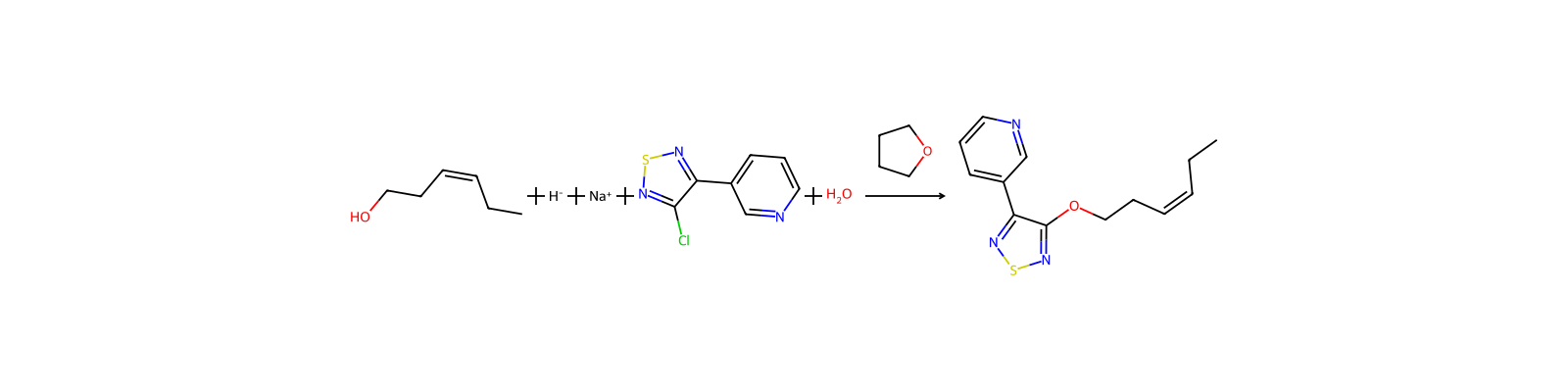
Reaktionsgleichung von HRID 65317
HRID 65317als Eduktuspto-grants-1986_09
Reaktionsgleichung von HRID 256975
HRID 256975als Eduktuspto-grants-1993_11
Reaktionsgleichung von HRID 257913
HRID 257913als Eduktuspto-grants-1993_11
Reaktionsgleichung von HRID 381224
HRID 381224als Eduktuspto-grants-2001_10
Reaktionsgleichung von HRID 630572
HRID 630572als Eduktuspto-grants-2016_04
Reaktionsgleichung von HRID 727332
HRID 727332als Eduktuspto-grants-1998_01
Reaktionsgleichung von HRID 744639
HRID 744639als Eduktuspto-grants-1996_09
Reaktionsgleichung von HRID 865166
HRID 865166als Eduktuspto-grants-1996_10
Seite 1 von 3

Notizen zur Verbindung

Wird geladen…

Auf dieser SeiteGrundinformationenÜberblickNamen und BezeichnerEigenschaftenSicherheit und RegulatorischesChemie und IndustrieZugehörige ReaktionenNotizen zur Verbindung
Weitere Aktionen
Neue NotizNeue ReaktionAnfrage stellen
Color/FormColorless liquid
Solubility · 4 Einträge

Very soluble in ethanol and ether

Soluble in alcohol, propylene glycol, fixed oils

soluble in alcohol, propylene glycol and most fixed oils

(in ethanol)

Flash PointFlash Point: 130 °F/ 54 °C/closed cup/

Physikochemische Eigenschaften

Schmelzpunkt
22.55 °C · 22.55°C (estimate)
Siedepunkt
156 · 156-157 °C(lit.)
Dichte
0.848 g/mL · 0.848 g/mL at 25 °C(lit.)
Dampfdichte
3.45 · 3.45 (vs air)
Dampfdruck
2.26 hPa · 2.26hPa at 25℃
Brechungsindex
20 · n20/D 1.44(lit.)
FEMA
2563 · 2563 | CIS-3-HEXENOL
Flammpunkt
112 °F · 112 °F
storage temp.
Flammables area
Löslichkeit
100 mg/mL · DMSO: 100 mg/mL (998.40 mM)
pka
15 · 15.00±0.10(Predicted)
Aggregatzustand
Liquid
Farbe
100 · APHA: ≤100
Wichte
0.848 · 0.848 (20/4℃)
Geruch (Odor)
10 % · at 10.00 % in dipropylene glycol. fresh green cut grass foliage vegetable herbal oily
Geruchsart
green
Biologische Quelle
synthetic
Wasserlöslichkeit
INSOLUBLE
Merck
14 · 14,4700
JECFA Number
315 · 315
BRN
1719712 · 1719712
Stabilität
Stable. Substances to be avoided include strong oxidizing agents and strong acids. Flammable.
Major Application
flavors and fragrances
Kosmetik-Inhaltsstoffe Funktionen
PERFUMINGSKIN CONDITIONINGFRAGRANCE
InChI
1S/C6H12O/c1-2-3-4-5-6-7/h3-4,7H,2,5-6H2,1H3/b4-3-
InChIKey
UFLHIIWVXFIJGU-ARJAWSKDSA-N
SMILES
CC\C=C/CCO
LogP
1 at · 1 at 35℃
CAS Datenbank
928 · 928-96-1(CAS DataBase Reference)
NIST chemische Informationen
3 · 3-Hexen-1-ol, (Z)-(928-96-1)
EPA chemische Informationen
-3 · (Z)-3-Hexen-1-ol (928-96-1)
FIFRA Requirements · 2 Einträge

Residues of 3-hexen-1-ol, (3Z)- are exempted from the requirement of a tolerance when used in accordance with good agricultural practice as inert (or occasionally active) ingredients in pesticide formulations applied to growing crops or to raw agricultural commodities after harvest. Use: Odorant, alerting agent. Limit: Not more than 0.4% of the pesticide formulation.

Residues of the following chemical substances are exempted from the requirement of a tolerance when used in accordance with good manufacturing practice as ingredients in an antimicrobial pesticide formulation, provided that the substance is applied on a semi-permanent or permanent food-contact surface (other than being applied on food packaging) with adequate draining before contact with food. (a) The following chemical substances when used as ingredients in an antimicrobial pesticide formulation may be applied to: Food-contact surfaces in public eating places, dairy-processing equipment, and food-processing equipment and utensils. (Z)-3-Hexenol is included on this list. Limit: When ready for use, the end-use concentration is not to exceed 100 ppm.

NFPA Hazard Classification · 3 Einträge

1 - Materials that, under emergency conditions, can cause significant irritation.

2 - Materials that must be moderately heated or exposed to relatively high ambient temperatures before ignition can occur. Materials would not under normal conditions form hazardous atmospheres with air, but under high ambient temperatures or under moderate heating could release vapor in sufficient quantities to produce hazardous atmospheres with air.

0 - Materials that in themselves are normally stable, even under fire conditions.

Toxic Combustion Products · 2 Einträge

When heated to decomposition it emits acrid smoke and fumes.

Hazardous decomposition products formed under fire conditions. - Carbon oxides

Hazard Classes and Categories · 2 Einträge

Flam. Liq. 3 (99.2%)

Flammable liquids - Category 3

Hazardous Reactivities and IncompatibilitiesIncompatible Materials: Strong oxidizing agents and strong acids.

Sicherheit und Schutzausrüstung

Fire Fighting Procedures · 4 Einträge

Use water spray to cool unopened containers.

For small (incipient) fires, use media such as "alcohol" foam, dry chemical, or carbon dioxide. For large fires, apply water from as far as possible. Use very large quantities (flooding) of water applied as a mist or spray; solid streams of water may be ineffective. Cool all affected containers with flooding quantities of water.

Wear self contained breathing apparatus for fire fighting if necessary. Use water spray to cool unopened containers.

Extinguishing methods: alcohol resisitant fire fighting foam

Storage Conditions · 2 Einträge

Store in cool place. Keep container tightly closed in a dry and well-ventilated place. Containers which are opened must be carefully resealed and kept upright to prevent leakage.

Store under inert gas.

Cleanup Methods · 2 Einträge

ACCIDENTAL RELEASE MEASURES: Personal precautions, protective equipment and emergency procedures: Use personal protective equipment. Avoid breathing vapors, mist or gas. Remove all sources of ignition. Beware of vapors accumulating to form explosive concentrations. Vapors can accumulate in low areas. Environmental precautions: Prevent further leakage or spillage if safe to do so. Do not let product enter drains.

Contain spillage, and then collect with an electrically protected vacuum cleaner or by wet-brushing and place in container for disposal according to local regulations.

Disposal Methods · 2 Einträge

SRP: Recycle any unused portion of the material for its approved use or return it to the manufacturer or supplier. Ultimate disposal of the chemical must consider: the material's impact on air quality; potential migration in air, soil or water; effects on animal, aquatic and plant life; and conformance with environmental and public health regulations. If it is possible or reasonable use an alternative chemical product with less inherent propensity for occupational harm/injury/toxicity or environmental contamination.

Product: Burn in a chemical incinerator equipped with an afterburner and scrubber but exert extra care in igniting as this material is highly flammable. Offer surplus and non-recyclable solutions to a licensed disposal company. Contaminated packaging: Dispose of as unused product.

Preventive Measures · 3 Einträge

Avoid inhalation of vapor or mist. Keep away from sources of ignition - No smoking. Take measures to prevent the build up of electrostatic charge.

Gloves must be inspected prior to use. Use proper glove removal technique (without touching glove's outer surface) to avoid skin contact with this product. Dispose of contaminated gloves after use in accordance with applicable laws and good laboratory practices. Wash and dry hands.

Handle in accordance with good industrial hygiene and safety practice. Wash hands before breaks and at the end of workday.

Allowable Tolerances · 2 Einträge

Residues of 3-hexen-1-ol, (3Z)- are exempted from the requirement of a tolerance when used in accordance with good agricultural practice as inert (or occasionally active) ingredients in pesticide formulations applied to growing crops or to raw agricultural commodities after harvest. Use: Odorant, alerting agent. Limit: Not more than 0.4% of the pesticide formulation.

Residues of the following chemical substances are exempted from the requirement of a tolerance when used in accordance with good manufacturing practice as ingredients in an antimicrobial pesticide formulation, provided that the substance is applied on a semi-permanent or permanent food-contact surface (other than being applied on food packaging) with adequate draining before contact with food. (a) The following chemical substances when used as ingredients in an antimicrobial pesticide formulation may be applied to: Food-contact surfaces in public eating places, dairy-processing equipment, and food-processing equipment and utensils. (Z)-3-Hexenol is included on this list. Limit: When ready for use, the end-use concentration is not to exceed 100 ppm.

Personal Protective Equipment (PPE) · 4 Einträge

Respiratory protection: Where risk assessment shows air-purifying respirators are appropriate, use a full-face respirator with multipurpose combination (US) or type ABEK (EN 14387) respirator cartridges as a backup to engineering controls. If the respirator is the sole means of protection, use a full-face supplied air respirator. Use respirators and components tested and approved under appropriate government standards such as NIOSH (US) or CEN (EU).

Body Protection: Wear impervious, flame retardant, antistatic protective clothing. The type of protective equipment must be selected according to the concentration and amount of the dangerous substance at the specific workplace.

Skin protection: Handle with gloves.

Eye/face protection: Face shield and safety glasses, use equipment for eye protection tested and approved under appropriate government standards such as NIOSH (US) or EN 166(EU).

Toxikologische Informationen

Ecotoxicity Values · 5 Einträge

EC50; Species: Xenopus laevis (African Clawed Frog) embryo; Conditions: freshwater, static, 23 °C; Concentration: 3.25 mmol/L for 96 hr (95% confidence interval: 2.5-5 mmol/L); Effect: development, increased deformation /> or = 95% purity/

LC50; Species: Xenopus laevis (African Clawed Frog) age 5 days tadpole; Conditions: freshwater, renewal, 23 °C; Concentration: 2.23 mmol/L for 96 hr (95% confidence interval: 2-2.5 mmol/L) /> or = 95% purity/

LC50; Species: Xenopus laevis (African Clawed Frog) embryo; Conditions: freshwater, static, 23 °C; Concentration: 8.41 mmol/L for 96 hr (95% confidence interval: 7.5-10 mmol/L) /> or = 95% purity/

LC50; Species: Pimephales promelas (Fathead Minnow) age 29-33 days, juvenile, weight 119 mg, length 19.7 mm; Conditions: freshwater, flow through, 24.8 °C, pH 7.69, hardness 44.5 mg/L CaCO3, alkalinity 43.2 mg/L CaCO3, dissolved oxygen 6.9 mg/L; Concentration: 381000 ug/L for 96 hr (95% confidence interval: 352000-412000 ug/L) /> or = 95% purity/

For more Ecotoxicity Values (Complete) data for 3-Hexenol (6 total), please visit the HSDB record page.

Environmental Fate · 3 Einträge

TERRESTRIAL FATE: Based on a classification scheme(1), an estimated Koc value of 12(SRC), determined from a structure estimation method(2), indicates that cis-3-hexen-1-ol is expected to have very high mobility in soil(SRC). Volatilization of cis-3-hexen-1-ol from moist soil surfaces is expected to be an important fate process(SRC) given an estimated Henry's Law constant of 1.6X10⁻⁵ atm-cu m/mole(SRC), using a fragment constant estimation method(2). cis-3-Hexen-1-ol is expected to volatilize from dry soil surfaces(SRC) based upon an estimated vapor pressure of 0.94 mm Hg at 25 °C(SRC), determined from a fragment constant method(2). An 87% of theoretical BOD using activated sludge in the Japanese MITI test(3) suggests that biodegradation is an important environmental fate process in soil(SRC). cis-3-Hexen-1-ol absorbs at wavelengths >290 nm(4) and, therefore, may be susceptible to direct photolysis on soil surfaces exposed to sunlight(SRC).

AQUATIC FATE: Based on a classification scheme(1), an estimated Koc value of 12(SRC), determined from a structure estimation method(2), indicates that cis-3-hexen-1-ol is not expected to adsorb to suspended solids and sediment(SRC). Volatilization from water surfaces is expected(3) based upon an estimated Henry's Law constant of 1.6X10⁻⁵ atm-cu m/mole(SRC), developed using a fragment constant estimation method(2). Using this Henry's Law constant and an estimation method(3), volatilization half-lives for a model river and model lake are 2.5 and 21 days, respectively(SRC). According to a classification scheme(4), an estimated BCF of 5(SRC), from an estimated log Kow of 1.61(2) and a regression-derived equation(2), suggests the potential for bioconcentration in aquatic organisms is low(SRC). An 87% of theoretical BOD using activated sludge in the Japanese MITI test(5) suggests that biodegradation is an important environmental fate process in water(SRC). cis-3-Hexen-1-ol is not expected to undergo hydrolysis in the environment due to the lack of functional groups that hydrolyze under environmental conditions(3). cis-3-Hexen-1-ol is an olefin and olefins in surface waters exposed to sunlight react with photo-oxidants (such as hydroxyl radicals, peroxy radicals and singlet oxygen) with a half-life on the order of 25 days reported(6).

ATMOSPHERIC FATE: According to a model of gas/particle partitioning of semivolatile organic compounds in the atmosphere(1), cis-3-hexen-1-ol, which has an estimated vapor pressure of 0.94 mm Hg at 25 °C(SRC), determined from a fragment constant method(2), is expected to exist solely as a vapor in the ambient atmosphere. Vapor-phase cis-3-hexen-1-ol is degraded in the atmosphere by reaction with photochemically-produced hydroxyl radicals(SRC); the half-life for this reaction in air is estimated to be 3.6 hours(SRC), calculated from its rate constant of 1.06X10⁻¹⁰ cu cm/molecule-sec at 24 °C(3). cis-3-Hexen-1-ol is also degraded in the atmosphere by reaction with ozone, nitrate radicals and direct photolysis(4). The half-life for the reaction with ozone is estimated to be 7.5 hours(SRC), calculated from its rate constant of 3.69X10⁻¹⁷ cu cm/molecule-sec at 25 °C(5). The half-life for the reaction with nitrate radicals is estimated to be 2.1 hours(SRC), calculated from its rate constant of 2.67X10⁻¹³ cu cm/molecule-sec at 25 °C(5). The nitrate radical (NO3) is the dominant atmospheric oxidant during the night-time in most atmospheric environments(6), therefore, night-time degradation appears to be a major fate process for cis-3-hexen-1-ol(SRC). cis-3-Hexen-1-ol absorbs at wavelengths >290 nm(4), and a calculated upper limit direct photolysis rate constant at ground level of 1.61X10⁻⁵/sec(4) corresponds to a half-life of about 12 hours(SRC).

Food Survey Values · 1 Eintrag

cis-3-Hexen-1-ol has been detected in the skin and pulp of Queen Anne's pocket melon (Cucumus melo var. dudaim L.) at concentrations of 37.6 and 6.9 ug/kg respectively(1). cis-3-Hexen-1-ol was identified in the volatile components of ripe and very ripe kiwi fruit (Actinidia chinensis) at levels of 0.1-0.2% of the total amount(2). Analysis of the volatile components of pineapple guava (Feihoa sellowiana) detected cis-3-hexen-1-ol(3). cis-3-Hexen-1-ol was detected in canned cream corn and canned kernel corn at respective concentrations of 1 and 2 ppb(4); concentrations in fresh and frozen kernel corn was <1 ppb(4). cis-3-Hexen-1-ol was detected in the volatile compounds from edible Korean Chamchwi (Aster scaber Thunb)(5). Concentration of cis-3-hexen-1-ol in mature and overripe guava fruit (Psidium guajava L.) was 8736.9 and 2630.6 ug/kg, respectively(6). Nectarines (Prunus persica L.) were found to contain cis-3-hexen-1-ol at concentrations of 30-110 ug/kg(7). Analysis of the volatile compounds in plums (Prunus salicina Lindl.) detected cis-3-hexen-1-ol at 13 ug/kg(8). cis-3-Hexen-1-ol was detected in Japanese muskmelon (Cucumis melo L.)(9), in stored mango(10) and in kiwi fruit flowers(11). cis-3-Hexen-1-ol was detected in a variety of honeydew melons at mean concentrations of 22.3-33.5 ug/kg(12). cis-3-Hexen-1-ol is reported to occur in over 200 foods including apple, banana, apricot, citrus, berries, grapes, pineapple, cabbage, celery, peas, tomato, butter and many others(13).

Toxicity Summary · 1 Eintrag

IDENTIFICATION AND USE: 3-Hexenol is a colorless liquid. It has a strong, fresh-cut grass odor and a fresh green, fruity taste. It is released to the air from a variety of plants including grass, clover, alfalfa, grapes, onions, peaches and oak trees. It is present in the green parts of nearly all plants. It is reported to be found in several essential oils and in many fruit juices and is a component of tobacco smoke. 3-Hexenol is used as a fragrance in perfumes, household cleaners, and food flavoring. HUMAN EXPOSURE AND TOXICITY: Tested at 4% in petrolatum, 3-hexenol produced no irritation after a 48 hour closed patch test in humans. Odorization of inert gas can serve to warn workers in an enclosed space. A psychophysical investigation examined 3-hexenol as a candidate for the possible odorization of argon. The detection threshold for 3-hexenol in argon was 19 ppb. 3-Hexenol did not induce any statistically significant increases in the frequency of human lymphocytes with chromosome aberrations in either the absence or presence of a liver enzyme metabolizing system. ANIMAL STUDIES: The LD50 of 3-hexenol in rats and mice was in the range of 7-10 g/kg by the oral route and 0.4-0.6 g/kg by the intraperitoneal route. No effects were seen at 310 and 1250 ppm, but in males of the 5000-ppm group the intake of drinking water was reduced compared with controls, the relative kidney weight was increased and the urine collected in the first 2 hr after a water load was more concentrated. In females, the only finding was a transitory anemia at this level. In another study, 3-hexanol applied at full strength to rabbit skin for 24 hours produced no irritation. In rats, an analysis of Fos protein was performed as a way of investigating the effects of inhalation of green odor (a mixture of of trans-2-hexenal and 3-hexenol) on the neuronal activations in stress-related forebrain regions induced by acute and repeated stress. Green odor had inhibitory effects on the stress-induced corticosterone response, body-weight loss, and adrenal hypertrophy. In another study, the reproductive toxicity via the oral route was assessed in rats at dose levels of 100, 300 and 1000 mg/kg/day. Based on the results of the study, a NOAEL for general toxicity in males and females was considered to be 1000 mg/kg/day, the highest dose level tested. The potential mutagenicity of 3-hexenol on the thymidine kinase, TK +/-, locus of the L5178Y mouse lymphoma cell line was assessed. 3-Hexenol did not induce any toxicologically significant increases in the mutant frequency at the TK +/- locus in L5178Y cells and is therefore considered to be non-mutagenic under the conditions of the test.

Average Daily IntakeThe individual average daily intake of cis-3-hexen-1-ol is 0.01765 mg/kg/day(1).
Plant Concentrations · 2 Einträge

Robinia pseudacacia /black locust; Fabaceae/ and mulberry /Morus sp.; Moraceae/ leaf oil contain up to 50% cis-3-hexen-1-ol, and green tea contains up to 30%(1); small quantities occur in the green parts of nearly all plants(1).

cis-3-Hexen-1-ol detections in plants(1).[Table#8254]

Effluent Concentrations · 1 Eintrag

cis-3-Hexen-1-ol has been detected in volatile emissions from biodegradable household waste and industrial building materials(1). cis-3-Hexen-1-ol is a biogenic volatile compound emitted into the atmosphere globally from a wide range of plants including grass, clover, alfalfa, grape, lettuce, onion, orange, peach and oak(2). cis-3-Hexen-1-ol was identified as a volatile emission product from agricultural and natural plant types found in California's Central Valley(3). Leaves of the Eucalyptus dunni trees were found to emit cis-3-hexen-1-ol(4).

Soil Adsorption/Mobility · 1 Eintrag

Using a structure estimation method based on molecular connectivity indices(1), the Koc of cis-3-hexen-1-ol can be estimated to be 12(SRC). According to a classification scheme(2), this estimated Koc value suggests that cis-3-hexen-1-ol is expected to have very high mobility in soil.

Natural Pollution Sources · 2 Einträge

cis-3-Hexen-1-ol is a biogenic volatile compound emitted into the atmosphere globally from a wide range of plants including grass, clover, alfalfa, grape, lettuce, onion, orange, peach and oak(1). cis-3-Hexen-1-ol occurs in the leaves of odoriferous plants including shrubs and trees(2). Small quantities occur in the green parts of nearly all plants(3).

Herbivore attack is known to increase the emission of volatiles, which attract predators to herbivore-damaged plants in the laboratory and agricultural systems. We quantified volatile emissions from Nicotiana attenuata plants growing in natural populations during attack by three species of leaf-feeding herbivores and mimicked the release of five commonly emitted volatiles individually. Three compounds (cis-3-hexen-1-ol, linalool, and cis-alpha-bergamotene) increased egg predation rates by a generalist predator; linalool and the complete blend decreased lepidopteran oviposition rates. As a consequence, a plant could reduce the number of herbivores by more than 90% by releasing volatiles. These results confirm that indirect defenses can operate in nature.

Atmospheric ConcentrationsRURAL/REMOTE: Air samples collected in a beech forest in Vienna, Austria in 1994 contained cis-3-hexen-1-ol + trans-2-hexanal concentrations of not detected to 140 pptv (average of 50 pptv)(1).
Human Toxicity Excerpts · 3 Einträge

/HUMAN EXPOSURE STUDIES/ Tested at 4% in petrolatum, cis-3-Hexenol produced no irritation after a 48 hour closed patch test in human subjects.

/GENOTOXICITY/ The cytogenicity potential of /cis-hex-3-en-ol/ was assessed according to OECD guideline 473. The test item did not induce any statistically significant increases in the frequency of cells with chromosome aberrations in either the absence or presence of a liver enzyme metabolising system in either of the 2 separate experiments. The test item was therefore considered to be non-clastogenic to human lymphocytes in vitro.

/OTHER TOXICITY INFORMATION/ Odorization of inert gas can serve to warn workers in an enclosed space about gas leaking into the space. This psychophysical investigation, performed under conditions of directed attention, examined two candidates for possible odorization of argon:pyridine and cis-3-hexen-1-ol. Detection thresholds for pyridine and cis-3-hexen-1-ol in argon were 106 ppb and 19 ppb, respectively. Practice over four days yielded modest improvement in the detection of both odorants. For cis-3-hexen-1-ol, smokers had marginally lower thresholds than nonsmokers and older participants had slightly higher thresholds than younger participants. Gender, smoking status and age had no reliable influence on threshold for pyridine. This outcome indicated desirable perceptual stability for pyridine. Additional experiments dealt with the perceived intensity of pyridine and cis-3-hexen-1-ol over time in the realistic setting of an environmental chamber. Visitors to the chamber and occupants in the chamber assessed perceived magnitude at 5-min intervals for up to 60 min during injections of odorized argon into the chamber. Participants could gauge and track the concentration of pyridine much better than that of cis-3-hexen-1-ol. This held true for occupants almost to the same degree as visitors, though occupants inevitably exhibited some olfactory adaptation. Hence, the suprathreshold measurements also gave strong relative endorsement to pyridine. Calculations based on the experimental results indicated that odorization of the inert gas stream with 3 to 10 ppm (v/v) pyridine should suffice to warn occupants or visitors of an argon buildup of any severity. Field studies should permit a definitive judgment of the best concentration to use in practice.

Fish/Seafood Concentrationscis-3-Hexen-1-ol is reported to occur in over 200 foods including fish(1).

Regulatorische Informationen

FDA Requirements · 1 Eintrag

3-Hexen-1-ol is a food additive permitted for direct addition to food for human consumption as a synthetic flavoring substance and adjuvant in accordance with the following conditions: a) they are used in the minimum quantity required to produce their intended effect, and otherwise in accordance with all the principles of good manufacturing practice, and b) they consist of one or more of the following, used alone or in combination with flavoring substances and adjuvants generally recognized as safe in food, prior-sanctioned for such use, or regulated by an appropriate section in this part.

FIFRA Requirements · 2 Einträge

Residues of 3-hexen-1-ol, (3Z)- are exempted from the requirement of a tolerance when used in accordance with good agricultural practice as inert (or occasionally active) ingredients in pesticide formulations applied to growing crops or to raw agricultural commodities after harvest. Use: Odorant, alerting agent. Limit: Not more than 0.4% of the pesticide formulation.

Residues of the following chemical substances are exempted from the requirement of a tolerance when used in accordance with good manufacturing practice as ingredients in an antimicrobial pesticide formulation, provided that the substance is applied on a semi-permanent or permanent food-contact surface (other than being applied on food packaging) with adequate draining before contact with food. (a) The following chemical substances when used as ingredients in an antimicrobial pesticide formulation may be applied to: Food-contact surfaces in public eating places, dairy-processing equipment, and food-processing equipment and utensils. (Z)-3-Hexenol is included on this list. Limit: When ready for use, the end-use concentration is not to exceed 100 ppm.

Sicherheitsdaten

F
10
wgk
1
tsca
TSCA listed
ridadr
UN 1987 3/PG 3
hs_code
29052990
RTECS-Nr.
MP8400000
risk_code
10
Toxizität
The acute oral LD50 value in rats was reported as 4.70 g/kg (3.82-5.58 g/kg) (Moreno, 1973). The acute dermal LD50 value in rabbits was reported as > 5 g/kg (Moreno, 1973).
hazard_code
F
safety_code
16
hazard_class
3
packing_group
III
Speicherklasse
3 - Flammable liquids
Giftige Stoffe Daten
928-96-1(Hazardous Substances Data)
Hazard Classifications
Flam. Liq. 3
Consumer Uses
Other
Industry UsesFragrance
Methods of Manufacturing · 3 Einträge

Preparation by the reaction of butyne-1 with ethylene oxide and subsequent selective reduction to the cis isomer.

Extracted from various essential oils and purified by reacting it to the corresponding phthalate or allophanate.

A stereospecific synthesis for cis-3-hexen-1-ol starts with the ethylation of sodium acetylide to 1-butyne, which is reacted with ethylene oxide to give 3-hexyn-1-ol. Selective hydrogenation of the triple bond in the presence of palladium catalysts yields cis-3-hexen-1-ol.

Household ProductsInformation on 80 consumer products that contain 3-Hexenol in the following categories is provided:
Use Classification · 6 Einträge

Fragrance Ingredients

Flavouring Agent -> FLAVOURING_AGENT -> JECFA Functional Classes

Flavouring Agent -> FLAVOURING_AGENT -> JECFA Functional Classes

Flavoring Agents -> JECFA Flavorings Index

Flavouring Agent -> FLAVOURING_AGENT -> JECFA Functional Classes

Flavouring Agent -> FLAVOURING_AGENT -> JECFA Functional Classes

General Manufacturing Information · 3 Einträge

All Other Chemical Product and Preparation Manufacturing

3-Hexen-1-ol, (3Z)-: ACTIVE

Reported to be found in several essential oils and in many fruit juices.

Anwendungen · 2 Einträge

BeschreibungLeaf alcohol exists as a liquid at room temperature with a characteristic odor of green leaves. It is found in green tea, violet leaf oil, and many types of leaves, herbs, and grasses. Leaf alcohol finds applications in perfumery as floral fragrance. Leaf alcohol is also investigated for its antidiabetic activity.

OccurrenceMain constituent of the oil distilled from the infusion of fermented tea leaves. Reported found as the corresponding ester of phenylacetic acid in the oil of Japanese mint (Mentha arvensis); the volatile oil of Thea chinensis contains approximately 26 to 35% 3-hexen-1-ol, whereas larger amounts are reported in the oils of Morus bombysic, Robinia pseudacacia and Raphanus sativus. Probably occurring also in several green leaves and herbs; reported found in the fruit juices of raspberry, grapefruit and others. Also reported in over 200 foods including apple, apricot, banana, citrus peel oils and juices, berries, guava, mango, grapes, pineapple, cabbage, kohlrabi, celery, cucumber, lettuce, leek, peas, sauerkraut, tomato, ginger, peppermint oil, coconut oil, spearmint oil, mustard, parsley, breads, butter, fish, fish oil, cognac, brandy, cider, sherry, grape wines, tea, soybeans, avocado, olive, passion fruit, plum, rose apple, Malay apple, water apple (Syzigium spp.), beans, marjoram, starfruit, broccoli, pear and apple brandies, figs, brussels sprouts, radish, prickly pear, litchi, dill, lovage, pumpkin, corn oil, malt, laurel, kiwifruit and other sources

Darstellung

synthetischeBy the reaction of butyne-1 with ethylene oxide and subsequent selective reduction to the eis isomer (Bedoukian, 1967).

Vor- und nachgelagerte Produkte

Vorgelagerte Rohstoffe

NatriumacetylidBut-1-inNatriumHex-1-in-3-olHex-3-inTriphenylphosphinLithiumAmmoniak, wasserfreiHex-3-en-1-ol5,6-Dihydro-2-methyl-2H-pyran(E)-Hex-4-en-1-oltrans-Hex-3-en-1-ol

Nachgelagerte Produkte

(Z)-Hex-3-enylformiatHex-3-enylisovalerat1-Propylallylacetatcfs-3-trans-2-Hexenyl propionate(mixtme)cis-3-Hexenai(Z)-Hex-3-enyl-2-methylbutyrat(Z)-Hex-3-enylbutyrat(2E,6Z)-Nona-2,6-dien-1-ol(Z)-Hex-2-ensurecis-Hex-3-en-1-ylmethylcarbonatcis-5,8,11,14,17-Eicosapentaenoic acid methyl ester(Z)-Hex-3-enylbenzoat(Z)-1-Methoxyhex-3-en

Ergänzende Hinweise

DefinitionChEBI: A primary alcohol that consists of (3Z)-hex-3-ene substituted by a hydroxy group at position 1.