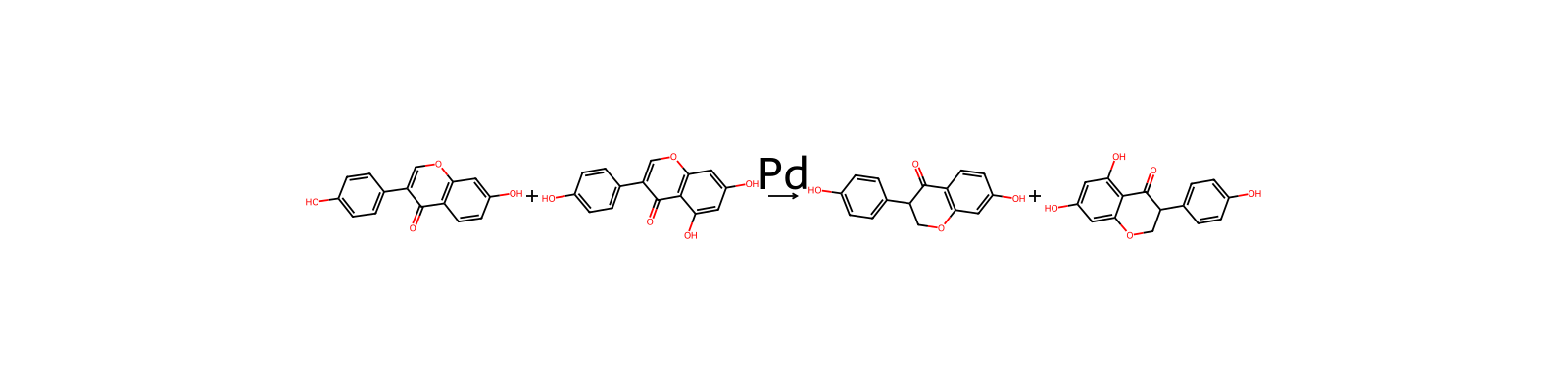
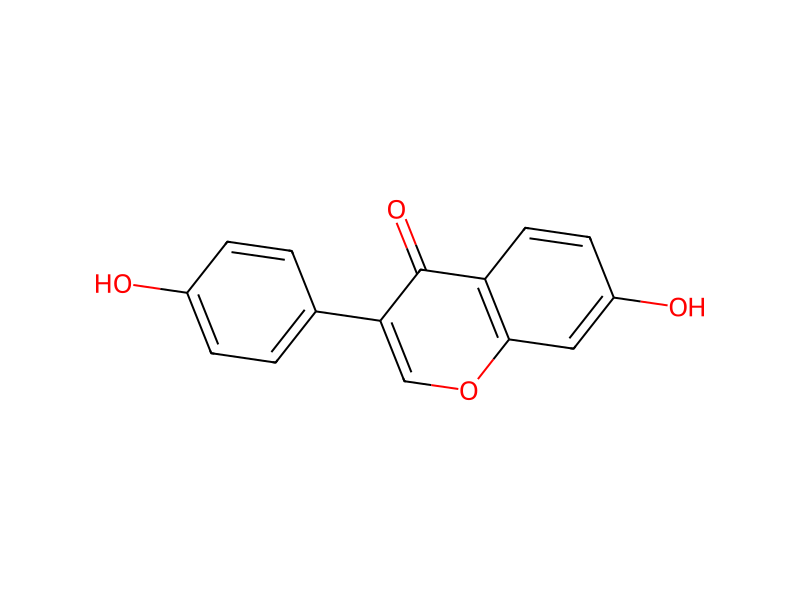
7-Hydroxy-3-(4-hydroxyphenyl)-4-benzopyron
Daidzein
Daten werden ergänzt – lade die Seite später neu, um den aktuellen Stand zu sehen
Grundinformationen
- CAS
486-66-8- Standard-SMILES
O=c1c(-c2ccc(O)cc2)coc2cc(O)ccc12- InChIKey
ZQSIJRDFPHDXIC-UHFFFAOYSA-N- Summenformel
- C15H10O4
- Durchschnittliche Molmasse
- 254,24 g/mol
- Monoisotopische Masse
- 254,0579088
Überblick
Daidzein is a member of the class of 7-hydroxyisoflavones that is 7-hydroxyisoflavone substituted by an additional hydroxy group at position 4'. It has a role as an EC 2.7.7.7 (DNA-directed DNA polymerase) inhibitor, an antineoplastic agent, an EC 3.2.1.20 (alpha-glucosidase) inhibitor, a plant metabolite and a phytoestrogen. It is a conjugate acid of a daidzein(1-).
Namen und Bezeichner
- Bevorzugter Name
- Daidzein
- IUPAC
- 7-hydroxy-3-(4-hydroxyphenyl)chromen-4-one
- Lokaler Name
- 7-Hydroxy-3-(4-hydroxyphenyl)-4-benzopyron
- Englischer Name
- Daidzein
- Summenformel
- C15H10O4
- Molmasse
- 254.24
Namen und Synonyme
daidzein486-66-84',7-DihydroxyisoflavoneDaidzeol7-hydroxy-3-(4-hydroxyphenyl)-4H-chromen-4-one7,4'-Dihydroxyisoflavone7-Hydroxy-3-(4-hydroxyphenyl)-4H-1-benzopyran-4-one7-hydroxy-3-(4-hydroxyphenyl)chromen-4-oneDiadzein7-Hydroxy-3-(4-hydroxyphenyl)-4-benzopyroneDTXSID90223106287WC5J2L
Weitere Namen anzeigen
Daidzein 486-66-84’,7-dihydroxy-isoflavon4,7-Dihydroxyisoflavone(Daidzein)7-HYDROXY-3-(4-HYDROXY-PHENYL)-CHROMEN-4-ONEk251bGMP-5TatoinDaizeolK 251-6
DTXCID102310CHEBI:28197RefChem:5729207-635-44H-1-Benzopyran-4-one, 7-hydroxy-3-(4-hydroxyphenyl)-Daidzein (Standard)MFCD000169544,7-Dihydroxyisoflavone
Datenbank-Bezeichner
Eigenschaften
Berechnete StruktureigenschaftenWird ergänzt
- XLogP
- 2,5
- Polarare Oberfläche (TPSA)
- 66,8 Ų
- H-Brücken-Donoren
- 2
- H-Brücken-Akzeptoren
- 4
- Frei drehbare Bindungen
- 1
- Schwere Atome
- 19
- Formalladung
- 0
- Komplexität
- 382
Experimentelle und physikochemische Eigenschaften
DrugsPharmaceuticals -> Listed in ZINC15
LipidsPolyketides [PK] -> Flavonoids [PK12] -> Isoflavonoids [PK1205]
Endocrine DisruptorsPotential endocrine disrupting compound
Melting Point323 °C
Physical DescriptionSolid
Collision Cross Section
155.8 Ų [M+H]+ [CCS Type: DT; Buffer gas: N2; Ionization: ESI+; Dataset: TOXCAST; Source Identifier: DTXSID9022310]
162.33 Ų [M-H]- [CCS Type: DT; Method: stepped-field]
172 Ų [M+Na]+
Physikochemische Eigenschaften
- Schmelzpunkt
- 315 · 315-323°C (dec.)
- Siedepunkt
- 317.45 °C · 317.45°C (rough estimate)
- Dichte
- 1.1629 · 1.1629 (rough estimate)
Sicherheit und Regulatorisches
Sicherheitsangaben dienen nur zur Orientierung und ersetzen weder das Sicherheitsdatenblatt (SDB) des Lieferanten noch geltende Vorschriften oder eine fachliche Bewertung.
GHS-Klassifizierung
GHS Classification
This chemical does not meet GHS hazard criteria for 3.7% (3 of 81) of reports.
Warning
H315 (95.1%): Causes skin irritation [Warning Skin corrosion/irritation]
P264, P264+P265, P280, P302+P352, P305+P351+P338, P321, P332+P317, P337+P317, and P362+P364 (click each P-code to see the statement)
Aggregated GHS information provided per 81 reports by companies from 5 notifications to the ECHA C&L Inventory. Each notification may be associated with multiple companies.
Gefahrenhinweise
Regulatory Information4H-1-Benzopyran-4-one, 7-hydroxy-3-(4-hydroxyphenyl)-: Does not have an individual approval but may be used as a component in a product covered by a group standard. It is not approved for use as a chemical in its own right.
Hazard Classes and CategoriesSkin Irrit. 2 (95.1%)
Toxikologische Informationen
Carcinogen ClassificationNo indication of carcinogenicity to humans (not listed by IARC).
Sicherheitsdaten
- wgk
- 3
- hs_code
- 29329990
- RTECS-Nr.
- DJ3100040
- risk_code
- 36/38
- hazard_code
- Xi
- safety_code
- 24-26-37/39
- hazard_class
- IRRITANT
Chemie und Industrie
Pharmakologische Informationen
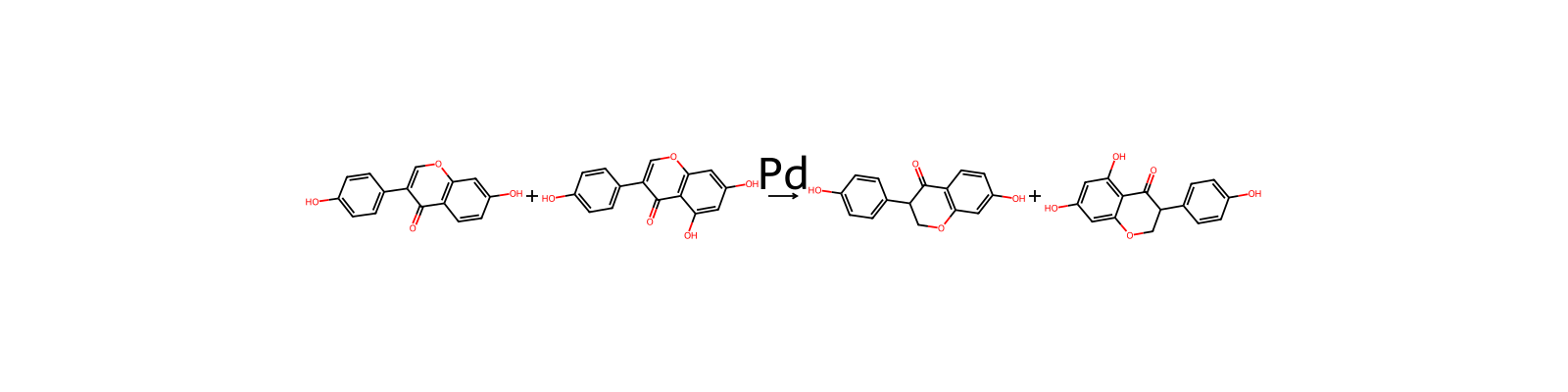
Metabolism/MetabolitesDaidzein has known human metabolites that include (2S,3S,4S,5R)-3,4,5-Trihydroxy-6-[3-(4-hydroxyphenyl)-4-oxochromen-7-yl]oxyoxane-2-carboxylic acid and Dihydrodazein.
MeSH Pharmacological ClassificationCompounds derived from plants, primarily ISOFLAVONES that mimic or modulate endogenous estrogens, usually by binding to ESTROGEN RECEPTORS.
Cellular LocationsMembrane
Verwendung und Herstellung
Uses
Isoflavones compounds are found in a number of plants, but soybeans and soy products like tofu and textured vegetable protein are the primary food source. Equol represents the main active product of daidzein metabolism, produced via specific microflora in the gut.
Anwendungen
BeschreibungDaidzein mainly comes from leguminous plants, the seeds of soybean (dadou), red clover grass, or all Pueraria roots. Its medicinal value was first recorded in Shen Nong Ben Cao Jing 2838 BC.Daidzein, one of the main soy isoflavones, is also the main component of radix puerariae (Gegen) which is the dry root of kudzu leguminous plants. Radix puerariae can reduce fever, produce saliva, and relieve diarrhea. Its chemical composition is complicated, including puerarin, xyloside, soy flavonoids, soybean flavonoid glycosides, beta-sitosterol, daidzin, daidzein. The main effective components are puerarin and daidzein
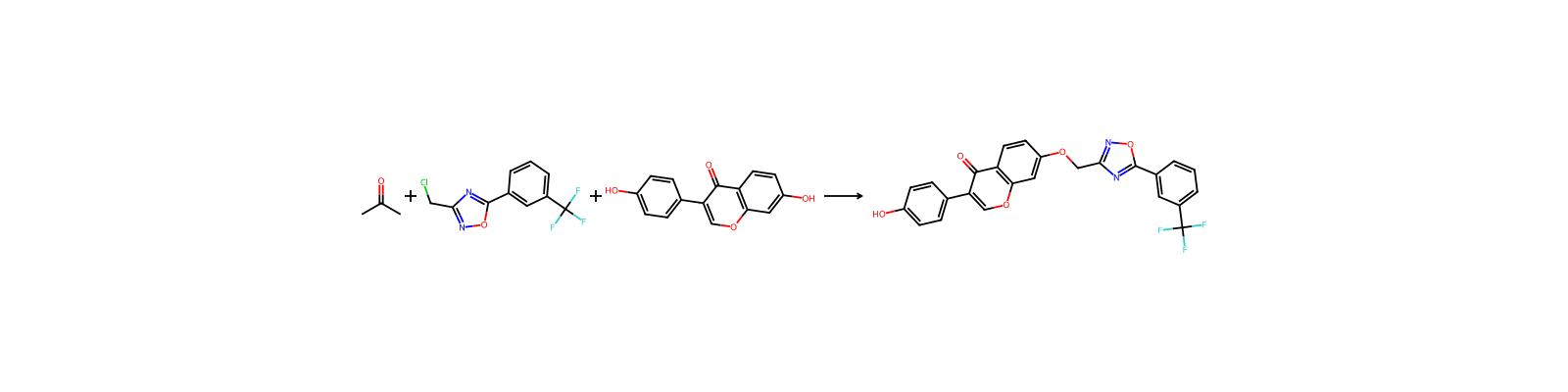
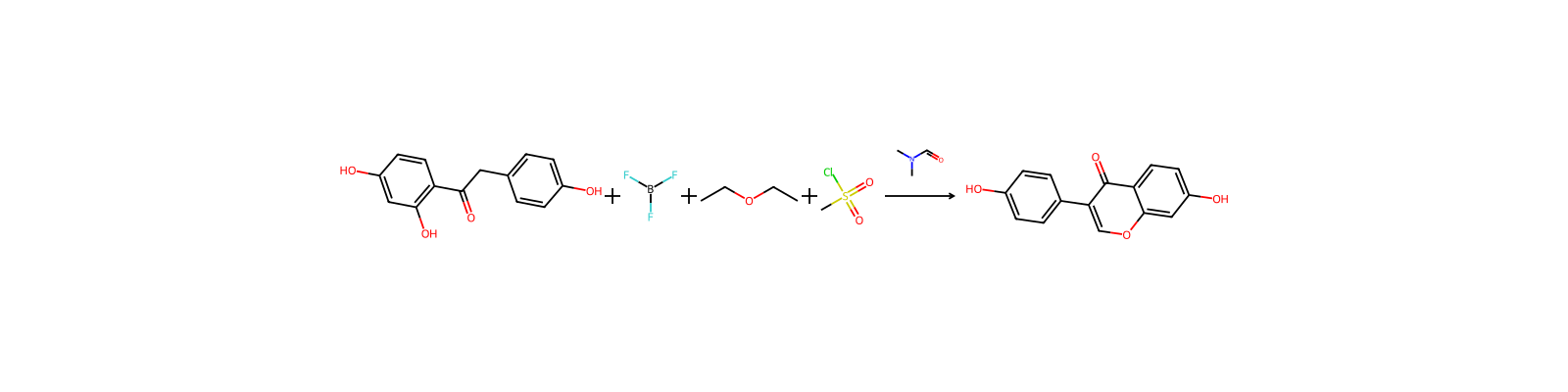
HistoryDaidzein is a kind of isoflavone compound, which was first synthetized by researchers in China. It has been widely used in drugs, food supplements, and cosmetics. Because of two phenolic hydroxyl structures, Daidzein has poor water solubility, poor liposolubility, and strong first-pass effect, leading to the low bioavailability of oral absorption, which limits its widely clinical usage. Ipriflavone is a kind of isoflavone modified from Daidzein, which has been used for the treatment of osteoporosis in Japan and some European countries. The effects of a series of amino alkoxy derivatives of ipriflavones on inhibiting the bone absorption were evaluated. The researchers found that 7-amino alkoxy derivative works best. When Daidzein was alkylated or acylated at 7-hydroxyl selectively, the stability was increased, and thus the proliferation of MCF-7 cell was inhibited.
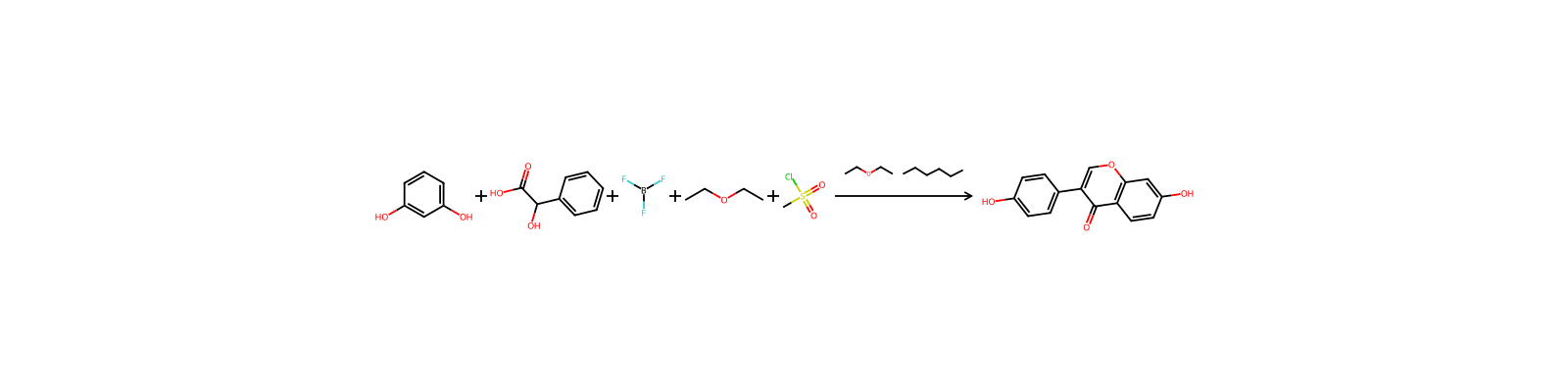
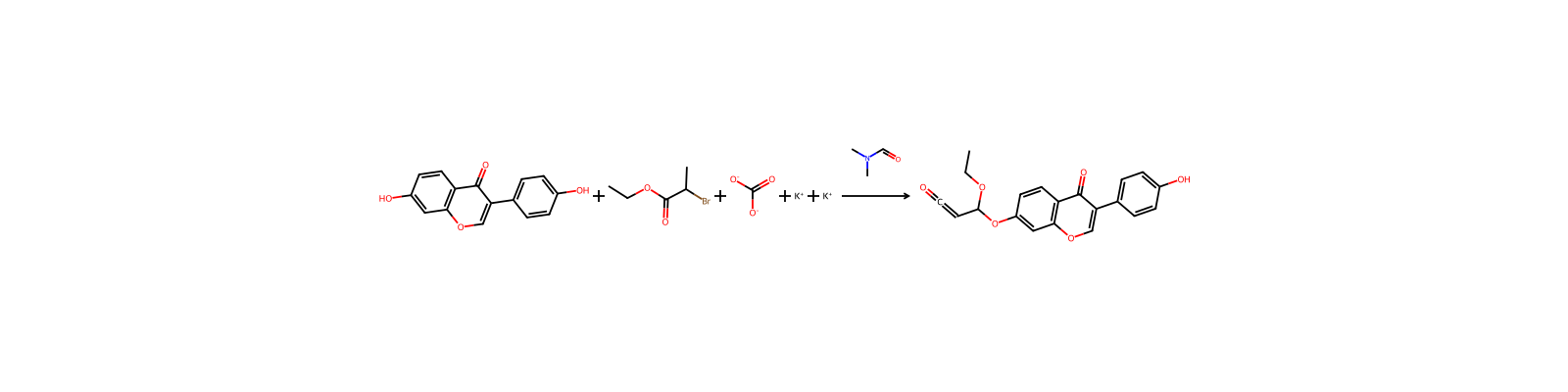
Zugehörige Reaktionen
49


Notizen zur Verbindung
Wird geladen…