
Grundinformationen
- Standard-SMILES
COc1cc(/C=C/c2ccc(O)cc2)cc(OC)c1- InChIKey
VLEUZFDZJKSGMX-ONEGZZNKSA-N- Summenformel
- C16H16O3
- Durchschnittliche Molmasse
- 256,3 g/mol
- Monoisotopische Masse
- 256,10994437
Überblick
Pterostilbene is a stilbenol that consists of trans-stilbene bearing a hydroxy group at position 4 as well as two methoxy substituents at positions 3' and 5'. It has a role as an antioxidant, a neurotransmitter, a hypoglycemic agent, an antineoplastic agent, a radical scavenger, a neuroprotective agent, an anti-inflammatory agent, an apoptosis inducer and a plant metabolite. It is a stilbenol, a diether and a member of methoxybenzenes. It derives from a hydride of a trans-stilbene.
Namen und Bezeichner
- Bevorzugter Name
- Pterostilbene
- IUPAC
- 4-[(E)-2-(3,5-dimethoxyphenyl)ethenyl]phenol
- Englischer Name
- Pterostilbene
- Summenformel
- C16H16O3
- Molmasse
- 256.3
Namen und Synonyme
Pterostilbene537-42-8trans-pterostilbene4-[(E)-2-(3,5-dimethoxyphenyl)ethenyl]phenolpterostilbene, (E)-3',5'-Dimethoxy-4-stilbenol3,5-Dimethoxy-4'-hydroxy-trans-stilbenePhenol, 4-[(1E)-2-(3,5-dimethoxyphenyl)ethenyl]-3',5'-dimethoxy-resveratroltrans-3,5-dimethoxy-4'-hydroxystilbene3,5-Dimethoxy-4'-hydroxystilbene26R60S6A5I
Weitere Namen anzeigen
pterostibenehydroxystilbenePTEROCARPUS MARSUPIUMnootropic blueberry extract PterostilbeneAKOS 236-80(Z)-3,4’-aminostilbene(E/Z)-3,4’POVIDONE USP(RG)
4-((E)-2-(3,5-dimethoxyphenyl)ethenyl)phenolCHEBI:8630DTXSID9041106phenol, 4-((1E)-2-(3,5-dimethoxyphenyl)ethenyl)-EH-301 COMPONENT PTEROSTILBENEPhenol, 4-(2-(3,5-dimethoxyphenyl)ethenyl)-, (E)-3',5'-dimethoxy-4E-stilbenol3',5'-dimethoxy-4trans-stilbenol
Datenbank-Bezeichner
- CAS
18259-15-9、537-42-8- PubChem CID
- 5281727
- DTXSID
DTXSID9041106- ChEMBL
CHEMBL83527- ChEBI
CHEBI:8630- UNII
- 26R60S6A5I
- EC Number
- 611-041-4
- Nikkaji
- J11.562B、J2.032.037K
Eigenschaften
Berechnete Struktureigenschaften
- XLogP
- 3,8
- Polarare Oberfläche (TPSA)
- 38,7 Ų
- H-Brücken-Donoren
- 1
- H-Brücken-Akzeptoren
- 3
- Frei drehbare Bindungen
- 4
- Schwere Atome
- 19
- Formalladung
- 0
- Komplexität
- 270
Experimentelle und physikochemische Eigenschaften
LipidsPolyketides [PK] -> Aromatic polyketides [PK13] -> Diphenyl ethers, biphenyls, dibenzyls and stilbenes [PK1309]
Endocrine DisruptorsPotential endocrine disrupting compound
Physikochemische Eigenschaften
- Schmelzpunkt
- 89 · 89-92 ºC
- Siedepunkt
- 420.4 · 420.4±35.0 °C(Predicted)
- Dichte
- 1.169 · 1.169±0.06 g/cm3(Predicted)
- storage temp.
- 2 · 2-8°C
- Löslichkeit
- 20 mg/mL · DMSO: >20mg/mL
- pka
- 9.96 · 9.96±0.26(Predicted)
- Aggregatzustand
- solid
- Farbe
- White or off-white
- Geruch (Odor)
- Characteristic
- Stabilität
- 2 years · Stable for 2 years from date of purchase as supplied. Solutions in DMSO or ethanol may be stored at -20° for up to 1 week.
- Kosmetik-Inhaltsstoffe Funktionen
- SKIN CONDITIONINGANTIOXIDANT
- InChI
- InChI=1S/C16H16O3/c1-18-15-9-13(10-16(11-15)19-2)4-3-12-5-7-14(17)8-6-12/h3-11,17H,1-2H3/b4-3+
- InChIKey
- VLEUZFDZJKSGMX-ONEGZZNKSA-N
- SMILES
- C1(O)=CC=C(/C=C/C2=CC(OC)=CC(OC)=C2)C=C1
- LogP
- 4.056 · 4.056 (est)
Sicherheit und Regulatorisches
GHS-Klassifizierung
GHS Classification
Danger
H318 (100%): Causes serious eye damage [Danger Serious eye damage/eye irritation]
P264+P265, P273, P280, P305+P354+P338, P317, P391, and P501 (click each P-code to see the statement)
Aggregated GHS information provided per 41 reports by companies from 1 notifications to the ECHA C&L Inventory. Each notification may be associated with multiple companies.
Gefahrenhinweise
Hazard Classes and CategoriesEye Dam. 1 (100%)
Sicherheitsdaten
- wgk
- 3
- ridadr
- 3077
- hs_code
- 29095000
- risk_code
- 41-51/53
- hazard_code
- Xi,N
- safety_code
- 26-39-61
- hazard_class
- IRRITANT
- packing_group
- Ⅲ
- Speicherklasse
- 11 - Combustible Solids
- Hazard Classifications
- Aquatic Chronic 2Eye Dam. 1
Chemie und Industrie
Pharmakologische Informationen
Metabolism/MetabolitesPterostilbene has known human metabolites that include (2S,3S,4S,5R)-6-[4-[(E)-2-(3,5-dimethoxyphenyl)ethenyl]phenoxy]-3,4,5-trihydroxyoxane-2-carboxylic acid.
Anwendungen
BeschreibungPterostilbene (PTS) is a fragrant-smelling hydrocarbon called "styrene", which is a derivative of resveratrol. It is found in blueberries and Pterocarpus marsupium (PM) heartwood. Similar to resveratrol, PTS has anti-inflammatory, anti-thrombotic, anti-cancer, anti-cancer, anti-hyperlipidemia and antibacterial effects.
OccurrencePterostilbene is a natural molecule found in fruits, vegetables and nuts. Blueberries are often quoted as one of the richest sources of pterostilbene. It is also found in almonds,various Vaccinium berries (including blueberries), grape leaves and vines,and Pterocarpus marsupium heartwood.
VerwendenSubstantial studies demonstrate that pterostilbene has diverse pharmacological activities for the prevention and treatment of diseases including inflammation, cancer, diabetes, and dyslipidemia.Pterostilbene has been used:to investigate its anti-oxidative stress activities and the involvement of the nuclear factor (erythroid-derived 2)-like 2 (Nrf2)-antioxidant response element (ARE) signaling pathwayto determine its effects on transcriptional activation of estrogen receptor-α (ERα) in hormone resistant breast cancer cells)
Darstellung
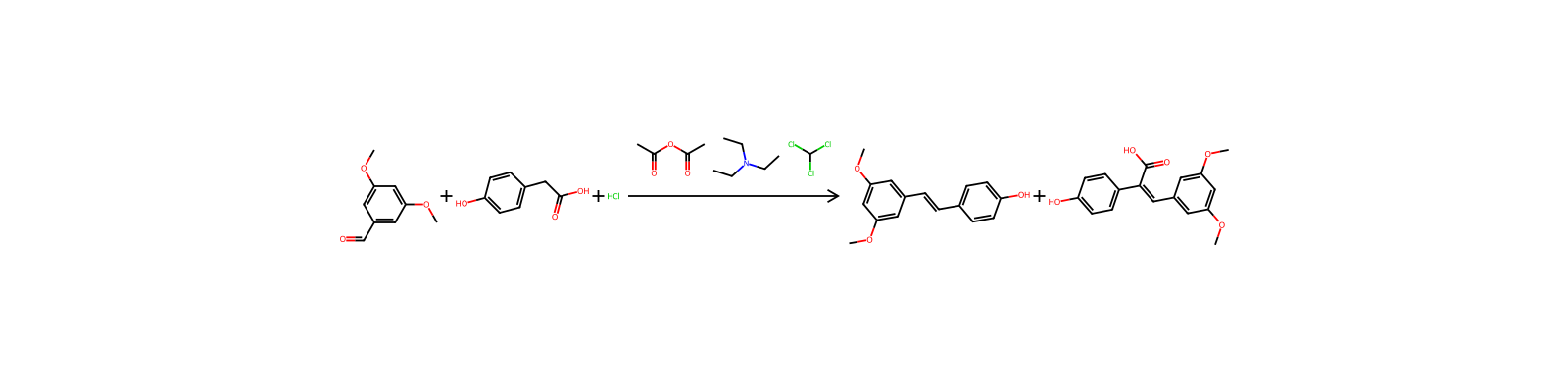
synthetischePterostilbene was synthesized from 3,5-dimethoxybenzyl bromide and p-nitrobenzaldehyde by Witting-Hornor reaction, reduction, diazotization and hydrolysis, with a total yield of 53.9%.
Vor- und nachgelagerte Produkte
Vorgelagerte Rohstoffe
Anbieter50 Anbieter
北京华美互利生物化工010-56205725 · [email protected]
梯希爱(上海)化成工业发展有限公司021-67121386 · [email protected]
苏州道澜生物医药科技有限公司15952404857 · [email protected]
上海阿拉丁生化科技股份有限公司400-6206333 13167063860 · [email protected]
山西玉宁生物科技有限公司13623677056
INTATRADE GmbH+49 3493/605464 · [email protected]
T&W GROUP021-61551611 13296011611 · [email protected]
上海如吉生物科技发展有限公司+86-21-65211385-8001 36031160 · [email protected]
上海将来实业股份有限公司400-0066400 13621662912 · [email protected]
山东原力泰医药科技有限公司18668987081 18980869808
上海迈瑞尔生化科技有限公司4006356688 18621169109 · [email protected]
大连美仑生物技术有限公司0411-62910999 13889544652 · [email protected]
安耐吉化学&3A(安徽泽升科技股份有限公司)400-0056266 · [email protected]
上海柯维化学技术有限公司021-64609169 18901607656 · [email protected]
上海相辉医药科技有限公司13761987713 · [email protected]
吉良化学21-62165282 · [email protected]
TransMIT GmbH PlantMetaChem+49-172-1024293 · [email protected]
武汉威顺达科技发展有限公司86-027-88774375 · [email protected]
南京春秋生物工程有限公司17388075642 13815430202 · [email protected]
武汉丰泰威远科技有限公司027-87465837 19945049750 · [email protected]
孝感深远化工有限公司15527621225; 15527621225 · [email protected]
云南西力生物技术股份有限公司0871-65217109 · [email protected]
山东西亚化学有限公司13355009207 13355009207 · [email protected]
湖南汇百侍生物科技有限公司0731-85526065 13308475853 · [email protected]
上海源叶生物科技有限公司13636370518 · [email protected]
艾科试剂4008-755-333 18080918076 · [email protected]
成都锦然生物科技有限公司028-83311324 1278112614 · [email protected]
上海思域化工科技有限公司86-21-34053660 · [email protected]
上海遐瑞医药科技有限公司+86 21 61551611
南京诺利斯医药科技有限公司13901585132 · [email protected]
上海健超生物科技有限公司150-2103-5486 18017383231 · [email protected]
TCI AMERICA800-4238616 · [email protected]
TOKYO CHEMICAL INDUSTRY CO., LTD.03-36680489 · [email protected]
上海诺宝化工有限公司+86(0)21 60484900
南京生利德生物科技有限公司025-57798810 18652991625 · [email protected]
陕西帕尼尔生物科技有限公司13720616393;029-84385017-8003 13720616393 · [email protected]
成都瑞芬思德丹生物科技有限公司2355253622; 18981954830 · [email protected]
上海倍卓生物科技有限公司021-61119791,13386096464 · [email protected]
Xunteng International Trading Co.,Limited—
湖北鑫源顺医药化工有限公司13971561712, 13995564702, 027-50664929 · [email protected]
上海将来实业股份有限公司400-0066400 13621662912 · [email protected]
上海将来实业股份有限公司021-61552785 · [email protected]
上海笛柏生物科技有限公司400-008-9730,021-54359730 400-008-9730 · [email protected]
上海石洋化工有限公司021-56795766 · [email protected]
成都零六生物科技有限公司400-1166-196 13458535857 · [email protected]
雷丁试剂0510-85629785 18013409632 · [email protected]
上海卓因生物科技有限公司021-61317773 · [email protected]
南京恩德萨生物科技有限公司025-58862853 18915922038 · [email protected]
上海御略医药科技有限公司021-60345187 13671753212 · [email protected]
珠海华辰医药科技有限公司15916275916 · [email protected]
Ergänzende Hinweise
DefinitionChEBI: Pterostilbene is a stilbenol that consists of trans-stilbene bearing a hydroxy group at position 4 as well as two methoxy substituents at positions 3' and 5'. It has a role as an antioxidant, an antineoplastic agent, a neurotransmitter, a plant metabolite, an apoptosis inducer, a neuroprotective agent, an anti-inflammatory agent, a radical scavenger and a hypoglycemic agent. It is a stilbenol, a member of methoxybenzenes and a diether. It derives from a hydride of a trans-stilbene.
Zugehörige Reaktionen
5


Verknüpfte Notizen
Wird geladen…