StartseiteMCPWorkbenchSkills
StartseiteWorkbenchBenachrichtigungenMein Bereich
llms.txt · MCP-AnleitungDatenschutz · Nutzungsbedingungen · Supportv1.8.3
  1. Startseite
  2. /Verbindung

Alfacalcidol

HCID 5282181
Neue Reaktion
Drucken

Daten werden ergänzt – lade die Seite später neu, um den aktuellen Stand zu sehen

GrundinformationenÜberblickNamen und BezeichnerEigenschaftenSicherheit und RegulatorischesChemie und IndustrieZugehörige ReaktionenNotizen zur Verbindung
TeilstruktursucheÄhnliche Strukturen suchen

Grundinformationen

CAS
41294-56-8
Standard-SMILES
C=C1/C(=C\C=C2/CCC[C@]3(C)[C@@H]([C@H](C)CCCC(C)C)CC[C@@H]23)C[C@@H](O)C[C@@H]1O
InChIKey
OFHCOWSQAMBJIW-AVJTYSNKSA-N
Summenformel
C27H44O2
Durchschnittliche Molmasse
400,6 g/mol
Monoisotopische Masse
400,33413065

Überblick

Alfacalcidol is a member of the class of D3 vitamins that is calciol in which the hydrogen at the 1alpha position is replaced by a hydroxy group. It is an active metabolite of cholecalciferol, which performs important functions in regulation of the calcium balance and the bone metabolism. It has a role as a bone density conservation agent. It is a diol, a seco-cholestane, a hydroxycalciol and a member of D3 vitamins. It is functionally related to a calciol.

Namen und Bezeichner

Bevorzugter Name
Alfacalcidol
IUPAC
trans-(1R,3S,5Z)-5-[(2E)-2-[(1R,3aS,7aR)-7a-methyl-1-[(2R)-6-methylheptan-2-yl]-2,3,3a,5,6,7-hexahydro-1H-inden-4-ylidene]ethylidene]-4-methylidenecyclohexane-1,3-diol
Lokaler Name
Alfacalcidol
Englischer Name
Alfacalcidol
Summenformel
C27H44O2
Molmasse
400.64

Namen und Synonyme

alfacalcidol41294-56-81-HydroxycholecalciferolAlphacalcidol1alpha-Hydroxyvitamin D3AlfarolEinsAlpha1-Hydroxyvitamin D31alpha-HydroxycholecalciferolAlsiodolOxydevitBondiol
Weitere Namen anzeigen
HYDROXYVITAMIN D3Alfacalcidiol1α-Hydroxyvitamin D3EtαUn Alfa
alpha-CalcidolOne-AlphaEtalphaAlfacalcidolumAlpha D3AlpharolTevabone1alpha-Hydroxy-vitamin D3

Datenbank-Bezeichner

CAS
41294-56-8
PubChem CID
5282181
DTXSID
DTXSID0022569
ChEMBL
CHEMBL1601669
ChEBI
CHEBI:31186
UNII
URQ2517572
EC Number
255-297-1
Nikkaji
J9.282G

Eigenschaften

Berechnete StruktureigenschaftenWird ergänzt

XLogP
6,8
Polarare Oberfläche (TPSA)
40,5 Ų
H-Brücken-Donoren
2
H-Brücken-Akzeptoren
2
Frei drehbare Bindungen
6
Schwere Atome
29
Formalladung
0
Komplexität
643

Experimentelle und physikochemische Eigenschaften

DrugsPharmaceuticals -> Listed in ZINC15
LipidsLipids -> Sterol Lipids [ST] -> Secosteroids [ST03] -> Vitamin D3 and derivatives [ST0302]
Solubility · 2 Einträge

<1 mg/mL

1.63e-03 g/L

Melting Point136 °C
Physical DescriptionSolid

Physikochemische Eigenschaften

Schmelzpunkt
134 · 134-136°C
Siedepunkt
531.5 · 531.5±50.0 °C(Predicted)
Dichte
1.01 · 1.01±0.1 g/cm3(Predicted)
storage temp.
20 °C · −20°C
Löslichkeit
Practically insoluble in water, freely soluble in ethanol (96 per cent), soluble in fatty oils.
Aggregatzustand
White crystalline solid

Sicherheit und Regulatorisches

Sicherheitsangaben dienen nur zur Orientierung und ersetzen weder das Sicherheitsdatenblatt (SDB) des Lieferanten noch geltende Vorschriften oder eine fachliche Bewertung.

GHS-Klassifizierung

GHS Classification · 4 Einträge

Danger

H300 (100%): Fatal if swallowed [Danger Acute toxicity, oral]

P260, P262, P264, P270, P271, P280, P284, P301+P316, P302+P352, P304+P340, P316, P320, P321, P330, P361+P364, P403+P233, P405, and P501 (click each P-code to see the statement)

Aggregated GHS information provided per 48 reports by companies from 7 notifications to the ECHA C&L Inventory. Each notification may be associated with multiple companies.

Gefahrenhinweise

Regulatory InformationAlfacalcidol: Does not have an individual approval but may be used as a component in a product covered by a group standard. It is not approved for use as a chemical in its own right.
Hazard Classes and CategoriesAcute Tox. 2 (100%)

Toxikologische Informationen

Drug Induced Liver Injury · 4 Einträge

Drug-Induced Liver Injury Severity and Toxicity (DILIst)

Alfacalcidol

DILI Positive

DOI:10.1016/j.drudis.2019.09.022

Sicherheitsdaten

F
8-10
wgk
3
ridadr
UN 2811 6.1/PG 1
hs_code
29361000
RTECS-Nr.
VS2851000
risk_code
26/27/28-36/37/38

Chemie und Industrie

Pharmakologische Informationen

ATC Code · 3 Einträge

A11CC03

A - Alimentary tract and metabolism

QA - Alimentary tract and metabolism

Protein BindingThe active metabolite of alfacalcidol, 1,25-dihydroxyvitamin D, is transported to tissues via globulin, a specific transport protein.
Pharmacodynamics · 1 Eintrag

Alfacalcidol works to increase serum levels of calcium by stimulating intestinal calcium absorption, reabsorption of calcium from bone, and possibly the renal reabsorption of calcium. It also modestly promotes intestinal phosphorus absorption. In patients with renal failure, alfacalcidol increased intestinal calcium and phosphorus absorption in a dose-related manner. This increase in calcium and phosphorus levels occurs within three days following drug administration: this effect was reversed within three days of drug discontinuation. In patients with chronic renal failure, serum calcium levels were elevated while parathyroid hormone and alkaline phosphatase levels returned to normal levels within five days following alfacalcidol administration. Since alfacalcidol suppresses parathyroid hormone, a reduction in parathyroid hormone levels is achieved more rapidly in patients on intermittent intravenous therapy, with significant reductions occurring within three months of therapy. In patients receiving daily oral therapy of alfacalcidol, the time it takes alfacalcidol to normalize plasma calcium levels may be up to several months, possibly reflecting calcium being utilized for bone mineralization. In patients with nutritional osteomalacia, alfacalcidol increased calcium absorption with six hours of oral administration and the effects peaked at 24 hours.

Mechanism of Action · 1 Eintrag

In conditions like chronic renal failure, renal bone disease, hypoparathyroidism, and vitamin D dependent rickets, the kidneys' capacity for 1α-hydroxylation is impaired, leading to reduced production of endogenous 1,25-dihydroxyvitamin D and aberrated mineral metabolism. As an active and potent analog of vitamin D, alfacalcidol works to restore the functions and activities of endogenous 1,25-dihydroxyvitamin D.

Biological Half-Life

Zugehörige Reaktionen

5
Reaktionsaufzeichnung erstellen
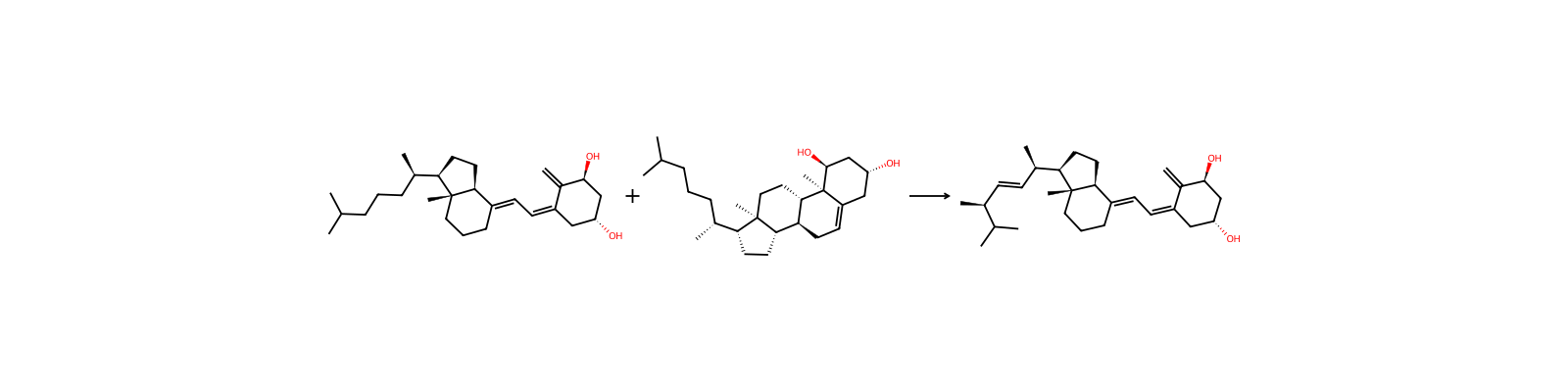
Reaktionsgleichung von HRID 348784
HRID 348784als Produkt
Reaktionsgleichung von HRID 553331
HRID 553331als Produkt
Reaktionsgleichung von HRID 1758905
HRID 1758905als Edukt
Reaktionsgleichung von HRID 2259556
HRID 2259556als Edukt
Reaktionsgleichung von HRID 2259557
HRID 2259557als Edukt

Notizen zur Verbindung

Auf dieser SeiteGrundinformationenÜberblickNamen und BezeichnerEigenschaftenSicherheit und RegulatorischesChemie und IndustrieZugehörige ReaktionenNotizen zur Verbindung
pka
14.43 · 14.43±0.40(Predicted)
Farbe
White to Almost white
Biologische Quelle
synthetic
Merck
14 · 14,4819
Stabilität
Light Sensitive
InChIKey
OFHCOWSQAMBJIW-GITLSTMWSA-N
SMILES
[C@@H]1(O)CC(=C/C=C2\CCC[C@@]3(C)[C@@]\2([H])CC[C@@H]3[C@H](C)CCCC(C)C)C(=C)[C@H](O)C1
CAS Datenbank
41294 · 41294-56-8(CAS DataBase Reference)
EPA chemische Informationen
Alphacalcidol (41294-56-8)
hazard_code
T+,Xi
safety_code
28-36/37-45-36-26
hazard_class
6.1(a)
packing_group
I
Speicherklasse
6.1A - Combustible acute toxic Cat. 1 and 2very toxic hazardous materials
Hazard Classifications
Acute Tox. 1 Oral
The half-life of alfacalcidol ranges from three to four hours.
Metabolism/Metabolites · 1 Eintrag

Alfacalcidol is rapidly converted in the liver to 1,25-dihydroxyvitamin D, which is essentially the metabolite of vitamin D that regulates calcium and phosphate metabolism. Alfacalcidol is further metabolized to other polar inactive metabolites, excreted primarily through the bile.

MeSH Pharmacological ClassificationAgents that inhibit BONE RESORPTION and/or favor BONE MINERALIZATION and BONE REGENERATION. They are used to heal BONE FRACTURES and to treat METABOLIC BONE DISEASES such as OSTEOPOROSIS.
Absorption, Distribution and ExcretionAlfacalcidol is absorbed passively and almost completely in the small intestine.
Cellular LocationsCytoplasm

Anwendungen

VerwendenA synthetic analog of Calcitiol (the hormonal form of vitamin D3), which shows identical potency with respect to stimulation of intestinal calcium absorption and bone mineral mobilization. Vitamin D source

Vor- und nachgelagerte Produkte

Vorgelagerte Rohstoffe

Lithium Aluminum Hydride3-ChlorperbenzoesureEthylenediamine tetrakis(propoxylate-block-ethoxylate) tetrol4-Phenyl-1,2,3,6-tetrahydropyridinhydrochlorid
Ergänzende Hinweise · 1 Eintrag

DefinitionChEBI: A member of the class of D3 vitamins that is calciol in which the hydrogen at the 1alpha position is replaced by a hydroxy group. It is an active metabolite of cholecalciferol, which performs important functions in reg lation of the calcium balance and the bone metabolism.