
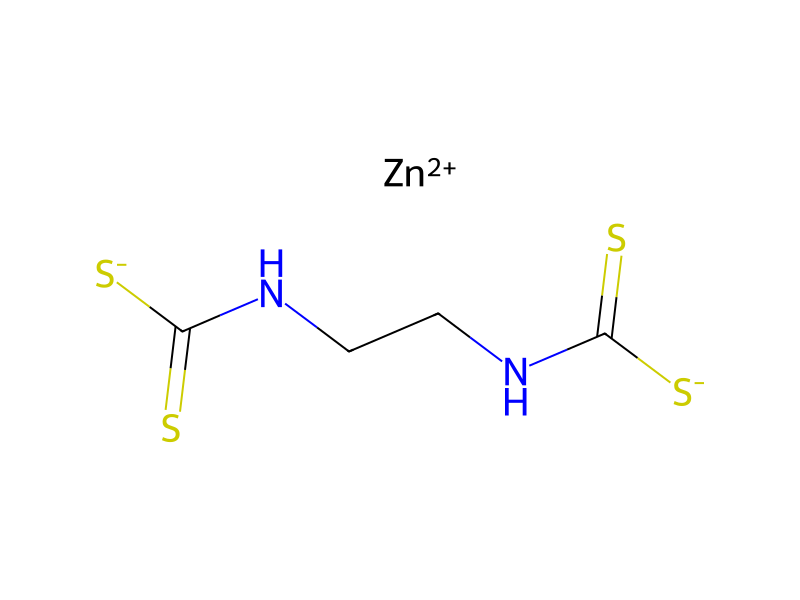
Grundinformationen
- Standard-SMILES
S=C([S-])NCCNC(=S)[S-].[Zn+2]- InChIKey
AMHNZOICSMBGDH-UHFFFAOYSA-L- Summenformel
- C4H6N2S4Zn
- Durchschnittliche Molmasse
- 275,8 g/mol
Überblick
Metiram can cause cancer and developmental toxicity according to The Environmental Protection Agency (EPA).
Namen und Bezeichner
- Bevorzugter Name
- Zineb
- IUPAC
- zinc N-[2-(sulfidocarbothioylamino)ethyl]carbamodithioate
- Englischer Name
- METIRAM
- Summenformel
- C12H12N6S16Zn
- Molmasse
- 818.69388
Namen und Synonyme
ZINEB12122-67-7TritoftorolParzateDTXSID5021465Zinc Ethylenebis(dithiocarbamate)X1FSB1OZPTENT-14874Zinc ethylenebisdithiocarbamatezinc ethane-1,2-diyldicarbamodithioatezinc ethane-1,2-diylbis(dithiocarbamate)Cynkotox
Weitere Namen anzeigen
amarexPOLYRAMFMC9102METIRAMTHIUMETMetriamnia9102polymatMethiramMetriraM
NovozirCHEBI:52498CinebNSC-49513ClortocaffaroAaphytoraAphytoraAsporum
Datenbank-Bezeichner
- CAS
12122-67-7、9006-42-2- PubChem CID
- 5284484
- DTXSID
DTXSID5021465- ChEMBL
CHEMBL1411246- ChEBI
CHEBI:52498- UNII
- X1FSB1OZPT
- EC Number
- 235-180-1
Eigenschaften
Berechnete Struktureigenschaften
- Polarare Oberfläche (TPSA)
- 90,2 Ų
- H-Brücken-Donoren
- 2
- H-Brücken-Akzeptoren
- 4
- Frei drehbare Bindungen
- 3
- Schwere Atome
- 11
- Formalladung
- 0
- Komplexität
- 108
Experimentelle und physikochemische Eigenschaften
Chemical ClassesMutagens
Pesticides
Pesticide -> EPA IRIS
Fungicides
Active substance -> EU Pesticides database: Not approved
Pesticides -> Dithiocarbamates (Pesticide)
LogPlog Kow = 1.30
OdorPractically odorless
DensityApprox 1.74 at 20 °C
Color/Form
Powder or crystals from chloroform + alcohol
Light-tan solid
WHITE POWDER OR CRYSTALS
Pale yellow powder
Solubility
less than 1 mg/mL at 77 °F (NTP, 1992)
Soluble in carbon disulfide, pyridine
Soluble in chloroform
Soluble in benzene
Practically insoluble in common organic solvents. Dissolves in some chelating agents, for example salts of ethylediaminetetra-acetic acid, from which it cannot be recovered.
In water, about 10 mg/L at 25 °C
Flash Point
90 °C
194 °F
Endocrine DisruptorsPotential endocrine disrupting compound
Boiling Pointdecomposes
Decomposition
Decomposes at 157 °C without melting.
Zineb decomposes on storage primarily due to exposure to moisture. Products of the decomposition were identified as ethylenethiuram monosulfide, zinc sulfide, carbon disulfide and ethylenethiourea.
Decomposes before melting. Decomposes gradually, accelerated by exposure to moisture, heat or air.
When heated to decomposition it emits very toxic fumes of /nitroxide, zinc oxide/, and /sulfoxides/.
157 °C
Melting Point
157 °C (decomposes)
314.6 °F
Physikochemische Eigenschaften
- Schmelzpunkt
- 156 ℃ · 156℃ (approx, Decomposition)
- storage temp.
- 0 · 0-6°C
- Löslichkeit
- DMSO (Slightly, Heated)
- Aggregatzustand
- Solid
- Farbe
- Off-White
- EPA chemische Informationen
- Metiram (9006-42-2)
Sicherheit und Regulatorisches
GHS-Klassifizierung
GHS Classification
Warning
H317: May cause an allergic skin reaction [Warning Sensitization, Skin]
P261, P271, P272, P280, P302+P352, P304+P340, P319, P321, P333+P317, P362+P364, P403+P233, P405, and P501 (click each P-code to see the statement)
Warning
H317 (100%): May cause an allergic skin reaction [Warning Sensitization, Skin]
P261, P271, P272, P280, P302+P352, P304+P340, P319, P321, P333+P317, P362+P364, P403+P233, P405, and P501 (click each P-code to see the statement)
Gefahrenhinweise
Regulatory Information
01/245/EC
Zineb: HSNO Approval: HSR003171 Approved with controls
The New Jersey Worker and Community Right to Know Act requires public and private employers to provide information about hazardous substances at their workplaces. (N.J.S.A. 34:5A-1 et. seq.)
Other Safety InformationIMAP assessments - Zinc, [[1,2-ethanediylbis(carbamodithioato)](2-)]-: Environment tier I assessment
DOT LabelPoison
Fire Hazards
Flash point data for this chemical are not available, but it is probably combustible. (NTP, 1992)
Combustible. Gives off irritating or toxic fumes (or gases) in a fire. Finely dispersed particles form explosive mixtures in air.
Fire PotentialCombustible.
Health HazardsSYMPTOMS: Symptoms associated with exposure to this compound include irritation of the skin, eyes and mucous membranes as well as anemia.
Hazards Summary
The EBCDCs (ethylenebisdithiocarbamates) can cause irritant and allergic contact dermatitis. EBDCs include ferbam, vapam, maneb, mancozeb, zineb, thiram, and ziram. They are also used as rubber accelerators. Ethylene thiourea (ETU), which may contaminate EBCDCs, is carcinogenic and teratogenic in animal experiments. [LaDou, p. 610] ETU is the major metabolite of EBDCs. [Krieger, p. 1690] A skin, eye, and respiratory tract irritant; May cause skin sensitization; Prolonged or repeated exposure may have effects on the blood, CNS, and liver; [ICSC] See the agent, Ethylene thiourea.
FDA RequirementsZineb is an indirect food additive for use only as a component of adhesives.
Reactive GroupThiocarbamate Esters and Salts/Dithiocarbamate Esters and Salts
EC ClassificationSymbol: Xi; R: 37-43; S: (2)-8-24/25-46
UN ClassificationUN Hazard Class: 6.1; UN Pack Group: III
Special Reports
WHO; Environmental Health Criteria 78: Dithiocarbamate Pesticides, Ethylenethiourea and Propylenethiourea (1988). EHC documents are designed for scientists and administrators responsible for the establishment of safety standards and regulations and provide basic scientific risk evaluations of a wide range of chemicals and groups of chemicals.[Available from, as of March 4, 2010: http://www.inchem.org/documents/ehc/ehc/ehc78.htm]
Sicherheit und Schutzausrüstung
Fire Fighting
Fires involving this compound should be controlled with a dry chemical, carbon dioxide or Halon extinguisher. (NTP, 1992)
Use water spray, foam, powder, carbon dioxide. In case of fire: keep drums, etc., cool by spraying with water.
First Aid Measures
Fresh air, rest. Refer for medical attention.
Remove contaminated clothes. Rinse and then wash skin with water and soap.
First rinse with plenty of water for several minutes (remove contact lenses if easily possible), then refer for medical attention.
Rinse mouth. Do NOT induce vomiting. Give one or two glasses of water to drink. Refer for medical attention .
First Aid
EYES: First check the victim for contact lenses and remove if present. Flush victim's eyes with water or normal saline solution for 20 to 30 minutes while simultaneously calling a hospital or poison control center. Do not put any ointments, oils, or medication in the victim's eyes without specific instructions from a physician. IMMEDIATELY transport the victim after flushing eyes to a hospital even if no symptoms (such as redness or irritation) develop.
Safe Storage
Separated from food and feedstuffs, strong bases, amines, amides, acids and strong oxidizers. Store only in original container. Provision to contain effluent from fire extinguishing. Cool. Dry. Keep in the dark. Keep in a well-ventilated room.
Fire Fighting ProceduresWater spray, foam, powder, carbon dioxide ... Keep drums, etc., cool by spraying with water.
Storage ConditionsStore in well-aired, fresh (less than 30 °C), dry area away from dwellings, animal shelters and stored food.
Cleanup Methods
SRP: Wastewater from contaminant suppression, cleaning of protective clothing/equipment, or contaminated sites should be contained and evaluated for subject chemical or decomposition product concentrations. Concentrations shall be lower than applicable environmental discharge or disposal criteria. Alternatively, pretreatment and/or discharge to a permitted wastewater treatment facility is acceptable only after review by the governing authority and assurance that "pass through" violations will not occur. Due consideration shall be given to remediation worker exposure (inhalation, dermal and ingestion) as well as fate during treatment, transfer and disposal. If it is not practicable to manage the chemical in this fashion, it must be evaluated in accordance with EPA 40 CFR Part 261, specifically Subpart B, in order to determine the appropriate local, state and federal requirements for disposal.
Do NOT wash away into sewer. Sweep spilled substance into containers; if appropriate, moisten first to prevent dusting. Carefully collect remainder, then remove to safe place.
Nonfire Spill Response
SMALL SPILLS AND LEAKAGE: If you spill this chemical, FIRST REMOVE ALL SOURCES OF IGNITION, then dampen the solid spill material with toluene, then transfer the dampened material to a suitable container. Use absorbent paper dampened with toluene to pick up any remaining material. Your contaminated clothing and absorbent paper should be sealed in a vapor-tight plastic bag for eventual disposal. Solvent-wash all contaminated surfaces with toluene followed by washing with a soap and water solution. Do not reenter the contaminated area until the Safety Officer (or other responsible person) has verified that the area has been properly cleaned.
Disposal Methods
Generators of waste (equal to or greater than 100 kg/mo) containing this contaminant, EPA hazardous waste number U114, must conform with USEPA regulations in storage, transportation, treatment and disposal of waste.
A potential candidate for liquid injection incineration at a temperature range of 650 to 1,600 °C and a residence time of 0.1 to 2 seconds. A potential candidate for rotary kiln incineration at a temperature range of 820 to 1,600 °C and residence times of seconds for liquids and gases, and hours for solids. A potential candidate for fluidized bed incineration at a temperature range of 450 to 980 °C and residence times of seconds for liquids and gases, and longer for solids. /Ethylenebisdithiocarbamate/
Spillage Disposal
Personal protection: particulate filter respirator adapted to the airborne concentration of the substance. Do NOT let this chemical enter the environment. Sweep spilled substance into covered labelled containers. If appropriate, moisten first to prevent dusting. Then store and dispose of according to local regulations.
Preventive Measures
SRP: The scientific literature for the use of contact lenses by industrial workers is inconsistent. The benefits or detrimental effects of wearing contact lenses depend not only upon the substance, but also on factors including the form of the substance, characteristics and duration of the exposure, the uses of other eye protection equipment, and the hygiene of the lenses. However, there may be individual substances whose irritating or corrosive properties are such that the wearing of contact lenses would be harmful to the eye. In those specific cases, contact lenses should not be worn. In any event, the usual eye protection equipment should be worn even when contact lenses are in place.
SRP: Contaminated protective clothing should be segregated in a manner that results in no direct personal contact by personnel who handle, dispose of, or clean the clothing. Quality assurance procedures to confirm the efficacy of the cleaning procedures should be implemented prior to the decontaminated protective clothing being returned for reuse by the workers. Contaminated clothing (including shoes/socks) should not be taken home at end of shift, but should remain at employee's place of work for cleaning.
Production equipment must be enclosed and provided with exhaust ventilation. No workers must be authorized to enter reactor for syntheses of this compound before it has been purged, cleaned, checked and certified safe for entry. ... Showers should be provided, and their regular use should be encouraged. /Carbamates and thiocarbamates/
Isolation and EvacuationExcerpt from ERG Guide 151 [Substances - Toxic (Non-Combustible)]:
Toxikologische Informationen
TreatmentZinc poisoning is treated symptomatically, often by administering fluids such as water or milk, or with gastric lavage. (L49)
Target OrgansEndocrine
Health EffectsChronic exposure to zinc causes anemia, atazia, lethargy, and decreases the level of good cholesterol in the body. It is also believed to cause pancreatic and reproductive damage. (L49)
Ecotoxicity Values
LD50; Species: Anas platyrhynchos (Mallard duck, male, 11-12 months old) oral >2000 mg/kg /sample purity 95%/
LD50; Species: Phasianus colchicus (Pheasant, female, 3-4 months old) oral >2000 mg/kg /sample purity 95%/
LC50; Species: Coturnix japonica (Japanese quail) oral >5000 ppm (diluent: corn oil) /Technical grade, 85% ai/
EC50; Species: Chlorella pyrenoidosa (Green algae, 10+8 cells/100 mL); Conditions: freshwater, static, 20 °C; Concentration: 1800 ug/L for 96 hr; Effect: growth, general /95% purity/
For more Ecotoxicity Values (Complete) data for Zineb (16 total), please visit the HSDB record page.
Environmental Fate
TERRESTRIAL FATE: Based on a classification scheme(1), Koc values of 308-1158(2) indicate that zineb is expected to have low to moderate mobility in soil(SRC). Volatilization of zineb from moist soil surfaces is not expected to be an important fate process since zineb is a zinc salt(SRC). Zineb is not expected to volatilize from dry soil surfaces(SRC) based upon a vapor pressure of <7.5X10⁻⁸ mm Hg(3). Zineb field half-lives range from 23-43 days(4). Dithiocarbamate fungicides undergo rapid decomposition in the presence of moisture(5-6); therefore, zineb decomposition in and on wet soil may be an important fate process(SRC).
TERRESTRIAL FATE: Zineb is hydrolyzable and does not persist long in soil(1). Its persistence in soil is less than that in water so zineb's degradation in soil is probably catalyzed by soil components. Loss in soil, while rapid, was not complete at the end of 45 days(1). Within four months after a field planted with forage was sprayed with zineb, 99.7% of the fungicide was no longer present at effective levels(1). In the laboratory, zineb lost its efficacy in 16 days at 30 or 40 °C and in the field its bioactive half-life was 16 days(2). Since the fungitoxicity of zineb increases for four days before it declines(2), degradative products are probably the active fungicides and the half-life of the zineb is less than what would be inferred from its bioactivity(SRC). In an experiment in a microagricultural chamber containing 19 day old tomato plants, zineb was applied as a spray at day 56 and day 86, the latter spray containing radiolabeled fungicide(3). The experiment was terminated on day 156 and the half-life of the zineb was 23 days. It was primarily confined to the top 1 cm of soil(3). 36% of the zineb was removed through volatilization of low molecular weight degradation products(3).
AQUATIC FATE: Based on a classification scheme(1), Koc values of 308-1159(2) indicate that zineb is expected to adsorb to suspended solids and sediment(SRC). Volatilization from water surfaces is not expected since zineb is a zinc salt(SRC). According to a classification scheme(3), an estimated BCF of 3(SRC), from its log Kow of 1.3(4) and a regression-derived equation(5), suggests the potential for bioconcentration in aquatic organisms is low(SRC). Surface water mixed with sediment produced 70% cumulative radio-labeled carbon dioxide after 50 days incubation(6), suggesting that biodegradation may be an important fate process in water(SRC). Hydrolysis half-lives for zineb in relation to pH are 9 mins at pH 3.8, 6.5 hrs at pH 5.7, 96 hrs at pH 7.0, and 405 hrs at pH 8.0(6). Zineb is unstable in aqueous solutions, producing ethylenethiourea, 5,6-dihydro-3H-imidaz-1,2,4-dithiazole-3-thione, ethylenediamine, ethylenediisothiocyanate, sulfur, carbon disulfide, and hydrogen sulfide(7). Zineb is unstable to moisture on prolonged storage(7). When zineb was spilled into the Rhine River during a warehouse fire, it hydrolyzed very quickly(8). The mass of zinc resulting from the fire was unimportant(8).
ATMOSPHERIC FATE: According to a model of gas/particle partitioning of semivolatile organic compounds in the atmosphere(1), zineb, which has a vapor pressure of <7.5X10⁻⁸ mm Hg at 20 °C(2), is expected to exist solely in the particulate phase in the ambient atmosphere. Zineb will be lost by gravitational settling(3). Zineb contains chromophores that absorb at wavelengths >290 nm(4) and therefore may be susceptible to direct photolysis by sunlight(SRC).
ATMOSPHERIC FATE: In the atmosphere zineb will exist primarily as dust or an aerosol and be lost by gravitational settling. In an experiment in a microagricultural chamber containing 19 day old tomato plants, in which zineb was applied as a spray, the half-life of zineb in air, as determined by measuring (14)C-zineb and the ethylenediamine derivative, was 11 and 14 days, respectively(1).
Food Survey Values
Zineb residues of 0.57 and 0.77 ppm were found in grapes sprayed 5 times and harvested 20 days after the last spraying(1). Similarly, another study reported residues of 1.02-2.05 ppm in grapes sprayed 11-13 times and harvested <20 days after the last spraying(1). A Food and Drug Administration study of pesticide residues in ready-to-eat foods in 1968-1972 indicates that zineb is an infrequent contaminant with concentrations of 0.7-1.4 ppm being reported in onions and 3.0 ppm in celery(3). Of the 1522 samples of leaf and stem vegetables analyzed for zineb in FY1970-1976 in the FDA Total Diet Program, zineb was found in 10% of samples, of which 8% exceeded 0.04 ppm and 2.7% exceeded 2.00 ppm(5). The average zineb concn was 0.461 ppm(5). No zineb residues were reported in tested composite samples of cherries, peaches and strawberries delivered to farmer's wholesale markets in Leamington and Toronto, Ontario between 1980-1984(2). Samples of canned pears and baby food contained no zineb, although the latter contained ETU(4). Zineb was detected in crops from Cuba; 3.6-7.2 ug/kg in tomato, below detection limit in onion and pepper, and not detected in cucumber and citrus(6).
Zineb was detected in 0.057% of 13,980 food sampled for pesticides in fiscal year 1988(1). Out of 710 domestic and 949 imported pears sampled for various pesticides from 1991-1992, zineb was not found as a residue(2). Ethylene bis-dithiocarbamate (EBDCs) fungicides, which includes zineb, were found to be the most prevalent residue found on fruits and vegetables analyzed in Switzerland in 1989-90(3). Out of 461 salads analyzed in Geneva, 23 samples had levels of EBDCs exceeding tolerance values(3). In 1989, 18,798 food samples were analyzed by the FDA for pesticide residues(4). Of these, only 1278 samples were analyzed for EBDCs in which zineb was detected (percent positive and concentrations not specified)(4). Vegetables analyzed included peppers, leafy vegetables, cantaloupe, squash and peas(4). In 1990, the same study was conducted by the FDA but with 1472 samples being analyzed for EBDCs(5). Once again, zineb was detected (percent positive and concentrations not specified)(5).
Adverse EffectsOccupational hepatotoxin - Secondary hepatotoxins: the potential for toxic effect in the occupational setting is based on cases of poisoning by human ingestion or animal experimentation.
Exposure Routes
The substance can be absorbed into the body by inhalation.
Oral (L49) ; inhalation (L49) ; dermal (L49)
Toxicity Summary
Anaemia results from the excessive absorption of zinc suppressing copper and iron absorption, most likely through competitive binding of intestinal mucosal cells. Unbalanced levels of copper and zinc binding to Cu,Zn-superoxide dismutase has been linked to amyotrophic lateral sclerosis (ALS). Stomach acid dissolves metallic zinc to give corrosive zinc chloride, which can cause damage to the stomach lining. Metal fume fever is thought to be an immune response to inhaled zinc. (L48, L49, A49)
Average Daily IntakeDanish farmers (251) were found to have average daily intake of zineb of 0.01 mg/kg day(1).
Ecotoxicity Excerpts
/BIRDS and MAMMALS/ Signs of intoxication /in mallards and pheasants administered Ziram (LD50 >2000 mg/kg, orally)/: goose-stepping ataxia, wings crossed over back, general myasthenia from first hr up to 1 or 2 days. /Sample purity 95%/
/AQUATIC SPECIES/ Dithane and Zineb were potent teratogens inducing formation of large, wavy notochord in embryo of Microhyla ornata /(ornate narrow-mouth frog)/. Cysteine was protective against these fungicides. Ethylenethiourea a degradation product of bisdithiocarbamates, was also a potent teratogen with the same effects as Dithane or Zineb. Urea and thiourea were not teratogenic whereas carbon disulfide, another degradation product of dithiocarbamates induced moderate changes in the morphogenesis of the notochord. Sodium thiocyanate and D-penicillamine were without any effect on survival or development of the embryo. Apparently, teratogenic effects of dithiocarbamates are caused by oxidative damage to embryonic cells; chelation probably does not play any significant role.
/AQUATIC SPECIES/ The dithiocarbamate fungicides sodium diethyldithiocarbamate, Dithane M-45, and Zineb were teratogenic to Lymnaea luteola (freshwater snail) at very low concentration. The concentration inducing 100% teratogenesis were < 10 ppm for Zineb. Swollen balloon like embryos resulted from these treatments.
/OTHER TERRESTRIAL SPECIES/ Not toxic to bees.
/PLANTS/ Phytotoxicity: Non-phytotoxic, except for zinc-sensitive plants such as tobacco and cucurbits.
Plant Concentrations
Residues on tomato leaves were 50 ppm after spraying and declined with a half-life of 14 days(1). The decline of zineb residues after spraying to half its initial concentration was 7, 11, and 35 days for tomatoes, lettuce, and grapes, respectively(1). Immediately after spraying, zineb residues on pear foliage was about 350 ppm, declining 27 ppm/day in the following 9 days and then more slowly (about 4 ppm/day)(2). Bartlett pears sprayed twice with zineb, the second application coming 14 days after the first, contained 5.2 ppm of zineb
Regulatorische Informationen
FDA RequirementsZineb is an indirect food additive for use only as a component of adhesives.
RCRA Requirements
U114; As stipulated in 40 CFR 261.33, when ethylenebisdithiocarbamic acid, salts & esters, as a commercial chemical product or manufacturing chemical intermediate or an off-specification commercial chemical product or a manufacturing chemical intermediate, becomes a waste, it must be managed according to Federal and/or State hazardous waste regulations. Also defined as a hazardous waste is any residue, contaminated soil, water, or other debris resulting from the cleanup of a spill, into water or on dry land, of this waste. Generators of small quantities of this waste may qualify for partial exclusion from hazardous waste regulations (40 CFR 261.5). /Ethylenebisdithiocarbamic acid, salts and esters/
FIFRA Requirements
Pesticide chemicals that cause related pharmacological effects will be regarded as having an additive deleterious action. Where residues from two or more chemicals in the same class are present in or on a raw agricultural commodity the tolerance for the total of such residues shall be the same as that having the lowest numerical tolerance in this class. Zineb is a member of the class of dithiocarbamates.
As the federal pesticide law FIFRA directs, EPA is conducting a comprehensive review of older pesticides to consider their health and environmental effects and make decisions about their continued use. Under this pesticide reregistration program, EPA examines newer health and safety data for pesticide active ingredients initially registered before November 1, 1984, and determines whether the use of the pesticide does not pose unreasonable risk in accordance to newer saftey standards, such as those described in the Food Quality Protection Act of 1996. Pesticides for which EPA had not issued Registration Standards prior to the effective date of FIFRA '88 were divided into three lists based upon their potential for human exposure and other factors, with List B containing pesticides of greater concern than those on List C, and with List C containing pesticides of greater concern than those on List D. Zineb is found on List B. Case No: 2750; Pesticide type: insecticide, fungicide; Case Status: No products containing the pesticide are actively registered ... The case /is characterized/ as "cancelled." Under FIFRA, pesticide producers may voluntarily cancel their registered products. EPA also may cancel pesticide registrations if registrants fail to pay required fees or make/meet certain reregistration commitments, or if EPA reaches findings of unreasonable adverse effects.; Active ingredient (AI): Zineb; AI Status: The active ingredient is no longer contained in any registered pesticide products ... "cancelled."
CERCLA Reportable Quantities
Persons in charge of vessels or facilities are required to notify the National Response Center (NRC) immediately, when there is a release of this designated hazardous substance, in an amount equal to or greater than its reportable quantity of 5000 lb or 2270 kg. The toll free number of the NRC is (800) 424-8802. The rule for determining when notification is required is stated in 40 CFR 302.4 (section IV. D.3.b). /Ethylenebisdithiocarbamic acid, salts and esters/
Clean Water Act RequirementsToxic pollutant designated pursuant to section 307(a)(1) of the Federal Water Pollution Control Act and is subject to effluent limitations. /Zinc and compounds/
State Drinking Water Guidelines
(FL) FLORIDA 350 ug/L
(AZ) ARIZONA 350 ug/L
(ME) MAINE 350 ug/L
Sicherheitsdaten
- ridadr
- UN 1282 3 / PGII
- RTECS-Nr.
- TR6250000
- Giftige Stoffe Daten
- 9006-42-2(Hazardous Substances Data)
Chemie und Industrie
Pharmakologische Informationen
Metabolism/Metabolites
ETU and DIDT /(5,6-dihydro-3 H-imidazo(2,1-C)-1,2,4-dithiazole-3-thione)/ were the major metabolites found in the urine of rats treated with zineb, and carbon disulfide was detected in the expired air.
The metabolism of the fungicide zineb, (zinc ethylenebisdithiocarbamate), has been studied in the rat and the marmoset. In both species a relatively large proportion (21-22%) of the original zineb administered was detectable in the excreta as ethylenethiourea (ETU) ... A further proportion (2-5%) was determined to be ethyleneurea which is a metabolite of ETU. Results of comparative experiments in marmosets revealed that ETU was photolabile in the presence of excreta, thus showing the importance of conducting the studies in the dark.
Zineb ... Is metabolized in rats to carbon disulfide, which is expired, and to ethylenethiourea ... and ethylenebis(isothiocyanate)sulfide (ebis) ... which are excreted in urine.
Ethylenethiourea is the major metabolite in plants. Ethylenethiuram monosulfide and presumably ethylenethiuram disulfide and sulfur are also formed.
For more Metabolism/Metabolites (Complete) data for Zineb (9 total), please visit the HSDB record page.
Zinc can enter the body through the lungs, skin, and gastrointestinal tract. Intestinal absorption of zinc is controlled by zinc carrier protein CRIP. Zinc also binds to metallothioneins, which help prevent absorption of excess zinc. Zinc is widely distributed and found in all tissues and tissues fluids, concentrating in the liver, gastrointestinal tract, kidney, skin, lung, brain, heart, and pancreas. In the bloodstream zinc is found bound to carbonic anhydrase in erythrocytes, as well as bound to albumin, _2-macroglobulin, and amino acids in the the plasma. Albumin and amino acid bound zinc can diffuse across tissue membranes. Zinc is excreted in the urine and faeces. (L49)
MeSH Pharmacological ClassificationChemicals that kill or inhibit the growth of fungi in agricultural applications, on wood, plastics, or other materials, in swimming pools, etc.
Absorption, Distribution and Excretion
... Approx 70-75% of ingested zineb passed through the gastrointestinal tract of rats and appeared in the feces within 24-72 hr.
... Only 11 to 17% of an oral dose of zineb is absorbed from the gastrointestinal tract of the rat. Some additional material may be absorbed following breakdown in the intestine. At different dietary levels 68.5 to 74.9% of the ingested material was recovered unchanged in the feces.
In short-term static bioaccumulation experiments with (14)C-labeled zinc ethylenebisidithiocarbamate (zineb) and zinc dimethyldithiocarbamate (ziram) both compounds were rapidly disseminated through the tissues. Whole body elimination was rapid with 45% and 25% of the initial radioactivity from ziram, and zineb, respectively, being retained by the end of the 16 day depuration period. Pigmented tissues appeared to be major distribution sites as well. This may be related to the affinity of the compounds and/or their degradation products to melanin or to complexion with phenoloxidase, a copper containing enzyme involved in melanin synthesis. Autoradiography also revealed a high labeling of thyroid follicles. The results show that dithiocarbamates are selectively localized in various tissues, reported to be the target organs for their toxic actions.
Urinary and fecal excretion of ethylene thiourea, a metabolite of ethylene-bis-dithiocarbamic /acid/ fungicides, was monitored in rats for 16 days after they were administered a single oral dose of zineb. After 48 hr, 86% of the excreted ethylene thiourea was in the urine, 14% in the feces. Urinary excretion peaked at 24 hr after ingestion, at which time 52% of the total urinary ethylene thiourea had been excreted. Low levels of ethylene thiourea excretion continued in urine for the length of the study, by which time 5.1% of the zineb /oral dose/ was excreted as urinary ethylene thiourea. Fecal excretion of ethylene thiourea was complete after 3 days.
For more Absorption, Distribution and Excretion (Complete) data for Zineb (6 total), please visit the HSDB record page.
Verwendung und Herstellung
Uses
A fungicide that was used on fruits and vegetables; [EXTOXNET] Also formerly used as fungicide for paints, fabrics, leather, paper, plastics, surfaces already painted and those to be painted, and wood surfaces; [HSDB]
All registrations were voluntarily canceled by the manufacturer; [EXTOXNET]
Pulp and Paper Processing [Category: Industry]
For zineb (USEPA/OPP Pesticide Code: 014506) there are 0 labels match. /SRP: Not registered for current use in the U.S., but approved pesticide uses may change periodically and so federal, state and local authorities must be consulted for currently approved uses./
The active ingredient is no longer contained in any registered pesticide products ... "cancelled."
/Formerly used in US/ as fungicide on fruits, vegetables, field crops and a large number of ornamental plants and for treatment of many seeds. In paints and on fabrics, leather, linen, painted surfaces, surfaces to be painted and paper, plastics and wood surfaces
Impurities
Many commercial samples of ... Zineb ... have been shown to contain ethylenethiourea.
After storage of Zineb in darkness, ethylenethiourea, ethylenethiuram mono- and disulfide, trace of sulfur, and one unidentified compound were observed.
Consumption Patterns
Approx 55% as a fungicide for apples; approx 17% as a fungicide for home and garden, lawn, and turf; approx 14% as a fungicide for deciduous fruit; and approx 14% as a fungicide for vegetables (1975)
239 tons are used annually
Methods of Manufacturing
Reaction of ethylene diamine and carbon disulfide in the presence of alkali, followed by addition of zinc sulfate to precipitate Zineb
Zineb is produced by mixing ethylenebis(dithiocarbamate) with an aqueous zinc sulfate solution, or by reaction of Nabam with a solution of zinc salts.
Reaction of sodium ethylenebisdithiocarbamate with zinc sulfate or other zinc salts. In practical application as a fungicide these reactants are mixed in the presence of lime; the zineb is not formed until after reaction of the carbon dioxide of the air with the film of the other chemicals on the leaf or fruit.
Formulations/Preparations
Grades: commercial dusts & wettable powders usually contain 65% active material.
Dithane Z78 and Parzate Xineb are wettable powders containing 75% Zineb and used generally at 1 1/2 to 2 lb/100 USA gal.
Mancozeb (Dithane M45) is ... a combination of maneb and zineb.
Wettable powder (700 or 750 g ai/kg); dust (Dithane dust). Mixtures include: 'Cupro-phynebe' (Bayer), 'Super Mixy', wettable powder (150 g zineb + 375 g copper (as copper oxychloride)/kg); 'Turbair Dicamate' (zineb + mancozeb).
For more Formulations/Preparations (Complete) data for Zineb (7 total), please visit the HSDB record page.
General Manufacturing Information
/Zineb was introduced/ ... by Rohm & Haas Co (& EI du Pont de Nemours & Co who no longer manufacture or market it) (USP 2,457,674; 3,050,439) ...
Generally non-phytotoxic except to zinc-sensitive plants.
In practical application as a fungicide these reactants are mixed in the presence of lime; the zineb is not formed until after reaction of the carbon dioxide of the air with the film of the other chemicals on the leaf or fruit.
Zineb also results from combining nabam (or diammonium or potassium ammonium analogs) with zinc sulfate in the spray tank.
All registrations of zineb were previously voluntarily cancelled by the registrant.
Anwendungen
VerwendenMetriram is a polymeric dithiocarbamic fungicide used in agriculture. Metiram is present as a mixture rather than a complex and is not assigned an ISO name. Metiram is used commonly in the protection of grapevines, apples, tomatoes, potatoes as well as other crops.
Anbieter43 Anbieter
上海阿拉丁生化科技股份有限公司400-6206333 13167063860 · [email protected]
Shandong chuangyingchemical Co., Ltd.18853181302 · [email protected]
艾吉析科技(上海)有限公司17717235263 · [email protected]
江苏艾康生物医药研发有限公司025-025-66113011 15955137747 · [email protected]
梯希爱(上海)化工贸易有限公司021-61109150 · [email protected]
湖北长耀生物科技有限公司17683887209 17683887209 · [email protected]
凯试(上海)科技有限公司021-50135380 · [email protected]
TargetMol 中国(陶术生物)400-821-0310 15002144251 · [email protected]
天津普西唐生物医药科技有限公司010-60605840 · [email protected]
长沙晶康新材料科技有限公司0733-0731-85118349 18229890050 · [email protected]
天津阿尔塔科技有限公司022-6537-8550 15522853686 · [email protected]
上海陶术生物科技股份有限公司+1-781-999-5354; +1-00000000000 · [email protected]
上海谱振生物科技有限公司4001650900 13817534909 · [email protected]
武汉峰耀同辉化学制品有限公司027-87466205 15377579727 · [email protected]
HANGZHOU LEAP CHEM CO., LTD.+86-571-87711850 +86-15355479329 · [email protected]
厦门志信化学有限公司+86-5922680277 +86-13806087780 · [email protected]
湖北世腾化工科技有限公司18971850150 19086915685 · [email protected]
曼哈格(上海)生物科技有限公司400-818 0104 18918165978 · [email protected]
南通市苏北化工原料有限公司0513-85290972 18762756250 · [email protected]
上海源叶生物科技有限公司13636370518 · [email protected]
山东西亚化学有限公司4009903999 13395398332 · [email protected]
成都华纯科技有限公司400-1166-196 15982826727 · [email protected]
陕西缔都医药化工有限公司029-81154043 17391733319 · [email protected]
河南中梵实业发展有限公司+86-18906033525 · [email protected]
Shanghai Acmec Biochemical Technology Co., Ltd.+86-18621343501 · [email protected]
上海臻励生物科技有限公司021-16621358918; 18516310516;16621358918;13045646768 · [email protected]
武汉峰耀同辉化学制品有限公司027-87466105 15377573527 · [email protected]
career henan chemical co+86-0371-86658258 · [email protected]
郑州艾克姆化工有限公司0371-63315541 13323832564 · [email protected]
深圳聚合生化科技有限公司+86-400-002-6226 · [email protected]
Aladdin Scientific[email protected]
爆牛贸易重庆有限公司+86-023-6139-8061 +86-86-13650506873 · [email protected]
河北独领国际贸易有限公司18032116176 · [email protected]
XIAMEN AMITY INDUSTRY AND TRADE CO., LTD.+8618950047208 · [email protected]
上海迈瑞尔生化科技有限公司18621169109 · [email protected]
SHANGHAI KEAN TECHNOLOGY CO., LTD.+8613817748580 · [email protected]
SUZHOU SENFEIDA CHEMICAL CO.,LTD+86-0512-83500002 +86-15195660023 · [email protected]
BOC Sciences+1-631-485-4226 · [email protected]
上海安谱实验科技股份有限公司18502138905 · [email protected]
上海杰股生物科技有限公司021-51698675 · [email protected]
北京百灵威科技有限公司18210857532 18210857532 · [email protected]
TargetMol中国(陶术生物)15002134094 · [email protected]
南通众合化工新材料有限公司0513-85666561 15950816326 · [email protected]
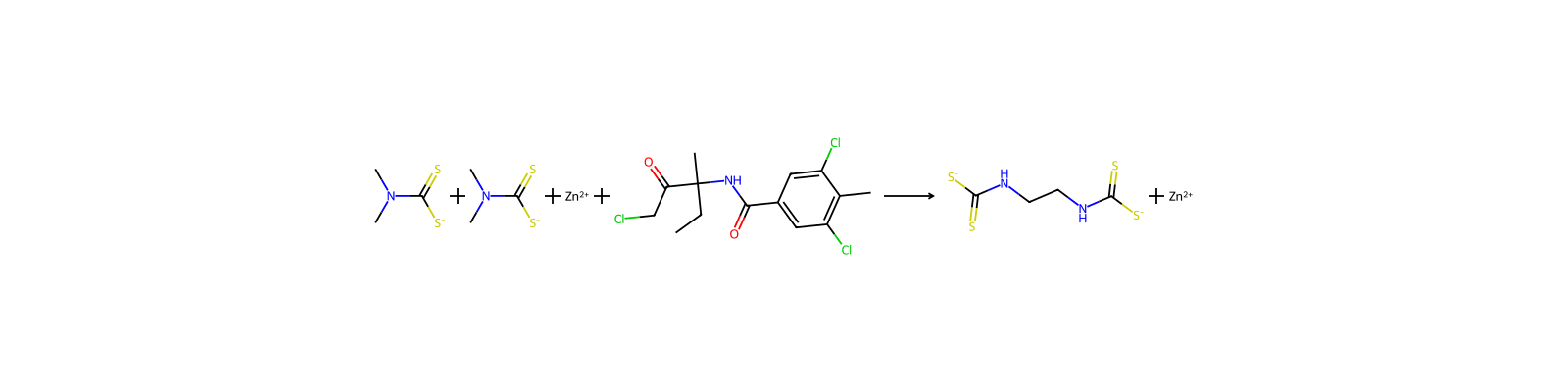
Zugehörige Reaktionen
5



Verknüpfte Notizen
Wird geladen…