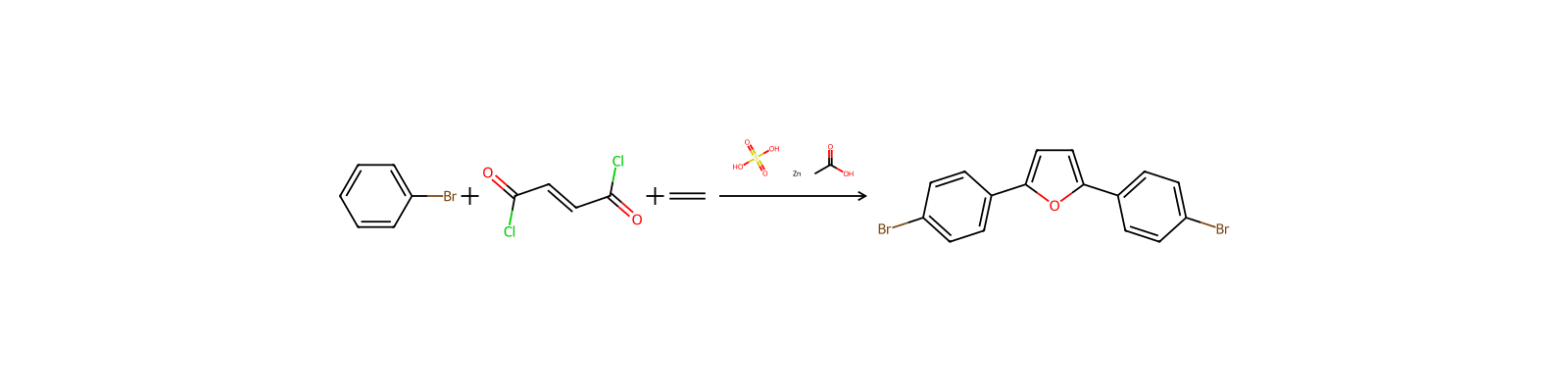
2-Butendioyldichlorid, (E)-
Fumaryl chloride
Daten werden ergänzt – lade die Seite später neu, um den aktuellen Stand zu sehen
Grundinformationen
- CAS
627-63-4- Standard-SMILES
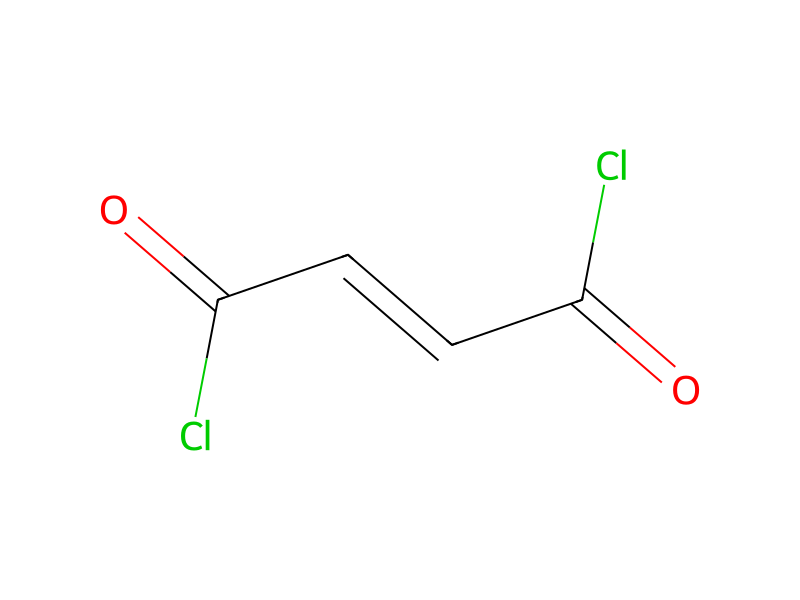
O=C(Cl)/C=C/C(=O)Cl- InChIKey
ZLYYJUJDFKGVKB-OWOJBTEDSA-N- Summenformel
- C4H2Cl2O2
- Durchschnittliche Molmasse
- 152,96 g/mol
- Monoisotopische Masse
- 151,94318466
Überblick
Fumaryl chloride appears as a straw colored fuming liquid with a pungent odor. Vapors irritate the eyes and mucous membranes. Corrosive to metals and tissue.
Namen und Bezeichner
- Bevorzugter Name
- Fumaryl chloride
- IUPAC
- (E)-but-2-enedioyl dichloride
- Lokaler Name
- 2-Butendioyldichlorid, (E)-
- Englischer Name
- Fumaryl chloride
- Summenformel
- C4H2Cl2O2
- Molmasse
- 152.96
Namen und Synonyme
FUMARYL CHLORIDE627-63-4Fumaroyl dichlorideFumaroyl chlorideFumarylchloridfumaryl dichlorideChlorure de fumaryle2-Butenedioyl dichloride, (E)-2-Butenedioyl dichloride, (2E)-Dichlorid kyseliny fumaroveTL 189Fumaric acid dichloride
Weitere Namen anzeigen
trans-2-Butenedioyl dichloridetl189fumarylFumarylChoridefumaroylchloride
DTXSID3033519B95L4812RGFUMARIC DICHLORIDEFUMARIC ACID CHLORIDEDTXCID1013519RefChem:607705211-005-4(E)-but-2-enedioyl dichloride
Datenbank-Bezeichner
- CAS
627-63-4- PubChem CID
- 5325504
- DTXSID
DTXSID3033519- ChEMBL
CHEMBL2143883- UNII
- B95L4812RG
- EC Number
- 211-005-4
- Nikkaji
- J517G、J581.481B
Eigenschaften
Berechnete StruktureigenschaftenWird ergänzt
- XLogP
- 1,5
- Polarare Oberfläche (TPSA)
- 34,1 Ų
- H-Brücken-Donoren
- 0
- H-Brücken-Akzeptoren
- 2
- Frei drehbare Bindungen
- 2
- Schwere Atome
- 8
- Formalladung
- 0
- Komplexität
- 123
Experimentelle und physikochemische Eigenschaften
Chemical Classes
Toxic Gases & Vapors -> Acid Halides
Corrosives
SpringerMaterials PropertiesSchoenflies notation
Vapor Pressure2.07 [mmHg]
Physical Description
Fumaryl chloride appears as a straw colored fuming liquid with a pungent odor. Vapors irritate the eyes and mucous membranes. Corrosive to metals and tissue.
Fuming straw-colored liquid with a pungent odor; [CAMEO] Colorless liquid with an acrid odor; [Alfa Aesar MSDS]
Physikochemische Eigenschaften
- Schmelzpunkt
- -2 °C · -2 °C
- Siedepunkt
- 161 · 161-164 °C(lit.)
- Dichte
- 1.415 g/mL · 1.415 g/mL at 25 °C(lit.)
- Brechungsindex
- 20 · n20/D 1.499(lit.)
- Flammpunkt
- 165 °F · 165 °F
Sicherheit und Regulatorisches
Sicherheitsangaben dienen nur zur Orientierung und ersetzen weder das Sicherheitsdatenblatt (SDB) des Lieferanten noch geltende Vorschriften oder eine fachliche Bewertung.
GHS-Klassifizierung
GHS Classification
Danger
H302 (100%): Harmful if swallowed [Warning Acute toxicity, oral]
P260, P261, P264, P270, P271, P280, P301+P317, P301+P330+P331, P302+P352, P302+P361+P354, P304+P340, P305+P354+P338, P316, P317, P321, P330, P362+P364, P363, P405, and P501 (click each P-code to see the statement)
Aggregated GHS information provided per 47 reports by companies from 5 notifications to the ECHA C&L Inventory. Each notification may be associated with multiple companies.
Gefahrenhinweise
Regulatory Information
Fumaryl chloride: Does not have an individual approval but may be used under an appropriate group standard
The New Jersey Worker and Community Right to Know Act requires public and private employers to provide information about hazardous substances at their workplaces. (N.J.S.A. 34:5A-1 et. seq.)
DOT LabelCorrosive
Fire Hazards
Excerpt from ERG Guide 156 [Substances - Toxic and/or Corrosive (Combustible / Water-Sensitive)]:
· Combustible material: may burn but does not ignite readily.
Health Hazards
Excerpt from ERG Guide 156 [Substances - Toxic and/or Corrosive (Combustible / Water-Sensitive)]:
· TOXIC and/or CORROSIVE; inhalation, ingestion or contact (skin, eyes) with vapors, dusts or substance may cause severe injury, burns or death.
Hazards Summary
A severe skin and eye irritant; Causes musculoskeletal changes in inhalation lethal-concentration studies of mice; [RTECS] Corrosive to tissue; Vapor causes eye and mucous membrane irritation; [CAMEO] Reacts with water; Causes burns; Inhalation may cause corrosive injuries to upper respiratory tract and lungs; Harmful by ingestion, inhalation, and skin absorption; [Alfa Aesar MSDS]
Chemie und Industrie
Verwendung und Herstellung
General Manufacturing Information2-Butenedioyl dichloride, (2E)-: ACTIVE
Anwendungen
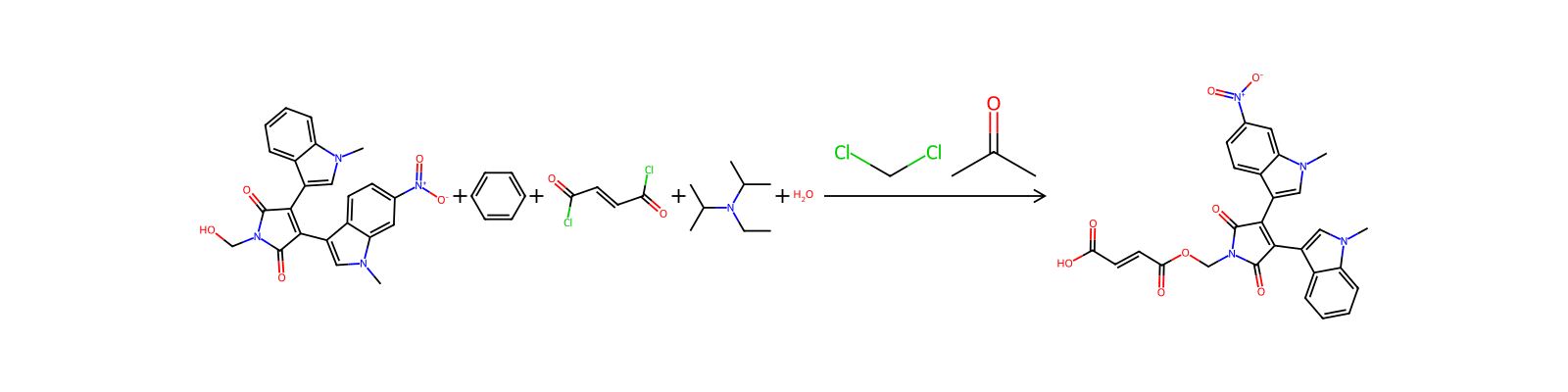
VerwendenFumaryl chloride was used in the preparation of high molecular weight poly(propylene fumarate). The photodissociation dynamics of fumaryl chloride was studied. It is used in agrochemicals and pharmaceuticals manufacturing. Also used as an intermediate for dyes, textile auxiliaries and peroxide compounds. It is an acid halide building block.
Vor- und nachgelagerte Produkte
Vorgelagerte Rohstoffe
Nachgelagerte Produkte
Zugehörige Reaktionen
16






Notizen zur Verbindung
Wird geladen…