

Grundinformationen
- CAS
30574-97-1- Standard-SMILES
C/C=C(\C)C#N- InChIKey
IHXNSHZBFXGOJM-HWKANZROSA-N- Summenformel
- C5H7N
- Durchschnittliche Molmasse
- 81,12 g/mol
- Monoisotopische Masse
- 81,05784922
Namen und Bezeichner
- Bevorzugter Name
- (E)-2-Methyl-2-butenenitrile
- IUPAC
- (E)-2-methylbut-2-enenitrile
- Lokaler Name
- (E)-2-Methyl-2-butennitril
- Englischer Name
- (E)-2-methyl-2-butenenitrile
- Summenformel
- C5H7N
- Molmasse
- 81.12
Namen und Synonyme
2-methylbut-2-enenitrile(E)-2-Methyl-2-butenenitrile30574-97-1(E)-2-methylbut-2-enenitrileTiglonitriletrans-2-Methyl-2-butenenitrile(2E)-2-methylbut-2-enenitrile2-Butenenitrile, 2-methyl-, (E)-2-Butenenitrile, 2-methyl-, (2E)-alpha-Methylcrotononitrile768X49F7XE1-Methyl-1-propenyl Cyanide
Weitere Namen anzeigen
Tiglonitryle
2-Cyano-2-buteneMFCD00037169TUBULONITRILEtrans-2-methyl-2-butenonitrile(2E)-2-Methyl-2-butenenitrileNSC44233EINECS 250-247-5(E)-2-methyl-crotononitrile
Datenbank-Bezeichner
- CAS
30574-97-1、4403-61-6- PubChem CID
- 5355732
- DTXSID
DTXSID7027964- UNII
- 768X49F7XE
- EC Number
- 250-247-5
- Nikkaji
- J205.784K、J287.367B
Eigenschaften
Berechnete Struktureigenschaften
- XLogP
- 1,2
- Polarare Oberfläche (TPSA)
- 23,8 Ų
- H-Brücken-Donoren
- 0
- H-Brücken-Akzeptoren
- 1
- Frei drehbare Bindungen
- 0
- Schwere Atome
- 6
- Formalladung
- 0
- Komplexität
- 102
Experimentelle und physikochemische Eigenschaften
SpringerMaterials PropertiesBoiling point
Physikochemische Eigenschaften
- Stabilität
- Stable. Combustible. Incompatible with strong oxidizing agents.
- EPA chemische Informationen
- -2 · trans-2-Methyl-2-butenenitrile (30574-97-1)
Sicherheit und Regulatorisches
Gefahrenhinweise
Regulatory InformationChemical: 2-Butenenitrile, 2-methyl-, (E)-
DOT LabelFlammable Liquid Poison
Fire HazardsFlash point data for this chemical are not available, however it is probably combustible. (NTP, 1992)
Health HazardsExcerpt from ERG Guide 131 [Flammable Liquids - Toxic]:
Reactive GroupNitriles
Reactivity AlertsHighly Flammable
Reactivity Profile
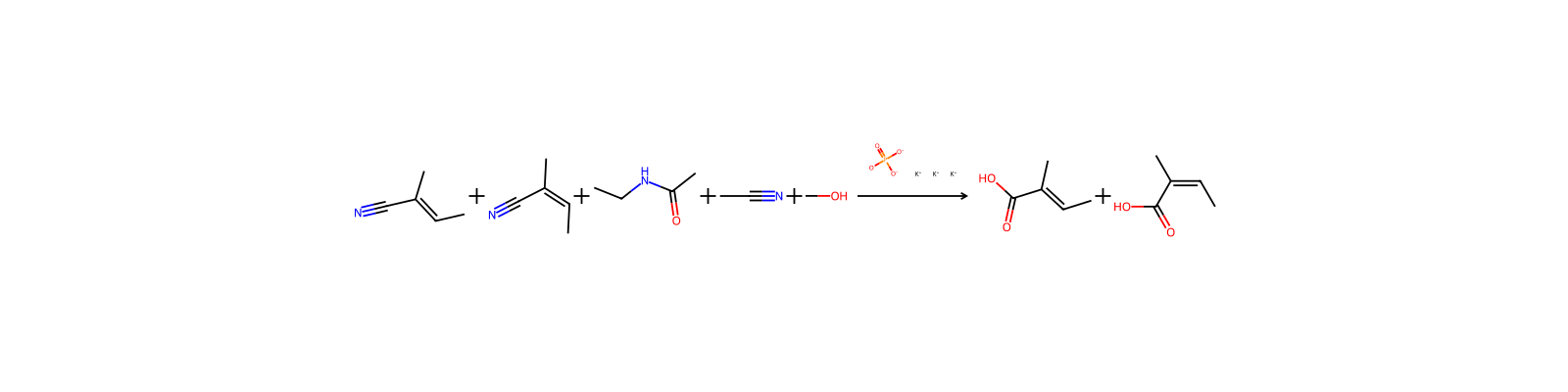
Nitriles, such as TRANS-2-METHYL-2-BUTENENITRILE, may polymerize in the presence of metals and some metal compounds. They are incompatible with acids; mixing nitriles with strong oxidizing acids can lead to extremely violent reactions. Nitriles are generally incompatible with other oxidizing agents such as peroxides and epoxides. The combination of bases and nitriles can produce hydrogen cyanide. Nitriles are hydrolyzed in both aqueous acid and base to give carboxylic acids (or salts of carboxylic acids). These reactions generate heat. Peroxides convert nitriles to amides. Nitriles can react vigorously with reducing agents. Acetonitrile and propionitrile are soluble in water, but nitriles higher than propionitrile have low aqueous solubility. They are also insoluble in aqueous acids.
Air and Water ReactionsHighly flammable.
Sicherheit und Schutzausrüstung
Fire FightingFires involving this compound can be controlled using a dry chemical, carbon dioxide or Halon extinguisher. (NTP, 1992)
First Aid
EYES: First check the victim for contact lenses and remove if present. Flush victim's eyes with water or normal saline solution for 20 to 30 minutes while simultaneously calling a hospital or poison control center. Do not put any ointments, oils, or medication in the victim's eyes without specific instructions from a physician. IMMEDIATELY transport the victim after flushing eyes to a hospital even if no symptoms (such as redness or irritation) develop.
Nonfire Spill ResponseSTORAGE PRECAUTIONS: You should store this material in a refrigerator. (NTP, 1992)
Isolation and EvacuationExcerpt from ERG Guide 131 [Flammable Liquids - Toxic]:
Personal Protective Equipment (PPE)
RECOMMENDED RESPIRATOR: Where the neat test chemical is weighed and diluted, wear a NIOSH-approved half face respirator equipped with an organic vapor/acid gas cartridge (specific for organic vapors, HCl, acid gas and SO2) with a dust/mist filter. (NTP, 1992)
Sicherheitsdaten
- tsca
- TSCA listed
Chemie und Industrie
Verwendung und Herstellung
General Manufacturing Information2-Butenenitrile, 2-methyl-, (2E)-: ACTIVE
Vor- und nachgelagerte Produkte
Nachgelagerte Produkte
Anbieter2 Anbieter
陕西缔都新材料有限公司81124267 17392282731 · [email protected]
Shaanxi Dideu New Materials Co. Ltd18192503167 · [email protected]
Zugehörige Reaktionen
8




Notizen zur Verbindung
Wird geladen…