StartseiteMCPWorkbenchSkills
StartseiteWorkbenchBenachrichtigungenMein Bereich
llms.txt · MCP-AnleitungDatenschutz · Nutzungsbedingungen · Supportv1.8.3
  1. Startseite
  2. /Verbindung

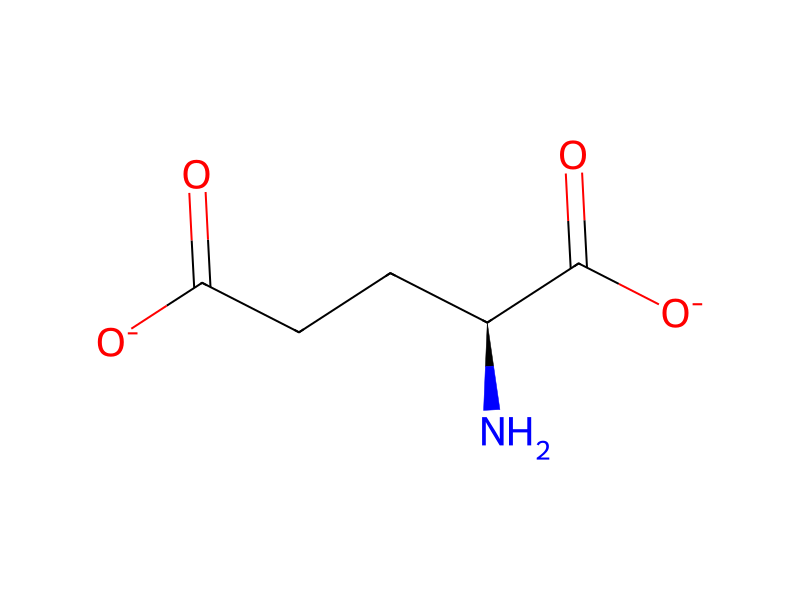
L-glutamate(2-)

HCID 5460544
Neue Reaktion
Drucken
GrundinformationenÜberblickNamen und BezeichnerEigenschaftenSicherheit und RegulatorischesChemie und IndustrieZugehörige ReaktionenNotizen zur Verbindung
TeilstruktursucheÄhnliche Strukturen suchen

Grundinformationen

CAS
138-18-1
Standard-SMILES
N[C@@H](CCC(=O)[O-])C(=O)[O-]
InChIKey
WHUUTDBJXJRKMK-VKHMYHEASA-L
Summenformel
C5H7NO4-2
Durchschnittliche Molmasse
145,11 g/mol
Monoisotopische Masse
145,0375077

Überblick

L-glutamate(2-) is an L-alpha-amino acid anion that is the dianion obtained by the deprotonation of the both the carboxy groups of L-glutamic acid. It is a glutamate(2-) and a L-alpha-amino acid anion. It is a conjugate base of a L-glutamate(1-). It is an enantiomer of a D-glutamate(2-).

Namen und Bezeichner

Bevorzugter Name
L-glutamate(2-)
IUPAC
(2S)-2-aminopentanedioate

Namen und Synonyme

L-glutamate(2-)(2S)-2-aminopentanedioateCHEBI:29988RefChem:1088172glutamate(S)-2-Aminopentanedioic acid dianion138-18-1L-glutamic acid dianionL-Glutamic acid (2-)WHUUTDBJXJRKMK-VKHMYHEASA-LDTXSID201315375Q27110357

Datenbank-Bezeichner

CAS
138-18-1
PubChem CID
5460544
DTXSID
DTXSID201315375
ChEBI
CHEBI:29988
Nikkaji
J2.338.013G

Eigenschaften

Berechnete Struktureigenschaften

XLogP
-2,4
Polarare Oberfläche (TPSA)
106 Ų
H-Brücken-Donoren
1
H-Brücken-Akzeptoren
5
Frei drehbare Bindungen
2
Schwere Atome
10
Formalladung
-2
Komplexität
134

Sicherheit und Regulatorisches

Sicherheitsangaben dienen nur zur Orientierung und ersetzen weder das Sicherheitsdatenblatt (SDB) des Lieferanten noch geltende Vorschriften oder eine fachliche Bewertung.

Toxikologische Informationen

Exposure RoutesAbsorbed from the lumen of the small intestine into the enterocytes.Absorption is efficient and occurs by an active transport mechanism.
Toxicity Summary · 1 Eintrag

Glutamate activates both ionotropic and metabotropic glutamate receptors. The ionotropic ones being non-NMDA (AMPA and kainate) and NMDA receptors. Free glutamic acid cannot cross the blood-brain barrier in appreciable quantities; instead it is converted into L-glutamine, which the brain uses for fuel and protein synthesis. It is conjectured that glutamate is involved in cognitive functions like learning and memory in the brain, though excessive amounts may cause neuronal damage associated in diseases like amyotrophic lateral sclerosis, lathyrism, and Alzheimer's disease. Also, the drug phencyclidine (more commonly known as PCP) antagonizes glutamate at the NMDA receptor, causing behavior reminiscent of schizophrenia. Glutamate in action is extremely difficult to study due to its transient nature.

Carcinogen ClassificationNo indication of carcinogenicity to humans (not listed by IARC).

Chemie und Industrie

Pharmakologische Informationen

Metabolism/MetabolitesHepatic

Verwendung und Herstellung

UsesConsidered to be nature's "Brain food" by improving mental capacities; helps speed the healing of ulcers; gives a "lift" from fatigue; helps control alcoholism, schizophrenia and the craving for sugar.

Zugehörige Reaktionen

52
Reaktionsaufzeichnung erstellen
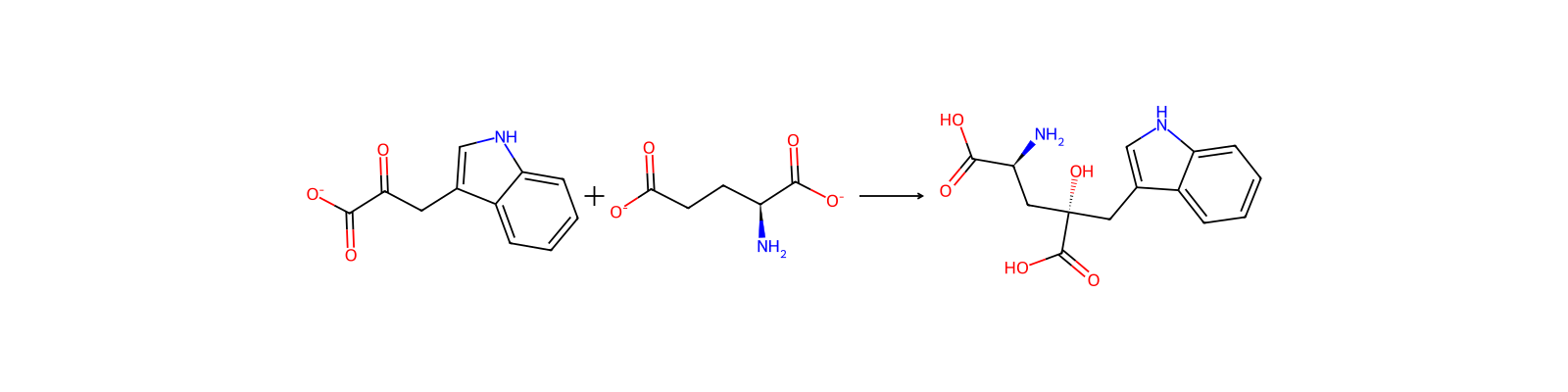
Reaktionsgleichung von HRID 221210
HRID 221210als Edukt
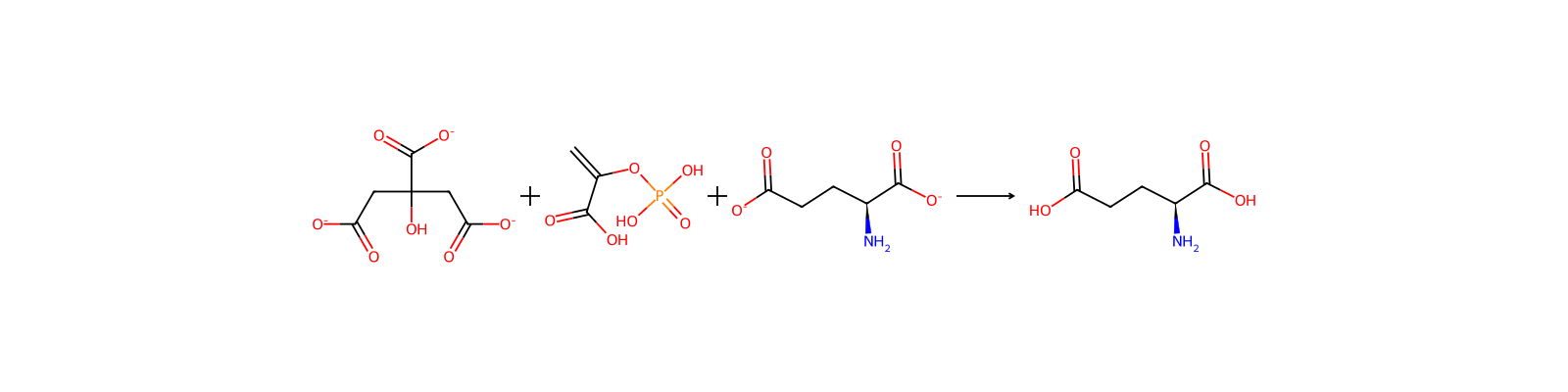
Reaktionsgleichung von HRID 221211
HRID 221211als Edukt
Reaktionsgleichung von HRID 387419
HRID 387419als Edukt
Reaktionsgleichung von HRID 387420
HRID 387420als Edukt
Reaktionsgleichung von HRID 411761
HRID 411761als Edukt
Reaktionsgleichung von HRID 547159
HRID 547159als Edukt
Reaktionsgleichung von HRID 574042
HRID 574042als Edukt
Reaktionsgleichung von HRID 574043
HRID 574043als Edukt
ZurückSeite 1 von 7

Notizen zur Verbindung

Auf dieser SeiteGrundinformationenÜberblickNamen und BezeichnerEigenschaftenSicherheit und RegulatorischesChemie und IndustrieZugehörige ReaktionenNotizen zur Verbindung