StartseiteMCPWorkbenchSkills
StartseiteWorkbenchBenachrichtigungenMein Bereich
llms.txt · MCP-AnleitungDatenschutz · Nutzungsbedingungen · Supportv1.8.3
  1. Startseite
  2. /Verbindung

Diethylazodiformiat

Diethyl azodicarboxylate

HCID 5462977
Neue Reaktion
Drucken
GrundinformationenNamen und BezeichnerEigenschaftenSicherheit und RegulatorischesChemie und IndustrieZugehörige ReaktionenNotizen zur Verbindung
TeilstruktursucheÄhnliche Strukturen suchen

Grundinformationen

CAS
1972-28-7
Standard-SMILES
CCOC(=O)/N=N/C(=O)OCC
InChIKey
FAMRKDQNMBBFBR-BQYQJAHWSA-N
Summenformel
C6H10N2O4
Durchschnittliche Molmasse
174,15 g/mol
Monoisotopische Masse
174,0640568

Namen und Bezeichner

Bevorzugter Name
Diethyl azodicarboxylate
IUPAC
ethyl (NE)-N-ethoxycarbonyliminocarbamate
Lokaler Name
Diethylazodiformiat
Englischer Name
Diethyl azodicarboxylate
Summenformel
C6H10N2O4
Molmasse
174.15

Namen und Synonyme

Diethyl azodicarboxylate1972-28-7DiethoxycarbonyldiazeneEthyl azodicarboxylateDiethyl azodiformate4143-61-7Azodiformic acid diethyl esterDiethyl diazenedicarboxylate1,2-Ethoxycarbonyl diazeneDiethyl azodicarboxylate, E-isomerDiethyl azodicarboxylate [MI]azodicarboxylic acid diethyl ester
Weitere Namen anzeigen
DEADDAD(E)-di-tert-butyl diazene-1,2-dicarboxylateDiethyl diazene-1,2-dicarboxylateEthyl (NE)-N-ethoxycarbonyliminocarbamate(E)-diethyl diazene-1,2-dicarboxylateDiethylAzidoCarboxylate
Formic acid, azodi-, diethyl esterUNII-D31B4839S8EINECS 217-821-71,2-Diazenedicarboxylic acid 1,2-diethyl esterNSC-3474D31B4839S8DTXSID10194348Diazenedicarboxylic acid, diethyl ester

Datenbank-Bezeichner

CAS
1972-28-7、4143-61-7
PubChem CID
5462977
DTXSID
DTXSID10194348
UNII
D31B4839S8
EC Number
217-821-7
Nikkaji
J3.045.678E、J7.834D

Eigenschaften

Berechnete Struktureigenschaften

XLogP
1,7
Polarare Oberfläche (TPSA)
77,3 Ų
H-Brücken-Donoren
0
H-Brücken-Akzeptoren
4
Frei drehbare Bindungen
4
Schwere Atome
12
Formalladung
0
Komplexität
170

Experimentelle und physikochemische Eigenschaften

Chemical ClassesNitrogen Compounds -> Other Nitrogen Compounds
Physical DescriptionOrange liquid; [Merck Index]

Physikochemische Eigenschaften

Schmelzpunkt
6 °C · 6°C
Siedepunkt
106 °C · 106°C (13 mmHg)
Dichte
1.106 · 1.106
Brechungsindex
20 · n20/D 1.47
Flammpunkt
85 °C · 85°C
storage temp.
2 · 2-8°C
Löslichkeit
Miscible with dichloromethane, diethyl ether and toluene.
Aggregatzustand
liquid
Farbe
Clear, orange
BRN
908662 · 908662
Stabilität
100 C · Stable, but may explode if heated under confinement. May be shock sensitive. Decomposes vigorously if heated above 100 C. Incompatible with strong acids, strong bases, strong oxidizing agents, strong reducing agents. Light sensitive.
InChI
InChI=1S/C6H10N2O4/c1-3-11-5(9)7-8-6(10)12-4-2/h3-4H2,1-2H3
InChIKey
FAMRKDQNMBBFBR-FPLPWBNLSA-N
SMILES
N(C(OCC)=O)=NC(OCC)=O
CAS Datenbank
1972 · 1972-28-7(CAS DataBase Reference)
NIST chemische Informationen
Diethyl azo diformate(1972-28-7)

Sicherheit und Regulatorisches

Sicherheitsangaben dienen nur zur Orientierung und ersetzen weder das Sicherheitsdatenblatt (SDB) des Lieferanten noch geltende Vorschriften oder eine fachliche Bewertung.

GHS-Klassifizierung

GHS Classification · 4 Einträge

Danger

H240 (83%): Heating may cause an explosion [Danger Self-reactive substances and mixtures; Organic peroxides]

P210, P234, P235, P240, P261, P264, P264+P265, P270, P271, P280, P301+P317, P302+P352, P304+P340, P305+P351+P338, P317, P319, P321, P330, P332+P317, P337+P317, P362+P364, P370+P372+P380+P373, P403, P403+P233, P405, P410, P411, P420, and P501 (click each P-code to see the statement)

Aggregated GHS information provided per 47 reports by companies from 7 notifications to the ECHA C&L Inventory. Each notification may be associated with multiple companies.

Gefahrenhinweise

Regulatory Information · 2 Einträge

Chemical: Diazenedicarboxylic acid, diethyl ester

Diazenedicarboxylic acid, diethyl ester: Does not have an individual approval but may be used under an appropriate group standard

Hazards SummaryExplosive; An irritant; [Merck Index] A skin, respiratory tract, and strong eye irritant; Harmful by ingestion and skin absorption; [Alfa Aesar MSDS] See Methylazoxymethanol acetate and Methylazoxymethanol.
Hazard Classes and CategoriesSelf-react. A (83%)

Sicherheitsdaten

F
9
wgk
3
ridadr
UN 3233 4.1
hs_code
29270000
risk_code
5-11-20-36/37/38-48/20-63-65-67-48/20/22-40-20/22-20/21/22-10
hazard_code
F,Xn,Xi
hazard_note
Toxic/Irritant/Flammable
safety_code
26-36/37-62-47-36-35
hazard_class
6.1
packing_group
III
Speicherklasse
5.2 - Organic peroxides and self-reacting hazardous materials
Hazard Classifications
Aquatic Chronic 3Asp. Tox. 1Eye Irrit. 2Flam. Liq. 3Repr. 2Self-react. CSkin Irrit. 2STOT RE 2STOT SE 3

Chemie und Industrie

Verwendung und Herstellung

UsesUsed in synthetic organic chemistry; [Merck Index]

Anwendungen

VerwendenA fluorescent CDK inhibitor for treatment of cancer

Vor- und nachgelagerte Produkte

Vorgelagerte Rohstoffe

Diethylbicarbamat

Nachgelagerte Produkte

Zidovudine5-Methylpyridine-2,3-dicarboxylic acidCyclobutan-1,1-dicarbonsure2,3-Quinoline dicarboxylic acid1-Boc-2-Methylpiperazine1-Methyl-prop-2-ynylamineAzodicarboxylic acid dimethyl ester5-[(1,3-Dioxo-1,3-dihydro-2H-isoindol-2-yl)methyl]-2-furaldehyde6-bromoisoindolin-1-one4-((1-Methylpiperidin-3-yl)methoxy)-3,5-dichlorobenzenamineBut-3-yn-1-amineMethyl 2-pyrrolecarboxylateDiethyl iminodiacetateEthylmethyl(phenyl)carbamat4-Pentenal2-Chloroquinoline-3-carbaldehyde4-bromoisoindolin-1-one

Zugehörige Reaktionen

1.850
Reaktionsaufzeichnung erstellen
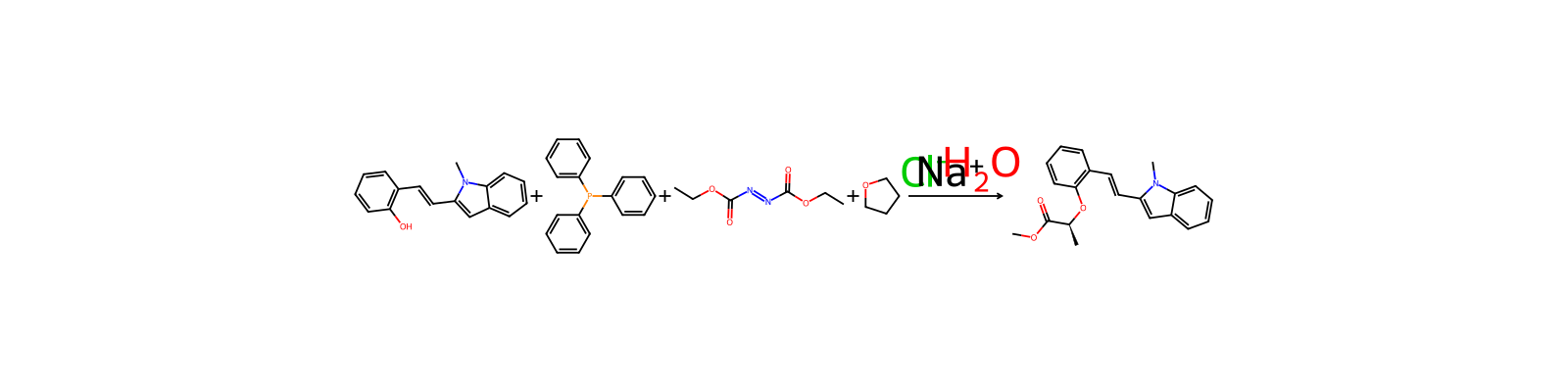
Reaktionsgleichung von HRID 1077
HRID 1077als Edukt
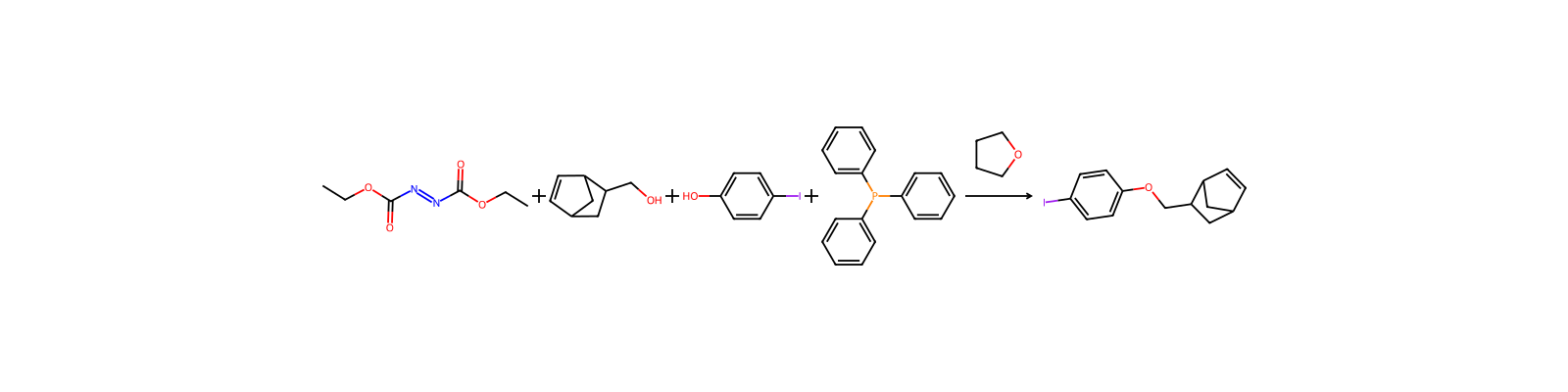
Reaktionsgleichung von HRID 1875
HRID 1875als Edukt
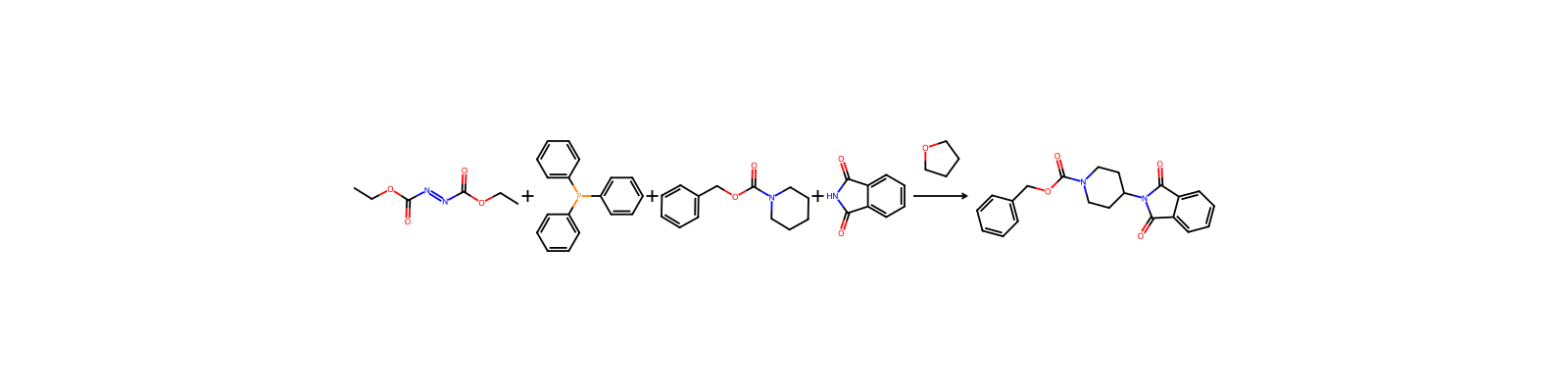
Reaktionsgleichung von HRID 2148
HRID 2148als Edukt
Reaktionsgleichung von HRID 2226
HRID 2226als Edukt
Reaktionsgleichung von HRID 2978
HRID 2978als Edukt
Reaktionsgleichung von HRID 4947
HRID 4947als Edukt
Reaktionsgleichung von HRID 6773
HRID 6773als Edukt
Reaktionsgleichung von HRID 7328
HRID 7328als Edukt
ZurückSeite 1 von 232

Notizen zur Verbindung

Auf dieser SeiteGrundinformationenNamen und BezeichnerEigenschaftenSicherheit und RegulatorischesChemie und IndustrieZugehörige ReaktionenNotizen zur Verbindung