
Trimethylboroxine
Daten werden ergänzt – lade die Seite später neu, um den aktuellen Stand zu sehen

Grundinformationen
- CAS
823-96-1- Standard-SMILES
CB1OB(C)OB(C)O1- InChIKey
GBBSAMQTQCPOBF-UHFFFAOYSA-N- Summenformel
- C3H9B3O3
- Durchschnittliche Molmasse
- 125,5 g/mol
- Monoisotopische Masse
- 126,08308535
Namen und Bezeichner
- Bevorzugter Name
- Trimethylboroxine
- IUPAC
- 2,4,6-trimethyl-1,3,5,2,4,6-trioxatriborinane
- Englischer Name
- Trimethylboroxine
- Summenformel
- C3H9B3O3
- Molmasse
- 125.53
Namen und Synonyme
Trimethylboroxine823-96-1TrimethylboroxinDTXSID90341570RefChem:899827DTXCID10292651617-330-12,4,6-trimethyl-1,3,5,2,4,6-trioxatriborinanetrimethyl-1,3,5,2,4,6-trioxatriborinane2,4,6-trimethylboroxineMFCD00013354Trimethylboroxine 50% w/w soln. in THF
Weitere Namen anzeigen
Trimethylcyclotriboroxane2,4,6-Trimethylboroxin2,4,6-TrMETHYLBOROXINtrimethylboroxin,TRIMEETHYLBOROXINEMethylboric anhydrideTrimethylcyclotriborane
C3H9B3O3Trimethylboroxin (50% Solution in THF)Boroxin, trimethyl-2,4,6-Trimethyl-1,3,5,2,4,6-trioxatriborinane; 2,4,6-Trimethylboroxine; Methaneboronic anhydrideMethaneboronic anhydridetrimethyboroxinetrimethyl boroxintrimethylboroxaine
Datenbank-Bezeichner
- CAS
823-96-1- PubChem CID
- 574072
- DTXSID
DTXSID90341570- EC Number
- 617-330-1
- Nikkaji
- J375.125B
Eigenschaften
Berechnete StruktureigenschaftenWird ergänzt
- Polarare Oberfläche (TPSA)
- 27,7 Ų
- H-Brücken-Donoren
- 0
- H-Brücken-Akzeptoren
- 3
- Frei drehbare Bindungen
- 0
- Schwere Atome
- 9
- Formalladung
- 0
- Komplexität
- 69,3
Physikochemische Eigenschaften
- Schmelzpunkt
- 38 °C · −38 °C(lit.)
- Siedepunkt
- 78 · 78-80 °C(lit.)
- Dichte
- 0.898 g/mL · 0.898 g/mL at 25 °C(lit.)
- Brechungsindex
- 20 · n20/D 1.362(lit.)
- Flammpunkt
- 16 °F · 16 °F
- storage temp.
- Flammables area
- Löslichkeit
- Chloroform (Sparingly), Dichloromethane (Slightly), THF (Soluble)
- Aggregatzustand
- Solution
- Farbe
- Colorless to yellow
- Wasserlöslichkeit
- Not miscible in water.
- BRN
- 1757008 · 1757008
- InChI
- 1S/C3H9B3O3/c1-4-7-5(2)9-6(3)8-4/h1-3H3
- InChIKey
- GBBSAMQTQCPOBF-UHFFFAOYSA-N
- SMILES
- Cb1ob(C)ob(C)o1
- CAS Datenbank
- 823 · 823-96-1(CAS DataBase Reference)
Sicherheit und Regulatorisches
Sicherheitsangaben dienen nur zur Orientierung und ersetzen weder das Sicherheitsdatenblatt (SDB) des Lieferanten noch geltende Vorschriften oder eine fachliche Bewertung.
GHS-Klassifizierung
GHS Classification
Danger
H225 (30.3%): Highly Flammable liquid and vapor [Danger Flammable liquids]
P210, P233, P240, P241, P242, P243, P260, P261, P264, P264+P265, P271, P280, P301+P330+P331, P302+P352, P302+P361+P354, P303+P361+P353, P304+P340, P305+P354+P338, P316, P317, P319, P321, P332+P317, P362+P364, P363, P370+P378, P403+P233, P403+P235, P405, and P501 (click each P-code to see the statement)
Aggregated GHS information provided per 152 reports by companies from 6 notifications to the ECHA C&L Inventory. Each notification may be associated with multiple companies.
Gefahrenhinweise
Hazard Classes and CategoriesFlam. Liq. 2 (30.3%)
Sicherheitsdaten
- F
- 2-10-21
- wgk
- 3
- tsca
- Yes
- ridadr
- UN 2924 3/PG 2
- hs_code
- 29319090
- risk_code
- 11-34-41-37/38-19
- hazard_code
- F,C,Xi
- safety_code
- 9-16-26-33-36/37/39-45-46-37/39-3
- hazard_class
- 3.1
- packing_group
- II
- Speicherklasse
- 3 - Flammable liquids
- Hazard Classifications
- Flam. Liq. 2Skin Corr. 1B
Chemie und Industrie
Anwendungen
VerwendenTrimethylboroxine is used as a derivatizing agent for GLC analysis. It is used in a diverse array of areas, including as a polymerization additive. It is also used in the preparation of CBS catalysts for asymmetric reductions.
Darstellung
synthetischeTrimethylboroxine is prepared by heating B(CH3)3 and B2O3 together in a sealed tube. The B2O3 powder is made by dehydrating H3BO3 under vacuum over P2O5 , at 220℃. The very hygro-scopic oxide is placed with strict exclusion of moisture in a 200-ml. thick-wall Pyrex tube provided with a ground joint, and a melting-point capillary is fastened to the tube just below the joint. The tube is connected to a vacuum pump and immersed in liquid nitrogen, and when a high vacuum has been established, a quantity of B(CH3)3 equivalent to 4.25 g. (0.061 mole) of B2O3 is condensed in the tube. The tube is sealed off, heated to 600℃ and kept at this temperature for six hours; in the process the contents turn into a clear, colorless liquid. When the tube has cooled down, the tip is broken under a nitrogen blanket and sealed to a tube leading to the vacuum pump. The tube is evacuated and the contents of the tube are transferred into a -78℃ trap. The crude product is purified by removing volatile contaminants at -45℃ and then distilling the product from a -10℃ trap into a receiver held at -78℃.
Vor- und nachgelagerte Produkte
Nachgelagerte Produkte
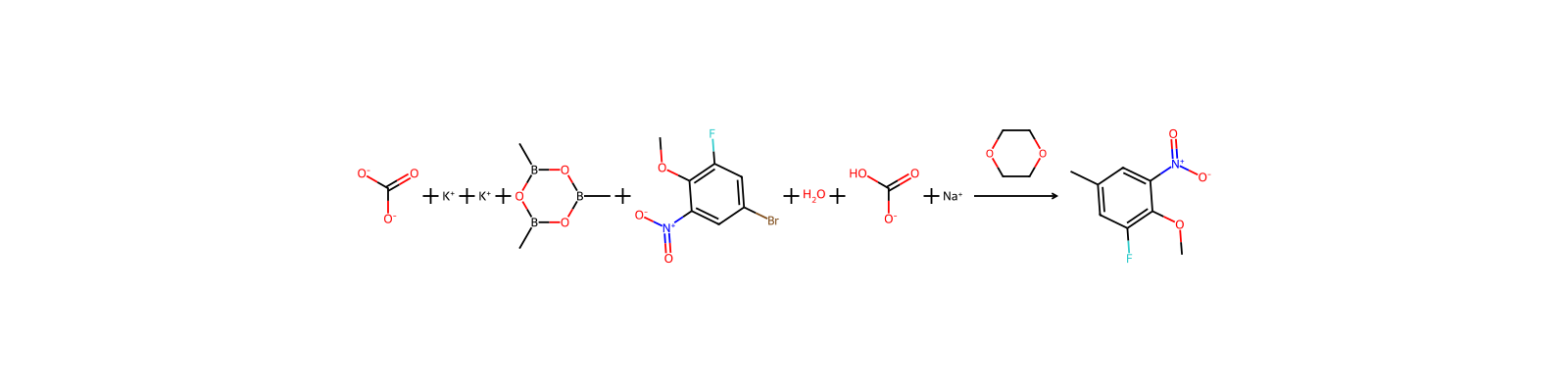
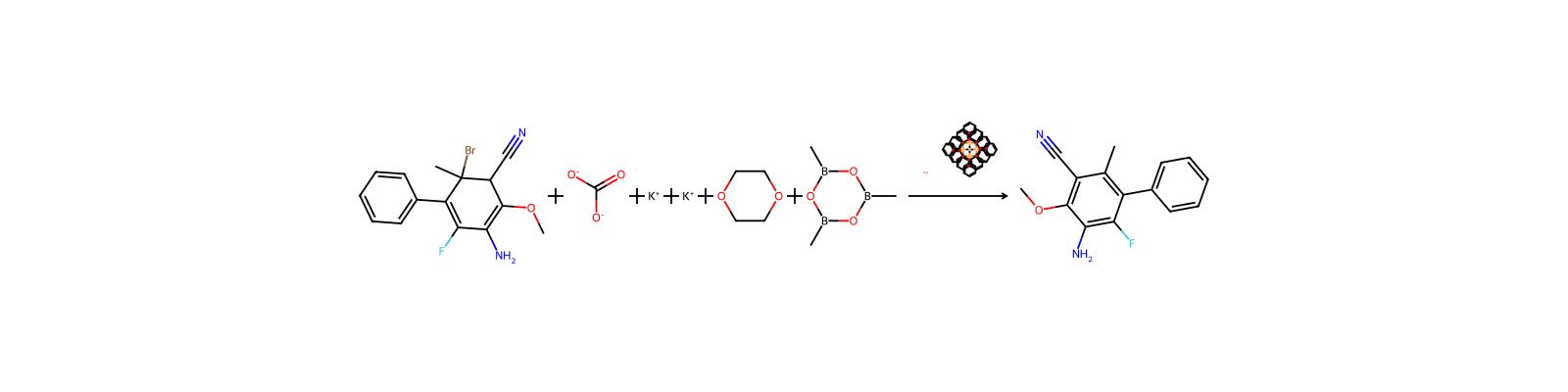
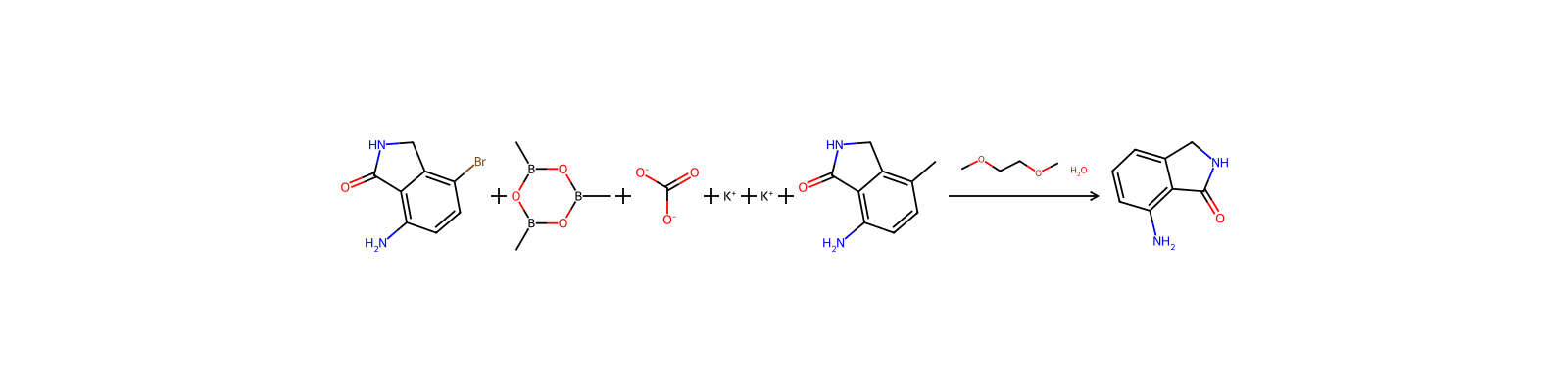
Zugehörige Reaktionen
535




Notizen zur Verbindung
Wird geladen…