
Guanidiniumchlorid
Guanidine Hydrochloride
Daten werden ergänzt – lade die Seite später neu, um den aktuellen Stand zu sehen
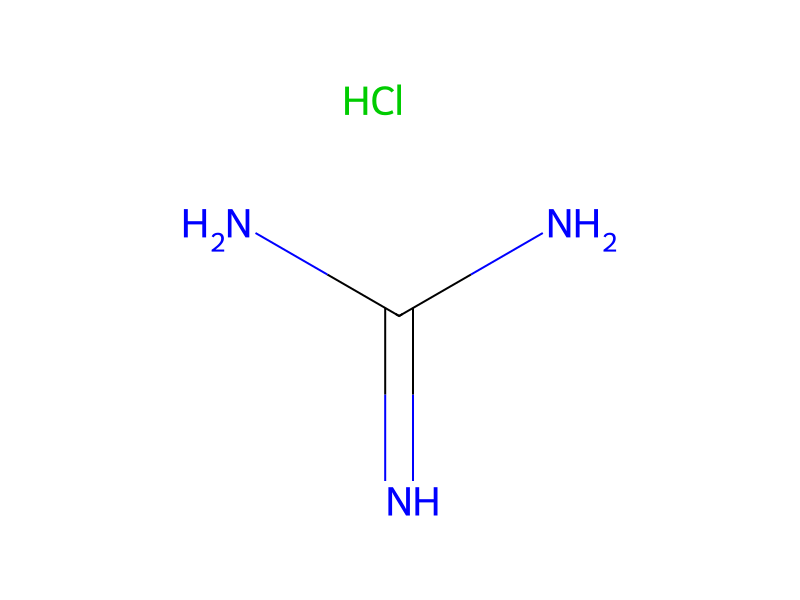
Grundinformationen
- CAS
50-01-1- Standard-SMILES
Cl.N=C(N)N- InChIKey
PJJJBBJSCAKJQF-UHFFFAOYSA-N- Summenformel
- CH5N3.ClH
- Durchschnittliche Molmasse
- 95,53 g/mol
- Monoisotopische Masse
- 95,02502487
Überblick
Guanidine Hydrochloride is the hydrochloride salt form of guanidine, a strong basic compound with parasympathomimetic activity. Guanidine hydrochloride enhances the release of acetylcholine following a nerve impulse and potentiates acetylcholine actions on muscarinic and nicotinic receptors. It also appears to slow the rates of depolarization and repolarization of muscle cell membranes. (NCI05)
Namen und Bezeichner
- Bevorzugter Name
- Guanidine Hydrochloride
- IUPAC
- guanidine;hydrochloride
- Lokaler Name
- Guanidiniumchlorid
- Englischer Name
- Guanidine hydrochloride
- Summenformel
- CH5N3.ClH
- Molmasse
- 95.53
Namen und Synonyme
Guanidine hydrochloride50-01-1Guanidinium chlorideguanidine HClAminoformamidine hydrochlorideGUANIDINE MONOHYDROCHLORIDECarbamidine hydrochlorideAminomethanamidine hydrochlorideIminourea hydrochloride3YQC9ZY4YBNSC-755884DTXSID7058757
Weitere Namen anzeigen
GAClGdmClAMINOFORMAMIDINE HCLguanidiniumhydrochlorideGUANIDINE HYDROCHLORIDE 99%guanidine,monohydrochlorideGuanidine, hydrochloride (1:1)
Chloride, GuanidiniumGuanidium chlorideCHEBI:32735Chloride, GuanidiumHydrochloride, GuanidineRefChem:58639Monohydrochloride, GuanidineDTXCID4040763
Datenbank-Bezeichner
- CAS
50-01-1- PubChem CID
- 5742
- DTXSID
Eigenschaften
Berechnete StruktureigenschaftenWird ergänzt
- Polarare Oberfläche (TPSA)
- 75,9 Ų
- H-Brücken-Donoren
- 4
- H-Brücken-Akzeptoren
- 1
- Frei drehbare Bindungen
- 0
- Schwere Atome
- 5
- Formalladung
- 0
- Komplexität
- 26,3
Experimentelle und physikochemische Eigenschaften
CosmeticsBuffering
LogP-1.7
Density1.3 g/cm³
SolubilitySolubility in water, g/100ml at 20 °C: 215
Human Drugs
FDA approved drugs -> Active ingredient
FDA approved drugs -> Active ingredient
Melting Point
178-185 °C
183 °C
Physical Description
Large Crystals; Dry Powder; Liquid
HYGROSCOPIC CRYSTALLINE POWDER.
Physikochemische Eigenschaften
- Schmelzpunkt
- 180 · 180-185 °C(lit.)
- Dichte
- 1.18 g/mL · 1.18 g/mL at 25 °C(lit.)
- Brechungsindex
Sicherheit und Regulatorisches
Sicherheitsangaben dienen nur zur Orientierung und ersetzen weder das Sicherheitsdatenblatt (SDB) des Lieferanten noch geltende Vorschriften oder eine fachliche Bewertung.
GHS-Klassifizierung
GHS Classification
Warning
H302: Harmful if swallowed [Warning Acute toxicity, oral]
P264, P264+P265, P270, P280, P301+P317, P302+P352, P305+P351+P338, P321, P330, P332+P317, P337+P317, P362+P364, and P501 (click each P-code to see the statement)
This chemical does not meet GHS hazard criteria for 9.2% (37 of 404) of reports.
Warning
H302 (90.8%): Harmful if swallowed [Warning Acute toxicity, oral]
Gefahrenhinweise
Regulatory Information
Chemical: Guanidine, monohydrochloride
Guanidine, hydrochloride (1:1) is listed on the EPA's Chemical Data Reporting (CDR) system. Manufacturers and importers of Guanidine, hydrochloride (1:1) are required to report information about their production and use of this chemical to the EPA under the Toxic Substances Control Act (TSCA). (40 eCFR Part 711)
Status: Active Update: 12-05-2021 https://echa.europa.eu/registration-dossier/-/registered-dossier/13899
Guanidinium chloride: Does not have an individual approval but may be used under an appropriate group standard
Fire HazardsCombustible.
EC ClassificationSymbol: Xn; R: 22-36/38; S: (2)-22
Chemical DangersOn combustion, forms toxic and corrosive fumes including hydrogen chloride and nitrogen oxides. The solution in water is a weak acid.
Hazard Classes and Categories
Acute Tox. 4 (90.8%)
Acute toxicity - category 4
Acute toxicity (Oral) - Category 4
Acute Tox. 4 *
Sicherheit und Schutzausrüstung
Chemie und Industrie
Verwendung und Herstellung
U.S. Production2023: 100,000 - <250,000 lb
Consumer UsesLaboratory chemicals
Industry UsesLaboratory chemicals
Use ClassificationCosmetics -> Buffering
General Manufacturing Information
Pharmaceutical and Medicine Manufacturing
Guanidine, hydrochloride (1:1): ACTIVE
Anwendungen
VerwendenGuanidine hydrochloride is used for purification of proteins and nucleic acids. It can be used as a medicine, organic synthesis intermediate and is used in dyes. It acts as an intermediate in the preparation of sulfadiazine, which is an important raw material for sulfamethyldiazine, sulfamethazine and folic acid. It is utilized in the synthesis of 2-amino-pyrimidine, 2- amino -6- methyl-pyrimidine and 2-amino -4,6 - dimethyl-pyrimidine. Also used in RNA isolation to dissociate nucleoproteins and inhibit RNase.
Darstellung
synthetischeThe process for preparing guanidine hydrochloride is as follows:Step 1: Fritting - Combine dicyandiamide and ammonium chloride in a reactor with a 1:1.27 weight ratio and carry out a frit reaction at 170-230°C to obtain crude guanidine hydrochloride.Step 2: Dissolving - Dissolve the crude guanidine hydrochloride in water at a 1:1 ratio at normal temperature. Then, add ammonium salt alkaloid in an amount determined by the ammonium salt content in the crude guanidine hydrochloride.Step 3: Filtering - Remove raw materials and reaction by-products with filtration.Step 4: Dehydrating - Dehydrate the filtered ground mother liquor at a high temperature.Step 5: Crystallizing - Cool the supersaturated solution, concentrate, and crystallize to obtain high-purity guanidine hydrochloride.Step 6: Repeat steps 2-5 and add dicyandiamide in the reactor with the guanidine hydrochloride to carry out frit reaction at 170-230°C for 3-4 hours to obtain even higher purity guanidine hydrochloride. This step can be repeated several times if needed.Step 7: To obtain higher purity guanidine hydrochloride, subject the guanidine hydrochloride obtained in step 5 to steps 2-5 again, with the water ratio in step 2 adjusted to 1.5:1. This step can be repeated numerous times as required.
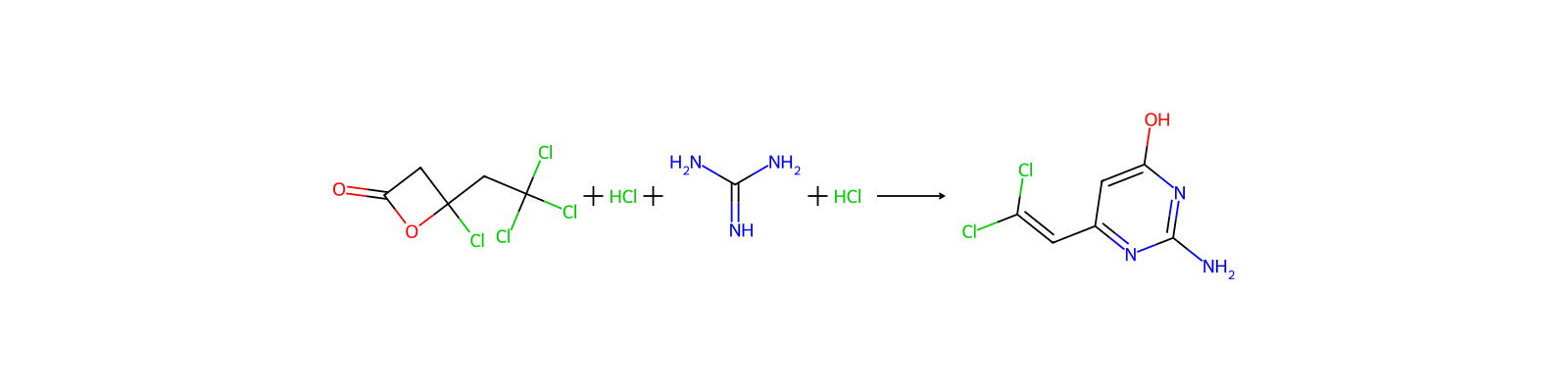
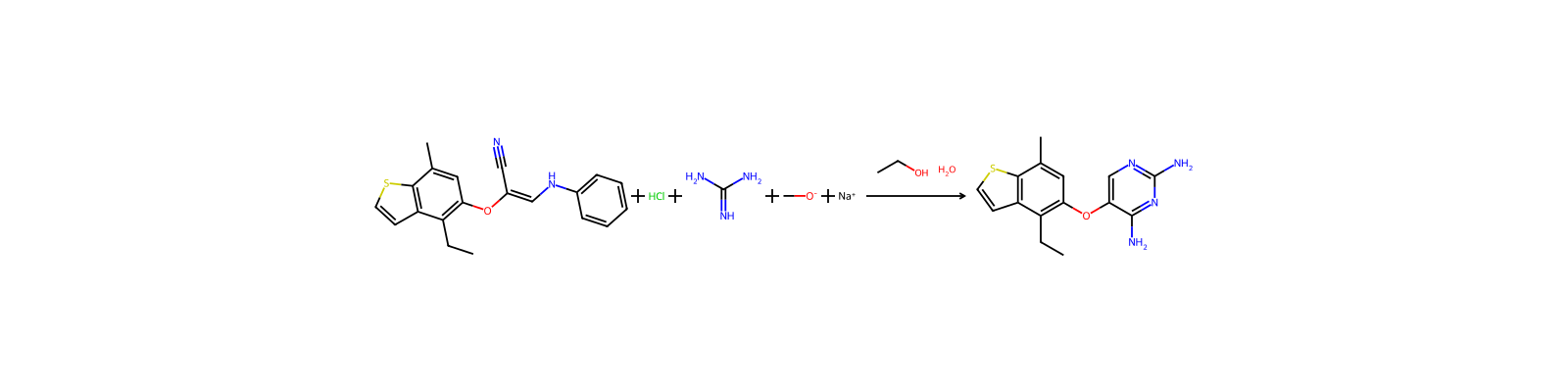
Zugehörige Reaktionen
510




Notizen zur Verbindung
Wird geladen…