StartseiteMCPWorkbenchSkills
StartseiteWorkbenchBenachrichtigungenMein Bereich
llms.txt · MCP-AnleitungDatenschutz · Nutzungsbedingungen · Supportv1.8.0
  1. Startseite
  2. /Verbindung

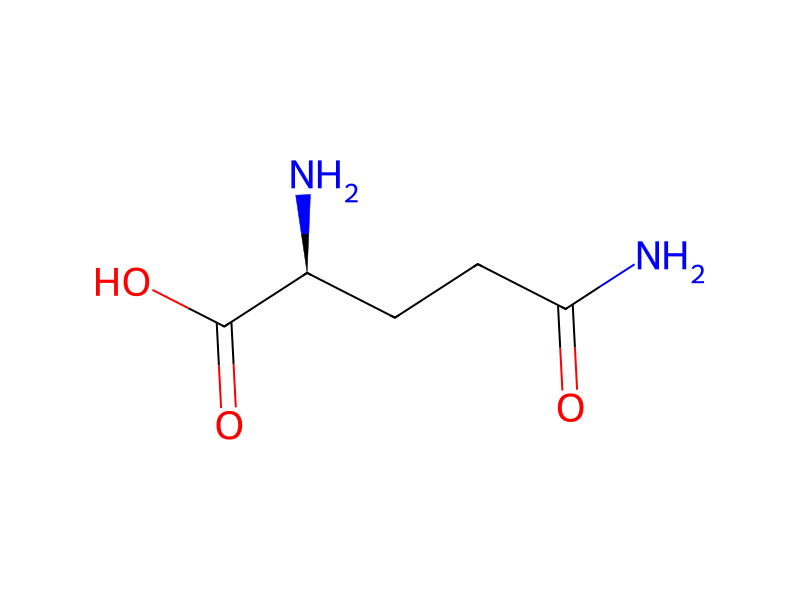
L-Glutamine

HCID 5961
Neue NotizNeue ReaktionAnfrage stellen
Druckvorschau

Daten werden ergänzt – lade die Seite später neu, um den aktuellen Stand zu sehen
GrundinformationenÜberblickNamen und BezeichnerEigenschaftenSicherheit und RegulatorischesChemie und IndustrieZugehörige ReaktionenNotizen zur Verbindung
TeilstruktursucheÄhnliche Strukturen suchen

Grundinformationen

CAS
26700-71-0
Standard-SMILES
NC(=O)CC[C@H](N)C(=O)O
InChIKey
ZDXPYRJPNDTMRX-VKHMYHEASA-N
Summenformel
C5H10N2O3
Durchschnittliche Molmasse
146,14 g/mol
Monoisotopische Masse
146,06914218

Überblick

L-glutamine is an optically active form of glutamine having L-configuration. It has a role as a micronutrient, a nutraceutical, an EC 1.14.13.39 (nitric oxide synthase) inhibitor, a mouse metabolite, a Saccharomyces cerevisiae metabolite, an Escherichia coli metabolite and a human metabolite. It is a L-alpha-amino acid, a glutamine family amino acid, a glutamine and a proteinogenic amino acid. It is a conjugate base of a L-glutaminium. It is a conjugate acid of a L-glutaminate. It is an enantiomer of a D-glutamine. It is a tautomer of a L-glutamine zwitterion.

Namen und Bezeichner

Bevorzugter Name
L-Glutamine
IUPAC
(2S)-2,5-diamino-5-oxopentanoic acid
Englischer Name
polyglutamine
Summenformel
C5H10N2O3
Molmasse
146.15

Namen und Synonyme

L-glutamineglutamine56-85-9LevoglutamideL-(+)-GlutamineCebrogenStimulinagluminGlutamic acid amideLevoglutamidGlavamin(S)-2,5-Diamino-5-oxopentanoic acid
Weitere Namen anzeigen
polyglutamine
glutamic acid 5-amideL-Glutamide2-aminoglutaramic acidNutrestoreSaforisL-2-Aminoglutaramidic acidL-GlutaminL-Glutamic acid gamma-amide

Datenbank-Bezeichner

CAS
26700-71-0、56-85-9、6899-04-3
PubChem CID
5961
DTXSID
DTXSID1023100
ChEMBL
CHEMBL930
ChEBI
CHEBI:18050
UNII
0RH81L854J
EC Number
105-459-1、200-292-1、230-006-0
Nikkaji
J9.170G

Eigenschaften

Berechnete StruktureigenschaftenWird ergänzt

XLogP
-3,1
Polarare Oberfläche (TPSA)
106 Ų
H-Brücken-Donoren
3
H-Brücken-Akzeptoren
4
Frei drehbare Bindungen
4
Schwere Atome
10
Formalladung
0
Komplexität
146

Experimentelle und physikochemische Eigenschaften

Chemical ClassesBiological Agents -> Amino Acids and Derivatives
DrugsPharmaceuticals -> Listed in ZINC15
Cosmetics · 2 Einträge

Cosmetic ingredients (Glutamine) -> CIR (Cosmetic Ingredient Review)

Hair conditioning; Antistatic; Skin conditioning

pHpH = 5-6 at 14.6 g/L at 25 °C
LogP · 2 Einträge

log Kow = -3.15

-3.64

Food AdditivesFLAVOR ENHANCER, FLAVORING AGENT OR ADJUVANT, NUTRIENT SUPPLEMENT -> FDA Substance added to food
Density1.364 g/cu cm
Flavoring AgentsEU Flavoring substances
Color/Form · 2 Einträge

White crystalline powder

Fine opaque needles from water or dilute ethanol

Sicherheit und Regulatorisches

Sicherheitsangaben dienen nur zur Orientierung und ersetzen weder das Sicherheitsdatenblatt (SDB) des Lieferanten noch geltende Vorschriften oder eine fachliche Bewertung.

GHS-Klassifizierung

GHS Classification · 6 Einträge

This chemical does not meet GHS hazard criteria for 98.8% (245 of 248) of all reports.

Not Classified

Aggregated GHS information provided per 248 reports by companies from 5 notifications to the ECHA C&L Inventory.

This chemical does not meet GHS hazard criteria for 100% (3 of 3) of all reports.

Not Classified

Aggregated GHS information provided per 3 reports by companies from 1 notifications to the ECHA C&L Inventory.

Gefahrenhinweise

Regulatory Information · 4 Einträge

Chemical: L-Glutamine

Commission Regulation (EC) No 1565/2000 (Repealed by Com. Implementing Reg. (EU) No 872/2012)

Status: Active Update: 14-06-2022 https://echa.europa.eu/registration-dossier/-/registered-dossier/17119

L-Glutamine: Does not have an individual approval but may be used under an appropriate group standard

Other Safety InformationIMAP assessments - L-Glutamine: Environment tier I assessment
Fire PotentialNot flammable or combustible.
Hazards Summary · 1 Eintrag

Causes effects on food intake, changes in the spleen, proteinuria, and other changes in urine composition in oral repeated-dose studies of rats; [RTECS] Safe when used as a flavoring agent in food; [JECFA] May cause irritation; [Sigma-Aldrich MSDS]

FDA Requirements · 2 Einträge

L-Glutamine is a food additive permitted for direct addition to food for human consumption, as long as 1) the quantity of the substance added to food does not exceed the amount reasonably required to accomplish its intended physical, nutritive, or other technical effect in food, and 2) any substance intended for use in or on food is of appropriate food grade and is prepared and handled as a food ingredient.

Chemie und Industrie

Pharmakologische Informationen

ATC Code · 2 Einträge

A - Alimentary tract and metabolism

QA - Alimentary tract and metabolism

Bionecessity · 1 Eintrag

... Glutamine is a nitrogen donor in metabolic reactions and the main interorgan nitrogen shuttle. As a source of glutamate, it is essential for maintenance of cellular volume, amino acid economy, glutathione, energy, and reducing equivalents. Glutamine is a conditionally essential amino acid, and several limited studies have suggested that metabolic support of catabolic patients with glutamine may improve their condition and speed their recovery.

Pharmacodynamics · 1 Eintrag

Like other amino acids, glutamine is biochemically important as a constituent of proteins. Glutamine is also crucial in nitrogen metabolism. Ammonia (formed by nitrogen fixation) is assimilated into organic compounds by converting glutamic acid to glutamine. The enzyme which accomplishes this is called glutamine synthetase. Glutamine can then be used as a nitrogen donor in the biosynthesis of many compounds, including other amino acids, purines, and pyrimidines. L-glutamine improves nicotinamide adenine dinucleotide (NAD) redox potential.

Mechanism of Action · 2 Einträge

Supplemental L-glutamine's possible immunomodulatory role may be accounted for in a number of ways. L-glutamine appears to play a major role in protecting the integrity of the gastrointestinal tract and, in particular, the large intestine. During catabolic states, the integrity of the intestinal mucosa may be compromised with consequent increased intestinal permeability and translocation of Gram-negative bacteria from the large intestine into the body. The demand for L-glutamine by the intestine, as well as by cells such as lymphocytes, appears to be much greater than that supplied by skeletal muscle, the major storage tissue for L-glutamine. L-glutamine is the preferred respiratory fuel for enterocytes, colonocytes and lymphocytes. Therefore, supplying supplemental L-glutamine under these conditions may do a number of things. For one, it may reverse the catabolic state by sparing skeletal muscle L-glutamine. It also may inhibit translocation of Gram-negative bacteria from the large intestine. L-glutamine helps maintain secretory IgA, which functions primarily by preventing the attachment of bacteria to mucosal cells. L-glutamine appears to be required to support the proliferation of mitogen-stimulated lymphocytes, as well as the production of interleukin-2 (IL-2) and interferon-gamma (IFN-gamma). It is also required for the maintenance of lymphokine-activated killer cells (LAK). L-glutamine can enhance phagocytosis by neutrophils and monocytes. It can lead to an increased synthesis of glutathione in the intestine, which may also play a role in maintaining the integrity of the intestinal mucosa by ameliorating oxidative stress. The exact mechanism of the possible immunomodulatory action of supplemental L-glutamine, however, remains unclear. It is conceivable that the major effect of L-glutamine occurs at the level of the intestine. Perhaps enteral L-glutamine acts directly on intestine-associated lymphoid tissue and stimulates overall immune function by that mechanism, without passing beyond the splanchnic bed. The exact mechanism of L-glutamine's effect on NAD redox potential is unknown but is thought to involve increased amounts of reduced glutathione made available by glutamine supplementation. This improvement in redox potential reduces the amount of oxidative damage which sickle red blood cells are more susceptible to. The reduction in cellular damage is thought to reduce chronic hemolysis and vaso-occlusive events.

Zugehörige Reaktionen

192
Reaktionsaufzeichnung erstellen
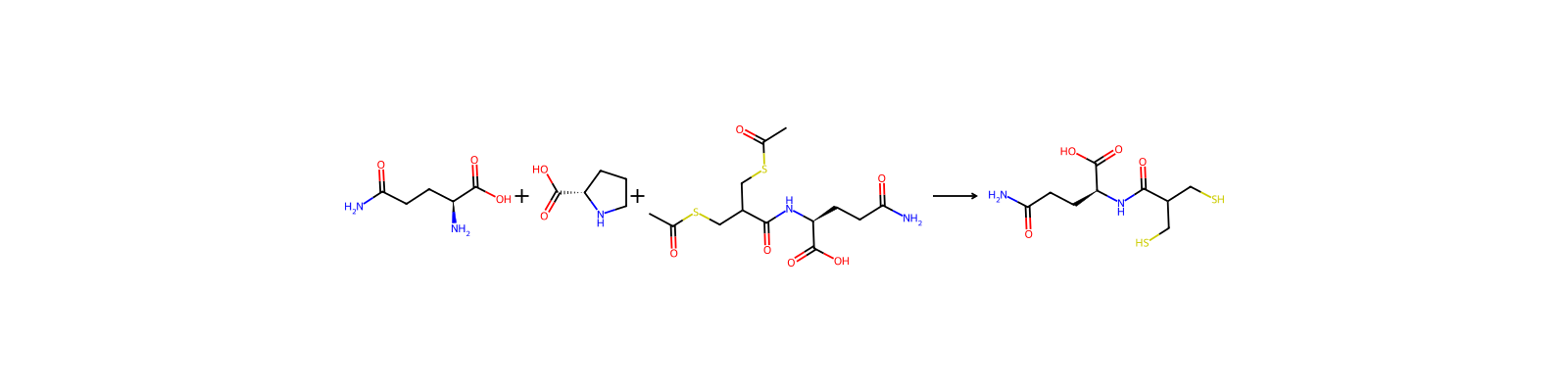
Reaktionsgleichung von HRID 10366
HRID 10366als Eduktuspto-grants-2006_08
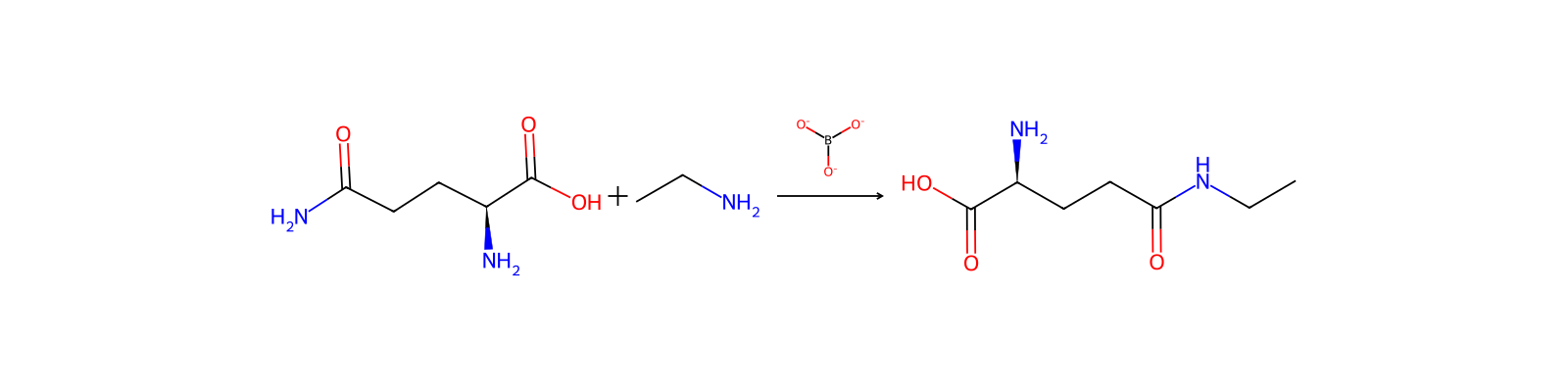
Reaktionsgleichung von HRID 16049
HRID 16049als Eduktuspto-grants-2010_06
Reaktionsgleichung von HRID 16050
HRID 16050als Eduktuspto-grants-2010_06
Reaktionsgleichung von HRID 46937
HRID 46937als Eduktuspto-grants-1979_11
Reaktionsgleichung von HRID 47143
HRID 47143als Eduktuspto-grants-1979_11
Reaktionsgleichung von HRID 48449
HRID 48449als Eduktuspto-grants-2004_03
Reaktionsgleichung von HRID 129915
HRID 129915als Eduktuspto-grants-1995_11
Reaktionsgleichung von HRID 129916
HRID 129916als Eduktuspto-grants-1995_11
Seite 1 von 24

Notizen zur Verbindung

Wird geladen…

Auf dieser SeiteGrundinformationenÜberblickNamen und BezeichnerEigenschaftenSicherheit und RegulatorischesChemie und IndustrieZugehörige ReaktionenNotizen zur Verbindung
Weitere Aktionen
Neue NotizNeue ReaktionAnfrage stellen
Solubility · 5 Einträge

In water, 41,300 mg/L at 25 °C

One gram dissolves in 20.8 mL water at 30 °C, in 38.5 mL at 18 °C, in 56.7 mL at 0 °C

Practically insoluble in methanol (3.5 mg/100 mL at 25 °C), ethanol (0.46 mg/100 mL at 23 °C), ether, benzene, acetone, ethyl acetate, chloroform

41.3 mg/mL

Soluble in water and ether

Dietary IngredientsGlutamine
Human Drugs · 2 Einträge

FDA approved drugs -> Active ingredient

FDA approved drugs -> Active ingredient

The Approved Drug Products with Therapeutic Equivalence Evaluations identifies currently marketed prescription drug products, including glutamine, approved on the basis of safety and effectiveness by FDA under sections 505 of the Federal Food, Drug, and Cosmetic Act.

Special ReportsAbcouwer SF; p. 287-296 in Encyclopedia of Dietary Supplements; Coates PM, Blackman MR et al, eds (2005): A review of Glutamine biochemistry and nutritional supplementation.
FIFRA Requirements · 1 Eintrag

Residues of glutamine are exempted from the requirement of a tolerance when used in accordance with good agricultural practice as inert (or occasionally active) ingredients in pesticide formulations applied to growing crops only. Use: Synergist. Limit: Maximum of 0.5% of formulation.

Toxic Combustion ProductsHazardous decomposition products formed under fire conditions. - Carbon oxides, nitrogen oxides (NOx)
Hazard Classes and Categories · 2 Einträge

Not Classified

Not Classified

Hazardous Reactivities and IncompatibilitiesStrong oxidizing agents

Sicherheit und Schutzausrüstung

Fire Fighting Procedures · 2 Einträge

Wear self contained breathing apparatus for fire fighting if necessary.

Use water spray, alcohol-resistant foam, dry chemical or carbon dioxide.

Storage Conditions · 2 Einträge

Keep container tightly closed in a dry and well-ventilated place. Recommended storage temperature: -20 °C/L-Glutamine solution/

Store at 25 °C (77 °F) with excursions allowed to 15 deg-30 °C (59 deg -86 °F).

Cleanup Methods · 3 Einträge

Keep in suitable, closed containers for disposal.

Do not let product enter drains.

Avoid breathing vapors, mist or gas.

Disposal Methods · 1 Eintrag

SRP: Criteria for land treatment or burial (sanitary landfill) disposal practices are subject to significant revision. Prior to implementing land disposal of waste residue (including waste sludge), consult with environmental regulatory agencies for guidance on acceptable disposal practices.

Preventive MeasuresAvoid breathing vapors, mist or gas.
Allowable Tolerances · 1 Eintrag

Residues of glutamine are exempted from the requirement of a tolerance when used in accordance with good agricultural practice as inert (or occasionally active) ingredients in pesticide formulations applied to growing crops only. Use: Synergist. Limit: Maximum of 0.5% of formulation.

Toxikologische Informationen

Body BurdenGlutamine is the most abundant free amino acid in human blood with a concentration of about 500-900 umol/L(1).
Interactions · 2 Einträge

Radiotherapy is often used to treat prostate tumors, but the normal bladder is usually adversely affected. Using an animal model of pelvic radiation, /the authors/ investigated whether glutamine nutritional supplementation can prevent radiation-induced damage to the bladder, especially in its more superficial layers. Male rats aged 3-4 months were divided into groups of 8 animals each: controls, which consisted intact animals; radiated-only rats, which were sacrificed 7 (R7) or 15 (R15) days after a radiation session (10Gy aimed at the pelvico-abdominal region); and radiated rats receiving l-glutamine supplementation (0.65g/kg body weight/day), which were sacrificed 7 (RG7) or 15 (RG15) days after the radiation session. Cells and blood vessels in the vesical lamina propria, as well as the urothelium, were then measured using histological methods. The effects of radiation were evaluated by comparing controls vs. either R7 or R15, while a protective effect of glutamine was assessed by comparing R7 vs. RG7 and R15 vs. RG15. The results showed that, in R7, epithelial thickness, epithelial cell density, and cell density in the lamina propria were not significantly affected. However, density of blood vessels in R7 was reduced by 48% (p<0.05) and this alteration was mostly prevented by glutamine (p<0.02). In R15, density of blood vessels in the lamina propria was not significantly modified. However, epithelial thickness was reduced by 25% (p<0.05) in R15, and this effect was prevented by glutamine (p<0.01). In R15, epithelial cell density was increased by 35% (p<0.02), but glutamine did not protect against this radiation-induced increase. Cell density in the lamina propria was likewise unaffected in R15. Density of mast cells in the lamina propria was markedly reduced in R7 and R15. The density was still reduced in RG7, but a higher density in RG15 suggested a glutamine-mediated recovery. Alpha-actin positive cells in the lamina propria formed a suburothelial layer and were identified as myofibroblasts. Thickness of this layer was increased in R7, but was similar to controls in RG7, while changes in R15 and RG15 were less evident. In conclusion, pelvic radiation leads to significant acute and post-acute alterations in the composition and structural features of the vesical lamina propria and epithelium. Most of these changes, however, can be prevented by glutamine nutritional supplementation. These results emphasize, therefore, the potential use of this aminoacid as a radioprotective drug.

Glutamine is a neutral amino acid that is used by rapidly dividing cells such as erythrocytes, lymphocytes, and fibroblasts. It is also the substrate of glutathione synthesis. In normal metabolic rates, glutamine is an amino acid synthesized endogenously, but in high metabolic conditions such as cancer, it must be taken exogenously. Animal studies strongly demonstrate that glutamine protects both the upper and lower gastrointestinal tract mucosa from the effects of chemotherapy, radiotherapy, or other causes of injury. In this study, ... the protective effect of glutamine on radiation-induced diarrhea /was investigated/.The patients were divided into glutamine-treated and placebo groups. In the glutamine-treated group, 15 g of oral glutamine was administered three times daily. The patients were evaluated for diarrhea grade according to the National Cancer Institute Common Toxicity Criteria version 3.0, need for loperamide use, need for supportive parenteral therapy, and treatment breaks due to diarrhea. There was no difference in overall diarrhea incidence when the two groups were compared. When diarrhea grade was evaluated, none of the patients in the glutamine-treated group had grade 3-4 diarrhea, but in the placebo group, grade 3-4 diarrhea was seen in 69% of the patients. In the placebo-treated group, patients requiring loperamide and parenteral supportive therapy were 39 and 92 %, respectively. There was no treatment break in glutamine-treated patients. Glutamine may have protective effect on radiation-induced severe diarrhea.

Hepatotoxicity · 1 Eintrag

In clinical trials of L-glutamine in patients with sickle cell disease, serum aminotransferase elevations were not mentioned, and there were no reports of clinically apparent liver injury. Patients with sickle cell disease frequently have jaundice, largely due to chronic hemolysis which raises serum indirect bilirubin levels. They also can have fluctuating liver test abnormalities due to complications of sickle cell disease, such as gall stone disease (from chronic hemolysis), viral hepatitis and iron overload (from blood transfusions), congestive liver disease (due to pulmonary hypertension), and veno-occlusive crises involving the liver which can be associated with serum aminotransferase elevations and hepatic dysfunction. In preregistration trials of L-glutamine, hepatic events were not reported and serious adverse events were no more common with the active drug than with placebo. L-glutamine is a normal constituent of virtually all tissues and is unlikely to have intrinsic toxicity, even in high doses.

Environmental Fate · 3 Einträge

TERRESTRIAL FATE: Based on a classification scheme(1), an estimated Koc value of 10(SRC), determined from a structure estimation method(2), indicates that glutamine is expected to have very high mobility in soil(SRC). Glutamine has pKa values of 2.17 (the acid) and 9.13 (the amine)(3) indicating that this compound will exist as a zwitterion having both a cation and anion form in the environment and cations generally adsorb more strongly to soils containing organic carbon and clay than their neutral counterparts(4). Volatilization of glutamine from moist soil surfaces is not expected to be an important fate process(SRC) given an estimated Henry's Law constant of 3.0X10⁻¹⁶ atm-cu m/mole(SRC), using a fragment constant estimation method(2). Glutamine is not expected to volatilize from dry soil surfaces(SRC) based upon an estimated vapor pressure of 1.9X10⁻⁸ mm Hg at 25 °C(SRC), determined from a fragment constant method(2). Utilizing the Japanese MITI test, 77% of the Theoretical BOD was reached in 4 weeks(5) suggesting that biodegradation could be an important environmental fate process in soil(SRC).

AQUATIC FATE: Based on a classification scheme(1), an estimated Koc value of 10(SRC), determined from a structure estimation method(2), indicates that glutamine is not expected to adsorb to suspended solids and sediment(SRC). Volatilization from water surfaces is not expected(3) based upon an estimated Henry's Law constant of 3.0X10⁻¹⁶ atm-cu m/mole(SRC), developed using a fragment constant estimation method(2). Glutamine has pKa values of 2.17 (the acid) and 9.13 (the amine)(4) indicating that this compound will exist as a zwitterion having both a cation and anion form in the environment that also suggests volatilization from water will not be an important fate process(SRC). According to a classification scheme(5), an estimated BCF of 3(SRC),from its log Kow of -3.15(6) and a regression-derived equation(2), suggests the potential for bioconcentration in aquatic organisms is low(SRC). Glutamine is not expected to undergo hydrolysis in the environment due to the lack of functional groups that hydrolyze under environmental conditions(3). Glutamine does not contain chromophores that absorb at wavelengths >290 nm(3) and, therefore, is not expected to be susceptible to direct photolysis by sunlight(SRC). Utilizing the Japanese MITI test, 77% of the Theoretical BOD was reached in 4 weeks(7) suggesting that biodegradation could be an important environmental fate process in water(SRC).

ATMOSPHERIC FATE: According to a model of gas/particle partitioning of semivolatile organic compounds in the atmosphere(1), glutamine, which has an estimated vapor pressure of 1.9X10⁻⁸ mm Hg at 25 °C(SRC), determined from a fragment constant method(2), will exist in both the vapor and particulate phases in the ambient atmosphere. Vapor-phase glutamine is degraded in the atmosphere by reaction with photochemically-produced hydroxyl radicals(SRC); the half-life for this reaction in air is estimated to be 8.5 hours(SRC), calculated from its rate constant of 4.6X10⁻¹¹ cu cm/molecule-sec at 25 °C(SRC) that was derived using a structure estimation method(2). Particulate-phase glutamine may be removed from the air by wet and dry deposition(SRC). Glutamine does not contain chromophores that absorb at wavelengths >290 nm(3) and, therefore, is not expected to be susceptible to direct photolysis by sunlight(SRC).

Food Survey Values · 1 Eintrag

Dietary sources of glutamine include plant and animal proteins such as beef, pork and poultry, milk, yogurt, ricotta cheese, cottage cheese, raw spinach, raw parsley, and cabbage(1). High-protein foods such as meat, fish, beans, and dairy products are sources of glutamine(2). Glutamine and glutamate comprise between 5 and 15% of the amino acid content of most foods and commercial and feedstuffs(3).

Exposure RoutesAbsorption is efficient and occurs by an active transport mechanism
Milk Concentrations · 1 Eintrag

Free glutamine was detected in human milk samples at median concentrations of 4960-5000 umol/L milk(1). The concentration of glutamine in mother's milk was determined as 259 umol/cu dm(2). The glutamine concentration in the milk of 11 women from India ranged from 2.04 to 43.79 umol/100 mL with a median of 15.69 umol/100 mL(3).

Toxicity Summary · 2 Einträge

Safe in the present practices of use and concentration. Ingredient, concentration, and use information are available in documents discoverable at https://cir-reports.cir-safety.org

Supplemental L-glutamine's possible immunomodulatory role may be accounted for in a number of ways. L-glutamine appears to play a major role in protecting the integrity of the gastrointestinal tract and, in particular, the large intestine. During catabolic states, the integrity of the intestinal mucosa may be compromised with consequent increased intestinal permeability and translocation of Gram-negative bacteria from the large intestine into the body. The demand for L-glutamine by the intestine, as well as by cells such as lymphocytes, appears to be much greater than that supplied by skeletal muscle, the major storage tissue for L-glutamine. L-glutamine is the preferred respiratory fuel for enterocytes, colonocytes and lymphocytes. Therefore, supplying supplemental L-glutamine under these conditions may do a number of things. For one, it may reverse the catabolic state by sparing skeletal muscle L-glutamine. It also may inhibit translocation of Gram-negative bacteria from the large intestine. L-glutamine helps maintain secretory IgA, which functions primarily by preventing the attachment of bacteria to mucosal cells. L-glutamine appears to be required to support the proliferation of mitogen-stimulated lymphocytes, as well as the production of interleukin-2 (IL-2) and interferon-gamma (IFN-gamma). It is also required for the maintenance of lymphokine-activated killer cells (LAK). L-glutamine can enhance phagocytosis by neutrophils and monocytes. It can lead to an increased synthesis of glutathione in the intestine, which may also play a role in maintaining the integrity of the intestinal mucosa by ameliorating oxidative stress. The exact mechanism of the possible immunomodulatory action of supplemental L-glutamine, however, remains unclear. It is conceivable that the major effect of L-glutamine occurs at the level of the intestine. Perhaps enteral L-glutamine acts directly on intestine-associated lymphoid tissue and stimulates overall immune function by that mechanism, without passing beyond the splanchnic bed.

Average Daily IntakeHigh-protein foods such as meat, fish, beans, and dairy products are sources of glutamine(1); typical daily intake from food ranges from approximately 1 to 6 g(1).
Plant ConcentrationsIn plants, soil nitrogen is assimilated into glutamine, which then serves as a nitrogen donor for other biochemical reactions(1).
Soil Adsorption/Mobility · 1 Eintrag

Using a structure estimation method based on molecular connectivity indices(1), the Koc of glutamine can be estimated to be 10(SRC). According to a classification scheme(2), this estimated Koc value suggests that glutamine is expected to have very high mobility in soil. Glutamine has pKa values of 2.17 (the acid) and 9.13 (the amine)(3) indicating that this compound will exist as a zwitterion having both a cation and anion form in the environment and cations generally adsorb more strongly to soils containing organic carbon and clay than their neutral counterparts(4).

Natural Pollution Sources · 1 Eintrag

All plants that are involved in nitrogen metabolism require the presence of glutamine in the form of glutamine synthetase(1). Glutamine is a non-essential amino acid for human development and is the most abundant free amino acid in plasma and tissue(2). It can be isolated from sugar beet juice(2). Sources of glutamine include plant and animal proteins such as beef, pork and poultry, milk, yogurt, ricotta cheese, cottage cheese, raw spinach, raw parsley, and cabbage(3). Glutamine occurs in human milk(4).

Regulatorische Informationen

FDA Requirements · 2 Einträge

L-Glutamine is a food additive permitted for direct addition to food for human consumption, as long as 1) the quantity of the substance added to food does not exceed the amount reasonably required to accomplish its intended physical, nutritive, or other technical effect in food, and 2) any substance intended for use in or on food is of appropriate food grade and is prepared and handled as a food ingredient.

The Approved Drug Products with Therapeutic Equivalence Evaluations identifies currently marketed prescription drug products, including glutamine, approved on the basis of safety and effectiveness by FDA under sections 505 of the Federal Food, Drug, and Cosmetic Act.

FIFRA Requirements · 1 Eintrag

Residues of glutamine are exempted from the requirement of a tolerance when used in accordance with good agricultural practice as inert (or occasionally active) ingredients in pesticide formulations applied to growing crops only. Use: Synergist. Limit: Maximum of 0.5% of formulation.

L-glutamine has important functions in regulation of gastrointestinal cell growth, function, and regeneration. Under normal conditions, glutamine concentration is maintained in the body by dietary intake and synthesis from endogenous glutamate. Data from clinical studies indicate that the role of and nutritional requirements for glutamine during catabolic illness, trauma, and infection may differ significantly from the role of and nutritional requirements for glutamine in healthy individuals. Glutamine concentrations decrease and tissue glutamine metabolism increases during many catabolic disease states, and thus glutamine is often considered a "conditionally essential" amino acid.

Biological Half-Life · 2 Einträge

The half life of elimination is 1 h.

After an IV bolus dose in three subjects, the terminal half-life of glutamine was approximately 1 hour.

Metabolism/Metabolites · 4 Einträge

Exogenous L-glutamine likely follows the same metabolic pathways as endogenous L-glutamine which is involved in the formation of glutamate, proteins, nucleotides, and amino acid sugars.

Glutamine plays an important role in nitrogen homeostasis and intestinal substrate supply. It has been suggested that glutamine is a precursor for arginine through an intestinal-renal pathway involving inter-organ transport of citrulline. The importance of intestinal glutamine metabolism for endogenous arginine synthesis in humans, however, has remained unaddressed. The aim of this study was to investigate the intestinal conversion of glutamine to citrulline and the effect of the liver on splanchnic citrulline metabolism in humans. Eight patients undergoing upper gastrointestinal surgery received a primed continuous intravenous infusion of [2-(15)N]glutamine and [ureido-(13)C-(2)H(2)]citrulline. Arterial, portal venous and hepatic venous blood were sampled and portal and hepatic blood flows were measured. Organ specific amino acid uptake (disposal), production and net balance, as well as whole body rates of plasma appearance were calculated according to established methods. The intestines consumed glutamine at a rate that was dependent on glutamine supply. Approximately 13% of glutamine taken up by the intestines was converted to citrulline. Quantitatively glutamine was the only important precursor for intestinal citrulline release. Both glutamine and citrulline were consumed and produced by the liver, but net hepatic flux of both amino acids was not significantly different from zero. Plasma glutamine was the precursor of 80% of plasma citrulline and plasma citrulline in turn was the precursor of 10% of plasma arginine. In conclusion, glutamine is an important precursor for the synthesis of arginine after intestinal conversion to citrulline in humans.

Endogenous glutamine participates in various metabolic activities, including the formation of glutamate, and synthesis of proteins, nucleotides, and amino sugars. Exogenous glutamine is anticipated to undergo similar metabolism.

Enterocytes, Hepatic

FDA Pharmacological Classification · 6 Einträge

0RH81L854J

GLUTAMINE

Established Pharmacologic Class [EPC] - Amino Acid

Chemical Structure [CS] - Amino Acids

Glutamine is an Amino Acid.

GLUTAMINE

Absorption, Distribution and Excretion · 6 Einträge

Absorption is efficient and occurs by an active transport mechanism. Tmax is 30 minutes after a single dose. Absorption kinetics following multiple doses has not yet been determined.

Primarily eliminated by metabolism. While L-glutamine is filtered though the glomerulus, nearly all is reabsorbed by renal tubules.

Volume of distribution is 200 mL/kg after intravenous bolus dose.

After an intravenous bolus dose in three subjects, the volume of distribution was estimated to be approximately 200 mL/kg.

Following single dose oral administration of glutamine at 0.1 g/kg to six subjects, mean peak blood glutamine concentration was 1028uM (or 150 mcg/mL) occurring approximately 30 minutes after administration. The pharmacokinetics following multiple oral doses have not been adequately characterized.

Metabolism is the major route of elimination for glutamine. Although glutamine is eliminated by glomerular filtration, it is almost completely reabsorbed by the renal tubules.

Tissue LocationsAdipose Tissue
Cellular LocationsExtracellular
Metabolite Pathways2-Hydroxyglutric Aciduria (D And L Form)

Verwendung und Herstellung

Uses · 6 Einträge

CIR ingredient: Glutamine

A non-essential amino acid; [Merck Index] Used as a flavoring agent and nutritional supplement for foods; [FDA]

Medicine, culture media, biochemical research, feed additive

L-glutamine and its derivatives are used for treatment of stomach ulcers; L-Glutamine has been used as a remedy for gastric and duodenal ulcers.

Medical use: parenteral nutrition, treatment of mental disorders and alcoholism

MEDICATION

U.S. Production · 1 Eintrag

Non-confidential 2012 Chemical Data Reporting (CDR) information on the production and use of chemicals manufactured or imported into the United States. Chemical: L-Glutamine. National Production Volume: Withheld. (Unable to aggregate due to CBI claims.)

Methods of Manufacturing · 2 Einträge

Microbial L-glutamine producers were selected from wild type glutamate-producing coryneform bacteria. A sulfaguanidine resistant mutant of Brevibacterium flavum accumulates 41 g/L Lglutamine in 48 h from 10% glucose. A yield of 44% was achieved by the mutant Brevibacterium flavum AJ3409.

Synthesis: By isolation from sugar beet juice.

Formulations/Preparations · 5 Einträge

PowerSleep /contains/ 250 mg L-glutamine /and other amino acids with vitamins, minerals and herbs/

Neu-Recovery-SA /contains/ 50 mg L-glutamine /and other amino acids with vitamins and minerals/

Neu-Recovery-DA /contains/ 25 mg L-glutaine /and other amino acids with vitamins and minerals/

NeuroSlim /contains/ 15 mg L-glutamine /and other amino acids with vitamins and minerals/

NutreStore (L-glutamine powder for oral solution) for oral administration is formulated as a white crystalline powder in a paper-foil-plastic laminate packet. Each packet of NutreStore contains 5 g of L-glutamine.

Household ProductsInformation on 1 consumer products that contain Glutamine in the following categories is provided:
Use Classification · 3 Einträge

Flavouring Agent -> FLAVOURING_AGENT -> JECFA Functional Classes

Flavoring Agents -> JECFA Flavorings Index

Cosmetics -> Hair conditioning; Antistatic; Skin conditioning

General Manufacturing InformationL-Glutamine: ACTIVE